

According to Channel News Asia, data shows that the situation has been developing complicatedly since the early months of 2026. In Indonesia alone, the area of land burned by fire had exceeded 32,600 hectares by February, an increase of approximately 20 times compared to the same period last year, even though the region has not officially entered the peak of the dry season.
The epicenter of the fires remains concentrated in the carbon-rich peatlands of eastern Indonesia, threatening to create multiple plumes of smoke that could blanket parts of Indonesia, Malaysia, and Singapore.
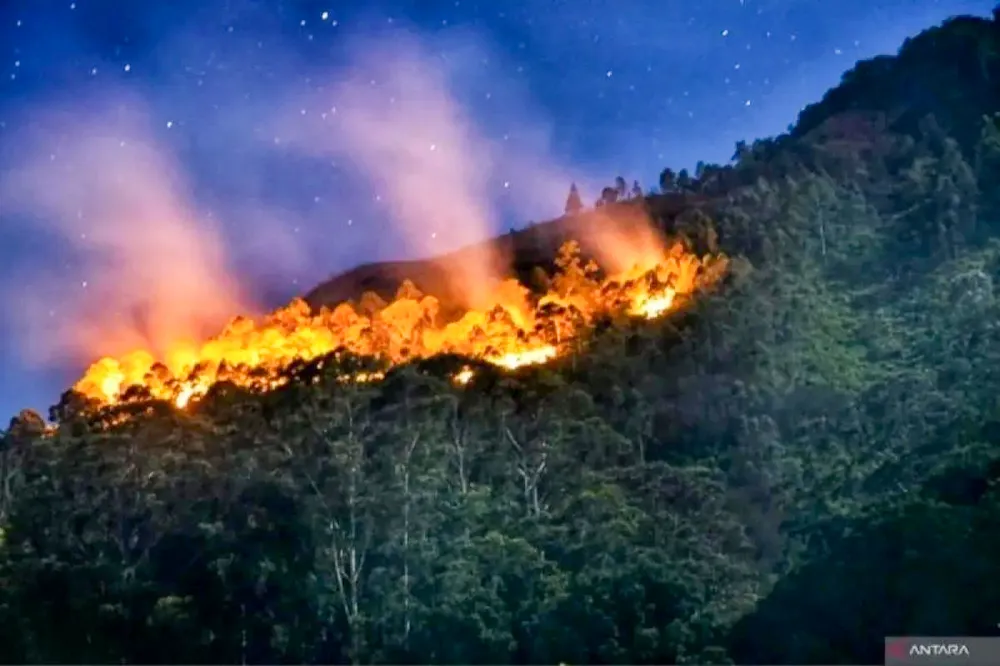
According to environmental experts, extreme droughts caused by climate change are only exacerbating the crisis. The root cause lies in years of land exploitation, especially the draining of peatlands to make way for large-scale oil palm and forestry plantations, leading to severe ecosystem degradation.
Due to cost pressures and short-term gains, the practice of using fire to clear forest land remains prevalent. Satellite data shows that many large fires occur within or near concessions of industrial corporations, not just on land managed by farmers, blurring the lines of legal responsibility for burned land.
Faced with this situation, many countries in the region have sought comprehensive solutions, ranging from national-level initiatives to multilateral cooperation. Thailand, Laos, and Myanmar continue to promote the implementation of the Blue Skies Strategy for the period 2024-2030. Within the framework of this cooperation, environmental officials from Laos and Thailand reached important agreements at a meeting held in Vientiane, Laos, at the end of April.
Thailand, Laos, and Myanmar are all committed to tightening controls on the burning of agricultural by-products, promoting sustainable, fire-free farming practices, and focusing on enhancing the capacity of local officials to monitor air quality and respond quickly to forest fires in border areas. In addition, regional initiatives such as the Action Plan for Sustainable, Smoke-Free Land Management in Southeast Asia are also working to reshape the approach to environmental issues.
However, analysts warn that merely implementing short-term action strategies or relying on pilot funding will not be enough to solve the haze problem. The ASEAN Agreement on Transboundary Haze Pollution, signed in 2002 and fully ratified in 2014, is still considered to lack sufficiently strong enforcement mechanisms. Singapore's enactment of its own Transboundary Haze Act in 2014 is seen as a sign of the limitations in ASEAN's consensus-based approach.
To break the vicious cycle of "forest fires - smog - crisis," experts recommend that Southeast Asian governments shift strongly towards a more transparent governance model. Fundamental solutions include building a common database on land concessions across the region, synchronizing satellite-based hotspot monitoring maps, and strengthening cross-border judicial cooperation to strictly address businesses that violate regulations.
Source: https://www.sggp.org.vn/dong-nam-a-tim-cach-ngan-khoi-mu-post853845.html








































































































Comment (0)