

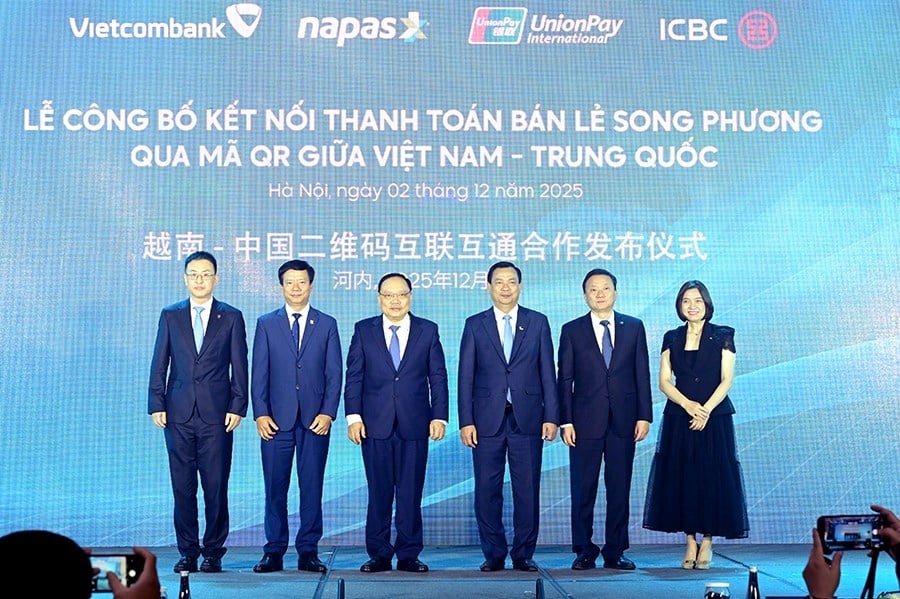
New steps shaping digital travel experiences
This event marks a significant step forward in the process of digitizing payment systems and upgrading travel experiences in two leading markets in the region.
The event, organized by NAPAS in collaboration with UnionPay International (UPI), Industrial and Commercial Bank of China (ICBC) and Vietcombank , shows that the global payment trend is shifting strongly towards interconnected QR solutions, helping tourists have a safe, smooth, cashless experience.
This model has been popular in Japan, South Korea, Singapore and especially China, where the QR ecosystem has shaped the spending behavior of hundreds of millions of users.
Speaking at the event, Director of the Payment Department of the State Bank of Vietnam Pham Anh Tuan emphasized that this is an important task to implement the Joint Statement between Vietnam and China after the visit of Prime Minister Li Qiang in October 2024, including cooperation in connecting QR codes and promoting payments in local currencies - a trend being chosen by many Asian economies to reduce conversion costs and increase financial independence.
The four-party cooperation agreement between UPI - NAPAS - ICBC - Vietcombank paves the way for an interconnected QR payment system to serve Chinese customers in Vietnam and move towards opening the opposite direction in the first quarter of 2026.
This is a realistic step forward: in the first 10 months of 2025, Vietnam welcomed 17.2 million international visitors, of which more than 4.3 million came from China - the largest market and an impressive growth of 43.7% compared to the same period in 2024.

Boosting tourism and trade flows with interconnected digital payments infrastructure
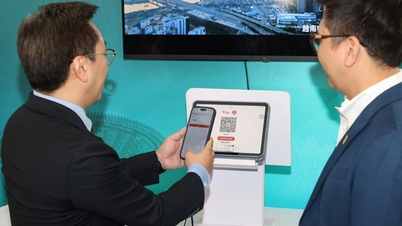
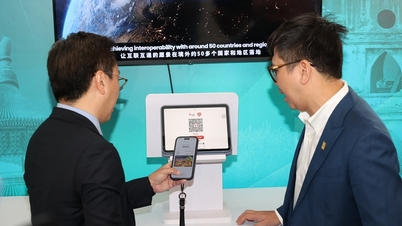
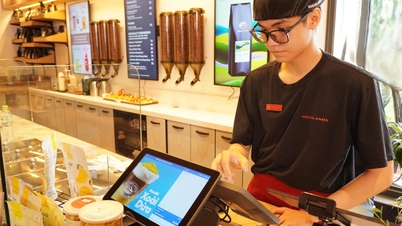
With the cross-border QR platform, Chinese tourists can scan the VIETQRGlobal code to pay at shopping malls, tourist areas, restaurants, large retail chains such as Center Retail, Highland Coffee or the Sun World ecosystem.
This model is in line with the world trend: QR payment is becoming the “common language” of international tourism, helping to reduce financial friction and improve tourists' spending ability.
When the reverse payment is activated in early 2026, Vietnamese tourists will have a similar experience in China - the market with the largest QR network in the world.
NAPAS General Director Nguyen Quang Minh said that interconnectivity not only brings payment convenience but also promotes trade, services and tourism - areas that depend heavily on the speed and security of digital transactions.
UPI Vice President and General Director Larry Wang said Vietnam is an important partner and a key tourist destination for China. Optimizing cross-border payments will facilitate both people-to-people exchanges and economic cooperation in the long term.
Once completed in both directions, the Vietnam-China cross-border QR ecosystem will become an important piece in the regional digital payment network, in line with ASEAN's goal of connecting multinational payments.
This is also the foundation for the Vietnamese tourism industry to upgrade service quality, increase tourists' spending ability, and shorten the gap with markets that have strongly developed smart tourism models.
By building a secure, seamless payment infrastructure and using the same banking applications that tourists are familiar with, Vietnam is catching up with the global digital travel payment trend - where technology not only makes transactions more convenient but also increases the attractiveness of destinations in the digital tourism era.
Source: https://baovanhoa.vn/nhip-song-so/du-khach-trung-quoc-co-the-quet-ma-thanh-toan-qr-tai-viet-nam-185168.html

![[Photo] Parade to celebrate the 50th anniversary of Laos' National Day](/_next/image?url=https%3A%2F%2Fvphoto.vietnam.vn%2Fthumb%2F1200x675%2Fvietnam%2Fresource%2FIMAGE%2F2025%2F12%2F02%2F1764691918289_ndo_br_0-jpg.webp&w=3840&q=75)
![[Photo] Worshiping the Tuyet Son statue - a nearly 400-year-old treasure at Keo Pagoda](/_next/image?url=https%3A%2F%2Fvphoto.vietnam.vn%2Fthumb%2F1200x675%2Fvietnam%2Fresource%2FIMAGE%2F2025%2F12%2F02%2F1764679323086_ndo_br_tempimageomw0hi-4884-jpg.webp&w=3840&q=75)





















































































Comment (0)