

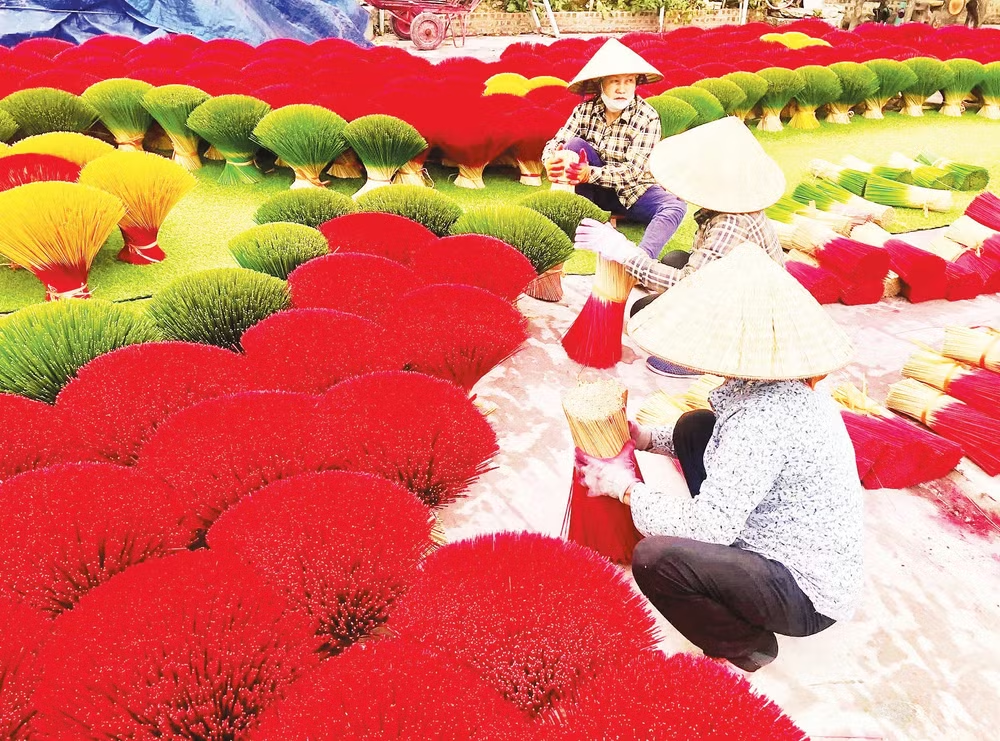
International recognition of the cultural value, craftsmanship, creativity, and enduring vitality of these "living heritage sites" has once again affirmed the potential and leading position of the capital city in the development of craft village tourism in particular, and cultural tourism in general, thereby creating momentum for the cultural industry to flourish and take off.
On May 8, 2026, Hanoi received good news when two more traditional craft villages, Chuyen My (mother-of-pearl inlay and lacquerware) and Son Dong (sculpture and fine art lacquerware), were officially recognized. Including the two representatives named in 2024 (Bat Trang pottery village and Van Phuc silk village), the fact that Vietnam has four names on the list of over 80 cities and craft villages recognized by the World Craft Council since 1964 demonstrates the significant prestige of Vietnamese craft villages on the international stage.
Hanoi , the capital city – known as the “City for Peace” and “UNESCO Creative City” – has long been recognized as a place where the unique cultural values of the Vietnamese people converge and spread. Within this cultural flow, traditional craft villages are “living heritage,” embodying the wisdom, talent, cultural identity, and enduring creativity of countless generations.
Hanoi also has the largest concentration of craft villages in the country (with 1,350 villages with traditional crafts, including 337 officially recognized traditional craft villages). According to data provided by the Hanoi Department of Tourism, the capital city has 54 city-level tourist destinations/areas, of which 26 exploit the value of tourism resources from craft villages, agriculture, and rural areas.
Deeply aware of the role and value of traditional crafts and craft villages in the cultural, economic, and tourism development of the Capital, the Hanoi People's Committee issued Decision No. 282/QD-UBND approving the "Overall Plan for the Development of Craft Villages in Hanoi City for the period 2025-2030, with a vision to 2050," along with many mechanisms and policies aimed at preserving, honoring, and sustainably developing craft villages in conjunction with innovation, digital transformation, cultural tourism development, and international integration.
Currently, Hanoi's tourism industry is focusing on exploiting the cultural, historical, and artistic values of traditional craft villages, combining them with cultural tourism and agricultural/rural tourism to build distinctive and attractive craft village tourism models that provide meaningful experiences for tourists. In recent times, many models have been established and have initially yielded positive results, such as Ha Thai lacquer village, Quang Phu Cau incense stick village, and Son Dong handicraft village... contributing to promoting traditional product brands, increasing income for local people, and preserving the value of handicraft heritage.
Hanoi is focusing on exploiting and effectively developing the resources and assets of traditional craft villages, linking tourism with the construction of new rural areas to develop a green and sustainable economy. The city also prioritizes investing in tourism infrastructure for craft villages, standardizing services, diversifying characteristic products, while paying attention to developing local human resources and promoting the brand "Hanoi Craft Village Tourism - Traditional Essence, Creativity, and Modernity".
Source: https://nhandan.vn/du-lich-lang-nghe-ha-noi-tao-da-cat-canh-post962062.html































































































Comment (0)