

Remarkably, this boat matches the description of the Greek historian Strabo, who visited the city around 29-25 BC.
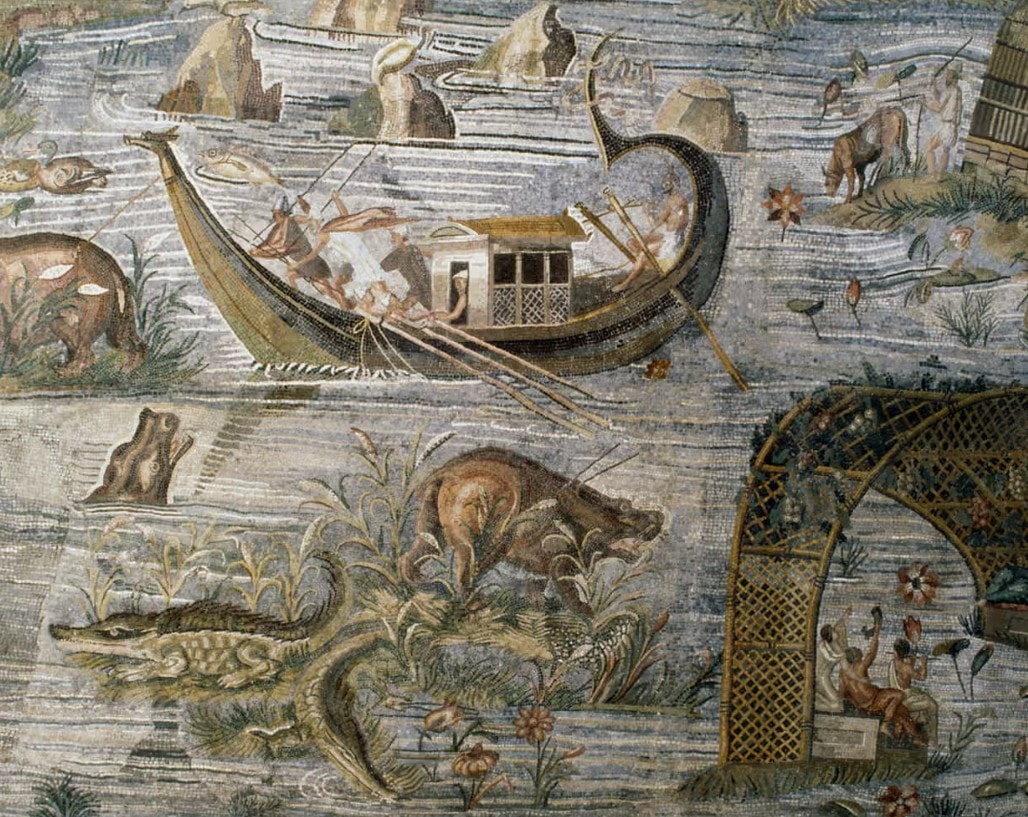
The wreck was found near the sunken island of Antirhodos, in the Portus Magnus area, the great port of ancient Alexandria.
Alexandria was once one of the most magnificent cities of antiquity, notable for its palaces, temples and the 130-meter-high Pharos lighthouse, one of the seven wonders of the ancient world .
The yacht dates back to the first half of the first century AD. It is 35 metres long and was designed to contain a central living quarters with lavishly decorated cabins.
According to archaeologist Franck Goddio, who led the excavation, the boat had a very strange shape with a flat bow and a rounded stern, allowing it to move in very shallow water.
The historian Strabo visited the Egyptian city around 29-25 BC and described such boats as luxurious, used by royalty for pleasure. He wrote that the boats were often filled with musicians, dancers and merrymakers around the clock as people traveled along the canals to attend festivals.
The wreck is much larger than the 15-meter boat said to be depicted in a mosaic. The well-preserved timbers suggest the boat was about 7 meters wide and could have required more than 20 oarsmen. The wreck was found in just 7 meters of water and 1.5 meters of sediment.
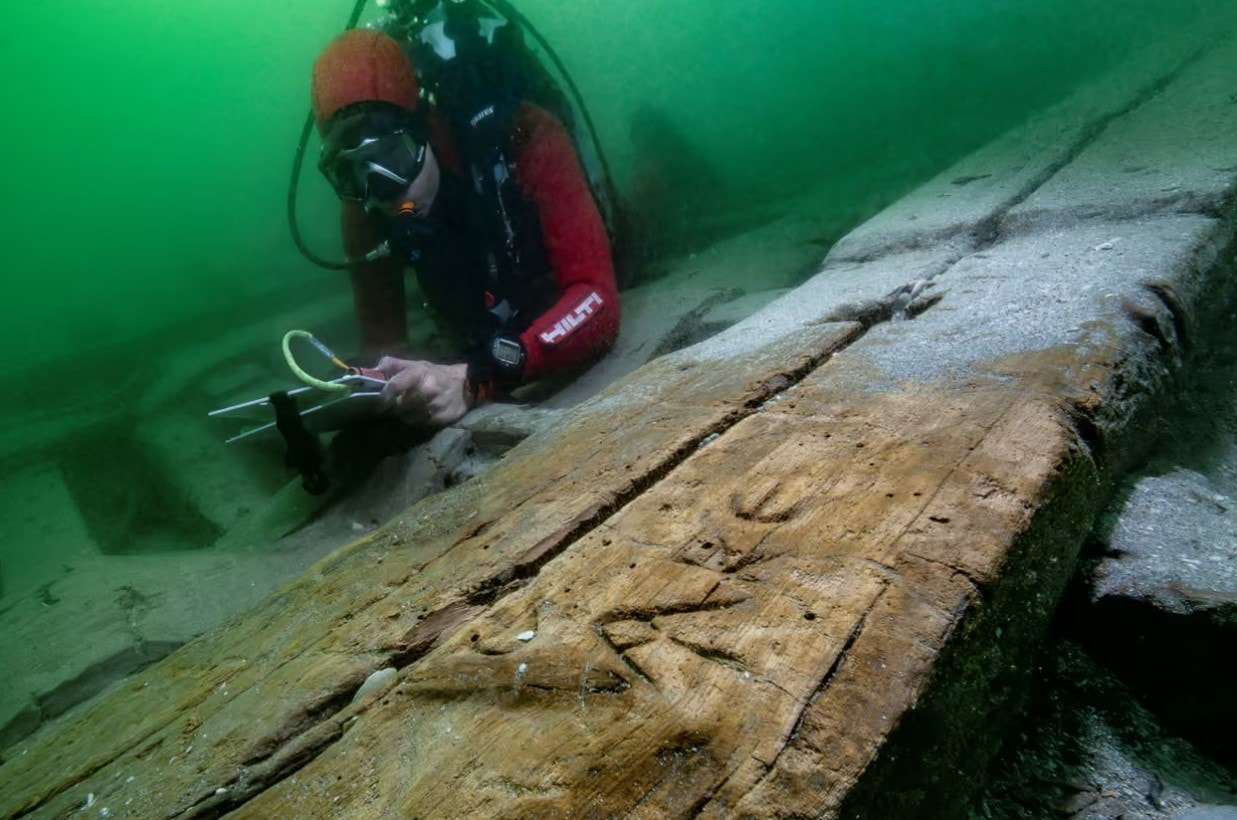
Goddio believes the ship may have sunk during the catastrophic destruction of the temple around AD 50, after a series of earthquakes and tsunamis caused Portus Magnus and part of the ancient coastline to sink to the bottom of the sea.
Greek graffiti found on the ship is still awaiting decipherment.
Although research on the shipwreck is in its early stages, Goddio believes it will yield new insights into life, religion and luxury on the waterways of early Roman Egypt.
The discovery is part of Mr. Goddio's archaeological project off the coast of Egypt. Working with the Egyptian Ministry of Antiquities, he has been exploring a large area in Alexandria's eastern port and the Gulf of Abu Qir since 1992.
In 2000, the ancient city of Thonis-Heracleion and part of the city of Canopus were discovered at Abu Qir Bay, considered one of the greatest archaeological discoveries of modern times.
In 2019, Goddio and his team found another shipwreck in the waters around Thonis-Heracleion, with unusual details that matched descriptions by ancient Greek historians.
Source: https://congluan.vn/du-thuyen-ai-cap-co-dai-duoc-tim-thay-ngoai-khoi-bo-bien-alexandria-10321825.html


![[Photo] Urgently help people soon have a place to live and stabilize their lives](/_next/image?url=https%3A%2F%2Fvphoto.vietnam.vn%2Fthumb%2F1200x675%2Fvietnam%2Fresource%2FIMAGE%2F2025%2F12%2F09%2F1765248230297_c-jpg.webp&w=3840&q=75)










































































Comment (0)