

There is a need for substantial incentives for businesses that invest in culture.
Representative Tran Thi Van argued that the draft resolution places people at the center; and at the same time, fully encompasses the pillars for the development of Vietnamese culture such as resources, human resources, cultural industry, preservation and digital transformation.
According to delegates, the formation of cultural and creative industrial zones and clusters is a new and groundbreaking point in the draft resolution. However, the tax exemption and reduction policies for creative start-up businesses as stipulated in Resolution No. 198/2025/QH15 of the 15th National Assembly on some special mechanisms and policies for the development of the private economy have not truly been a driving force and are not strong enough to develop the cultural industry.
Delegates suggested the need for longer-term and stronger policies, such as applying a corporate income tax rate of around 10% to the cultural industry; tax exemptions and reductions in the initial years, followed by gradual reductions in subsequent years. More substantial incentives are needed to attract businesses to invest.

Regarding the Cultural Development Fund, National Assembly Deputy Tran Thi Van suggested that it should operate as a genuine investment fund. The State should not only provide support but also participate in co-investment and act as the main investor to maximize its effectiveness. The fund should focus on areas with high potential and market demand, such as digital content, films, games, and music , as these are high-risk areas that require significant investment.
Delegates emphasized that for culture to truly become a driving force for development, a strong shift is needed from support to strategic investment, from encouragement to creating market incentives, and from cultural management to cultural economic development.
Clearly define the duties of public defenders.
Contributing her opinion on the draft Resolution of the National Assembly on the pilot implementation of the public lawyer institution, National Assembly Deputy Do Thi Viet Ha (Bac Ninh) highly agreed with the issuance of the Resolution to promptly institutionalize the Party's guidelines, especially Conclusion No. 23-KL/TW of the Politburo. The Deputy affirmed that this is an important legal basis for protecting the legitimate rights and interests of the State in the context of increasingly complex international administrative, civil, and commercial disputes.
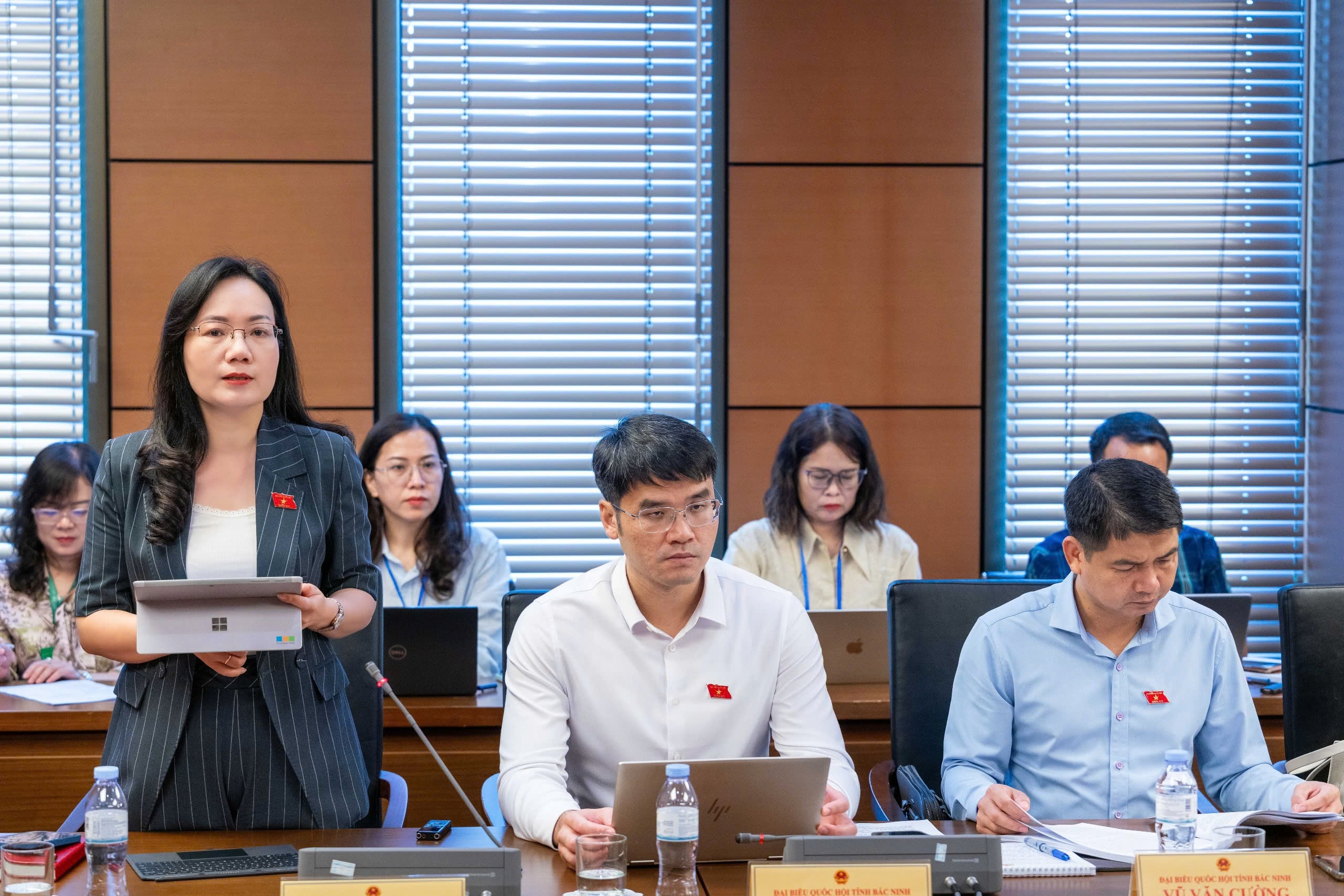
Contributing to the specific provisions, delegates focused on three key areas: regarding the scope of work of public lawyers (Article 7), which closely follows Conclusion No. 23-KL/TW, delegates agreed with this regulation; and suggested the need for clear regulations on the performance of duties by public lawyers. This is because this group must simultaneously fulfill their positions as civil servants, public employees, or officers within their units while also performing the duties of lawyers as required by the pilot program.
The clear distinction is necessary to ensure the rights of civil servants, public employees, and officers who serve as public lawyers, while also not affecting the functions, duties, and powers of the agencies, organizations, and units managing these civil servants, public employees, and officers.
Regarding the process of handling legal matters in the public sector (Article 9), the delegate suggested that stricter regulations are needed to limit the scope of signing legal service contracts with law firms to only cases where public lawyers are assigned to handle complex cases that the capacity of the public legal team cannot meet; avoiding the abuse of signing legal service contracts with law firms that affect the state budget and diminish the role of the public lawyer institution.
Regarding the implementation clause (Article 12), delegates suggested considering extending the pilot period to 3 years (instead of 2 years as drafted) to allow for a thorough assessment of the model's feasibility. Simultaneously, regulations should be added concerning the handling of public lawyer practice certificates after the Resolution expires (such as revocation or allowing conversion to private law practice) to ensure the rights of those participating in the pilot program.
Source: https://daibieunhandan.vn/dua-van-hoa-tro-thanh-dong-luc-phat-trien-10414414.html

























































































Comment (0)