

According to a VNA correspondent in Europe, diplomatic sources said the German Government is preparing to return to Poland a number of rare cultural artifacts that were taken out of the country during World War II.
A symbolic handover ceremony is expected to take place on December 2 in the German capital Berlin within the framework of intergovernmental consultations between the two countries, with the participation of host country Prime Minister Friedrich Merz and his Polish counterpart Donald Tusk.
The Polish government confirmed it would receive “cultural products” from Germany but did not provide a detailed list of the artifacts.
Polish media said the artifacts included a set of archives related to the Teutonic Order and a 14th-century sculpture that had been housed at Malbork Castle, the order's former headquarters, before being stolen during the war.
For decades, Polish historians have called for the repatriation of the documents and artifacts, with the first petition recorded in 1948.
This repatriation is considered by observers to be an important step, which could pave the way for a broader process to deal with historical legacies remaining from the time when Nazi Germany invaded and occupied Poland.
The consultation in Berlin is expected to be attended by many high-ranking officials of the two countries. The Polish side will send the Ministers of Foreign Affairs, Defense, Energy and Culture.
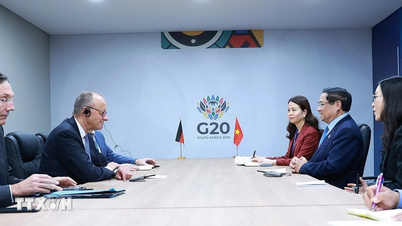
This is the 17th round of Polish-German intergovernmental consultations but the first under German Chancellor Friedrich Merz.
Bilateral relations and security and defense cooperation are expected to continue to be the focus of the consultation.
Speaking to Polish media, Mr. Andreas Umland, an expert at the Stockholm Center for East European Studies, expressed hope that the consultation would open a “new phase” in relations between the two countries, in the context that Berlin and Warsaw currently have many similarities in their approaches to regional and international issues.
However, some analysts say the two sides are unlikely to achieve historic breakthroughs, especially regarding claims for reparations for damage during World War II.
Polish-German intergovernmental consultations have been held regularly since 1997. The most recent round of consultations took place in July 2024 under former German Chancellor Olaf Scholz.
Relations between the two countries showed signs of improvement after Polish Prime Minister Donald Tusk and his centrist coalition took power at the end of 2023, ending a long period of tension under the government led by the Law and Justice (PiS) party, which caused consultations to be interrupted from 2018 to 2024./.
Source: https://www.vietnamplus.vn/duc-sap-trao-tra-hien-vat-van-hoa-bi-chiem-doat-cho-ba-lan-post1080379.vnp

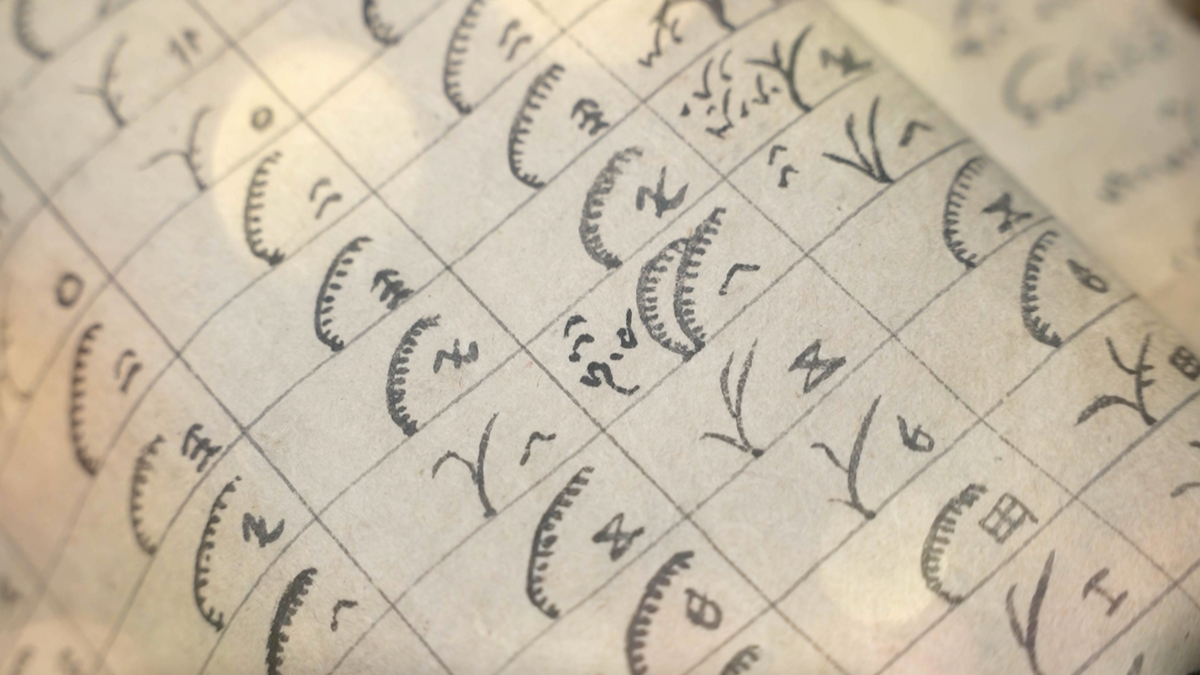
![[Photo] Worshiping the Tuyet Son statue - a nearly 400-year-old treasure at Keo Pagoda](/_next/image?url=https%3A%2F%2Fvphoto.vietnam.vn%2Fthumb%2F1200x675%2Fvietnam%2Fresource%2FIMAGE%2F2025%2F12%2F02%2F1764679323086_ndo_br_tempimageomw0hi-4884-jpg.webp&w=3840&q=75)

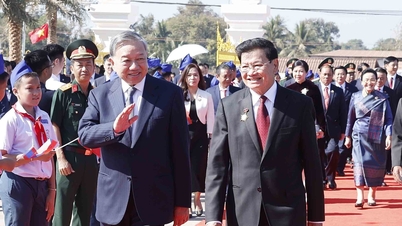
![[Photo] Parade to celebrate the 50th anniversary of Laos' National Day](/_next/image?url=https%3A%2F%2Fvphoto.vietnam.vn%2Fthumb%2F1200x675%2Fvietnam%2Fresource%2FIMAGE%2F2025%2F12%2F02%2F1764691918289_ndo_br_0-jpg.webp&w=3840&q=75)
































































Comment (0)