

No more "multi-layered rice" fields
When the rice season comes, my daughter, traveling along the Central region, wherever we go, we are "full of eyes" with green fields, rice plants arranged in rows like green carpets. Dr. Ho Huy Cuong, Director of the Institute of Agricultural Science and Technology for the South Central Coast (ASISOV), said that this is a clear illustration of scientific and technological breakthroughs in the field of genetics in the agricultural sector.
“Currently, Vietnam’s agricultural sector has new rice varieties with high productivity and quality, which not only support the country’s food security but also ensure exports. That is the mark of science and technology in the agricultural sector. Without science and technology, the cultivation sector in recent years could not have produced a series of exported fruits and vegetables bringing in billions of dollars,” Dr. Ho Huy Cuong affirmed.
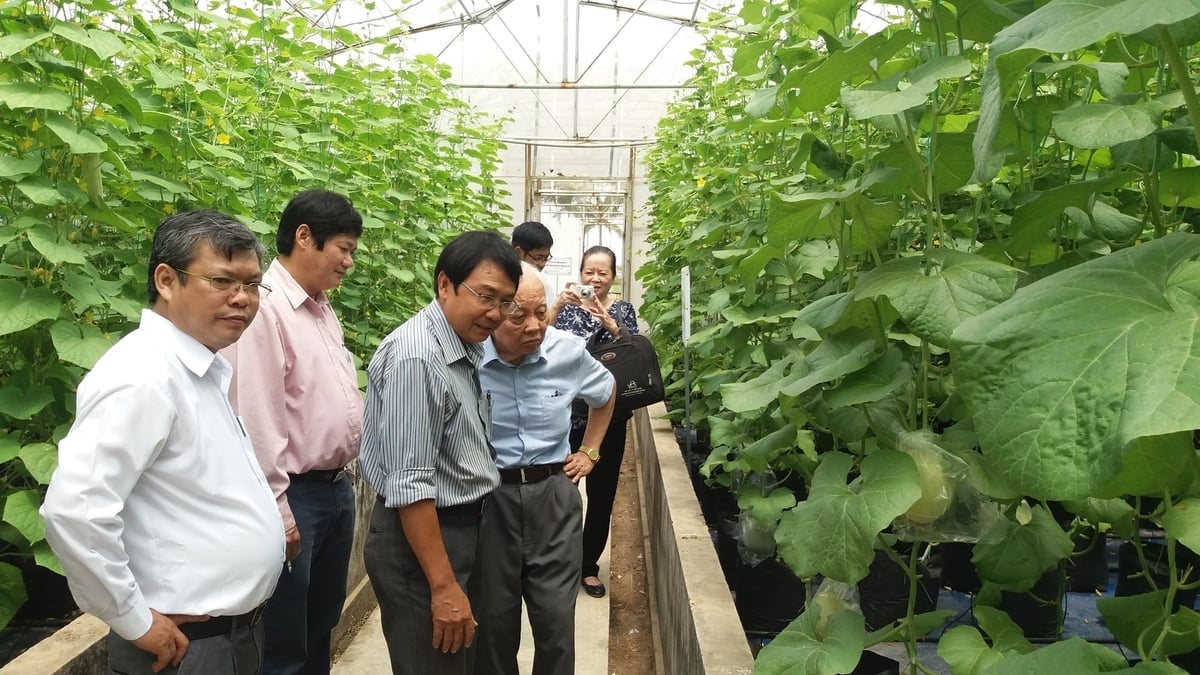
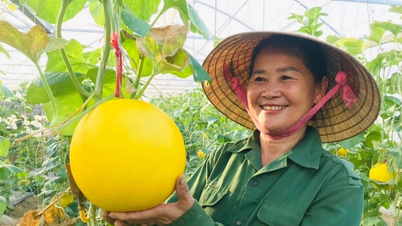
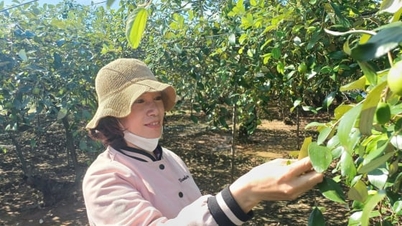
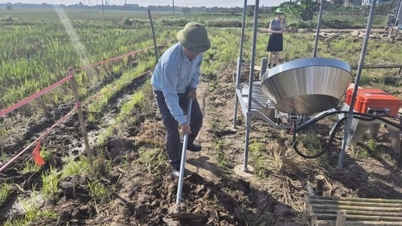
ASISOV builds a pilot model applying high technology in greenhouses to produce melons all year round. Photo: V.D.T.
The Central region is the region directly affected by climate change. Previously, in many localities in the Central region, the image of 'multi-layered rice' still existed, but now thanks to new rice varieties, every field is a vast carpet of rice, without a single speck in sight.
“Thanks to biotechnology, Vietnam has developed rice varieties that can withstand adverse weather conditions, with yields increasing to the ceiling. Thanks to that, although the rice growing area in the region has decreased, the output has continuously increased,” said Dr. Cuong.
According to Dr. Cuong, Vietnam has now mastered bean varieties to serve the transformation of crop structure in localities to cope with climate change. Particularly in the Central region, due to the impact of climate change, drought often occurs. Thanks to mastering a set of well-adapted crop varieties, the Central region has been assessed by the former Ministry of Agriculture and Rural Development, now the Ministry of Agriculture and Environment, as the region implementing the most active transformation of crop structure in the country, with economic efficiency on the same area increasing compared to before.
“To convert the crop structure, there must be varieties of peanuts, green beans, and sesame with many superior characteristics… Thanks to advances in science and technology, the Central region has proactively had many varieties to carry out the conversion,” said Dr. Cuong.
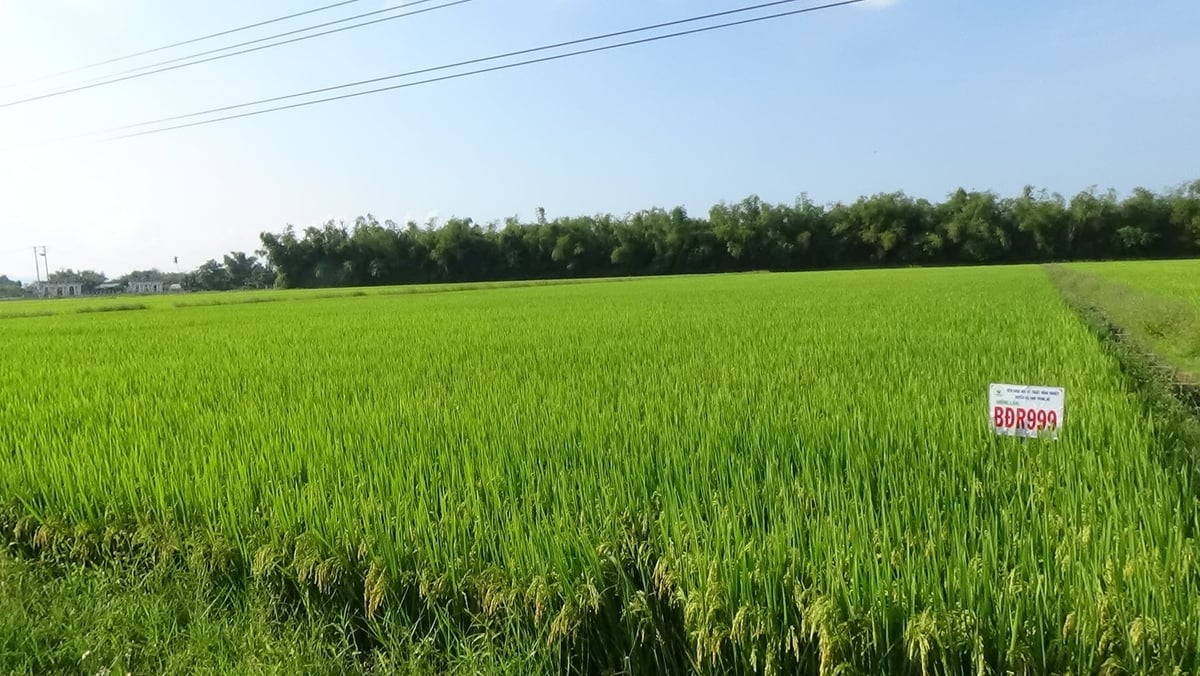
Thanks to new rice varieties, rice fields in the Central region no longer have "multi-layered rice". Photo: V.D.T.
The effectiveness of science in transforming crop structure is clearly seen in Hoa Hoi and Cat Tien communes (Gia Lai province). The sandy land of Hoa Hoi and Cat Tien communes previously could not grow any crops effectively due to the harsh climate. Only when farmers here switched to growing peanuts did their income improve.
Since ASISOV successfully created a new peanut variety LDH.09 with high resistance to harsh climates, farmers can produce all year round, in winter-spring, spring-summer, summer-autumn and autumn-winter.
Mr. Vo Ke Hung in Cat Tien commune (Gia Lai) demonstrated: From 2021 to now, local people have been mass-growing LDH.09 peanut variety, with dry yield reaching about 35 - 40 quintals/ha, fresh root yield about 80 - 90 quintals/ha, profit about 70 - 90 million VND/ha.
The peanut variety LDH.09 has better salt tolerance than the locally produced varieties, especially resistant to bacterial wilt. The yield is much higher than the previously mass-produced L14 variety, and the fruit is firm, especially suitable for fresh eating.
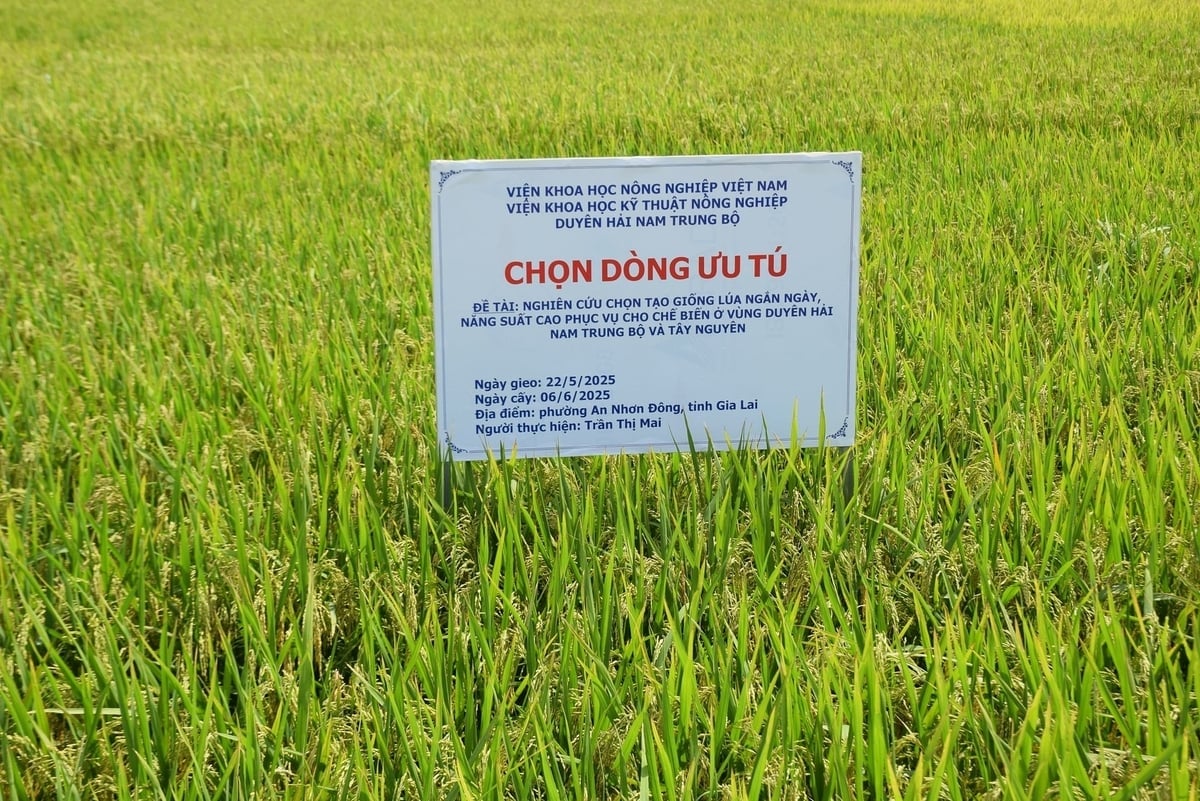
ASISOV researches and creates short-term, high-yield rice varieties for processing in the South Central and Central Highlands regions. Photo: V.D.T.
“The peanut varieties ICG20 and 9205-H1 originating from India were selected by ASISOV as parent varieties to create the peanut variety LDH.09. In particular, the peanut variety LDH.09 has conquered the converted rice fields in the coastal localities of Gia Lai. Particularly, Cat Tien commune in the east of Gia Lai has an annual peanut production area of up to 400 - 500 hectares/year of peanut variety LDH.09”, said Dr. Ho Huy Cuong.
The boost from Resolution 57
According to Dr. Ho Huy Cuong, Resolution 57-NQ/TW sets out 11 key areas, specifically for the agricultural sector, which is a general strategic orientation on science and technology development, innovation and digital transformation, creating momentum for agricultural development. The Resolution mentions 5 main groups of solutions, focusing on raising awareness, perfecting institutions, increasing infrastructure investment, developing high-quality human resources, promoting digital transformation and enhancing international cooperation.
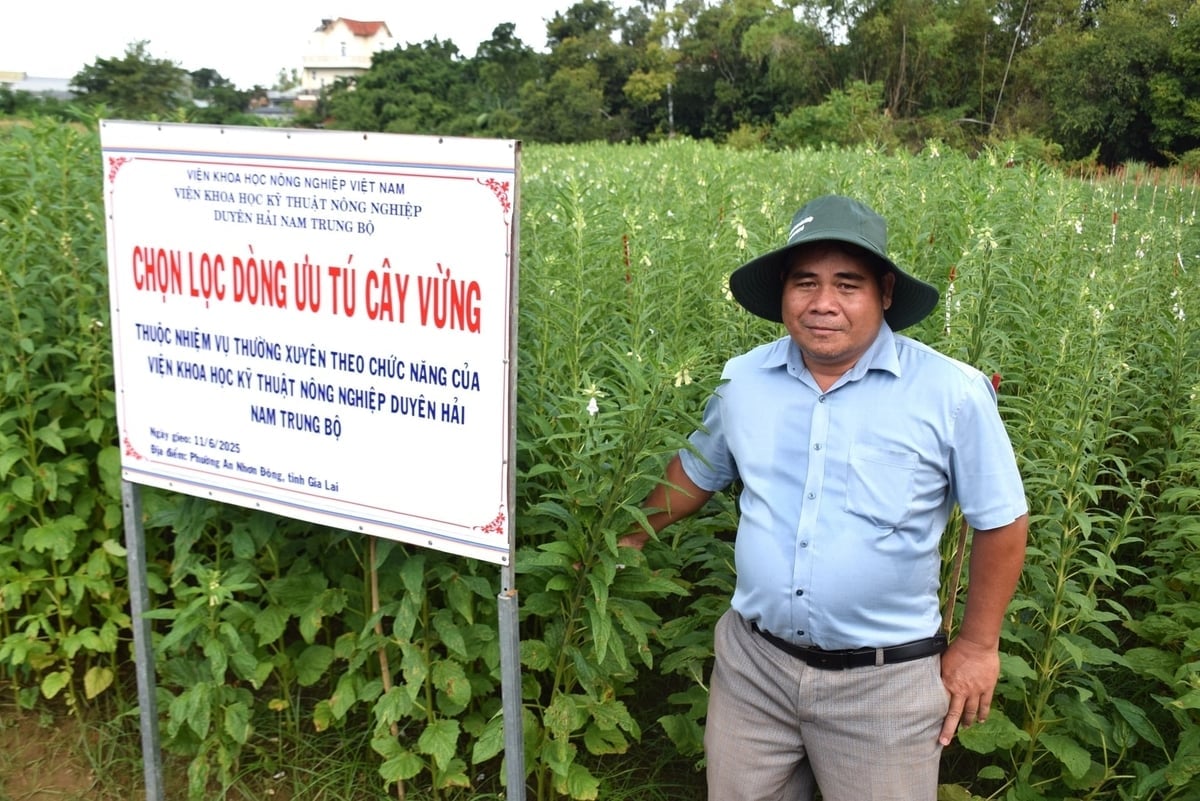
ASISOV selects elite sesame lines. Photo: V.D.T.
Among the 11 key areas of the agricultural sector according to Resolution 57 is the field of biotechnology, including gene editing technology. The goal of gene editing technology is to shorten the time for selecting and creating plant varieties to promptly meet production needs, with requirements that both meet productivity and improve quality, and the ability to withstand adverse conditions such as pests, heat, drought, salinity, acidity, etc.
“When implementing breakthroughs in gene editing technology, in addition to shortening research time, many beneficial traits can also be added to crop varieties. For example, rice varieties that already have superior characteristics such as high yield and quality, after applying gene editing technology, will have additional traits of resistance to blast disease, brown planthoppers, lodging resistance, drought tolerance, salt tolerance, etc. When put into mass production, these rice varieties will not only have high yield and quality but also be resistant to adverse weather effects, especially in the context of climate change that increasingly directly affects agricultural production,” Dr. Ho Huy Cuong emphasized.
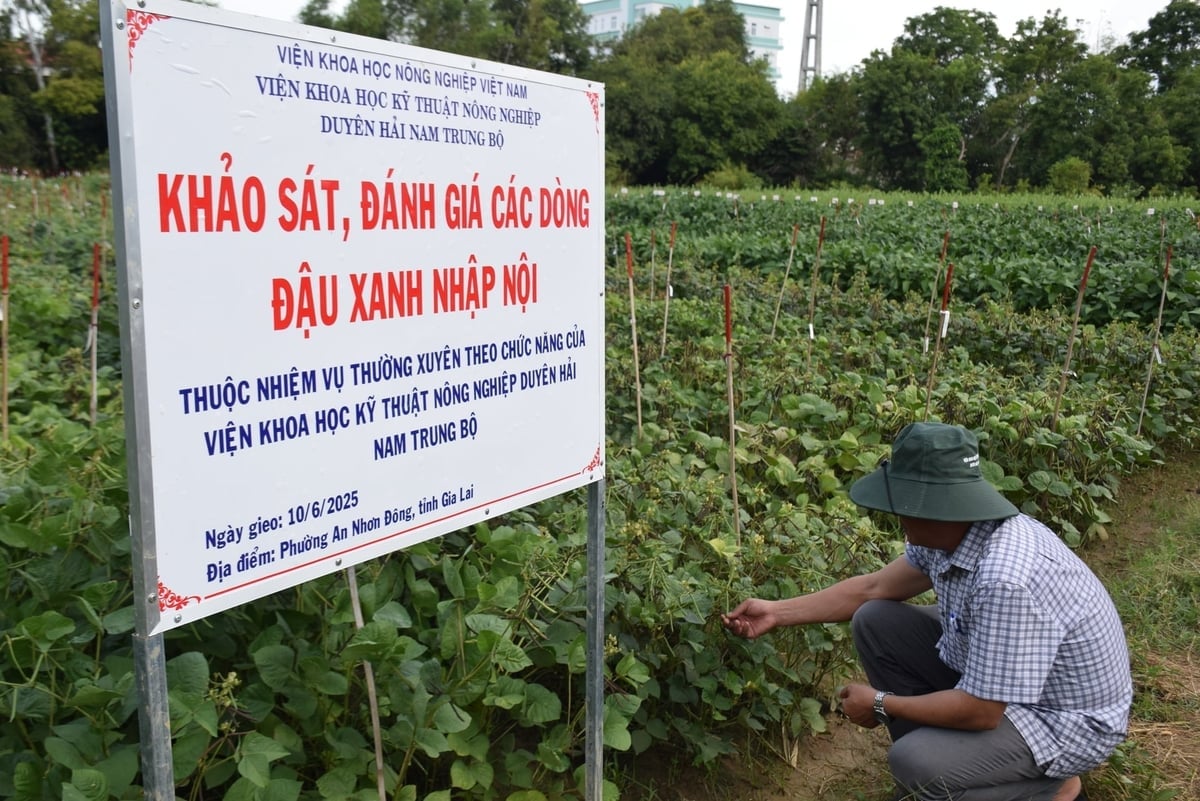
ASISOV surveys and evaluates imported mung bean varieties. Photo: V.D.T.
To realize Resolution 57, especially in the field of gene editing, it is necessary to have potential, fully equipped laboratories, meeting standards, meeting the requirements of research work. Second is the human factor, there must be a team of researchers with enough experience and capacity to access key technologies.
Resolution 57 opens up great opportunities for the agricultural sector. Previous achievements in agricultural scientific research on rice varieties, animal husbandry, and forestry now have the conditions to continue to be promoted...
“Resolution 57 brings great opportunities for scientific and technological research in agriculture, creating conditions for investment in upgrading scientific research facilities to regional and world standards. This is also an opportunity to train and continue to improve human resources in scientific and technological research to serve agricultural production in the new era of development.
"Creating breakthroughs in science, technology, innovation and digital transformation in the agricultural sector will benefit farmers directly involved in production first," Dr. Ho Huy Cuong shared.
Source: https://nongnghiepmoitruong.vn/duyen-hai-nam-trung-bo--vung-chuyen-doi-cay-trong-soi-dong-nhat-nuoc-d780730.html


































































Comment (0)