

 |
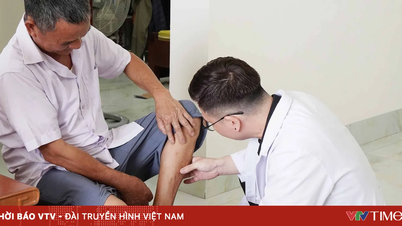
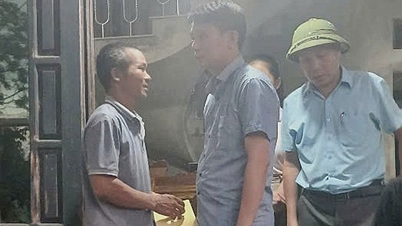
| In many localities of Thai Nguyen province, the transfer and secondment of doctors to commune health stations has created a real change. |
Primary healthcare: Shifting from "lack" to "proximity"
One of the key objectives of the two-tiered local government model is to reduce intermediate layers and bring public services closer to the people. In the healthcare sector, this requirement becomes even more urgent as the demand for primary healthcare continues to grow.
In the healthcare sector, the most noticeable change after implementing the new model is the strengthening of capacity at the grassroots level, which is closest to the people but was previously a "weak link." In many localities of Thai Nguyen province, the transfer and secondment of doctors to commune health stations has created a real transformation.
For example, in Van Han commune, which for many years lacked a permanent doctor, the health station now has a specialist to handle initial examinations and treatment. Mr. Tran Van Son, a resident of Van Han commune, shared: "Previously, we had to go to higher-level hospitals to get medical checkups, but now that we have doctors in the commune, people feel much more at ease."
According to Mr. Dang Ngoc Huy, Director of the Thai Nguyen Department of Health, the issuance of policies to attract and support the development of human resources, along with the plan for seconding doctors in the 2026-2030 period, are key solutions to gradually strengthen grassroots healthcare. The goal is not just to "have doctors," but to improve the quality of primary healthcare right in the community.
However, after the merger, the pressure on commune-level healthcare also increased due to the larger geographical area and population under management, while infrastructure and human resources were unevenly distributed, especially in remote and rural areas.
Many grassroots healthcare workers have to take on multiple responsibilities, from medical examination and treatment to preventive medicine, immunization, and population management. This necessitates continued investment in human resources, equipment, and working conditions so that grassroots healthcare can truly fulfill its role as the frontline healthcare system.
Education: Decentralization to better meet real-world needs.
 |
| A lesson at Than Sa Primary School. |
While healthcare clearly demonstrates the need to bring healthcare services closer to the people, in education, the two-tiered local government model creates significant changes in management methods.
The 2025-2026 school year will be the first year that preschools, primary schools, and lower secondary schools are directly managed by the commune/ward-level authorities. This is an important step in decentralization, because lower secondary education is closely linked to the demographic characteristics, geographical areas, and learning needs of each community.
According to the report from the Department of Education and Training, in the context of mergers and organizational restructuring, the sector has basically met its targets; the quality of education has been maintained, and digital transformation and administrative reform have shown positive progress. The organizational structure continues to be streamlined to improve efficiency and effectiveness.
The restructuring of the school network is one of the most notable achievements. The province currently has 975 educational institutions, with nearly 30,000 cadres, teachers, and staff; 22 schools have been merged into 11, reducing 41 small, scattered school locations, thereby contributing to streamlining the system and concentrating investment resources.
In particular, following the administrative boundary merger, education in Thai Nguyen faces the need to adapt to a more diverse development space, from urban to rural and mountainous areas. This requires flexible and practical educational management.
Mr. Tran Dinh Thin, Vice Chairman of the People's Committee of Phan Dinh Phung Ward, said: "When the local government directly manages the school, monitoring facilities, student numbers, and teaching staff must be more realistic. This is both a responsibility and an opportunity to build an educational environment that suits the needs of the people."
Overall, since the merger, professional indicators have continued to be maintained, showing a stable educational foundation: the rate of 6-year-old children entering grade 1 reached 99.98%; 100% of primary school students attend school for two sessions per day; and students are learning English and Information Technology according to the new curriculum.
Notably, the national excellent student competition achieved 125 awards – the highest achievement ever. Infrastructure has also improved, with nearly 80% of schools meeting national standards and the percentage of solid classrooms exceeding 88%.
In addition, the Education sector has advised on the issuance of many mechanisms and policies to overcome difficulties during the transition period; at the same time, it has delegated some management tasks and guided the arrangement and deployment of personnel for educational institutions managed at the commune level. This is the basis for decentralization to become truly effective.
However, during the implementation process, some difficulties gradually emerged. After the merger and the implementation of the two-tiered local government model, the capacity for educational management at the commune and ward levels was uneven; and implementation in some areas remained disorganized.
Furthermore, infrastructure conditions in some areas remain limited, while investment resources and the ability to mobilize social resources have not kept pace with practical requirements, creating pressure to further improve mechanisms and enhance management capacity at the grassroots level.
From the practical experience in the fields of healthcare and education, it can be seen that the two-tiered local government model has initially proven effective in bringing public services closer to the people. However, along with increasing the autonomy of local authorities, the model also places higher demands on management and implementation capacity.
Therefore, to ensure the model operates effectively and sustainably, it is necessary to continue reviewing and improving the mechanisms for ensuring implementation, with a focus on enhancing the capacity of personnel and improving operating conditions at the grassroots level.
These initial results provide an important basis for further adjustments and improvements to the model. The ultimate goal is not only to streamline the administrative apparatus but also to enhance the quality of service to the people, ensuring that essential services become increasingly convenient, efficient, and practical.
Source: https://baothainguyen.vn/y-te/202605/gan-dan-hon-tu-nhung-linh-vuc-thiet-yeu-ee27939/




























































































Comment (0)