

Against this backdrop, the Provincial People's Committee has just issued Plan No. 126 to implement solutions for tracing the origin of agricultural and aquatic products in the province. This plan focuses on applying traceability to criteria and conditions for receiving support policies for production, the OCOP program, and trade promotion activities; updating information on codes for growing areas, farming areas, and facilities for preliminary processing, packaging, and processing of agricultural and aquatic products; and developing a list of key product groups prioritized for traceability implementation.
It can be affirmed that traceability is a crucial step in improving the quality, value, and market reach of agricultural and aquatic products – a key to enhancing the competitiveness of businesses. Especially for aquatic products, traceability is a vital requirement in efforts to lift the European Commission's "yellow card" warning and improve the efficiency of fisheries management. For state management agencies, traceability is an important tool for managing agricultural data, helping to monitor and manage the production-distribution-export chain transparently and effectively.
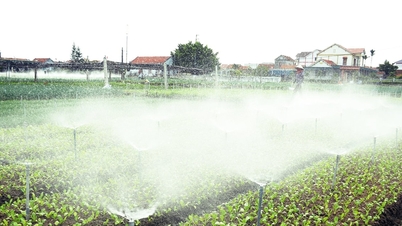
With over 1.6 million hectares of agricultural land and a system of fishing ports and coastal aquaculture areas, Dak Lak has favorable conditions for developing concentrated commodity production areas linked to processing, logistics, and export. During the 2021-2025 period, the province established over 310,000 hectares of concentrated production areas for key crops such as coffee and durian; and implemented 166 agricultural production-consumption linkage chains. The province has been approved for 320 export-oriented cultivation area codes covering nearly 10,000 hectares and 52 packaging facilities, contributing to meeting the requirements of various markets.
Clearly, compared to the area planted with the province's key crops, this figure is still quite small, especially in the context where most import markets consider traceability as a "passport" for agricultural products. For example, durian, despite being a key product of Dak Lak, only has 269 planting areas granted codes with a total area of over 7,400 hectares. This is a barrier to traceability activities, leading to the possibility of agricultural exports being flagged for violations or returned.
According to the roadmap, from now until the end of June 2026, the Ministry of Agriculture and Environment will pilot a traceability system for durian. From July 2026, the system will expand to other essential agricultural products, and from July 2027, all agricultural products consumed domestically and exported will be traceable; a pilot program will also be implemented for imported goods. This will be a digital platform serving the recording, management, and retrieval of information on agricultural and aquatic products throughout their production, processing, transportation, and circulation in the market.
Traceability is an inevitable trend to ensure transparency in the supply chain, control quality and food safety; and enhance the reputation and competitiveness of Vietnamese agricultural products in general and Dak Lak in particular in the international market. To achieve high effectiveness in this area, every farmer, business, and state management agency must comprehensively change their approach to managing and operating the production value chain. Regardless of the scale of operation, it is necessary to shift from a "production to sell" mindset to a "controlled, verifiable, and traceable production" mindset. This is a key factor in enabling Dak Lak's agricultural products to enter demanding markets and is also the province's overall direction in the coming years.
Nguyen Quang
Source: https://baodaklak.vn/kinh-te/202605/gap-rut-lam-ho-chieu-cho-nong-thuy-san-5433c83/























































































Comment (0)