

Domestic coffee prices fell sharply
Coffee prices today, December 2, in the domestic market recorded a sharp decrease, with a common decrease of 800 to 1,300 VND/kg in the Central Highlands provinces. This development pushed the purchasing price in many places down below 112,000 VND/kg, fluctuating between 110,500 - 111,300 VND/kg.
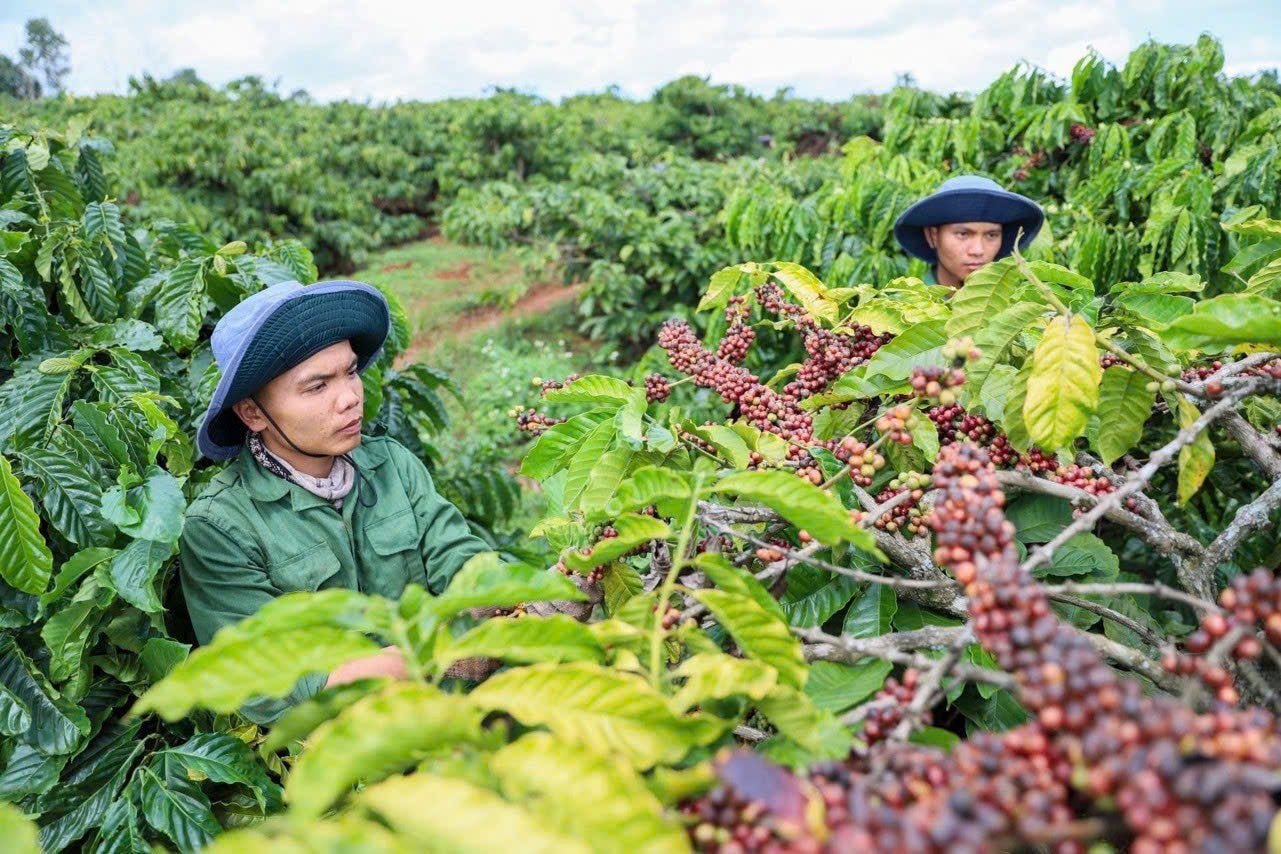
Detailed price list in some key localities:
| Local | Price (VND/kg) | Change (from yesterday) |
|---|---|---|
| Lam Dong (Di Linh, Bao Loc, Lam Ha) | 110,500 | -800 VND/kg |
| Dak Lak (Cu M'gar) | 111,000 | -1,300 VND/kg |
| Dak Lak (Ea H'leo, Buon Ho) | 110,900 | -1,300 VND/kg |
| Dak Nong (Gia Nghia, Dak R'lap) | 111,100 - 111,200 | -1,300 VND/kg |
| Gia Lai (Pleiku, La Grai) | 110,600 | -1,200 VND/kg |
Developments in the world market
In the world market, coffee prices ended the trading session in the red. Robusta prices on the London floor fell sharply due to pressure from favorable weather information in Vietnam.
- On the London floor , the price of Robusta coffee futures for delivery in January 2026 decreased by 93 USD/ton to 4,472 USD/ton. The price of futures for delivery in September 2026 decreased by 63 USD/ton to 4,165 USD/ton.
- On the New York floor , Arabica coffee prices only decreased slightly. The contract for delivery in December 2025 decreased by 1.5 US cents/pound (equivalent to 0.35%), to 411.5 US cents/pound.
- Brazilian Arabica coffee prices recorded mixed fluctuations. The December 2025 delivery contract decreased by 2.0 cents/lb, while the September 2026 contract increased by 3.85 cents/lb.

Analysis of influencing factors
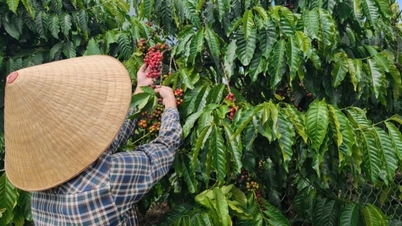
Robusta coffee prices fell sharply, mainly due to easing concerns about supply disruptions in Vietnam. According to Reuters, Typhoon Koto has weakened to a tropical depression and is expected to have only a modest impact on the Central Highlands coffee growing region. Dry weather in the past 1-2 days has also helped farmers return to harvest.
Meanwhile, Arabica coffee prices fell only slightly as concerns about drought conditions in Brazil persisted. Minas Gerais, Brazil’s largest Arabica growing region, received just 20.4 mm of rain last week, or 39% of the historical average, according to the meteorological agency Somar Meteorologia. Arabica coffee inventories monitored by ICE also fell to a 1.75-year low.
Other macro factors also impacted the market. The European Union (EU) easing of regulations under the EU Deforestation Reduction Regulation (EUDR) and the US removing tariffs on some commodities, including Brazilian coffee, helped ease tensions in the global supply chain.
Source: https://baolamdong.vn/gia-ca-phe-hom-nay-212-giam-sau-toi-1300-dongkg-406600.html
![[Photo] Worshiping the Tuyet Son statue - a nearly 400-year-old treasure at Keo Pagoda](/_next/image?url=https%3A%2F%2Fvphoto.vietnam.vn%2Fthumb%2F1200x675%2Fvietnam%2Fresource%2FIMAGE%2F2025%2F12%2F02%2F1764679323086_ndo_br_tempimageomw0hi-4884-jpg.webp&w=3840&q=75)


![[Photo] National Assembly Chairman Tran Thanh Man receives First Vice Chairman of the Federation Council of the Federal Assembly of the Russian Federation](/_next/image?url=https%3A%2F%2Fvphoto.vietnam.vn%2Fthumb%2F1200x675%2Fvietnam%2Fresource%2FIMAGE%2F2025%2F12%2F02%2F1764648408509_ndo_br_bnd-8452-jpg.webp&w=3840&q=75)



















































































Comment (0)