

From July 1st, 2025, Vietnam officially implemented a two-tiered local government model with the goal of streamlining the administrative apparatus, reducing intermediaries, and increasing autonomy at the grassroots level. After nearly a year of implementation, what concerns the people is not only how the administrative apparatus has changed, but also whether procedures are processed faster, and whether services are more practical and convenient.
This was the central theme raised by many delegates and experts at the seminar: When intermediate levels are eliminated, public services must truly move in a direction that is closer to the people, more responsive to their needs, and more responsive to actual demands.
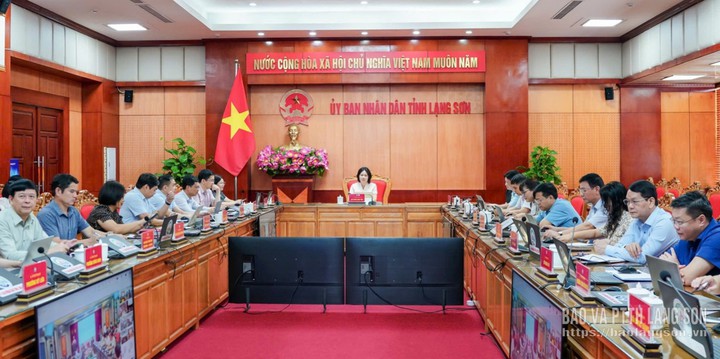
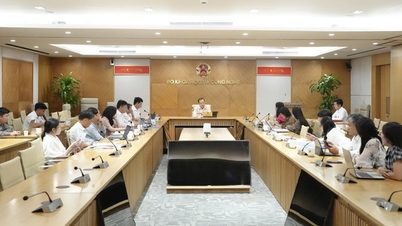
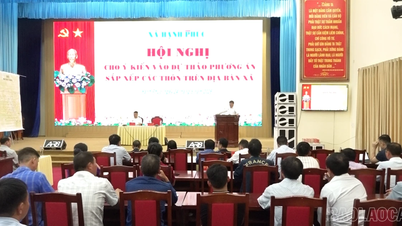
Delegates attending the seminar at the Lang Son province venue.
Initial assessments indicate that the new model has brought about significant changes in local governance. Many issues at the grassroots level are handled more quickly, administrative procedures are shortened, while the proactive role of commune and ward governments has been significantly enhanced. The increased decentralization of power to the grassroots level is also gradually changing the previous administrative practices.
A survey conducted jointly by the Ho Chi Minh National Academy of Politics in several localities shows that the majority of people agree with streamlining the administrative apparatus and reducing intermediate levels in the provision of public services. However, behind these positive signs, there are still quite a few "bottlenecks" that need to be addressed.
At the seminar, many delegates argued that implementation capacity at the grassroots level remains uneven. As the workload and authority increase, many localities, especially at the commune level, still face difficulties in terms of human resources, working conditions, and management capacity. Without appropriate support mechanisms, the pressure of overload at the grassroots level will become increasingly evident.
Experts, ministries, sectors, and localities have proposed numerous solutions to improve the efficiency of public service delivery during the 2026-2031 period. The focus is on improving the quality of officials and civil servants at the provincial and commune levels; streamlining administrative procedures to be more convenient and accessible to the public; and increasing public participation and feedback in the process of improving public services.
In his closing remarks at the seminar, the leader of the Ho Chi Minh National Academy of Politics stated that the opinions and suggestions presented at the seminar would be compiled to finalize a report of recommendations for submission to the competent authorities for consideration.
After nearly a year of implementation, the two-tiered local government model is no longer just about reorganizing the administrative apparatus, but is moving towards the greater goal of serving the people faster, more efficiently, and more conveniently.
Source: https://mst.gov.vn/giam-cap-trung-gian-dich-vu-cong-phai-gan-dan-hon-19726051516570167.htm





















































































Comment (0)