

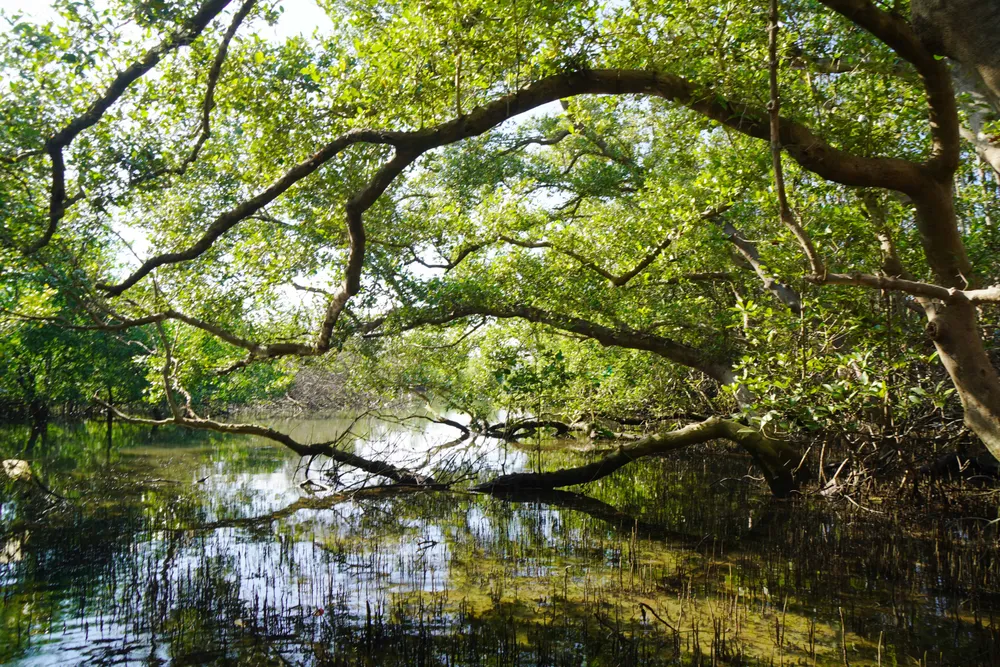
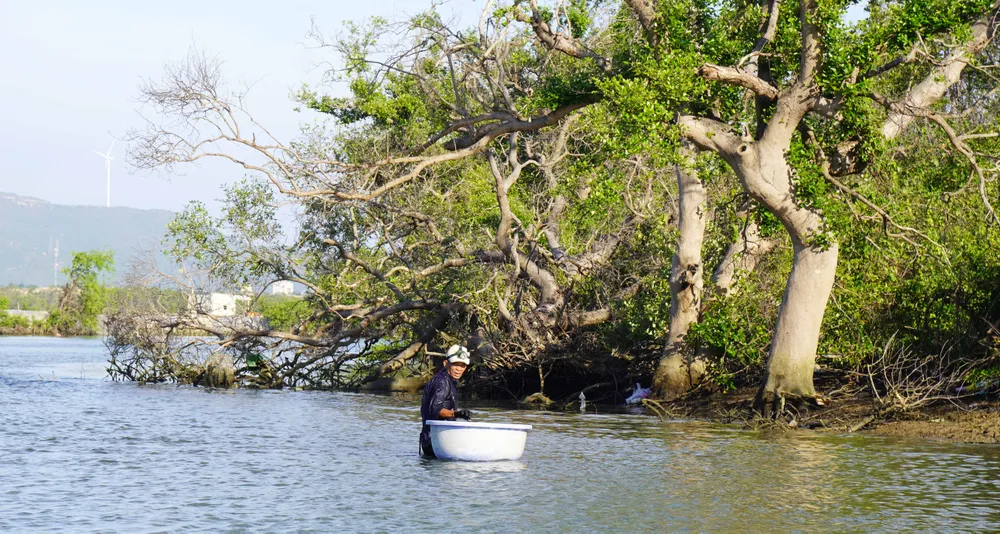
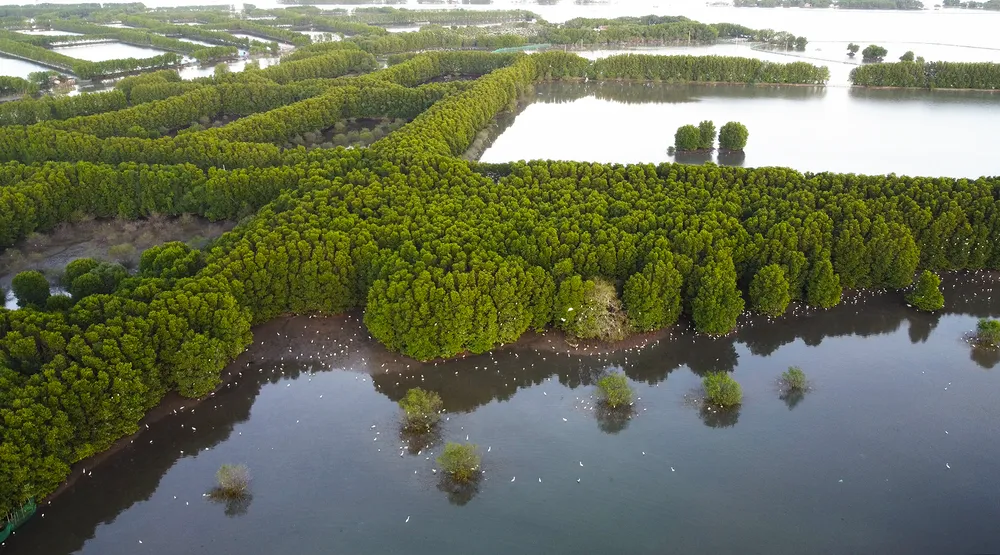
Previously, the Thi Nai ecological lagoon covered more than 5,000 hectares, but its greenery is now gradually shrinking. Currently, the mangrove forest clusters in the communes and wards of Tuy Phuoc, Tuy Phuoc Dong, Ngo May, and Quy Nhon Dong ( Gia Lai province) are considered the "green lungs" of this lagoon area.
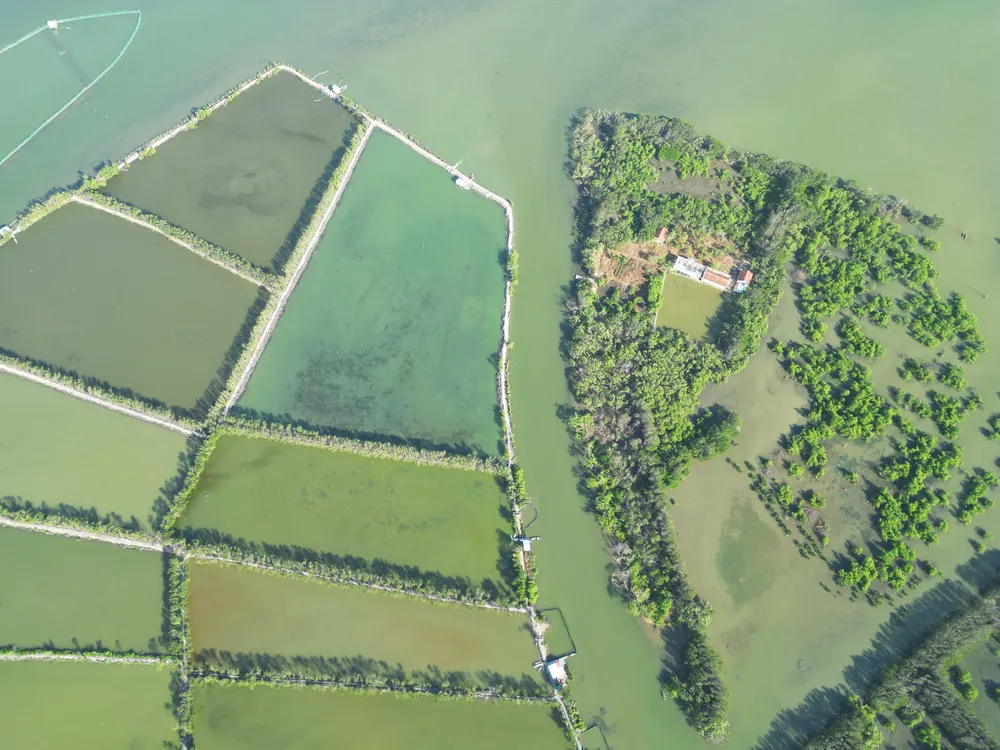
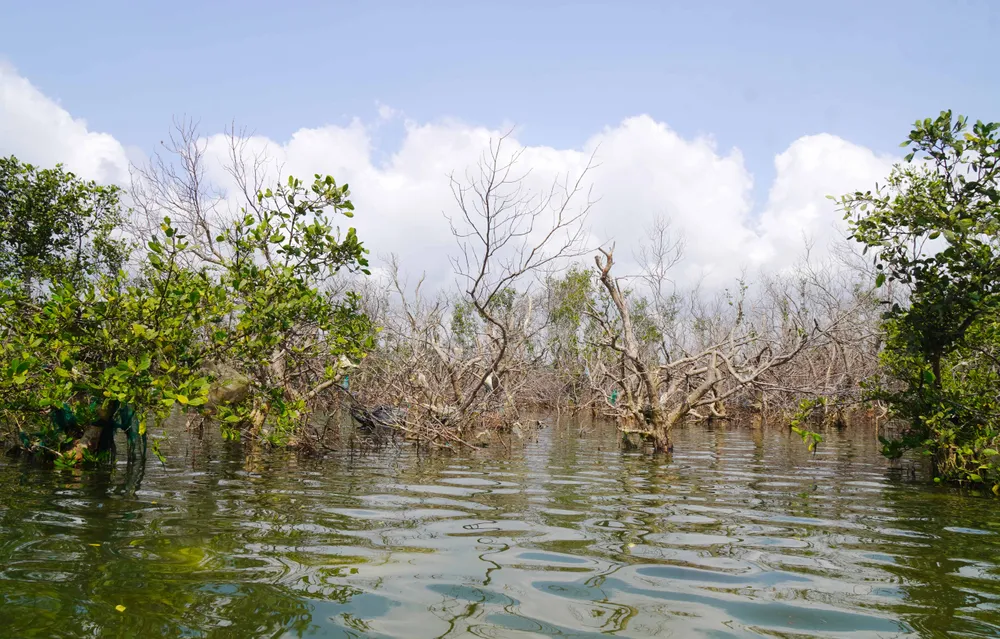
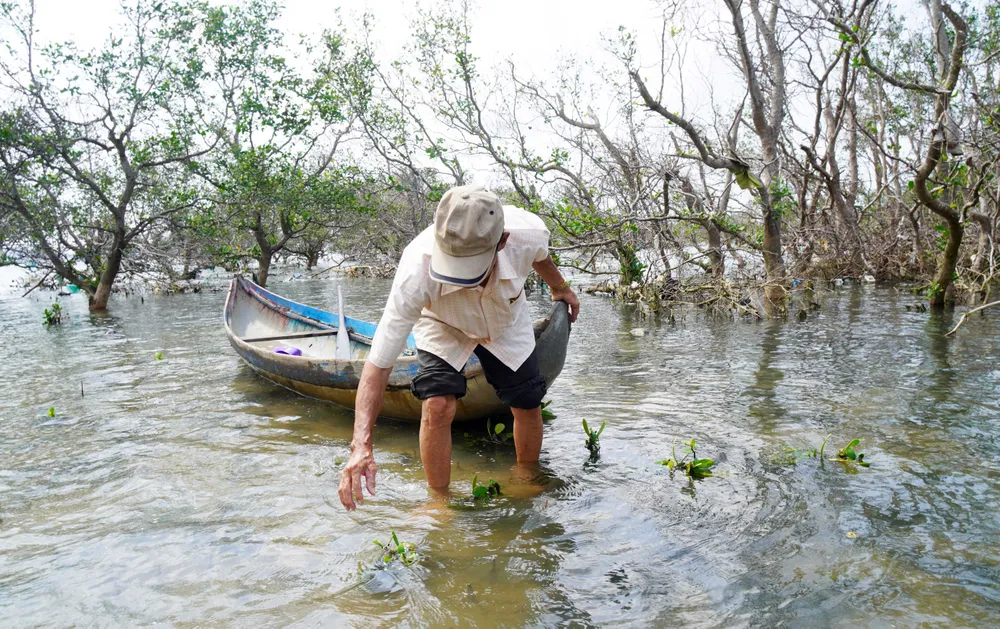
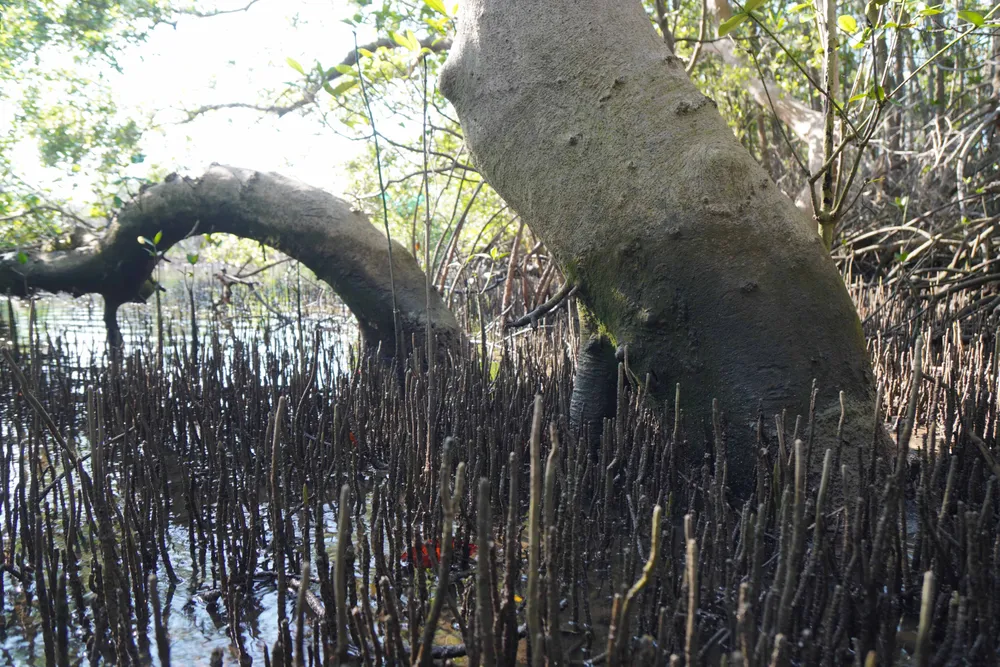
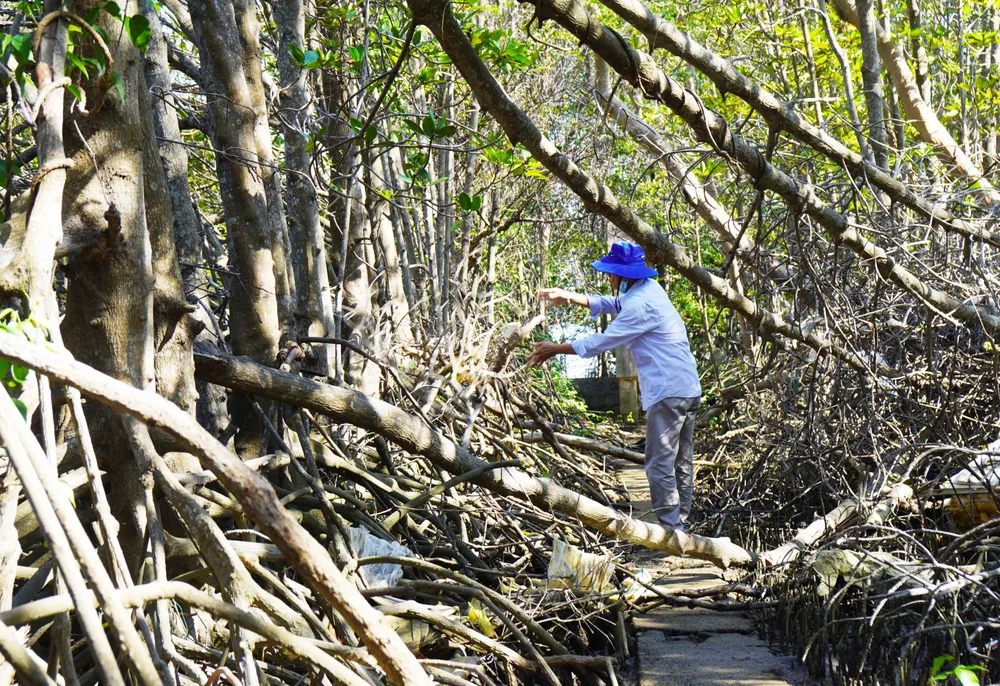
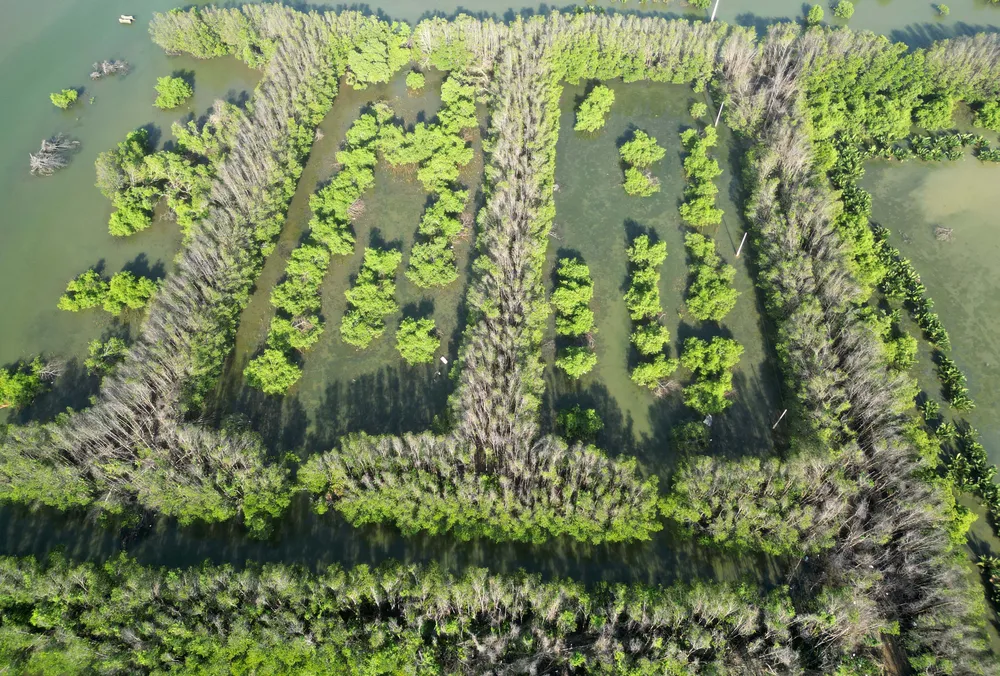
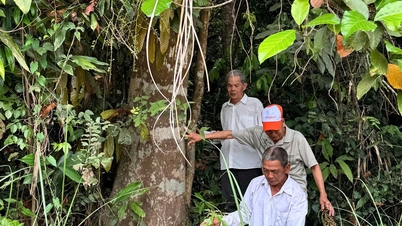
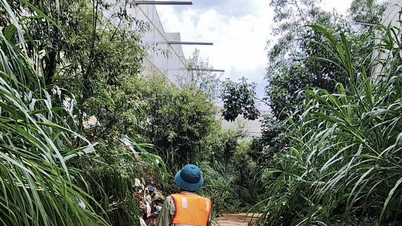
Following Mr. Truong Xuan Dua (representative of the Gia Lai Provincial Agricultural Extension Center) and Mr. Tran My Thang (forest ranger at Con Chim), we conducted a field survey to document the damage and the recovery process of the mangrove forest in Thi Nai Lagoon. Overall, many areas of forest are recovering, but some areas show patches of dead, dry forest with no signs of resurgence.
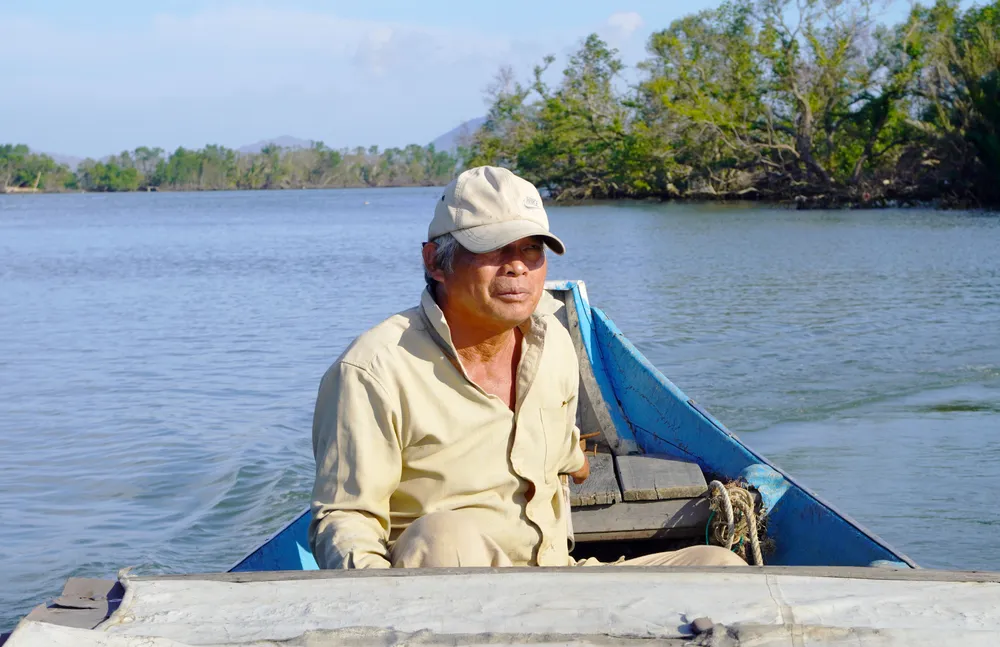
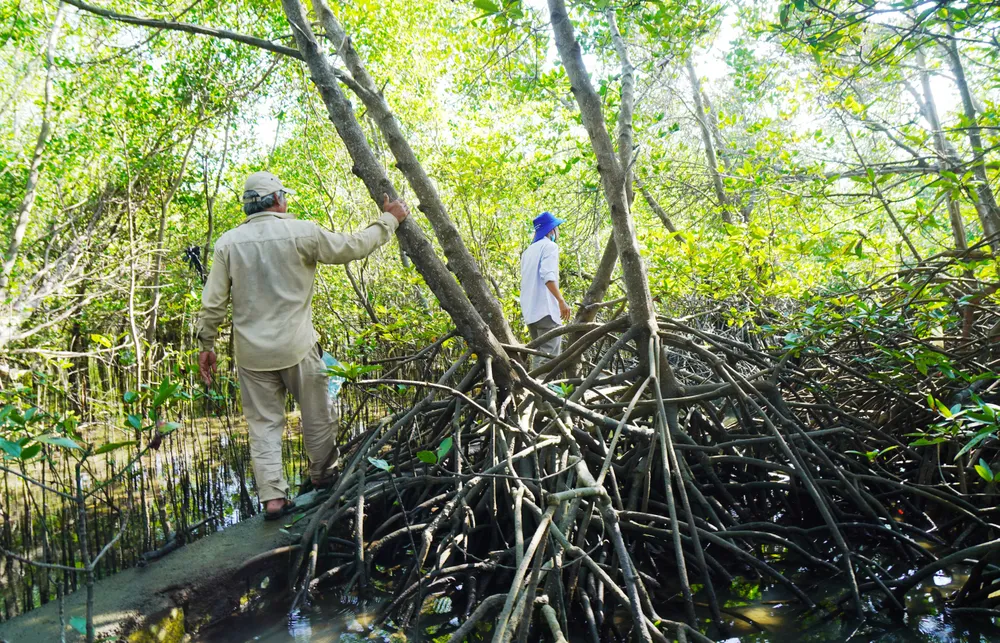
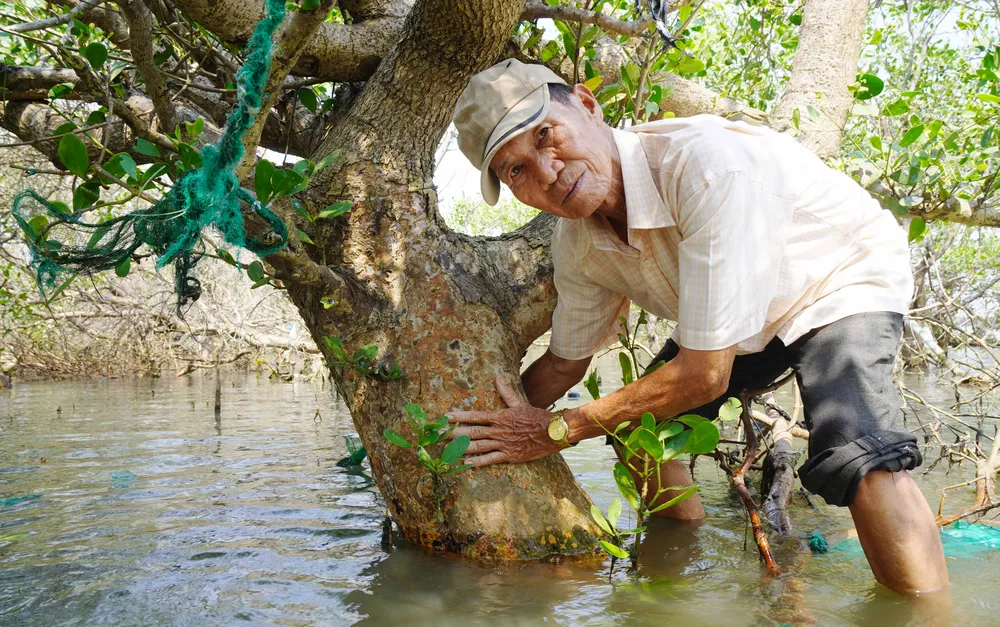
Mr. Truong Xuan Dua has spent over 20 years researching, planting, and protecting the Thi Nai mangrove forest, so he understands the difficulties and hardships involved in creating green spaces in this area.
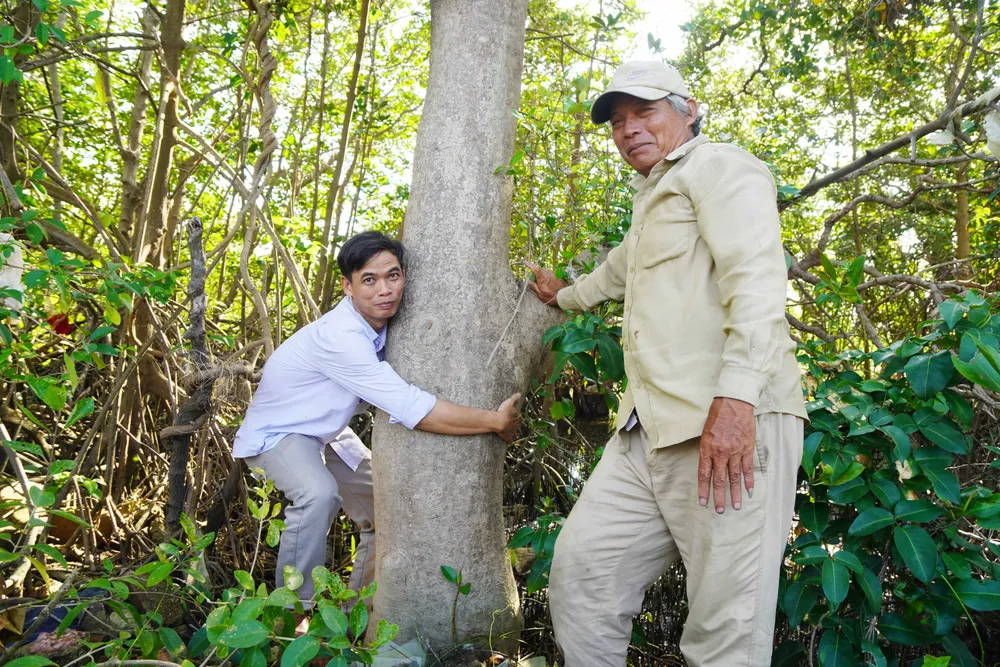
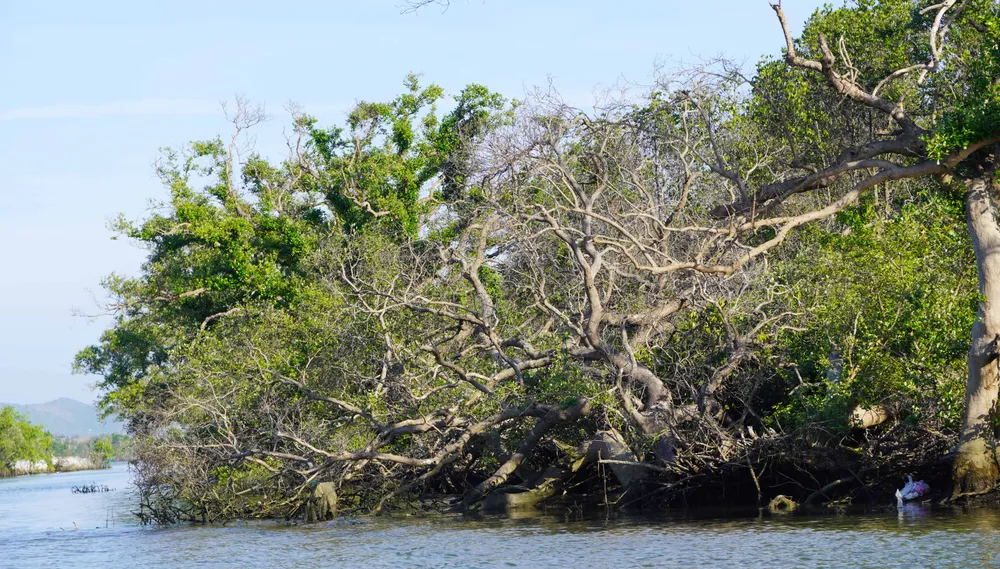
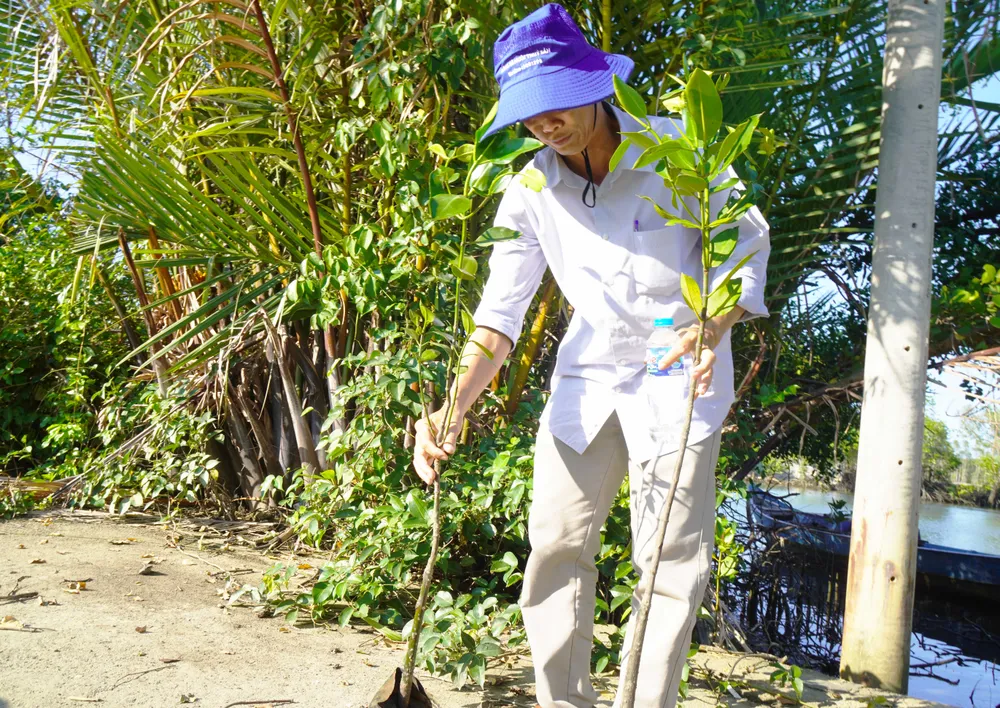
According to Mr. Truong Xuan Dua, since 2006, the ACTMANG organization (Japan) has supported the development of 32.7 hectares of mangrove forest, laying the foundation for concentrated forest planting in Thi Nai lagoon. Later, Mr. Dua's group researched and propagated more species, expanding the area of concentrated forest planting to over 80 hectares.
Once the forest formed, people living along the lagoon would collect the fruits and plant them to create a green belt along the banks to protect the ponds. This resulted in the formation of a mangrove forest belt spanning thousands of hectares around the lagoon's livelihood areas.
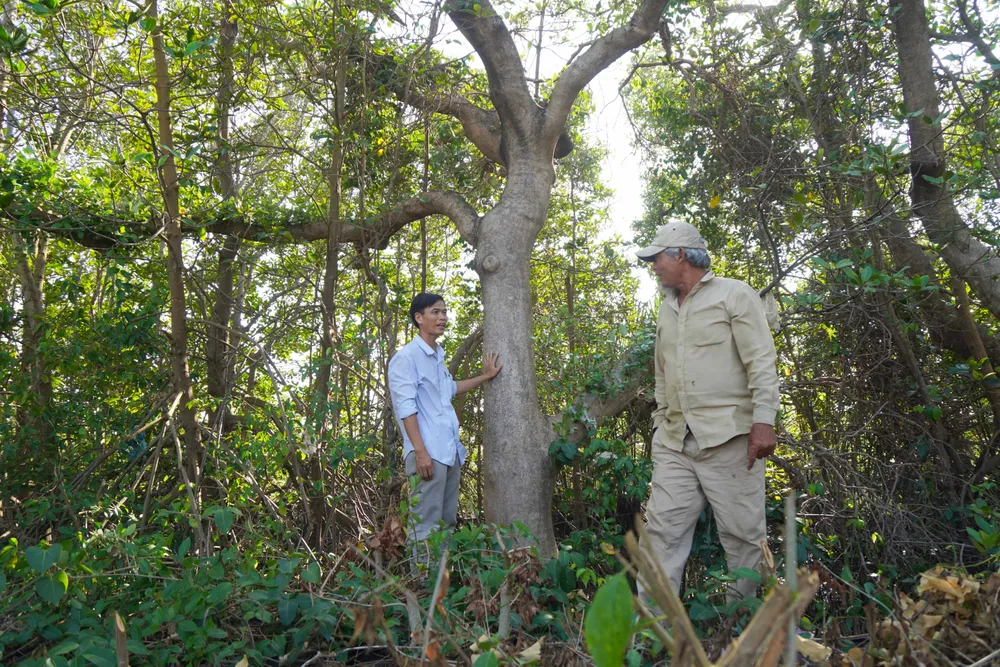
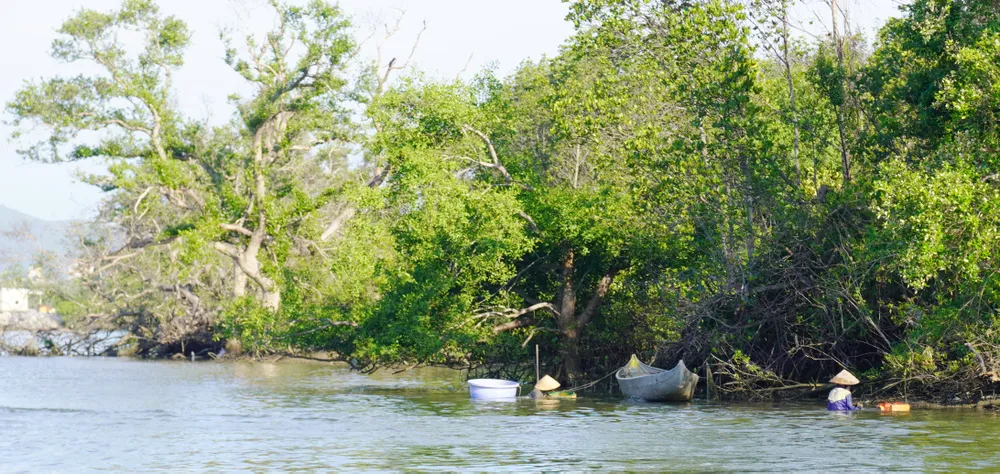
However, the natural disasters at the end of 2025, especially the storms and high tides in November 2025, severely damaged the forests. “After the storm, we were stunned because almost all the hard work of decades was wiped out. Not only the trees, but the infrastructure of the Con Chim - Thi Nai Eco-tourism Area was also severely damaged. After the disaster, we didn't know where to begin the recovery process because most of the forest area was damaged,” Mr. Truong Xuan Dua recalled.
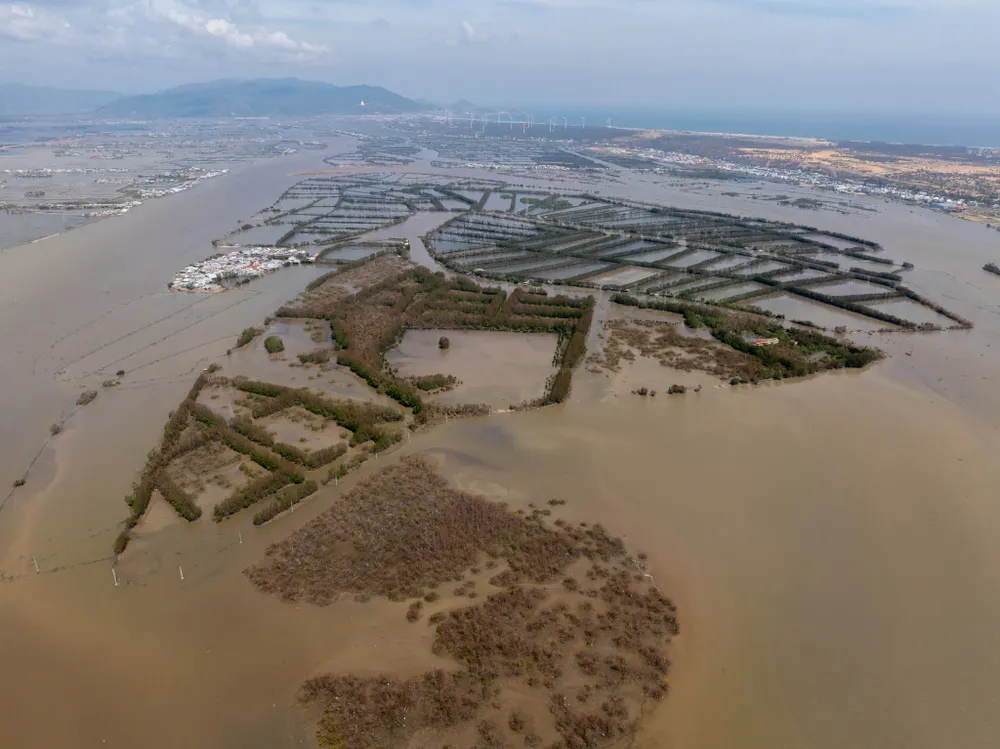
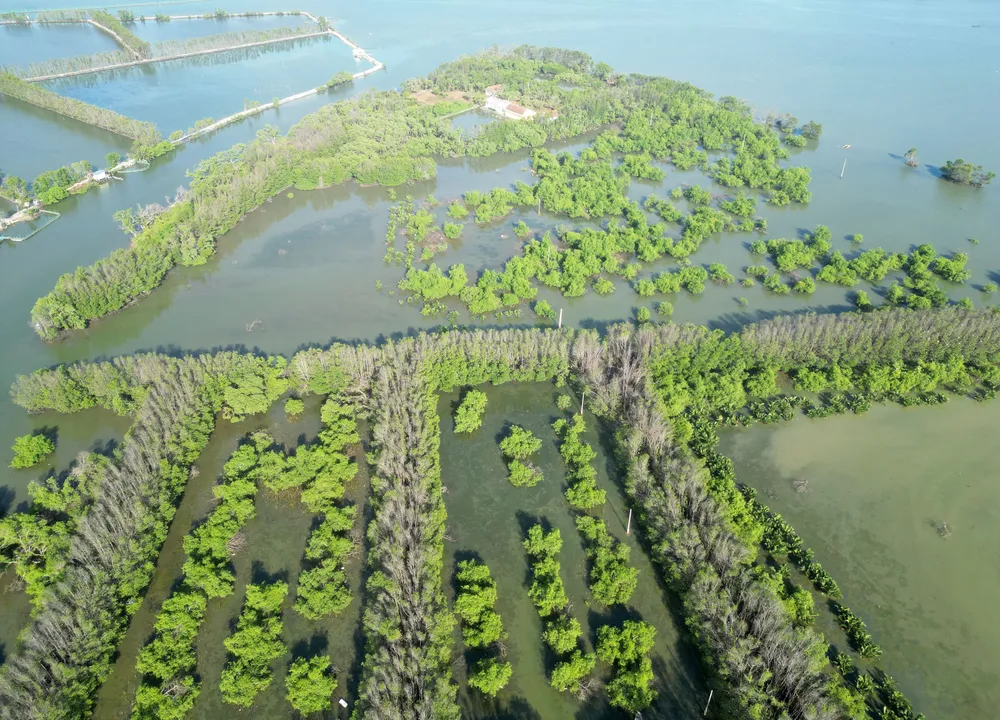
In Con Chim hamlet, Mr. Pham Dinh Luong (59 years old) is still haunted by the sea storm at the end of 2025. “The storm hit, with waves 4-6 meters high, like a tsunami, sweeping away property and houses along the Thi Nai lagoon. If it weren't for the mangrove forest, Con Chim hamlet would surely have been wiped out. We earnestly hope that relevant agencies and authorities will pay attention to restoring and replanting the forest so that people can live in peace,” Mr. Luong said.
According to Mr. Truong Xuan Dua, in early 2026, the unit conducted inspections and measurements. As a result, over 50% of the concentrated mangrove forest area in Thi Nai lagoon (44 hectares) was damaged by natural disasters.
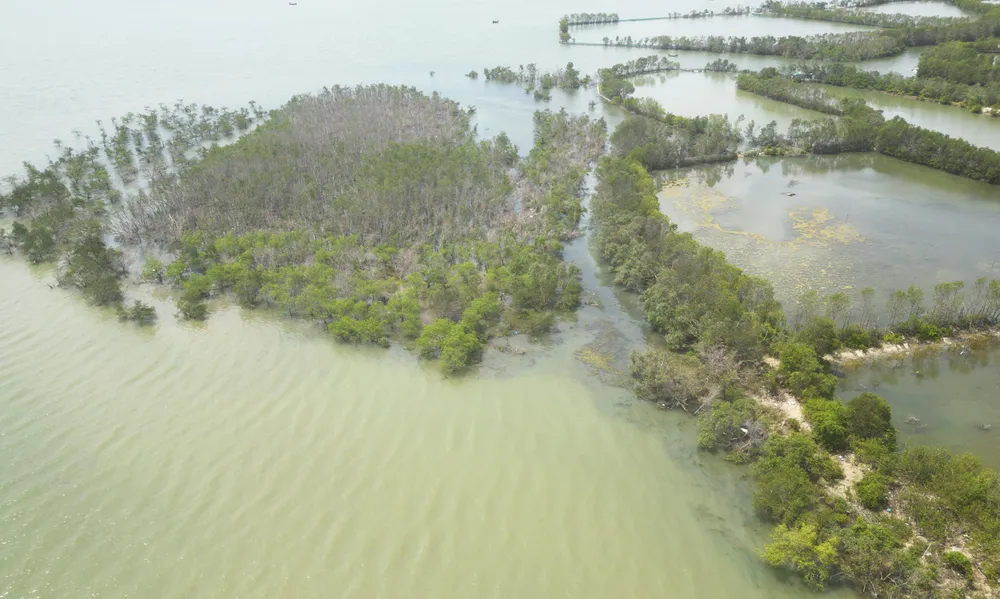
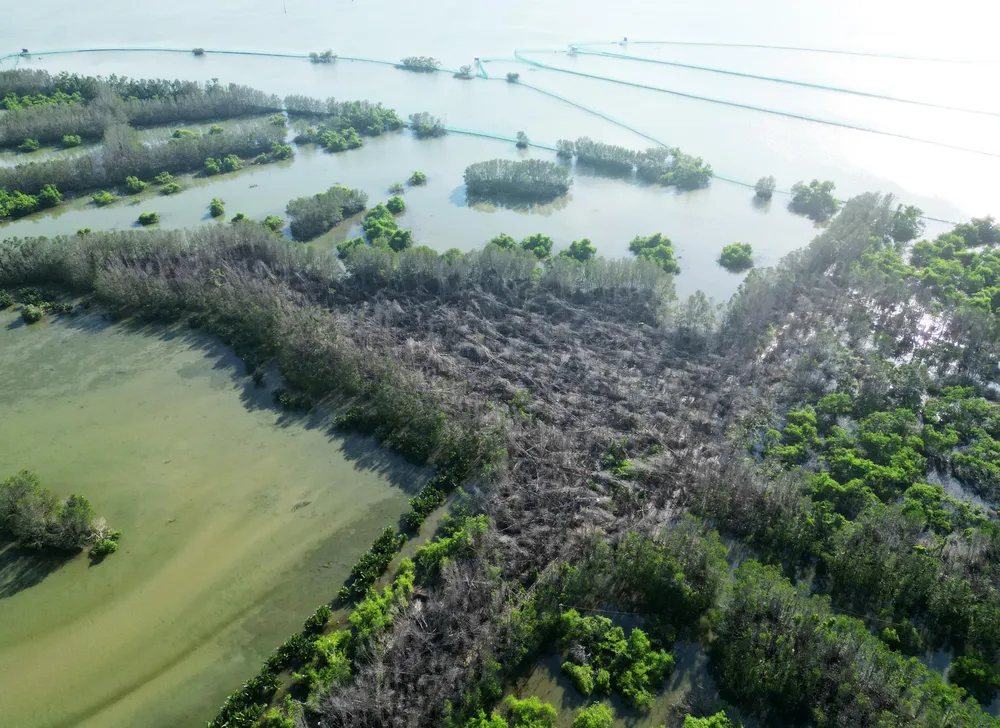
Mr. Huynh Viet Hung, Director of the Gia Lai Provincial Agricultural Extension Center, said that the unit has reported to the Department of Agriculture and Environment to advise the Provincial People's Committee to seek approval for reforestation and restoration of damaged mangrove areas in Thi Nai Lagoon.
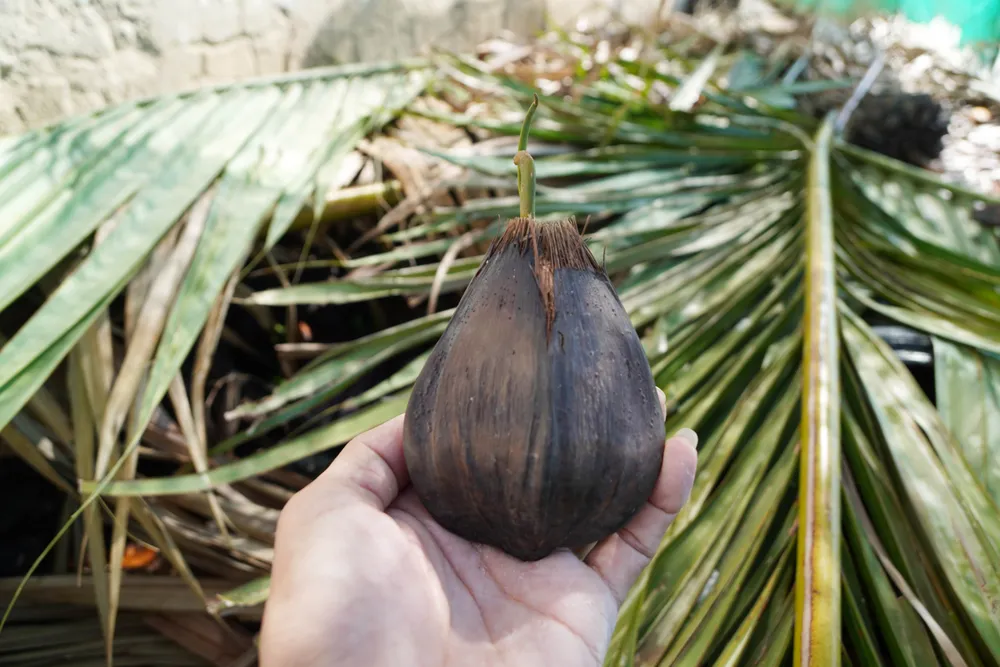
Based on monitoring the growth potential and resilience to natural disasters, the Gia Lai Provincial Agricultural Extension Center prioritizes the development of nipa palm trees in Thi Nai Lagoon. Initially, the unit is cultivating 4,000 nipa palm seedlings to restore the mangrove forest. It is expected that by early 2027, the seedlings will be ready for planting…
Source: https://www.sggp.org.vn/gian-nan-hoi-sinh-la-phoi-dam-thi-nai-post851508.html













































































Comment (0)