

Experience the unique "living alarm"
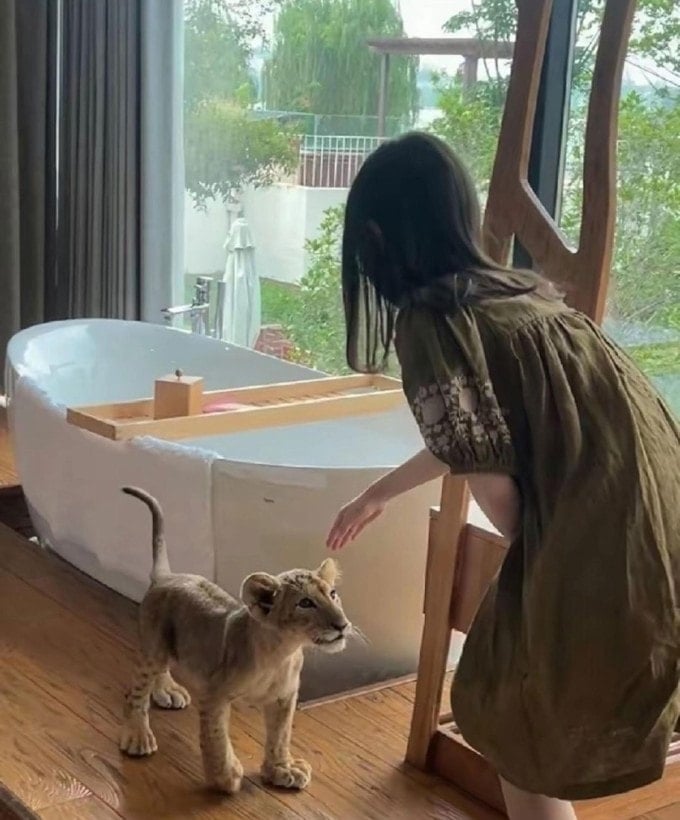
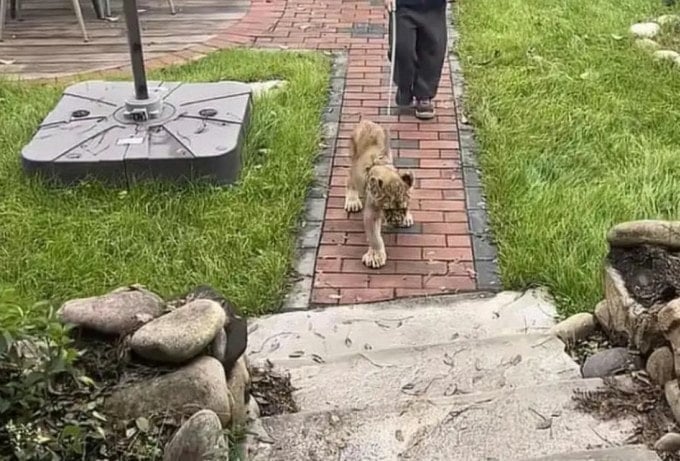
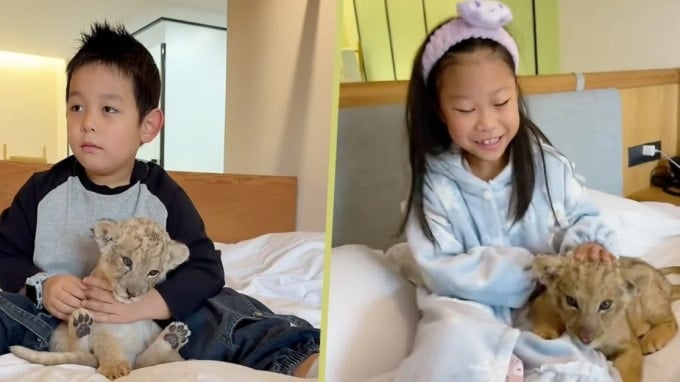
At the Happy Countryside Resort in Niujiao Village, Suqian City, Jiangsu Province, eastern China, guests can experience an unusual morning wake-up service: being woken up by lion cubs in their beds. The service runs from 8am to 10am daily, lasting seven minutes, and starts at $88.
This activity quickly attracted great attention on social networks, especially families with young children. Many young guests showed interest, even holding and petting the animals. To use the service, visitors are required to sign an "Asian lion wake-up service agreement". The hotel confirmed that the lion cubs are always accompanied by a caretaker and advised customers to be careful.
Contrasting opinions
A representative of the resort said that this service is completely legal in China. They confirmed that they have the qualifications to raise lions and have registered their activities with the authorities. The service is so popular that it is fully booked until the end of the month.
However, this activity has created a heated debate. Many people praised this idea as "unique, wonderful", some parents even joked that "my child will no longer have trouble waking up every morning". Some even suggested that the resort should add bear cubs or tiger cubs to increase the appeal.
Safety concerns and ethical issues
On the other hand, many people expressed concerns about safety risks, saying that lions are "still wild animals" and can injure tourists. Ethical issues were also raised. In an editorial on November 11, the Beijing Youth Daily said that this service was "abnormal", which could bring unforgettable memories to children but also infringe on animal rights.
The controversy is not unprecedented. In June, a hotel in Chongqing that offered a red panda wake-up service was ordered to stop by local authorities for violating the Wildlife Protection Law.
In China, tigers and lions are classified as level one protected animals, the highest level, while red pandas are classified as level two. A November 11 article in The Paper criticized such services, saying they “actually exploit animals for profit” and are “illegal both legally and morally.”
Source: https://baodanang.vn/giang-to-trai-nghiem-ky-nghi-voi-dich-vu-su-tu-con-goi-day-3314063.html

![[Photo] General Secretary To Lam works with the Standing Committees of the 14th Party Congress Subcommittees](/_next/image?url=https%3A%2F%2Fvphoto.vietnam.vn%2Fthumb%2F1200x675%2Fvietnam%2Fresource%2FIMAGE%2F2025%2F12%2F09%2F1765253019536_a1-bnd-0983-4829-jpg.webp&w=3840&q=75)
![[Photo] Urgently help people soon have a place to live and stabilize their lives](/_next/image?url=https%3A%2F%2Fvphoto.vietnam.vn%2Fthumb%2F1200x675%2Fvietnam%2Fresource%2FIMAGE%2F2025%2F12%2F09%2F1765248230297_c-jpg.webp&w=3840&q=75)













































































Comment (0)