

Amid escalating tensions and the threat of renewed airstrikes, Iran's Ministry of Education announced a temporary suspension of all in-person classes from the end of April, shifting to distance learning until further notice. The curriculum is being conducted via a domestic online platform and broadcast on state television under the name "Iran TV Schools," applicable to all grade levels.
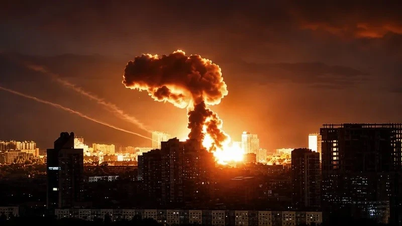
This decision comes as educational infrastructure has been severely impacted by the conflict. More than 640 educational facilities in 17 provinces have been damaged, with approximately 250 severely destroyed and at least 15 schools beyond repair. These damages not only disrupt learning but also pose long-term challenges for the reconstruction of the education system.
Furthermore, Iran is almost completely isolated from the global internet network. According to the international cybersecurity and governance monitoring organization NetBlocks, Iran has experienced its longest internet outage ever. The majority of traffic is now routed to the national intranet, allowing access only to domestic services. This leaves online learning entirely dependent on the limited domestic digital infrastructure.
Iranian cybersecurity expert Amir Rashidi argues that a separate internal network model is a long-term strategy to strengthen control over the digital space.
However, the shift to online learning via intranets is exacerbating educational inequality. In impoverished regions like Sistan and Baluchistan, internet infrastructure is virtually nonexistent.
Most people access the internet via mobile phones, but the rate of smartphone and laptop ownership is very low here. This leaves many students unable to access online classes, falling behind their peers in urban areas.
During the Covid-19 pandemic, domestic and international organizations provided learning equipment to disadvantaged students. However, prolonged war, inflation, and rising unemployment have significantly reduced these sources of support. Economic pressure weighs heavily on families, making investment in education a luxury for many.
To partially overcome the limitations of connectivity, some learning content has been moved to television broadcasts. However, this format is only supplementary and can hardly replace direct interaction between teachers and students.
In light of this situation, the Iranian Parliament has discussed expanding the national information network, increasing bandwidth for educational institutions, and developing standardized learning content. Alireza Manadi Sefidan, Chairman of the Education and Research Committee, called for increased investment to improve distance learning conditions nationwide.
Amir Rashidi, a cybersecurity expert, said: “We implemented a partial form of online learning on apps and platforms operating via the national internet during Covid-19. However, many areas lacked the infrastructure for internet connectivity, or even the necessary equipment. Students would not be able to ensure continuous learning.”
Source: https://giaoducthoidai.vn/giao-duc-iran-giua-khung-hoang-so-post776632.html






























































































Comment (0)