

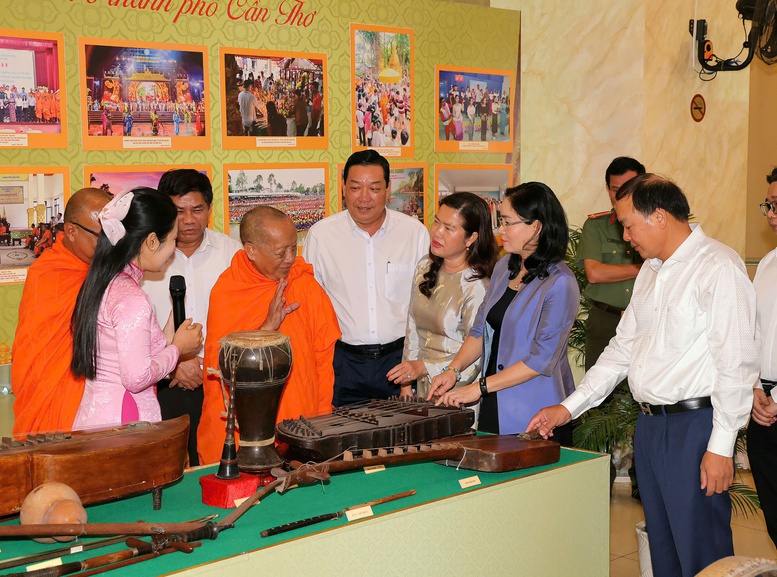
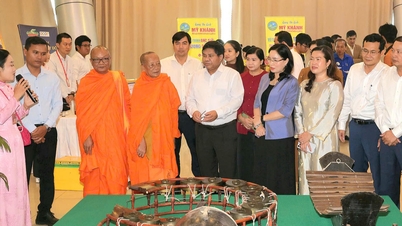
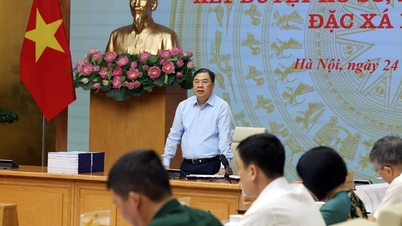
Preserving Khmer culture needs to be viewed from a broader perspective, not just focusing on preserving heritage, but also linking it to socio -economic development and improving community life. - Photo: VGP/LS
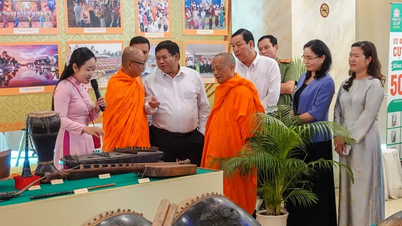
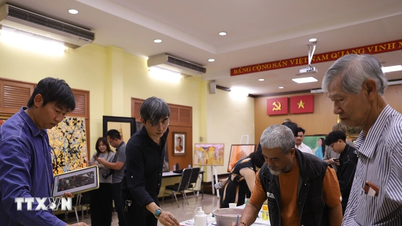
The conference brought together many managers, experts, artisans, religious leaders, and representatives of the Khmer community to jointly assess the current situation and propose solutions for preserving and promoting traditional cultural values in the new context.
Preserving Khmer culture is not just a cultural task.
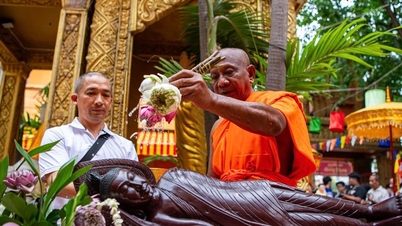
In her opening remarks at the conference, Deputy Minister of Culture, Sports and Tourism Trinh Thi Thuy emphasized that the Khmer people have a unique cultural tradition, making an important contribution to the diversity and unity of Vietnamese culture. The traditional cultural values of the Khmer people, such as the Theravada Buddhist temple system, traditional festivals, folk performing arts, language, writing system, and folk knowledge, are precious legacies that need to be preserved and promoted in the context of current integration.
According to Deputy Minister Trinh Thi Thuy, in recent years, the implementation of the Party's guidelines and the State's policies and laws on ethnic affairs and cultural development, especially national target programs and projects for the preservation of ethnic minority cultures, has yielded many positive results. Many types of heritage have been inventoried and restored; many festivals and traditional art forms have been maintained; and the cultural life of the Khmer people has been gradually improved.
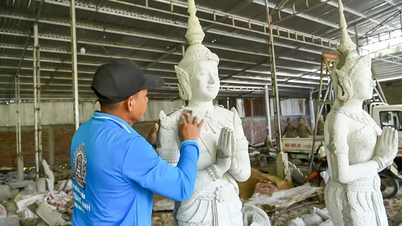
However, she also pointed out many difficulties and challenges. Some forms of traditional culture are at risk of disappearing; the number of artisans is increasing; and passing on culture to the younger generation is facing many difficulties. Urbanization, labor migration, and the impact of the market economy are also transforming the traditional cultural space of the Khmer people.
"The preservation of Khmer culture is not only a cultural task but also an important political and social task, contributing to strengthening national unity and sustainable national development," Deputy Minister Trinh Thi Thuy emphasized.
According to Ms. Nguyen Thi Ngoc Diep, Vice Chairman of the People's Committee of Can Tho City, in recent years the city has implemented many comprehensive policies and guidelines on ethnic affairs and ethnic policies, especially the National Target Program for socio-economic development in ethnic minority and mountainous areas. The city has also paid attention to caring for the material and spiritual lives of the Khmer people, creating jobs and favorable conditions for them to develop their economy and stabilize their lives.
Efforts to preserve and promote the traditional cultural values of the Khmer people in Can Tho have yielded many positive results. Many cultural heritage sites have been preserved, many traditional festivals have been restored and organized solemnly; and the role of religious leaders, artisans, and influential figures continues to be promoted in teaching and spreading cultural values to the younger generation.
Currently, Can Tho City has 120 Khmer Theravada Buddhist temples; of which 2 are classified as national historical relics: Kh'Leang Pagoda and Doi Pagoda; and 9 are classified as city-level historical relics. The city also has 6 ethnic minority artisans who have been awarded the titles of "People's Artisan" and "Outstanding Artisan" by the President of Vietnam in the field of intangible cultural heritage.
Among Can Tho's 16 intangible cultural heritage sites, there is one intangible cultural heritage site representing humanity, "Southern Vietnamese folk music and singing art," and 15 national intangible cultural heritage sites, including "The folk performance art of Aday singing of the Khmer people in Xa Phien commune."
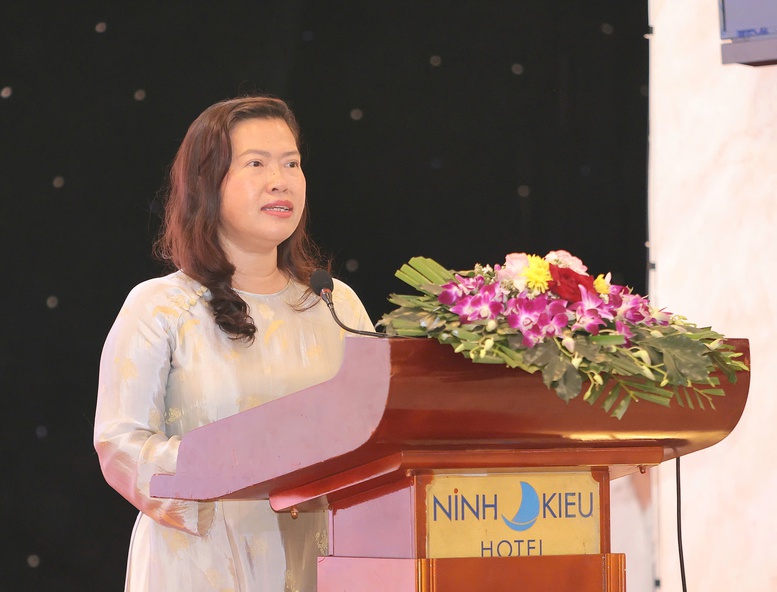
Vice Chairman of Can Tho City People's Committee Nguyen Thi Ngoc Diep speaks at the conference - Photo: VGP/LS
Concerns about the risk of transmission disruption in the younger generation.
Not only Can Tho, but many localities with large Khmer populations are also striving to preserve and promote the traditional cultural values of their community. However, according to Mr. Nguyen Hoang Hanh, Deputy Director of the Department of Propaganda on Ethnic and Religious Affairs (Ministry of Ethnic and Religious Affairs), the worrying issue today is not only the risk of cultural erosion but, more profoundly, the risk of a breakdown in the transmission of culture among the younger generation.
In some areas, policies remain fragmented and uncoordinated; conservation efforts are still heavily administrative or driven by campaigns. Some cultural values are at risk of commercialization, "theatricalization," and separation from the original cultural space of the community.
According to him, the new context demands a strong renewal of thinking in cultural governance and ethnic and religious affairs; at the same time, it requires perfecting institutions and policies in an integrated, interdisciplinary, synchronized manner that is consistent with the requirements of new development.
Mr. Nguyen Hoang Hanh emphasized the need for a strong shift from a mindset of "purely preserving culture" to "development governance based on cultural values." In this approach, the State plays a facilitating role, while the community must truly be the central subject in the process of preserving, creating, and disseminating culture.
"Furthermore, digital transformation is not just about digitizing cultural data, but also about digitizing the ability to spread identity and connect the younger generation with the roots of national culture through new, modern, and more engaging methods," Mr. Nguyen Hoang Hanh emphasized.
Making Khmer culture a resource for sustainable development.
From an educational and training perspective, Dr. Ngo So Phe, Principal of the Southern Khmer Language, Culture, Arts and Humanities School (Tra Vinh University), believes that it is necessary to continue promoting the role of educational institutions in training human resources in culture and arts, fostering teachers, and developing a team of intellectuals and artists knowledgeable in Khmer language and culture.
According to Dr. Ngo So Phe, promoting scientific research and digitizing the cultural values of the Khmer ethnic minority will contribute to creating more resources for the preservation and promotion of ethnic identity in the new era.
At the conference, many delegates shared the view that, in the current context, the preservation of Khmer culture needs to be viewed from a broader perspective, not just at the level of preserving heritage, but also linked to socio-economic development and improving community life. Culture is not only a spiritual foundation but can also become an important resource for sustainable development.
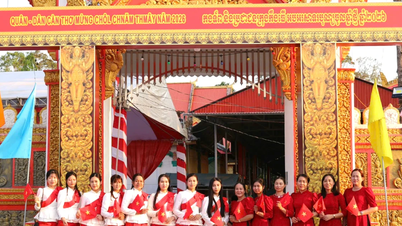
According to statistics, the Khmer are one of the largest ethnic minorities in Vietnam, with approximately over 1.3 million people, residing mainly in the southern provinces such as An Giang, Ca Mau, Can Tho City, Dong Nai, Dong Thap, Tay Ninh, Ho Chi Minh City, and Vinh Long. This community has a long history of residence, creating a unique cultural space and playing an important role in the unified yet diverse Vietnamese culture.
Le Son
Source: https://baochinhphu.vn/giu-hon-van-hoa-khmer-giua-dong-chay-hien-dai-102260522155858245.htm









![[Video] Weather forecast for May 25, 2026: Intense heat will blanket Northern and Central Vietnam, with temperatures exceeding 40 degrees Celsius in some areas.](https://vphoto.vietnam.vn/thumb/402x226/vietnam/resource/IMAGE/2026/05/25/1779663766038_thumb-sang-png.webp)






























































Comment (0)