

With its megacity status, Ho Chi Minh City is yearning for a breakthrough and thorough decentralization to transform all resources into practical benefits for the people.
A solid launching pad
After the merger, Ho Chi Minh City is no longer simply a central urban area in the traditional sense. The city has transformed into a multi-dimensional integrated development space, encompassing finance, commerce, industry, seaports, logistics, science and technology, education , healthcare, and high-quality services.
Recent statistics have shown the remarkable vitality and strong resilience of the country's leading economy after the COVID-19 pandemic. Ho Chi Minh City's GRDP growth rate has seen a proud leap, rising from 4.19% in 2023 to 5.75% in 2024 and estimated at 7.53% in 2025. Excluding the oil and gas sector, this growth rate reaches 8.03%, bringing the GRDP at current prices to approximately VND 2,972,939 billion.
Growth momentum continued to improve quarter by quarter in 2025, surging from 5.81% in the first quarter to 9.03% in the fourth quarter. Entering the first quarter of 2026, Ho Chi Minh City is expected to maintain its growth momentum with a GRDP increase of approximately 8.27% compared to the same period last year, setting a new record high in the past five years.
Overall, during the period 2023-2025, the city's GRDP is projected to grow at an average rate of approximately 5.82% per year. This impressive achievement is gradually establishing a solid foundation for Ho Chi Minh City to break through and aim for double-digit growth in the period 2026-2030.
Ho Chi Minh City's current growth drivers stem not only from its economic scale but also from a fundamental shift towards science and technology , innovation, and comprehensive digital transformation. By the end of 2025, the digital economy is expected to contribute an impressive 25% to the total GRDP. The digital infrastructure, data repositories, and digital government platforms are being invested in comprehensively and extensively, serving as a springboard for improved labor productivity and long-term growth quality.
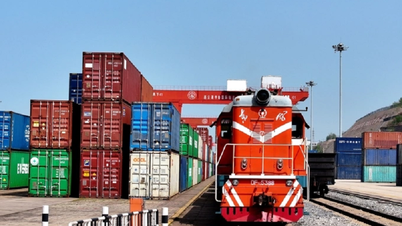
Production and logistics infrastructure is another solid pillar for the megacity's stature. The Binh Duong area currently maintains the efficient operation of 29 industrial parks covering a total area of 12,745 hectares, with an occupancy rate of up to 94%. The Ba Ria - Vung Tau area is operating 50 large-scale seaport projects, boasting a designed capacity of up to 160 million tons/year and 8.37 million TEU.
These platforms have created vast development space for industry, logistics, and the maritime economy. However, this very scale has exposed the inadequacies of the old management mechanisms.
A megacity cannot function effectively if planning, investment, budgeting, land use, transportation, environment, housing, data, and public services are fragmented across sectors and levels. Therefore, the requirement is not just for more resources, but for a sufficiently robust mechanism to coordinate, allocate, and transform those resources into development results.
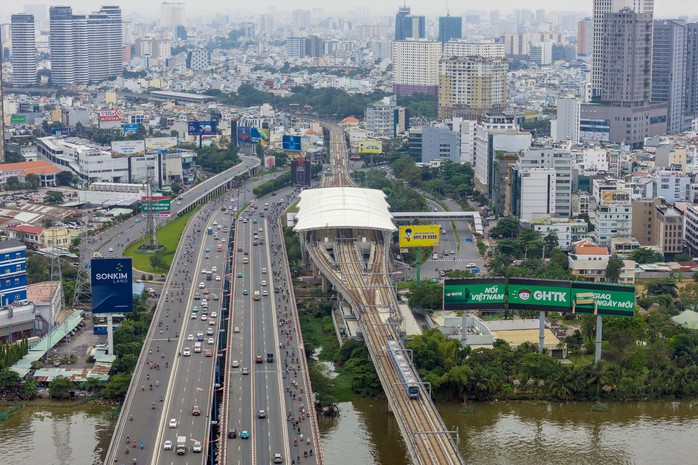
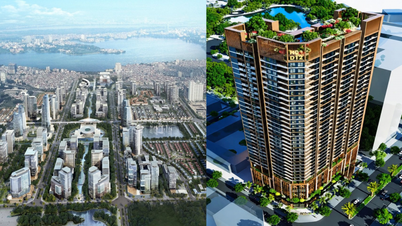
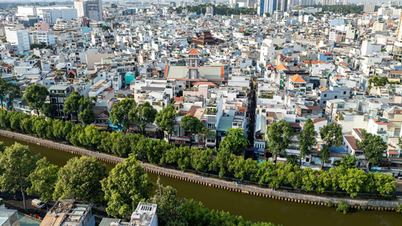
Ho Chi Minh City needs a Special Urban Law to "unleash" existing mechanisms and accelerate development. (Photo: HOANG TRIEU)
A crucial boost
At this time, the proposed Law on Special Urban Development for Ho Chi Minh City plays a crucial role as a catalyst. This represents a shift from situational, ad hoc policies to a comprehensive, superior, and integrated legal framework.
At a recent consultation workshop on the draft Law on Special Urban Areas, Ho Chi Minh City proposed that the Central Government entrust it with nearly 300 strategic powers. Specifically, the Ho Chi Minh City People's Council proposed receiving over 140 powers, the City People's Committee over 130 powers, and the Chairman of the City People's Committee over 20 powers.
A notable aspect of the draft law is its spirit of maximum and thorough decentralization, coupled with transparent accountability. The fact that the National Assembly delegates authority to the City People's Council, the Government delegates authority to the City People's Committee, and the Prime Minister delegates authority to the Chairman of the City People's Committee will help remove administrative barriers, shorten decision-making processes, and accelerate the handling of urgent issues.
This legal framework needs to be linked to major issues facing Ho Chi Minh City, such as establishing the legal status of a special urban area; decentralization in urban governance; developing green cities, smart cities, and coastal cities; promoting new economies and international financial centers; ensuring urban order and safety; and expanding regional linkages.
It is impossible to develop an international financial center without data infrastructure, high-quality human resources, a transparent legal environment, and rapid operational capabilities. Similarly, it is impossible to develop a green city if urban planning, public transportation, land use, environmental protection, and public investment are not integrated.
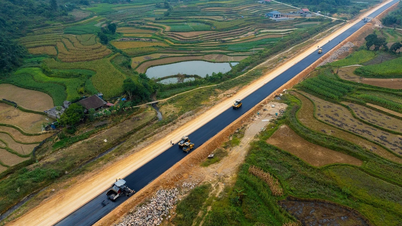
Therefore, the Urban Planning Law should especially become a tool to pave the way for strategic infrastructure projects such as the Ho Chi Minh City - Moc Bai expressway, Ring Road 4, Can Gio Bridge, Phu My 2 Bridge, or routes connecting seaports and logistics. Strong decentralization must always go hand in hand with administrative procedure reform, comprehensive digitalization of work processes, and emphasizing individual responsibility in public service performance.
More importantly, a mechanism befitting a megacity must always place the people at the center. Development cannot be measured solely by GRDP, investment capital, or the number of projects. The city needs to effectively address issues such as transportation, housing, healthcare, education, employment, environmental protection, and maintaining security and order.
When authority is delegated more effectively, citizens will directly benefit through faster decision-making, better services, and a more civilized living environment. Opportunity becomes a driving force when cities are empowered to take responsibility, act decisively, and contribute maximally to the nation.
The private sector continues to assert its crucial role in the development of the megacity. Between 2023 and 2025, an estimated 180,974 new businesses are expected to be established. In 2025 alone, Ho Chi Minh City is projected to welcome approximately 59,750 new businesses, bringing in registered and additional capital exceeding 2 trillion VND.
FDI continues to pour capital into high-knowledge sectors such as semiconductors, artificial intelligence, biopharmaceuticals, electronics, and information technology.

Source: https://nld.com.vn/go-vuong-co-che-rong-duong-phat-trien-196260524200744509.htm



























































































Comment (0)