


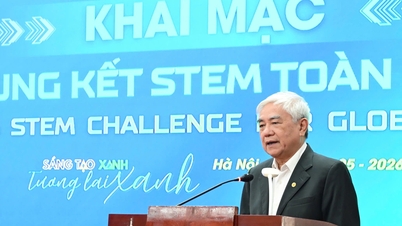
Google CEO Sundar Pichai speaks about the Gemini Spark at the Google I/O event in California on May 19th - Photo: AP
At the Google I/O 2026 conference held on May 19th in California (USA), Google simultaneously launched its new generation of smart glasses and the Gemini 3.5 AI model – a move considered a "double counterattack" strategy to regain its position on both fronts: smart wearable devices and generative artificial intelligence.
After years of being criticized for its slow response to the wave of AI chatbots, Google is making a big bet on a comprehensive strategy: bringing Gemini to every platform – from its search engine and office applications to smart wearables.
The Google I/O 2026 conference is where that strategy will be fully unveiled, with the ambition to transform AI from an add-on feature into the core of the entire product ecosystem.
Google is back in the race.
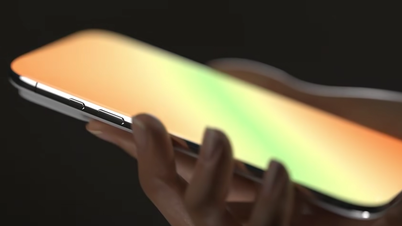
Google has confirmed it will release a line of smart glasses this fall, developed on the Android XR operating system in collaboration with Samsung and Qualcomm, along with two fashion eyewear brands, Gentle Monster and Warby Parker.
According to Google's official announcement, the new line of glasses includes two versions: glasses with built-in speakers and glasses with a display screen. Users can view directions, send messages, take photos, or use the Gemini assistant without taking their phone out of their pocket.
The first version will focus on audio, supporting both Android and iOS, allowing voice control to take photos, record videos , or receive private feedback from Gemini via the built-in speakers on the glasses, according to the tech news site Gadgets360.
Google says the device's goal is to provide timely assistance without disrupting daily activities. This is part of the company's strategy to expand AI into smart wearable devices, according to Reuters.
The technology magazine Wired noted that the focus of Google I/O this year is on integrating AI agents into major tools and applications such as Google Search, Gmail, YouTube, Docs, and the Chrome browser, while also expanding into wearable devices – where Google is directly competing with Meta and its Ray-Ban Meta eyewear line.
Ambition for AI automation
Alongside the smart glasses, Google introduced a new set of AI models under the Gemini 3.5 version, including Gemini 3.5 Flash - designed for programming and automation tasks - and plans to release Gemini 3.5 Pro in the near future.
Google promotes Gemini 3.5 Flash as a more powerful model for programming and "agentic behavior"—the ability to perform sequences of actions autonomously, rather than simply answering questions. This model is now the default in the Gemini assistant and Google Search's AI Mode.
Alongside this, Google launched Gemini Spark – a personal AI assistant running on Google Cloud infrastructure, capable of operating continuously in the background without requiring the user to turn on the device. Gemini Spark can aggregate data from multiple applications, perform multi-step tasks, and break down work into smaller parts for automated processing.
According to information released at the event, Google Search, integrated with AI, can track information on websites, update market trends, or send alerts on demand. Google CEO Sundar Pichai called this new direction the "Agentic Gemini Era"—a phase where AI not only assists but also actively acts throughout the company's entire ecosystem.
The tech news outlet The Verge reports that Google is focusing heavily on programmable features and AI systems that can handle multiple consecutive tasks autonomously – an area currently dominated by ChatGPT (OpenAI) and Claude (Anthropic).
Google's push to expand both its AI glasses and Gemini 3.5 shows it is broadening its competition on two fronts simultaneously, according to Reuters.
Lowering prices to expand market share.
Google competes not only through technology, but also adjusts its pricing strategy to attract more users and businesses.
The company reduced the price of its AI Ultra package from $250 to $200 per month, citing that this adjustment could save large customers more than $1 billion in costs annually.
Google currently has around 900 million Gemini users per month, while AI Overviews – the AI-powered summary tool on Google Search – serves approximately 2.5 billion users per month, according to Reuters.
Source: https://tuoitre.vn/google-lot-xac-with-kinh-ai-and-gemini-3-5-20260520231631732.htm






































































































Comment (0)