

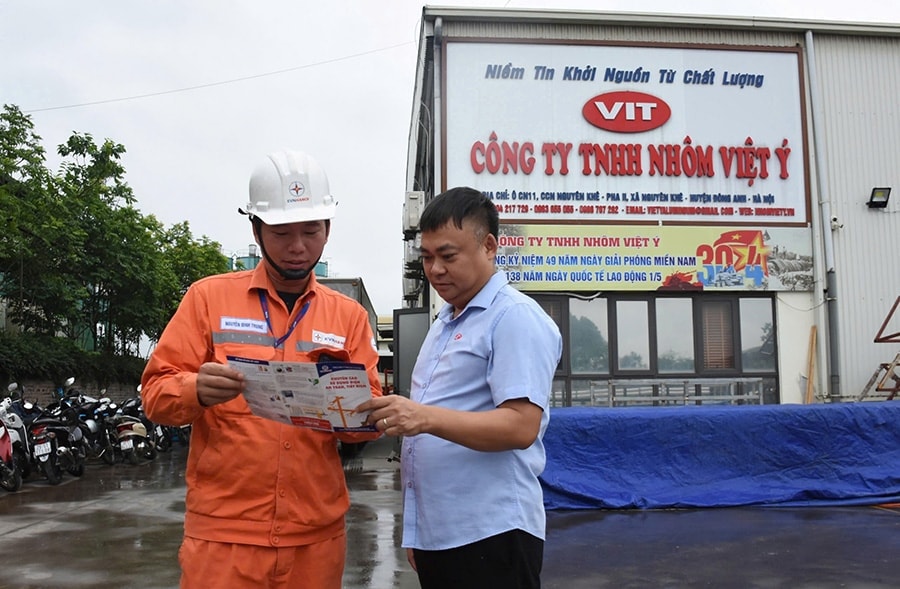
The plan aims to improve the capital's reserve and power supply capacity by 2030, with a vision to 2045. Accordingly, the city strives to have commercial electricity reaching 52,178 million kWh by 2030; average commercial electricity per capita of 5,721kWh/person/year; maximum capacity Pmax of 9,400MW; average commercial electricity growth rate meeting the requirements of double-digit economic growth.
The city strives for the proportion of renewable energy sources in the total primary energy supply to reach at least 5%; by 2030, strives to develop the total capacity of solar power sources to reach about 1,500 MW.
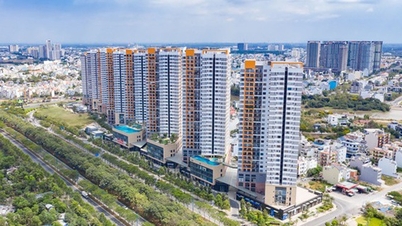
The city promotes investment in concentrated solar power projects and synchronously deploys rooftop solar power installations in industrial parks, high-tech parks, industrial clusters, office buildings, apartment buildings, high-rise buildings, commercial - service - residential complexes, and residential houses in the city.
The city strives to have 50% of office buildings use self-generated and self-consumed rooftop solar power for on-site consumption, without selling electricity to the national grid. The city also strives to have about 280MW of electricity produced from waste by 2030.
The directive also sets a target of saving 8-10% of the city's total energy consumption, promoting the use of high-performance, energy-saving equipment and machinery, energy auditing, and enhancing solutions to reduce electricity consumption and emissions in industrial parks, factories, and urban areas.
In addition, the petroleum reserve level strives to reach about 90 days of net imports; develop a facility with full capacity to import liquefied natural gas (LNG) according to the needs of LNG power sources and other needs; and form harmonious LNG concentrated energy centers.
Hanoi also reduces greenhouse gas emissions from energy activities by about 15-35% compared to the normal development scenario, ensuring synchronization with the economic growth target of 11% or more in 2026 and the following years.
Along with that, the city builds a smart, efficient power grid system capable of safely connecting the region; ensuring safe power supply, meeting the N-1 criteria for important load areas, N-2 for especially important load areas and for the transmission grid. Power supply reliability indicators continue to improve, equivalent to the capitals of some developed countries in the same region.
Hanoi will focus on completing the conversion and unifying the use of 22kV voltage for the medium-voltage grid; the rate of undergrounding medium- and low-voltage power lines in wards, central areas, and urban areas with stable planning will strive to reach 100%.
By 2045, the city will firmly ensure national energy security; the energy market and electricity market will be competitive, fair, transparent, effective, and in line with the socialist-oriented market economy. The energy sector will develop synchronously and sustainably, using resources efficiently, protecting the environment, reducing greenhouse gas emissions, and adapting to climate change. The energy infrastructure system will be smart, modern, and effectively connected to the region; the quality of human resources, science and technology level, and energy sector management capacity will reach the same level as those of modern industrialized countries...
Source: https://hanoimoi.vn/ha-noi-phan-dau-co-50-toa-nha-cong-so-su-dung-dien-mat-troi-mai-nha-725430.html
![[Photo] National Assembly Chairman Tran Thanh Man receives First Vice Chairman of the Federation Council of the Federal Assembly of the Russian Federation](/_next/image?url=https%3A%2F%2Fvphoto.vietnam.vn%2Fthumb%2F1200x675%2Fvietnam%2Fresource%2FIMAGE%2F2025%2F12%2F02%2F1764648408509_ndo_br_bnd-8452-jpg.webp&w=3840&q=75)
![[Photo] Worshiping the Tuyet Son statue - a nearly 400-year-old treasure at Keo Pagoda](/_next/image?url=https%3A%2F%2Fvphoto.vietnam.vn%2Fthumb%2F1200x675%2Fvietnam%2Fresource%2FIMAGE%2F2025%2F12%2F02%2F1764679323086_ndo_br_tempimageomw0hi-4884-jpg.webp&w=3840&q=75)







































































Comment (0)