

The lack of a legal framework, lack of transparent data and informal transactions create a large gap that researchers and cultural managers believe needs to be institutionalized soon to develop a sustainable cultural industry.
The creative ecosystem is "exploding" but the market is still "on the sidelines"
As the world enters a “creative boom”, Asian countries are competing fiercely to position themselves on the creative economic map. Vietnam is no exception.
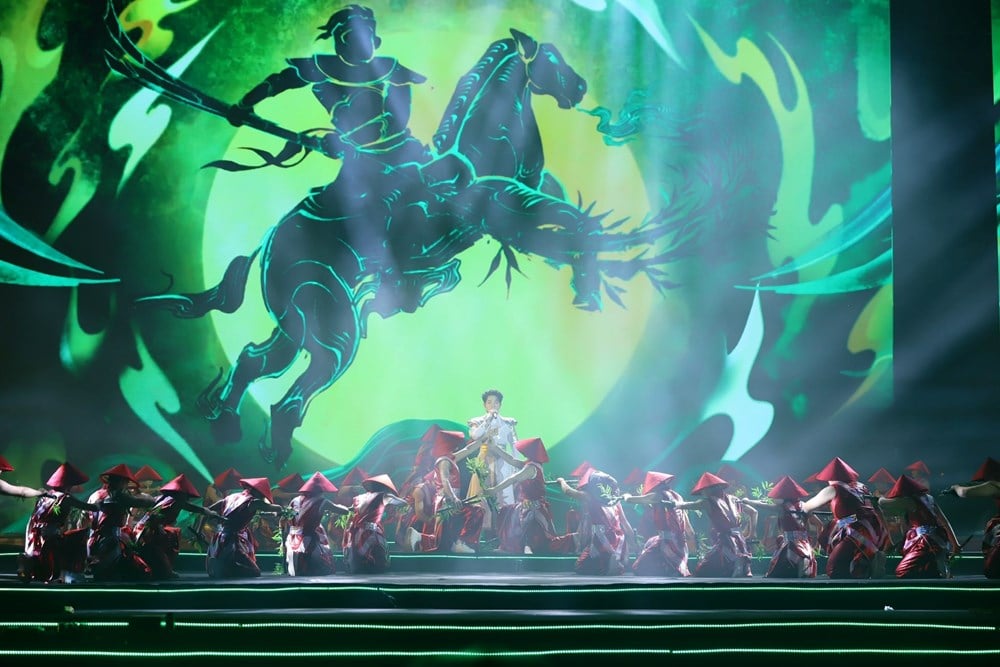
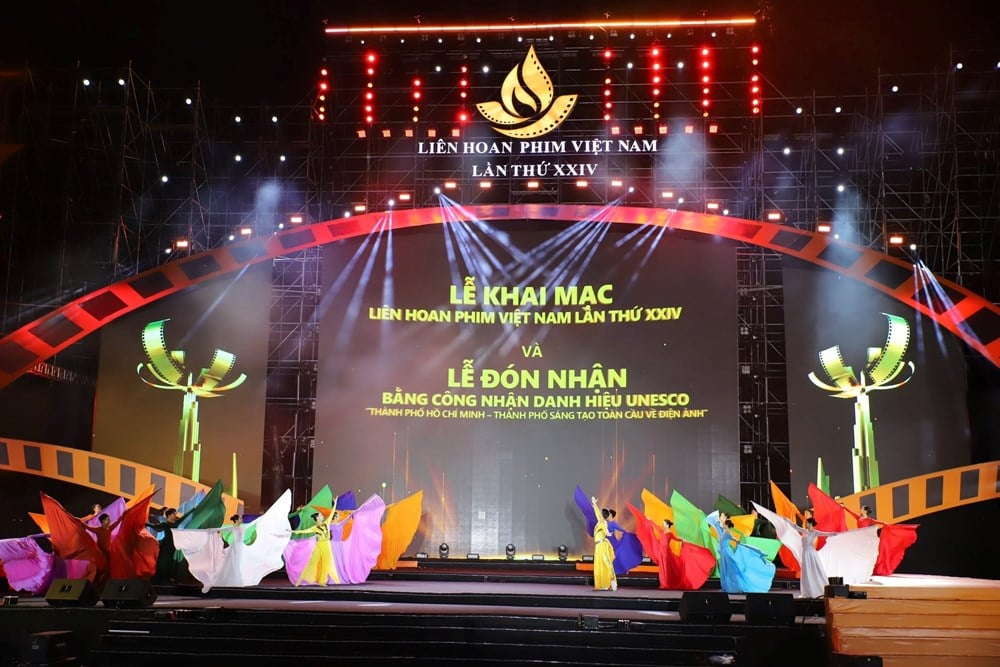
The four cities of Hanoi , Hoi An, Da Lat and Ho Chi Minh City – members of the UNESCO Creative Cities Network – are creating distinctive models from design, music , traditional crafts to cinema and culinary culture.
At the same time, many new creative centers are emerging in Sa Pa, Ninh Binh, Khanh Hoa or Lai Chau, creating an open creative map.
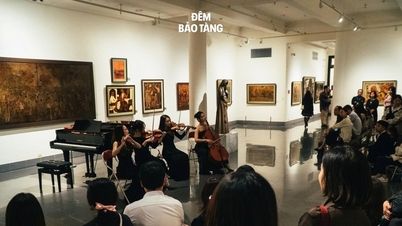
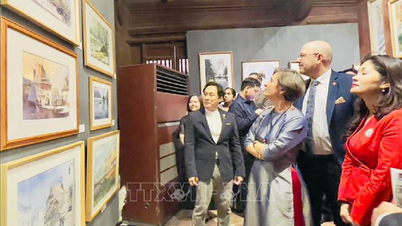
MSc. Ha Minh Thu (Oh Art Media and Arts Company Limited) commented that Vietnam's creative ecosystem has expanded significantly over the past decade: the number of young artists has increased rapidly, creative spaces, galleries, international residency programs and art funding funds are increasing.
However, this development is not enough to form an official and transparent art market.
According to MSc. Ha Minh Thu, there are three barriers preventing Vietnam from having an art market: an incomplete legal framework, a lack of data infrastructure, and informal transactions becoming a "habit".
Regarding the legal framework for the art market, MSc. Ha Minh Thu analyzed that Vietnam has "Intellectual Property Law" and "Cultural Heritage Law", but there are no specialized legal documents for transactions, valuation or circulation of modern and contemporary works of art.
This makes transactions largely based on “personal trust”, creating great risks for both artists and buyers.
Similarly, in data infrastructure, MSc. Ha Minh Thu pointed out that, due to the lack of a database on art prices, transaction history, auctions, etc., information asymmetry increases.
According to Statista's forecast for 2025, Vietnam's Arts & Auctions market will only reach about 26.41 million USD - much lower than other countries in the region.
In addition, informal transactions dominate, with most transactions taking place through personal relationships, artist studios or broker networks. Professional galleries or official auction houses are too few, leading to a dominant “underground” market, weakening the standards for transactions and art inspection.
“These limitations show that the view that “just develop the ecosystem and the market will form itself” is not entirely correct in Vietnam’s conditions,” said Master Ha Minh Thu.
Policy balance: Nurturing the ecosystem while perfecting institutions
MSc. Ha Minh Thu affirmed that developing the cultural industry does not only rely on artists or creativity, but also requires a strong enough institutional framework to protect intellectual property, ensure transaction transparency and create trust for investors.
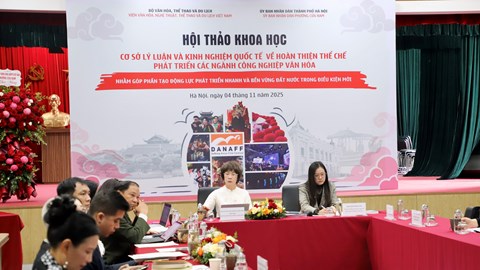
Institutional Improvement – The Driving Force for the Development of Vietnam’s Cultural Industry in the New Period
According to analysis from many international studies, the art market is a "failed market", requiring certain intervention from the State. MSc. Ha Minh Thu recommends policies including: Perfecting the law; Building a national database on art and Institutionalizing transparent transaction models.
MSc. Ha Minh Thu believes that, to perfect the legal system, instead of immediately applying international standards, Vietnam can start with feasible mechanisms: registering works, standardizing transaction contracts, building regulations on provenance, and strengthening the inspection and certification of works.
To build a national database on art, it is necessary to build a system connecting galleries – collectors – management agencies. According to Master Ha Minh Thu, this will help: reduce information asymmetry, make art prices transparent, support market research and promote official transactions.
She also analyzed that institutionalizing transparent transaction models will encourage professional auction floors and gallery associations to take on the role of inspection and professional training for market participants. This approach ensures harmonious development between creative freedom and transparent governance.
From a broader perspective, Dr. Mai Thi Thuy Huong (Vietnam Institute of Culture, Arts, Sports and Tourism) believes that creative human resources are the key for Vietnam to compete in the new era.
Dr. Mai Thi Thuy Huong emphasized: “National creative power depends on the quality of human resources. In the context of the Government promoting the national strategy of entrepreneurship and innovation, Vietnam is aiming to become a developing country with an upper middle income by 2030, and a high income by 2045. To achieve the above goals, human resources must be good at expertise, creative and have a global mindset.”
“This shows that the important task of the current period is no longer limited to “training human resources” but rather “developing human creativity”. Creative thinking becomes the core competency that determines the competitiveness of human resources in the era of globalization, knowledge economy and digital transformation.
In a context of constantly changing technology, business models and social structures, linear or repetitive thinking is no longer appropriate; instead, creativity has transformed from a “complementary skill” to a “prerequisite”.
In particular, in the creative economy, value is no longer based primarily on material resources but on knowledge, data and innovation capabilities; therefore, innovative thinking is no longer a personal need but has become an inevitable requirement of the labor market" - Dr. Thuy Huong said.
She also believes that human resources in the 21st century do not only need to be professionally competent but must also develop comprehensively, combining creativity, critical thinking and other essential competencies such as digital competence, integration ability, social skills, professional ethics, self-management and adaptability, along with a spirit of inquiry and lifelong learning.
These requirements are linked together as a system, requiring strategic solutions at the national level.
At the policy level, it is necessary to develop an innovation ecosystem first. The government must invest heavily in this ecosystem, creating conditions to link the three pillars: State - School - Enterprise, similar to the model of countries that have succeeded in forming innovation funds, providing tax incentives for R&D (research and development) enterprises and promoting start-up incubation.
Besides, institutional innovation is an urgent requirement, through policies to encourage business innovation, support basic and applied research and expand international cooperation in human resource training.
At the same time, it is necessary to establish a framework for assessing creative capacity in education. Currently, assessment frameworks mainly focus on expertise, ethics, foreign languages, information technology and soft skills, while creative capacity has not been standardized.
Although this is a difficult task, it plays an important role in comprehensively assessing the new generation of human resources, especially in the cultural and artistic sectors or fields that require high creativity.
Vietnam is facing a great opportunity to make a breakthrough in the field of cultural industries and creative economy. The creative ecosystem is developing rapidly, but is not enough to form a transparent and sustainable art market.
In the context of strong urbanization and global competition in innovation, Vietnam needs a “two-pillar” policy: both nurturing a creative ecosystem and establishing a complete market institution.
Only with a clear legal framework, transparent data and standardized transaction models can the Vietnamese art market operate as a professional structure, thereby truly contributing to the country’s economic and cultural growth. This is also the premise for Vietnam to achieve its goal of becoming a developed, high-income country by 2045.
Source: https://baovanhoa.vn/van-hoa/hai-tru-cot-cho-cong-nghiep-van-hoa-o-viet-nam-186949.html
![[Photo] Urgently help people soon have a place to live and stabilize their lives](/_next/image?url=https%3A%2F%2Fvphoto.vietnam.vn%2Fthumb%2F1200x675%2Fvietnam%2Fresource%2FIMAGE%2F2025%2F12%2F09%2F1765248230297_c-jpg.webp&w=3840&q=75)








































![[Photo] General Secretary To Lam works with the Standing Committees of the 14th Party Congress Subcommittees](https://vphoto.vietnam.vn/thumb/402x226/vietnam/resource/IMAGE/2025/12/09/1765265023554_image.jpeg)






















Comment (0)