

Land has always been considered one of the most important resources of the economy . However, the reality over the years has shown that this is also an area with many shortcomings, from planning, land allocation, valuation to the management of public assets. Through audit activities in the period 2023-2025, the State Audit Office has pointed out a series of shortcomings in land management and use in many localities, ministries, sectors and units; and at the same time made many recommendations to improve mechanisms and policies, tighten management discipline and exploit land resources more effectively for socio-economic development.
Many long-standing shortcomings exist in land management.
In implementing Resolution No. 18-NQ/TW on continuing to innovate and improve institutions and policies, and enhance the effectiveness and efficiency of land management and use, the Party Committee of the State Audit Office has directed the entire sector to strengthen thematic audits related to land. The focus has been identified as improving the quality of audits, thereby evaluating the implementation of land policies and laws at the local and central levels, and promptly identifying gaps in management.
Through thematic audits conducted between 2023 and 2025, the State Audit Office of Vietnam noted that land use planning in some areas still lacks consistency with socio-economic development plans and construction plans. This lack of uniformity hinders implementation, affecting land use efficiency and long-term management stability.

Land audit activities during the 2023-2025 period have revealed many shortcomings in land resource management at local and unit levels. (Illustrative image)
In the land allocation and leasing process, many cases involve putting land into use before the legal procedures are fully completed. Some units are using land without a lease decision or without signing a formal land lease contract as required. Notably, some financially autonomous public service units have not yet converted from land allocation to land leasing.
The State Audit Office continues to focus on the issue of land valuation. According to audit results, in some localities, the determination of specific land prices does not accurately reflect market realities. The data used for comparison in the valuation process lacks verifiable information and has a low degree of similarity, leading to the risk of determining inappropriate prices.
The State Audit Office believes that the land database system is still lacking in uniformity, market information on land prices is not truly transparent, while the phenomenon of "price inflation" in some areas also has a significant impact on land valuation.
Another issue highlighted is the continued practice in many places of leasing public land without auction, exceeding lease terms, or subleasing in violation of regulations. Furthermore, long-standing debts for public land leases remain unresolved.
Regarding the arrangement and handling of public housing and land, the State Audit Office noted that many properties have been left vacant for many years or are being used inefficiently. In numerous cases, public housing and land have been leased, borrowed, or used in joint ventures or partnerships before the approval of the public asset utilization plan has been completed.
Through practical auditing, the State Audit Office has also discovered some inconsistencies in the current mechanisms and policies. Specifically, some regulations in Decree No. 71/2024/ND-CP related to the surplus method in land valuation are limited in determining the level of price fluctuations in land transfer prices, land lease prices, premises lease prices, and product business prices when calculating development revenue.
Based on the audit results, the State Audit Office recommended amending, supplementing, or repealing 16 documents issued by central agencies and 19 documents under local authority.
According to Dr. Nguyen Minh Phong, an economic expert, the shortcomings pointed out by the State Audit Office show that many "bottlenecks" in land resource management have not been thoroughly addressed, especially the overlapping in planning and the inaccurate valuation of land.
"The State Audit Office's discovery and identification of shortcomings in land management not only helps warn of the risk of loss of public resources but also creates positive pressure for localities, ministries, and sectors to review and rectify management processes," Mr. Phong commented.
Meanwhile, Associate Professor Dr. Dinh Trong Thinh, an economic expert, assessed that recent audit activities have relatively comprehensively reflected the shortcomings in land management and use in many localities. According to him, the audit findings not only have economic significance but also contribute to increasing transparency, enhancing accountability, and tightening discipline in land management.
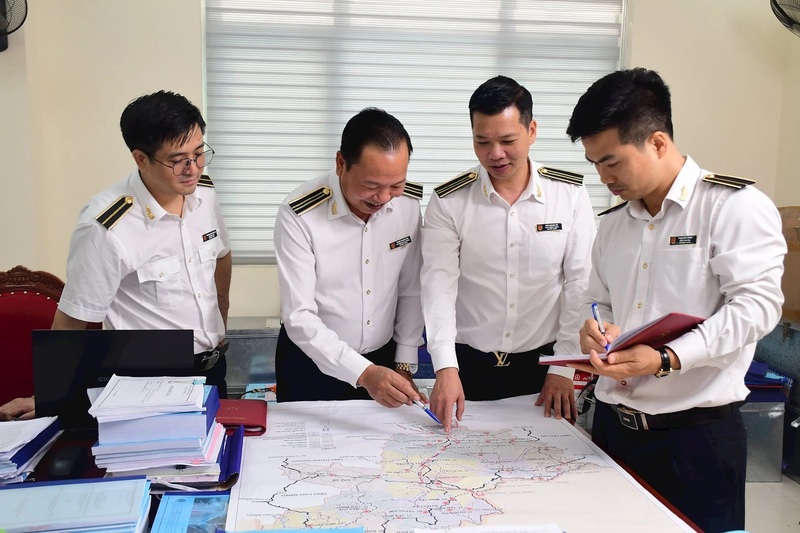
The State Audit Office has recommended amending, supplementing, or repealing 16 documents issued by central agencies and 19 documents under local authority.
Unlocking resources through institutional reform
According to the State Audit Office, although the system of land policies and laws has been amended and supplemented in recent years, there are still inconsistencies and discrepancies with related legal regulations, causing difficulties in implementation.
Based on audit experience, the State Audit Office proposes continuing to review and improve land-related legal regulations in a way that is consistent with the relevant legal system. At the same time, it is necessary to improve land valuation methods, specifying criteria and bases for determining and adjusting land price coefficients to ensure consistency in implementation.
The State Audit Office also emphasized the need to accelerate administrative procedure reforms and modernize land management on the basis of digital transformation. Accordingly, building a centralized land information system, connecting from the central to local levels and integrating databases, is considered an important solution to increase the transparency of the real estate market.
In addition, the State Audit Office recommends improving the quality of planning work; prioritizing the completion of local, urban, and rural planning, as well as planning for production and business sectors with long-term orientations, to serve as a foundation for stable and long-term land management.
Another point raised by the auditing agency is the need for a comprehensive review of land, vacant properties, and underutilized areas, especially public assets, in order to find solutions for more efficient land resource utilization and avoid waste. Along with this, it is necessary to clearly define the responsibilities of organizations and individuals if violations occur.
According to Dr. Nguyen Minh Phong, in order for audit recommendations to be truly effective, it is necessary to further strengthen the coordination mechanism between the State Audit Office and state management agencies in amending policies as well as organizing the implementation of land laws.
Mr. Phong also stated that localities and units need to enhance the responsibility of their leaders in land management, and at the same time, strictly handle cases of delayed implementation of audit conclusions and recommendations.
"If the audit recommendations are fully and comprehensively implemented, land resources will be exploited more efficiently, creating more room for economic growth," emphasized Dr. Nguyen Minh Phong.
From another perspective, Associate Professor Dr. Dinh Trong Thinh believes that, in the context of the 2024 Land Law with many changes, the State Audit Office needs to continue to promote in-depth audits on land management and use to further enhance its constructive role through recommendations for improving long-term mechanisms and policies.
According to experts, entities subject to land audits should proactively address shortcomings in their internal management, rather than waiting for the audit agency to intervene before taking action.
Source: https://congthuong.vn/hang-loat-bat-cap-dat-dai-bi-kiem-toan-chi-ro-457191.html






































































































Comment (0)