


The Ho Chi Minh City People's Committee has just issued a Project on training and fostering cadres, civil servants and public employees to serve the development of the urban railway system in the 2025 - 2030 period, with a vision to 2050.
According to the project, for cadres, civil servants and public employees in state management of urban railways (about 60 people), Ho Chi Minh City aims to have at least half of the cadres receive specialized training by 2030, of which 5 to 10 will have master's degrees.
In the period 2030 - 2035, the rate of specialized training will increase to 80%, with at least 30% of staff achieving a master's degree and about 10% continuing to study for a doctorate.
By the period 2035 - 2045, 100% of staff will be standardized in specialized training, over 50% will have a master's degree and 10 - 20% will have a doctorate degree.
For urban railway project management officials, in the 2025 - 2030 period, 160 officials will have appropriate university degrees, of which at least half will have specialized training and 10 to 15 will have master's degrees.
By 2035, this team will increase to 310 people, with 80% having advanced training, at least 30% having a master's degree and about 10% continuing to study for a doctorate.
By 2045, the number of urban railway project management officers will reach 400 people, 100% of whom will be professionally trained, with at least 50% having a master's degree and 20% having a doctorate degree.
For leaders of the Ho Chi Minh City People's Committee and departments and branches directly related to the urban railway sector, all must participate in general and advanced training courses on management, law, and technology according to the annual plan.
The training program is built on 11 core majors, covering all aspects of the urban railway system, from infrastructure - construction, signaling - control, electrification, vehicles, operation and maintenance management, to information technology, transport economics , TOD planning and safety management.
General and advanced training courses help leaders and professional staff grasp development strategies, policy mechanisms, financial - investment models, planning - design, operation, risk control and application of new technology in the metro sector.
In addition to domestic training, Ho Chi Minh City aims for at least 50% of officials in the metro management system and urban railway business leaders to be sent for training, tours, and study in countries with advanced metro systems.
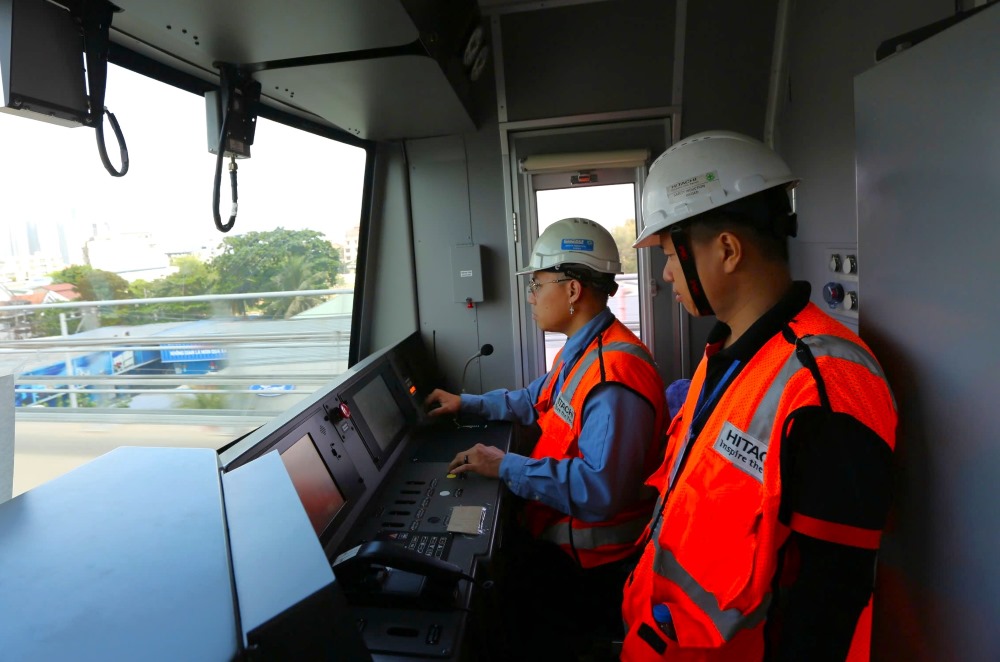
Ho Chi Minh City is implementing an urban railway system with the goal of forming 7 lines about 355 km long by 2035, and expanding to 10 lines with a total length of 510 km by 2045.
This modern form of transport requires a highly specialized workforce, from planning, project preparation, construction investment to operation and maintenance.
Currently, specialized human resources are still lacking and weak. Most of the staff come from the construction, transportation, and electricity-electronics sectors and have not received proper training in metro engineering and operations.
The city still depends heavily on foreign experts in design, technology transfer, trial operation and exploitation supervision, affecting implementation progress and investment efficiency.
Therefore, Ho Chi Minh City expects that training and fostering a team of cadres in a synchronous, systematic and international standard manner will improve management capacity, master design, construction and operation technology, reduce dependence on foreign experts, and at the same time aim to build a modern, smart and sustainable urban transport system.
Source: https://ttbc-hcm.gov.vn/hang-tram-can-bo-cong-chuc-tphcm-se-duoc-dao-tao-thac-si-tien-si-chuyen-nganh-metro-1020111.html

![[Photo] Worshiping the Tuyet Son statue - a nearly 400-year-old treasure at Keo Pagoda](/_next/image?url=https%3A%2F%2Fvphoto.vietnam.vn%2Fthumb%2F1200x675%2Fvietnam%2Fresource%2FIMAGE%2F2025%2F12%2F02%2F1764679323086_ndo_br_tempimageomw0hi-4884-jpg.webp&w=3840&q=75)


![[Photo] Parade to celebrate the 50th anniversary of Laos' National Day](/_next/image?url=https%3A%2F%2Fvphoto.vietnam.vn%2Fthumb%2F1200x675%2Fvietnam%2Fresource%2FIMAGE%2F2025%2F12%2F02%2F1764691918289_ndo_br_0-jpg.webp&w=3840&q=75)





























































Comment (0)