

Over the past four decades, Vietnam has embarked on a proud journey: thanks to strong reforms, intelligence, and resilience, it has transformed from a closed economy into one of the world's leading integrated nations; from a resource-scarce country to a destination attracting global capital; and from a workforce engaged in simple labor to the first steps in participating in international value chains. However, this very success is also presenting us with a new limitation: as cost advantages gradually diminish, value added generally remains low, and much of the core technology remains beyond our control.
In the digital age, competition between nations is no longer determined by the scale of production or resources, but by the ability to create and master knowledge and technology. The true value lies not in the quantity of goods exported, but in the intellectual property embodied in each product.
It is in this context that Resolution 57-NQ/TW on the development of science, technology, innovation, and digital transformation emerges as a strategic gateway. This is not just a policy to promote a particular sector, but a declaration of a transformation in the development model: from reliance on labor and capital to reliance on intellect and technology.
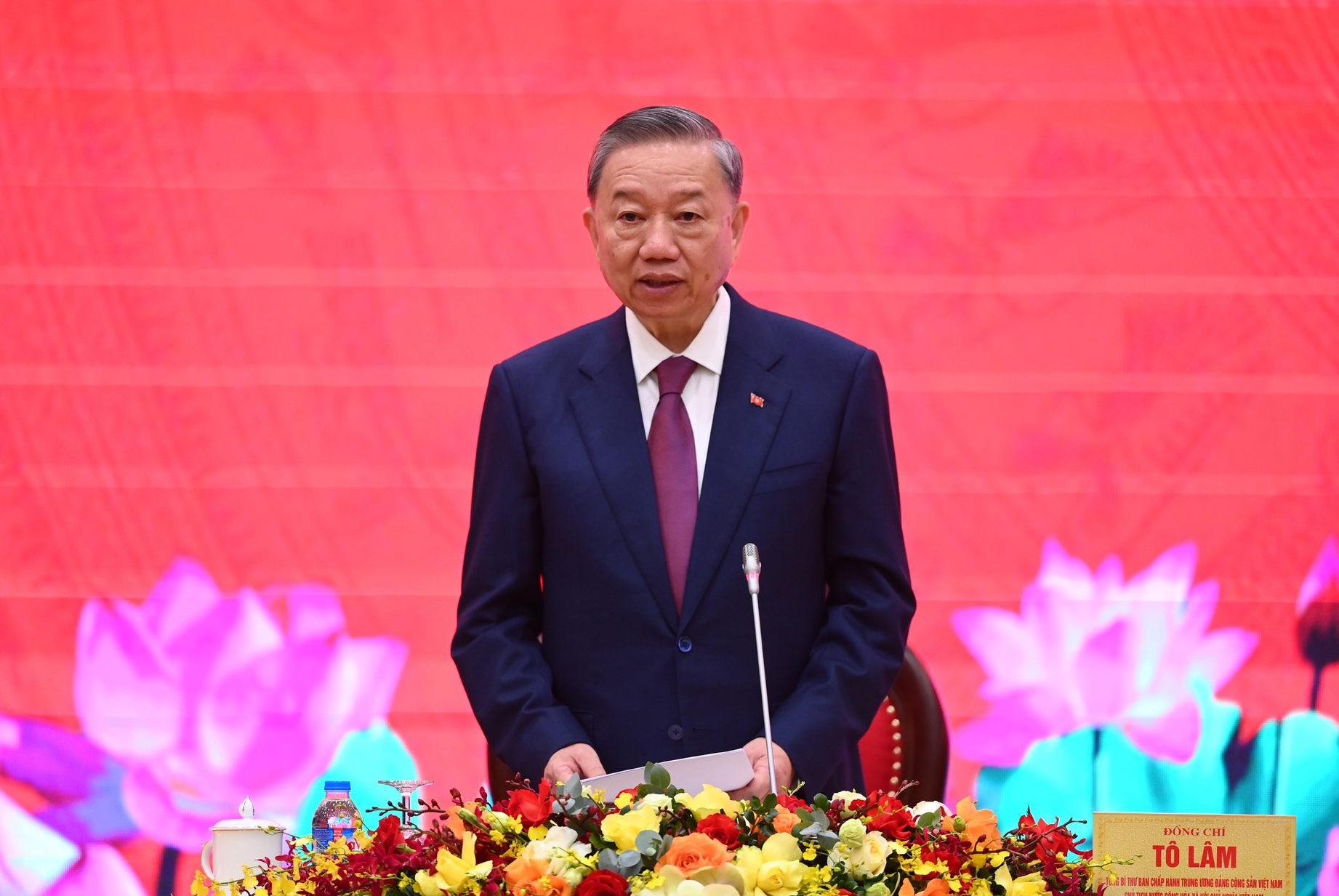
Most recently, General Secretary and President To Lam directed relevant agencies to draft a Resolution on the model of national development in the new period based on science and technology, innovation, and digital transformation for the 3rd Central Committee Conference to consider and decide upon.
Digital Vietnam, therefore, is the process of reinventing the Vietnamese economy using intellectual resources – where knowledge is no longer a supporting factor, but becomes the core strength of the nation.
From outsourcing to innovation - an inevitable turning point in development.
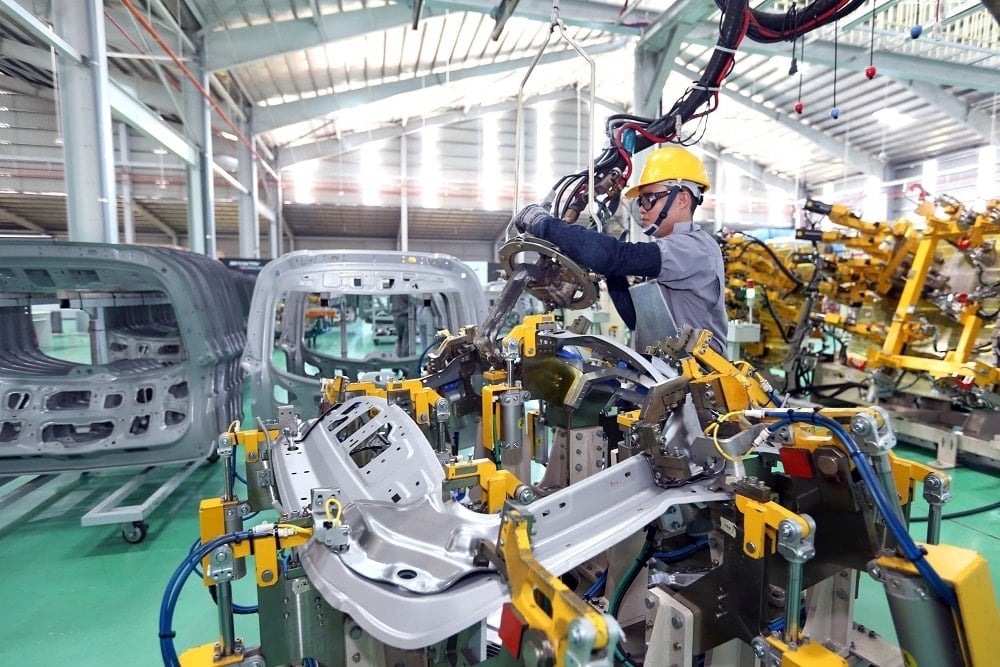
For many years, Vietnam's growth model has been built on three familiar pillars: abundant labor, competitive costs, and investment capital. This model proved effective in the early stages, helping the economy grow rapidly and creating jobs for tens of millions of people.
However, that very model is also revealing increasingly clear limitations. As labor costs rise, competitive advantages gradually diminish. As global value chains restructure, higher-value components, such as design, technology, and branding, remain out of reach. And as technology changes rapidly, the risk of being replaced is no longer a distant warning but a reality.
The digital age has established a completely different logic. Competition is no longer based on low costs, but on innovation and technological mastery. Speed is not just about production speed, but about innovation speed. Any nation that fails to master modern knowledge and technology will be stuck at the bottom of the value chain.
In this context, with Resolution 57-NQ/TW, for the first time, science, technology, innovation, and digital transformation were placed at the center of the development model. This not only changed policy priorities but also fundamentally altered the logic of development: from outsourcing to innovation, from participation to leadership, from outsourcing and subcontracting to ownership.
This isn't an innovative choice, but a life-or-death transition.
Mastering core technologies – shaping national strength.

If innovation is the driving force, then core technology is the foundation of that driving force. A nation can apply technology to advance rapidly in the short term, but can only go far when it masters that technology.
In reality, the majority of value in the global value chain lies not in production, but in stages related to technology and knowledge. Countries that possess core technology will have the power to set prices, standards, and control the market. Conversely, countries that only utilize technology will always be in a dependent position.
Therefore, the directives of General Secretary and President To Lam on completing the list of strategic technologies and strategic technology products, and immediately implementing a number of key strategic technology tasks linked to major national challenges; as well as the directives of Prime Minister Le Minh Hung on increasing the proportion of spending on the development of core technologies and strategic technologies, are of particular importance. The spirit is not to chase after superficial applications, but to focus on fundamental capabilities; not to seek short-term benefits, but to invest in long-term strength.
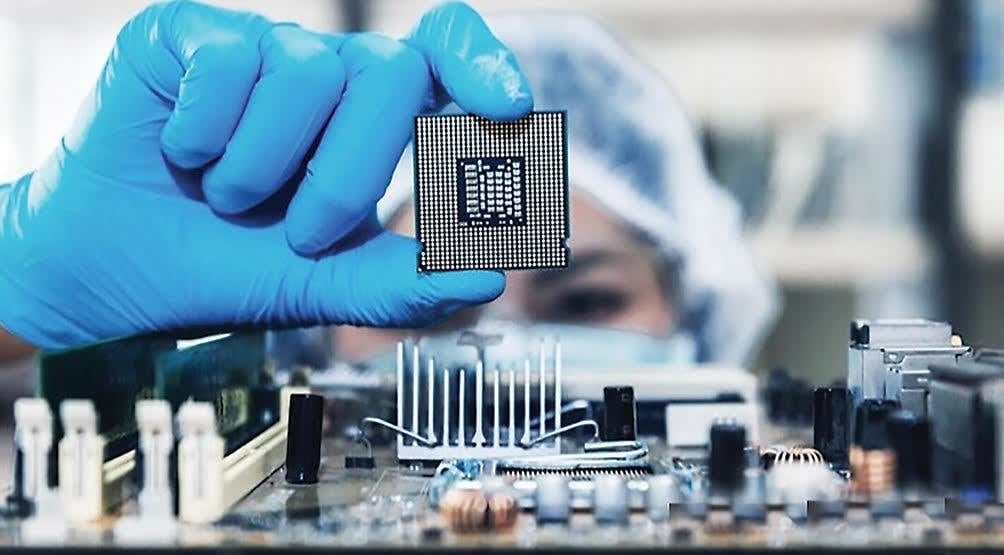
Core technologies, despite their high cost and inherent risks, are what determine a nation's standing in the digital age. They are where algorithms, data, and knowledge are formed – elements that are becoming the world's "new resources."
In a deeper sense, mastering core technologies is not just an economic issue. It's a matter of national sovereignty and brand recognition.
Intellectual capacity - the new measure of national strength.
One of the most significant shifts in thinking today is the perspective on value. In the past, success was often measured by export figures or production output. But in the digital age, those measures are no longer sufficient.
What matters is not how much we export, but how much intellectual value we gain from what we export.
The government's directive to increase the proportion of Vietnamese intellectual property value in export products is a testament to this new approach. This is not just a technical goal, but a strategic direction: Shifting from "Made in Vietnam" to "Made by Vietnam".
The difference between these two concepts lies not in the place of production, but in where the value is created. A product may be manufactured in a country, but in many cases, the greatest value lies in the design, technology, and brand held by a foreign country.
When Vietnamese ingenuity is integrated into products—from ideas and technology to branding—each exported unit not only carries economic value but also reflects the nation's standing.
This represents a leap from quantity to quality in development.
Creating an innovation ecosystem – the condition for intelligence to become power.
For intellectual capacity to truly become a national strength, it cannot rely solely on the individual efforts of a few businesses or industries. What is needed is a comprehensive innovation ecosystem.
First and foremost, the role of the State must be redefined. Beyond simply being a manager, the State must become a facilitator: creating favorable institutions, encouraging innovation, embracing experimentation, and controlling risks using modern tools. Mechanisms like sandboxes, policies promoting research and development, and prioritizing investment in core technologies are concrete manifestations of this role. These are also the major directions of the Party and the State, and are being implemented decisively and urgently by relevant agencies.
Businesses, for their part, cannot continue to rely on cost advantages. In a world where technology is changing daily, only businesses that invest in innovation, master technology, and build brands can survive and thrive sustainably.
Ultimately, people remain the deciding factor. A digital Vietnam cannot be built without a workforce that is creative, independent-thinking, and adaptable. Education, therefore, is not just about training skills, but about nurturing the capacity for innovation.
And Vietnamese businesses should focus on innovation, on mastering core technologies and strategic technologies, instead of processing, assembling, and packaging with low intellectual content…
When the three entities—the State, businesses, and people—move in the same direction, intelligence can be accumulated, disseminated, and transformed into real power.
From Digital Vietnam to National Power - An Irreversible Journey

Digital Vietnam is not a fixed destination. It is a new development method, a new operating logic for the economy and society.
This journey is not just about technological transformation, but about a transformation of mindset. It's not just about digitizing processes, but about restructuring how value is created. It's not just about application, but about mastery.
This is not an option to be postponed. In a rapidly changing world, nations that are slow to adapt will be left behind. Conversely, those that seize opportunities will be able to surge ahead.
Vietnam is facing such an opportunity. With the foundation already built, with clear political determination, and with strategic directions such as Resolution 57-NQ/TW, the door to a new phase of development is opening.
Not just participate, but contribute to shaping the game.
When intelligence becomes a force, development is no longer limited by resources or scale. It is determined by creativity, the ability to learn, and the capacity to shape the future.
Resolution 57-NQ/TW marks the beginning of a new journey – a journey that will lead Vietnam into the digital age as an innovative nation, a knowledge-based economy, and an innovative society. And by mastering intelligence and technology, Vietnam will not only participate in the game, but can also contribute to shaping it.
Source: https://baonghean.vn/hanh-trinh-moi-cua-dan-toc-trong-ky-nguyen-so-10334986.html






































































































Comment (0)