

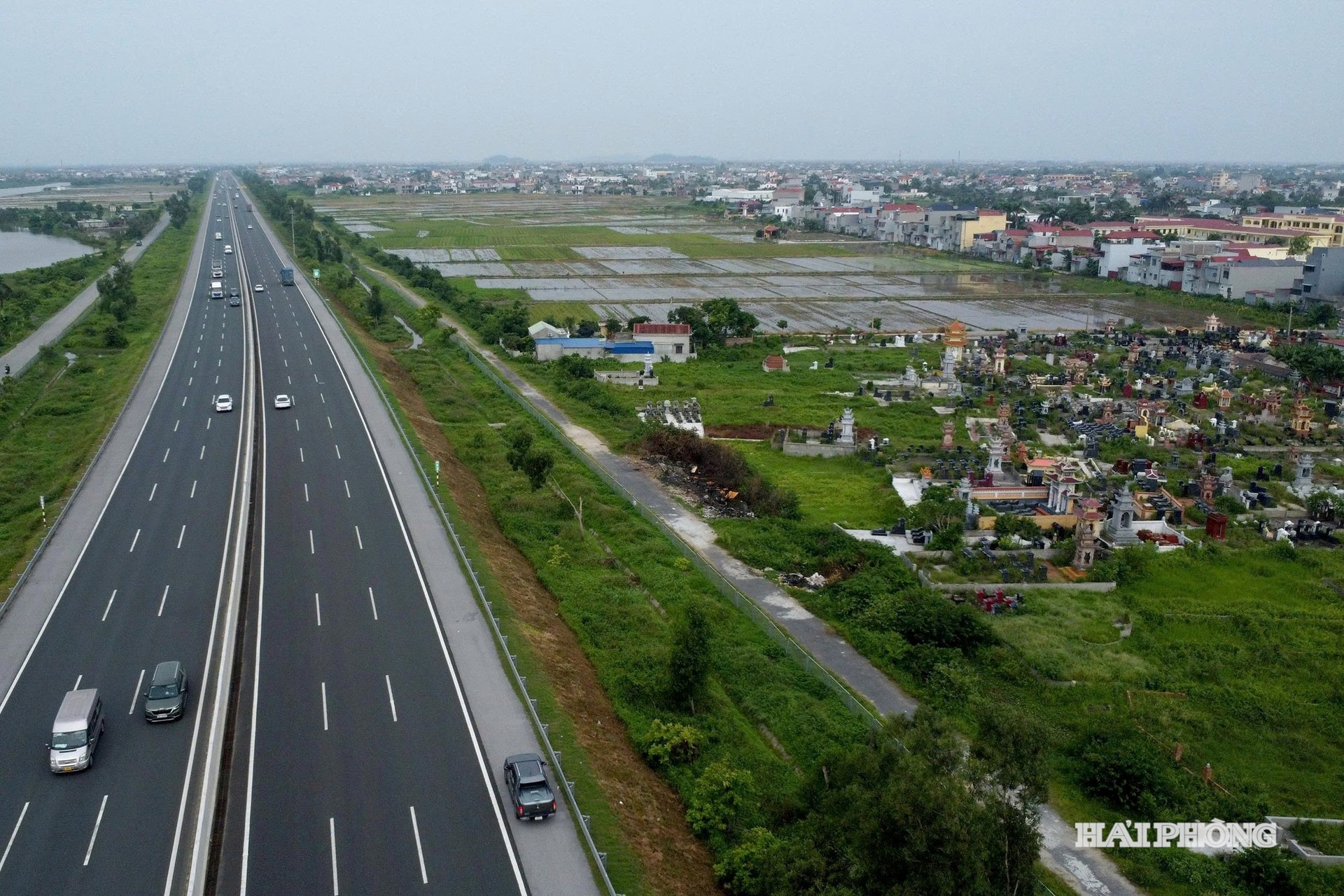
Prone to error
In early September 2025, Hong An Ward recorded a case of a household leveling dozens of square meters of rice fields to build a grave. As soon as the incident was discovered, the People's Committee of Hong An Ward directed a thorough handling of the case and asked the family to restore the original state.
This is a violation in land use, turning agricultural land into cemetery land, which is currently very complicated, especially in suburban communes and wards in Hai Phong city.
In the city, besides the planned and systematically built cemeteries, in some communes and wards there are also many spontaneous people's cemeteries.
The common feature of the people's cemetery is that it was formed many years ago, originating from the custom of each village and hamlet having its own cemetery. Therefore, most of the people's cemeteries do not have standard technical infrastructure, no protective fences, and makeshift drainage systems.
Many cemeteries, burial areas and sand burial areas have no boundaries with residential areas, and graves are placed among rice fields. It is worrying that graves, especially burials, are placed on agricultural land, near residential areas, increasing water pollution and the risk of disease spread.
The management and construction of public cemeteries in many localities have not received due attention. For example, in Hong An ward, there are 18 public cemeteries. The cemeteries do not have clear planning, boundaries, management teams and operating regulations. This is the reason for the increased risk of turning farmland into cemetery land.
The situation of building tombs haphazardly in cemeteries is breaking land use planning, increasing land violations, and narrowing the area of cultivated land. This situation also significantly affects the progress of compensation and site clearance when the state implements projects.
Need a synchronous solution
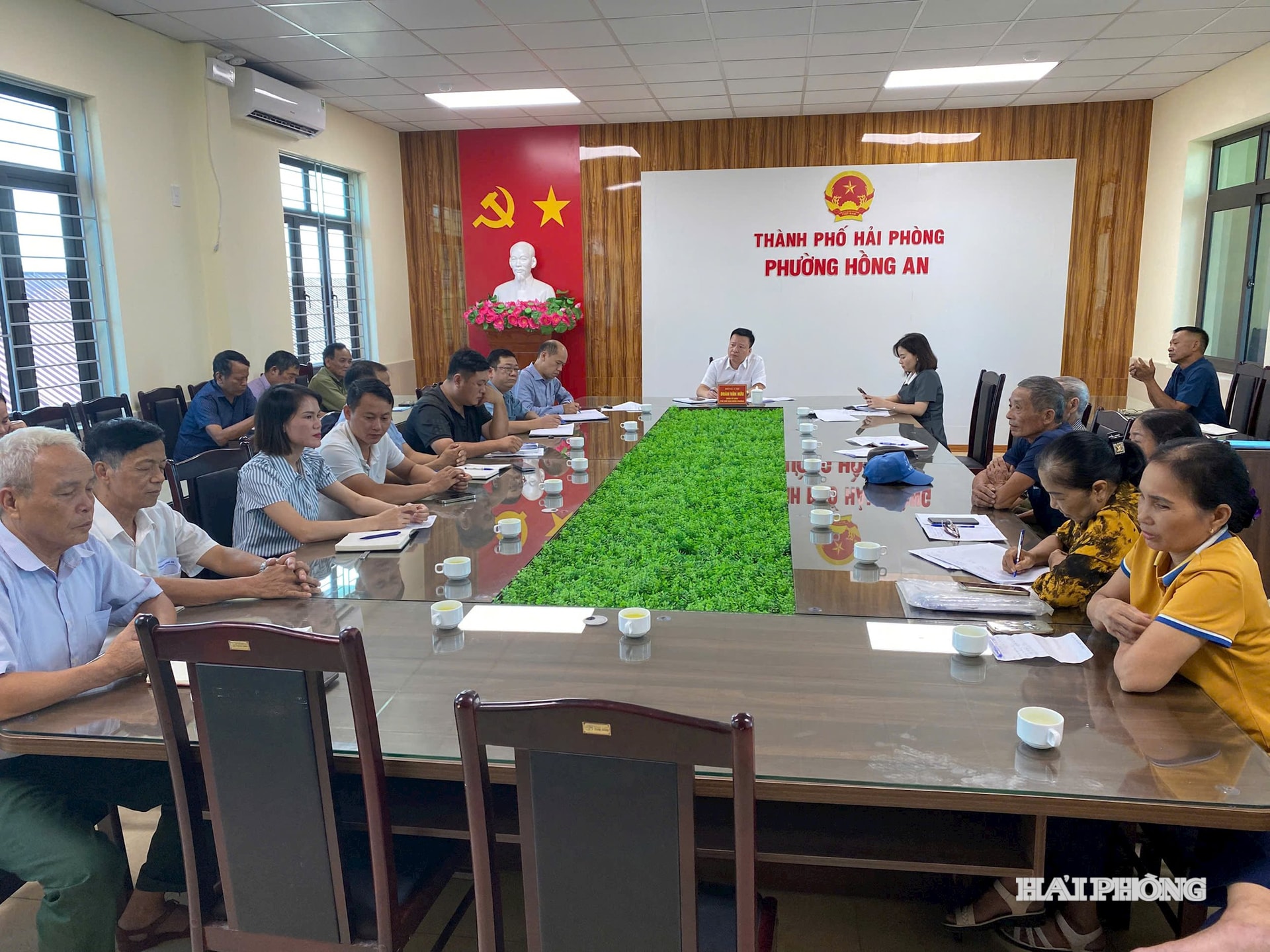
In early October 2025, the People's Committee of Hong An Ward worked with relevant parties on the management of the people's cemetery. The ward leaders requested the Department of Economics , Infrastructure and Urban Areas to urgently issue regulations on the management of the people's cemetery; coordinate with residential groups to continue to inspect and make a specific list of graves outside the planning.
On that basis, report to the Ward People's Committee for appropriate handling, strengthen management of construction order in the cemetery area, ensure compliance with regulations, maintain local hygiene and aesthetics.
Vice Chairman of Hong An Ward People's Committee Doan Van Huu said that to improve the efficiency of cemetery management, the ward has increased propaganda and mobilized people to comply with cemetery management regulations and rules. In addition, the ward regularly conducts inspections and strictly handles violations.
In the long term, the ward will proactively review, mark, and clearly demarcate cemeteries, and propose to competent authorities to plan a public cemetery.
In order to effectively manage people's cemeteries and gradually reduce spontaneous cemeteries, there needs to be a specific roadmap. Localities need to survey and evaluate the current situation and have plans to relocate small, scattered cemeteries; and develop a roadmap to close cemeteries that are not in accordance with the planning.
Wards and communes need to make detailed plans and actively call for socialization to build people's cemeteries that ensure environmental criteria according to rural planning; propagate and encourage people to use cremation.
To prevent violations and limit negative impacts, local authorities need to clearly define boundaries and landmarks; count the number of graves; establish burial areas and reburial areas to have appropriate environmental control and protection measures.
BAO CHAUSource: https://baohaiphong.vn/hau-qua-tu-buong-long-quan-ly-nghia-trang-528376.html

![[Photo] Worshiping the Tuyet Son statue - a nearly 400-year-old treasure at Keo Pagoda](/_next/image?url=https%3A%2F%2Fvphoto.vietnam.vn%2Fthumb%2F1200x675%2Fvietnam%2Fresource%2FIMAGE%2F2025%2F12%2F02%2F1764679323086_ndo_br_tempimageomw0hi-4884-jpg.webp&w=3840&q=75)

![[Photo] Parade to celebrate the 50th anniversary of Laos' National Day](/_next/image?url=https%3A%2F%2Fvphoto.vietnam.vn%2Fthumb%2F1200x675%2Fvietnam%2Fresource%2FIMAGE%2F2025%2F12%2F02%2F1764691918289_ndo_br_0-jpg.webp&w=3840&q=75)











































































Comment (0)