

 |
Routers like TP-Link TL-WR841N, familiar to Vietnamese users, have become outdated. |
Upgrading your Wi-Fi device is a step that is often overlooked by users. In the context of constantly developing network technology, devices that only support the 2.4 GHz band are gradually becoming obsolete, no longer meeting the speed and stability requirements of modern Internet.
Despite its age, 2.4 GHz Wi-Fi isn't completely dead. It still has some advantages and is still supported on modern routers. 2.4 GHz signals travel farther, are more stable, and can penetrate walls and obstacles better than the 5 GHz and 6 GHz bands.
However, these advantages cannot compensate for the core limitations. The 2.4 GHz band is very slow, has high latency and is prone to severe interference. This problem arises from the fact that so many household devices share this frequency band, including Bluetooth and microwaves.
If you subscribe to a high-speed internet plan but use a router that only supports 2.4 GHz, your network performance is severely limited. Even using an old 2.4 GHz router as an extender can drag down your network quality.
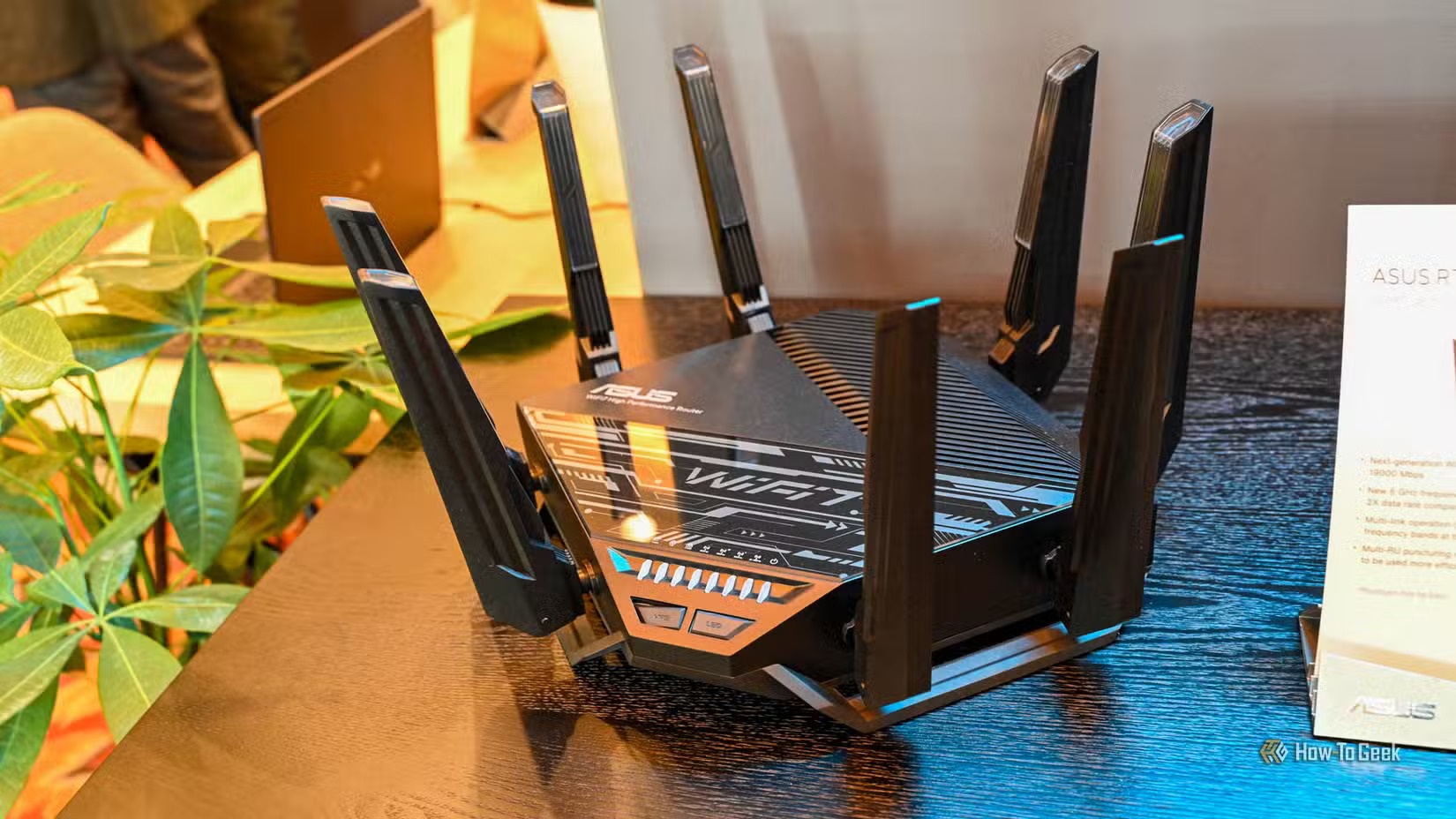 |
Router technology has advanced by leaps and bounds with the advent of new Wi-Fi standards, and users should not spend money on outdated routers. Photo: HowtoGeek. |
Router technology has evolved significantly with the advent of the latest Wi-Fi standards like Wi-Fi 6, 6E, and Wi-Fi 7. These standards bring huge improvements in speed, latency, and connection stability.
For example, Wi-Fi 6 enables a maximum speed of 9.6Gbps, far exceeding the 3.5Gbps of the previous Wi-Fi 5. Notably, Wi-Fi 6E also adds a completely new 6GHz band.
Meanwhile, the latest Wi-Fi 7 standard continues to break the limit, bringing speeds up to 23 Gbps to modern devices.
Importantly, newer routers also optimize the 2.4 GHz band, making the entire network faster, more efficient, and more secure. Therefore, users should at least get a dual-band router that supports both 2.4 GHz and 5 GHz.
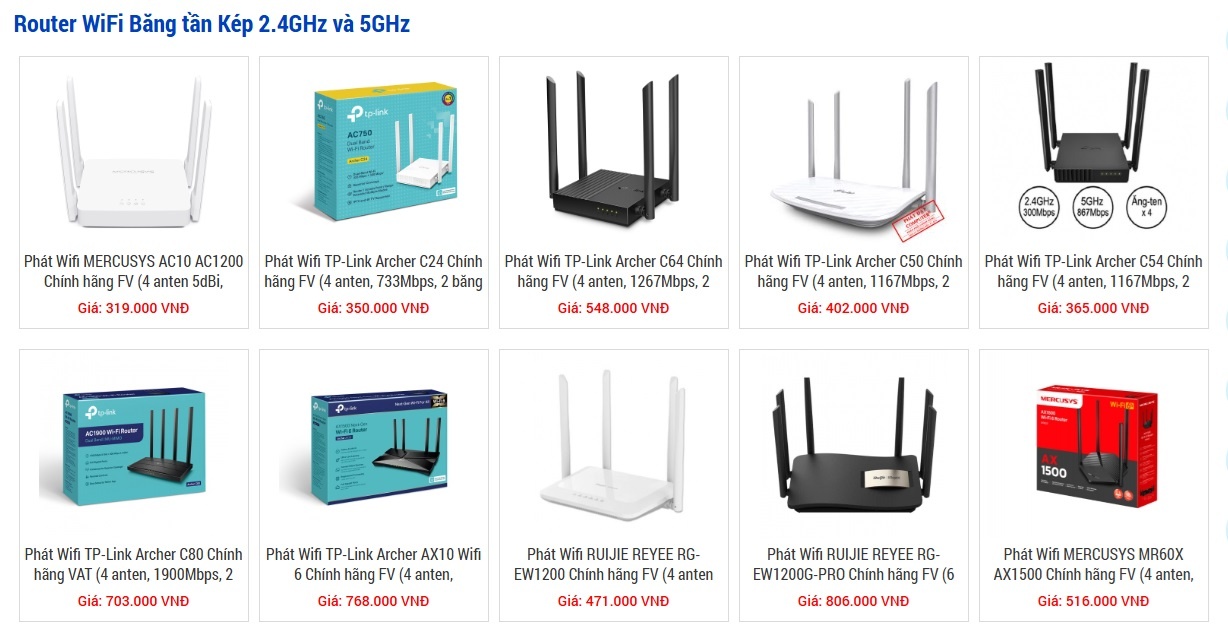 |
Dual-band router models that support both 2.4 and 5 GHz are no longer too expensive. Photo: Internet. |
Market reality shows that, even though it is 2025, router models that only support the 2.4 GHz band are still widely sold at very attractive prices, creating a temptation in terms of initial cost. These models often have a maximum speed of only 300 Mbps.
For example, products like Mercusys MW301R cost only about 180,000-200,000 VND, or competitors like TP-Link TL-WR844N and Totolink N200RE V5 also only fluctuate in the range of 200,000-250,000 VND. This price sounds attractive, but it is only suitable for low-speed Internet connections under 100 Mbps.
Instead of choosing these outdated routers, users only need to spend a small amount of money to own Wi-Fi 5 devices, providing outstanding speed and stability.
For just an additional 100,000 - 200,000 VND, users can switch to router models that support 5 GHz. For example, the Totolink A720R costs only about 290,000 - 330,000 VND. Or if you prefer TP-Link, the Archer C54/C64 costs about 380,000 - 390,000 VND.
These models offer 5 GHz speeds of up to 867 Mbps, nearly 3 times faster than the 300 Mbps limit of 2.4 GHz models, completely solving the problem of network congestion for video viewing or online gaming tasks.
Source: https://znews.vn/dung-mua-nhung-bo-phat-wi-fi-kieu-nay-post1608170.html

























































































Comment (0)