

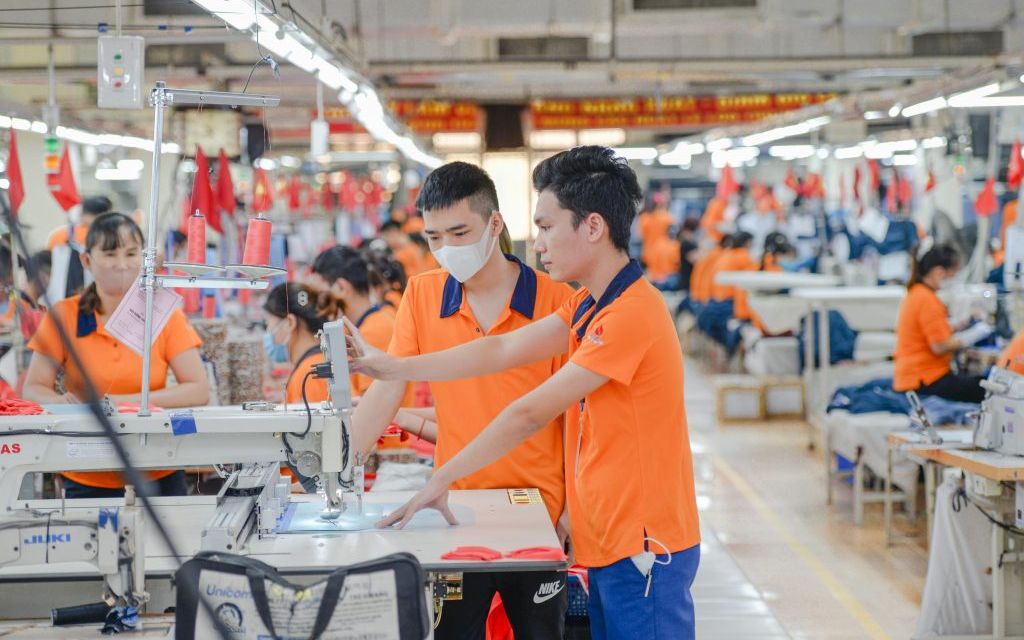
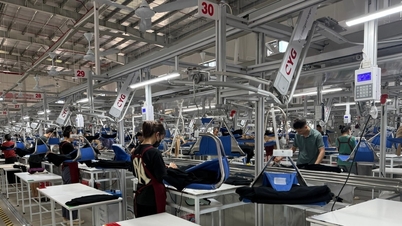
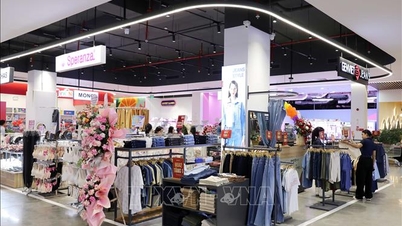
Textile and garment is one of the industries that benefit greatly from VIFTA.
The biggest challenge is to transform the model and upgrade quality to overcome strict standards and create momentum for high-value exports.
Create competitive advantage
The Import-Export Department ( Ministry of Industry and Trade ) said that the Vietnam - Israel Free Trade Agreement (VIFTA) was officially signed and is about to take effect, which is an important economic event, not only because of the size of the Israeli market but also because of the strategic position of this country. Israel is an advanced, high-tech economy and has a gateway position to other potential Middle Eastern markets. Therefore, VIFTA is not only a tariff reduction agreement, but also a strategic "launching pad", creating the premise for Vietnam to penetrate deeper into the entire region.
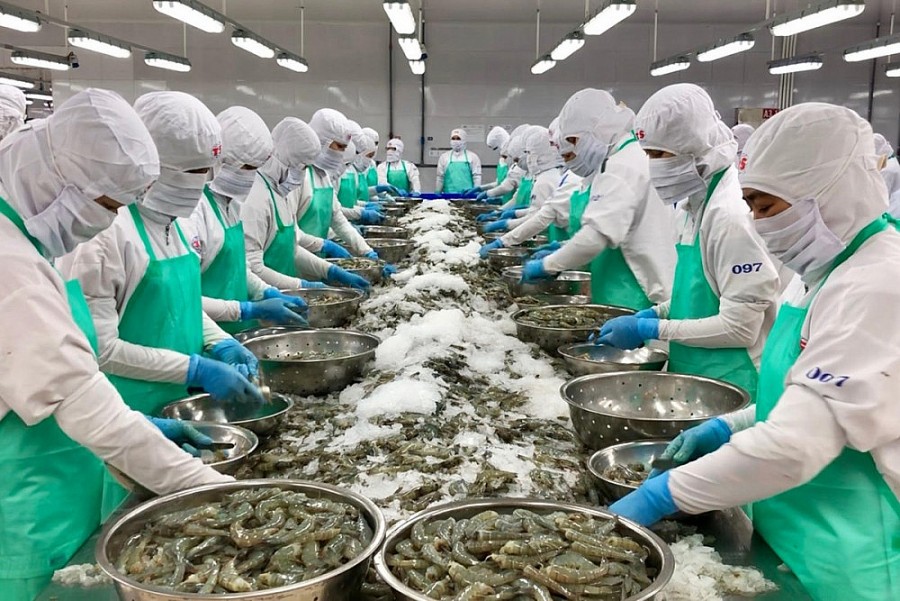
Key products such as seafood, processed agricultural products, textiles, footwear... have many export advantages.
The Vietnam - Israel Free Trade Agreement (VIFTA) is a comprehensive agreement, covering many areas of mutual interest to Vietnam and Israel such as trade in goods, services - investment, rules of origin, sanitary and phytosanitary measures, customs, government procurement...
Speaking to reporters, the leader of the Import-Export Department emphasized that the biggest benefit that VIFTA brings is the elimination or extensive reduction of import taxes on nearly 93% of tariff lines, creating a significant competitive advantage for Vietnamese goods. Key products such as seafood, processed agricultural products, textiles, footwear and especially manufactured industrial products, spare parts and electronic components will directly benefit from cost reduction.
"However, tariff reduction is only a necessary condition. The sufficient condition for Vietnamese enterprises to succeed in the Israeli market and neighboring markets is the challenge of innovating quality and upgrading production standards," the leader of the Import-Export Department emphasized.
The Israeli market is known as one of the markets with the strictest technical standards, food safety and quality management in the world, often equivalent to or even higher than many European or American markets. Israel is a country with leading agricultural and food processing technology, so they not only require safe goods but also ensure uniformity, traceability and technology content in the products.
This poses a big problem for Vietnamese businesses. To take advantage of VIFTA, they cannot stop at exporting raw or semi-processed goods with low value. Businesses need to change their production model, strongly shift to exporting high-value, deeply processed goods, and must meet international certifications required by Israel, such as kosher for food, or environmental and labor standards. VIFTA, therefore, acts as a strict "quality filter", allowing only truly innovative and professional businesses to pass.
From Israel to the Middle East: The roadmap to upgrading Vietnamese goods through the double-standard filter
The success in Israel under the VIFTA framework does not only stop at increasing bilateral export turnover, but also creates a strategic spillover effect to related markets with great potential in the Middle East, which is also a region with strict requirements on quality and religious certification.
The Israeli market is considered a "quality control station", creating conditions for Vietnamese goods to access deeper into countries of the Gulf Cooperation Council (GCC) such as the UAE, Saudi Arabia, Qatar or Turkey. This is an area with a huge demand for food imports due to limitations in agricultural land, and at the same time applying Halal standards and strict food safety regulations.
Deputy Minister Nguyen Sinh Nhat Tan believes that the VIFTA Agreement will be a launching pad to enhance trade and investment exchanges between the two countries in the coming time. At the same time, VIFTA will play an important role as a foundation to enhance bilateral trade and cooperation in areas of strength for both countries, contributing to the overall growth of the two economies.
Vietnamese enterprises investing in technology to meet Kosher standards under the VIFTA Agreement not only expands export opportunities to Israel but also creates a favorable foundation for obtaining additional Halal certification, which has many similarities in raw material control and production processes. In addition, Turkey - a large market and gateway to Europe - applies a similar technical system and has close trade relations with Israel. Therefore, when Vietnamese enterprises meet Israel's requirements well, the ability to penetrate markets such as Türkiye, especially in the manufacturing and textile sectors, will be significantly enhanced.
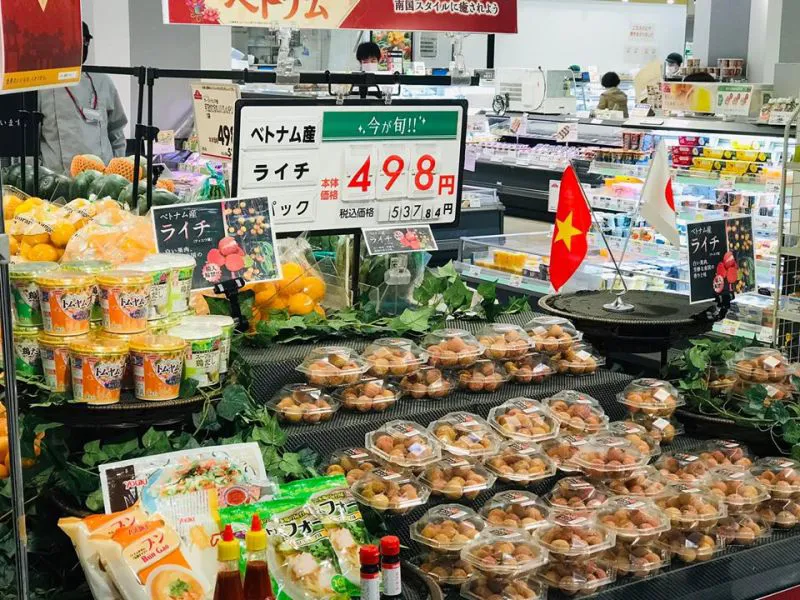
VIFTA is the driving force behind the production upgrading process, opening the door for Vietnamese goods to reach the Middle East.
To turn the potential from VIFTA and the Middle East markets into real export turnover, Vietnamese enterprises need to focus on upgrading their competitiveness and proactively adapting to increasingly high standards. This includes promoting deep processing and applying technology to shift from the export model of raw agricultural products to value-added products such as functional foods, dried or frozen agricultural products using advanced technology, as well as high-precision industrial product lines.
According to information from the Trade Promotion Agency (Ministry of Industry and Trade), Israel is currently prioritizing the search for partners to supply components, spare parts and modern production solutions, instead of products based on the advantage of cheap labor. Along with that, simultaneously achieving Kosher and Halal certifications is becoming an important strategy for businesses to operate an integrated production chain, thereby expanding access to the entire GCC region.
Notably, from a policy perspective, experts believe that the State's support role is crucial in helping businesses overcome technical barriers and meet international standards. Intensive training programs on VIFTA and technical regulations of the Israeli market, along with support for costs and certification processes, are especially necessary for small and medium-sized enterprises. At the same time, strengthening domestic supply chain linkages, from raw material areas to processing facilities, will help ensure product uniformity, traceability and food safety quality.
It can be affirmed that success in Israel not only brings opportunities in turnover but also international proof of Vietnam's supply capacity. VIFTA is therefore considered a driving force to promote the process of upgrading production, opening the door for Vietnamese goods to reach high-demand markets in the Middle East./.
Source: https://vtv.vn/hiep-dinh-vifta-bo-loc-chat-luong-mo-duong-cho-hang-viet-chinh-phuc-trung-dong-100251205203233374.htm















































































Comment (0)