

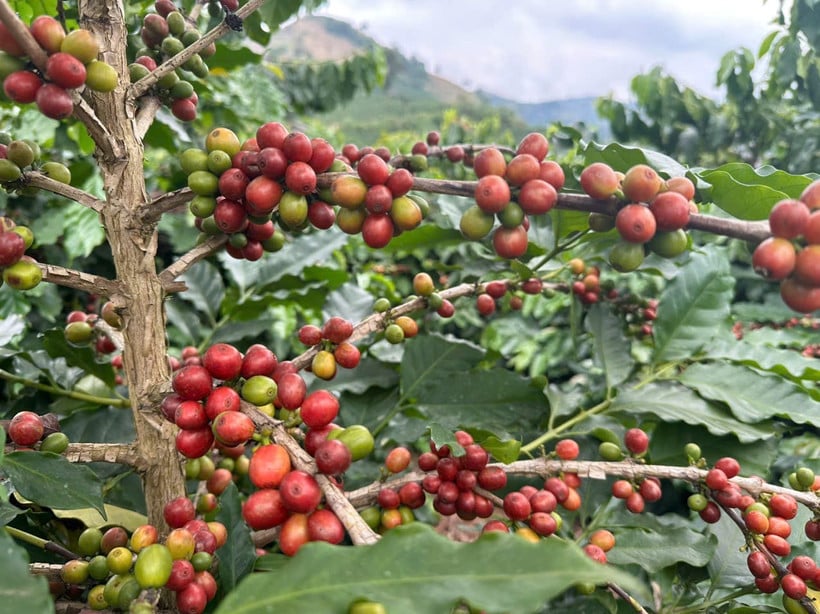
Growing coffee helps many households escape poverty.
Implementation efforts
Based on the Government's documents and instructions from central ministries and branches, Dien Bien province has promptly issued directive documents and implemented the National Target Program on Sustainable Poverty Reduction for the 2021-2025 period, ensuring close adherence to the practical situation and appropriate implementation capacity of grassroots levels. The work of developing plans and allocating capital sources has been carried out fully and promptly, regularly urging to speed up disbursement progress, removing difficulties and obstacles; propaganda and mobilization work has been strengthened.
Regarding the capital plan for the National Target Program on Sustainable Poverty Reduction for the 2021-2025 period, it is 2,279,076 million VND (of which development investment capital is 1,606,004 million VND, public service capital is 673,072 million VND), from 2022 to 2025, the allocation will reach 100% of the assigned plan.
In 2024, the poverty rate reduction reached 4.39%, achieving and exceeding the set target (the target assigned by the Prime Minister is 4%/year), the third consecutive year that the poverty rate in Dien Bien province has decreased by more than 4%. The implementation of projects using the capital source to implement the Program has been basically favorable, the projects are suitable for the objectives, subjects and support content of the Program, initially bringing benefits to beneficiaries.
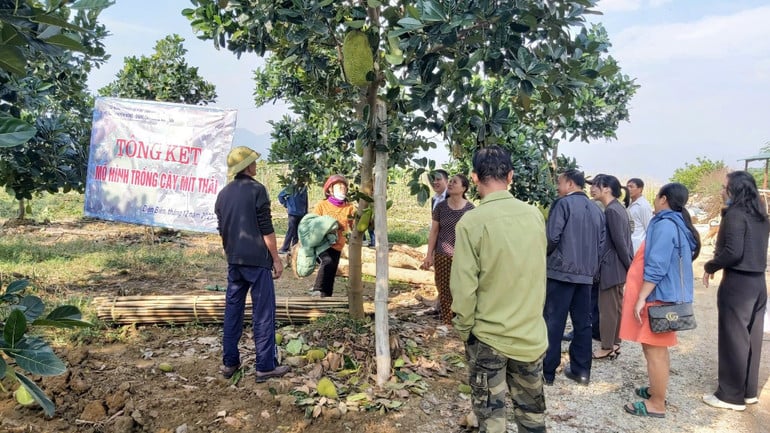
Thai jackfruit growing model.
Notably, 100% of (formerly) poor districts have been supported to invest in developing regional socio -economic infrastructure, serving people's lives, production, trade, goods circulation and providing basic social services. Support has been provided to build hundreds of models and projects to reduce poverty, support production development, service business, start-ups, and start-ups to create livelihoods, jobs, sustainable income, and adapt to climate change and epidemics for poor households, near-poor households, and newly escaped-poverty households; 100% of officials working on poverty reduction have been trained and provided with basic knowledge and skills in managing and organizing the implementation of poverty reduction programs, policies, and projects. Along with that, 100% of people in poor and near-poor households have been supported to participate in health insurance; housing support has been provided for 8,179 poor and near-poor households; 90.27% of poor and near-poor households use hygienic water; 95% of households living in poor districts and especially disadvantaged communes have access to information on sustainable poverty reduction through publications and media products. The proportion of workers from poor households, near-poor households, households that have just escaped poverty and from poor and disadvantaged areas who have received training is increasing.
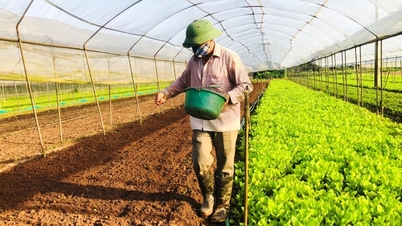
Developing production - processing - consumption linkage models associated with value chains, especially for key products such as macadamia, coffee, pineapple, not only helps increase income for poor households, near-poor households and people in particularly difficult areas, but also creates an important premise for building a sustainable, modern agriculture, linking production with the market. In many communes with soil and climate suitable for growing coffee trees, households are supported with essential materials, technical staff guide people to sow, plant, and care for them, bringing economic efficiency, income many times higher than growing corn and cassava, helping to escape poverty sustainably. Many households share that planting coffee trees once can yield harvests for many years; labor and care costs are low, care techniques are quite simple, and output is guaranteed, so they are confident and excited. Mr. Tong Van Don in Tuan Giao commune said that thanks to the local government's propaganda and active support, he boldly planted macadamia and coffee on 1 hectare of hilly land, his life became less difficult and more prosperous.
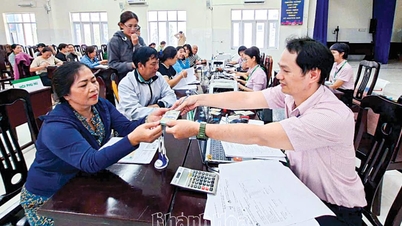
According to Deputy Director of the Department of Agriculture and Environment Lo Hong Phong, the emulation movement "For the poor - No one left behind" was widely launched, suitable to the actual conditions of each locality, spread strongly, attracted the attention of the whole society, contributing to the successful implementation of the Poverty Reduction Program. Many poverty reduction projects were implemented synchronously and effectively, contributing to promoting production, improving people's lives, and changing the face of the countryside. Many poor households were motivated, promoting the spirit of self-reliance, overcoming difficulties, and rising up in life.
Need to promptly remove difficulties and obstacles
Frankly, the results of poverty reduction in the province are not really sustainable; the rate of poor households is still high, some poor households tend to escape to near poverty; the income gap between households, groups of households, regions, and ethnic groups is still high, with many potential factors increasing the gap. The shortage of agricultural land still exists in many regions. Difficult conditions converge among many poor people, so it is difficult to overcome immediately, a part of the poor and poor households are still confused in choosing a way to escape poverty.
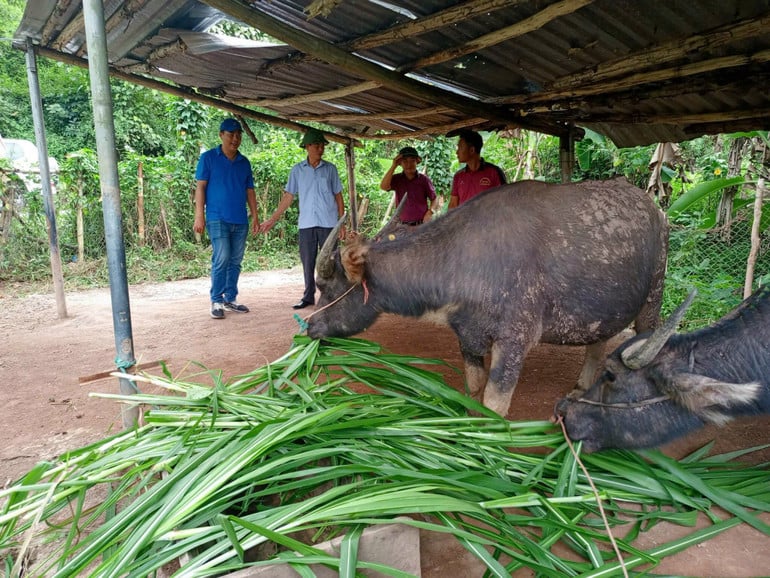
Livelihood model helps many poor households improve their lives.
Dien Bien province is a purely agricultural mountainous province, far from the major economic centers of the country, with complex terrain, difficult transportation; low economic starting point, high multidimensional poverty rate in rural areas, low average income per capita in rural areas, mainly from agricultural activities; fragmented land, high slope; scattered population, uneven awareness of people... are major obstacles in agricultural and forestry production. Abnormal weather changes such as severe cold, severe cold, floods, landslides... greatly affect agricultural production and people's lives. Most farmers lack investment capital, limited farming skills; access to and application of science and technology in agricultural production is still limited; the market for agricultural products is difficult, uncertain, and unstable.
Poor households are mostly ethnic minority households, living in scattered areas in extremely difficult and disadvantaged communes, with low and uneven educational levels; essential infrastructure is still weak and unsynchronized; actual living conditions, production and business in mountainous, remote and underdeveloped ethnic minority areas still face many difficulties and shortages. The level of financial support for the project to support production development in communities in areas not in difficult and extremely difficult areas is 60%, households participating in the project must contribute up to 40%, so many poor, near-poor and newly escaped poverty households do not have the conditions to participate. Most poor and near-poor households in difficult and extremely difficult areas propose that the State support breeding cows and buffaloes (because pig and poultry farming is highly economically efficient and has many diseases).
Some inadequacies in the mechanisms and subjects of some sub-projects and projects have not been resolved, so it has not created favorable conditions for localities to implement. The progress of some projects, sub-projects, and components of the Program is still slow, and capital disbursement is not high. Many communes still have difficulties and confusion in implementing projects to support production development because there is no guidance on purchasing crops, livestock, and goods and services directly produced by the people; some crops have been converted but are underdeveloped due to unsuitability to soil and climate conditions or lack of care from the people.
The number of regulations and instructions related to implementation is large and some documents need to be changed and supplemented, the content is not unified and unclear, making it difficult to research and apply the detailed allocation to each content, task, and sub-project for the National Target Programs, reducing the initiative, not really decentralizing and delegating power, causing difficulties in allocation and organization of implementation.
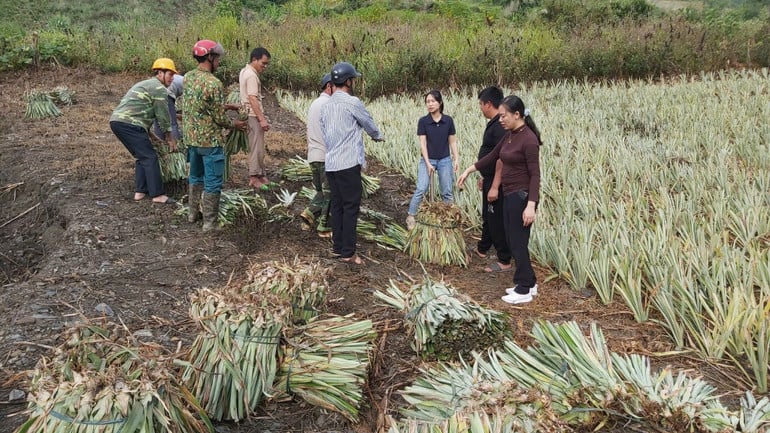
Many households are instructed in farming techniques to increase productivity.
Units in charge of linking projects to develop production and consume products according to the value chain are not supported with infrastructure to serve the linkage, including: machinery, equipment; construction of infrastructure works to serve the linkage of factories, yards, warehouses to serve production, preliminary processing, preservation, processing and consumption of agricultural products; support from the state budget is still limited, so it is not possible to attract units in charge of linking to participate in implementing linkage projects in the area.
Some commune-level Party committees and authorities have not yet identified poverty reduction as their responsibility, but still consider it the responsibility of the provincial level. The goals and solutions for poverty reduction are still general and not specific; the implementation of policies to support production development, livelihood diversification and replication of poverty reduction models is still confusing.
The capacity of commune-level cadres and civil servants is uneven, often changing and rotating new cadres, so it takes a lot of time to update information and get acquainted with the work. Lack of specialized cadres makes it difficult to organize and implement poverty reduction programs and projects at the local level, slow progress. A large number of poor people still wait for and rely on the support of the State, so they are not determined to escape poverty.
Promoting the positive results achieved and promptly overcoming difficulties and limitations will create momentum for effective poverty reduction work in the coming time.
In the 2021-2024 period (according to the poverty standard for the 2021-2025 period), the poverty rate has decreased from 34.9% in 2021 to 21.29% in 2024, an average decrease of 4.53%/year (a decrease of 16,906 poor households), reaching 113.25% of the Resolution's annual target. It is estimated that by the end of 2025, the poverty rate will decrease by an average of 4.4%/year, achieving the planned target.
KHANH MINH
Source: https://nhandan.vn/hieu-qua-cong-tac-giam-ngheo-o-dien-bien-post927045.html




















![[Photo] National Assembly Chairman Tran Thanh Man attends the VinFuture 2025 Award Ceremony](/_next/image?url=https%3A%2F%2Fvphoto.vietnam.vn%2Fthumb%2F1200x675%2Fvietnam%2Fresource%2FIMAGE%2F2025%2F12%2F05%2F1764951162416_2628509768338816493-6995-jpg.webp&w=3840&q=75)





























































Comment (0)