

He is not only the first person to spread this art in Vietnam, but also an artist who has made great contributions in developing and elevating sand painting as an emotional storytelling medium.
Artist Dang Tri Duc's journey to moving sand painting began from a chance moment. In 2008, when projection devices such as LED screens began to become popular in Vietnam, the need to find suitable art forms to perform on these devices also became urgent. One time, Dang Tri Duc watched a short clip of a Hungarian artist performing sand painting through a computer at an internet cafe, when YouTube was still unfamiliar to many people.
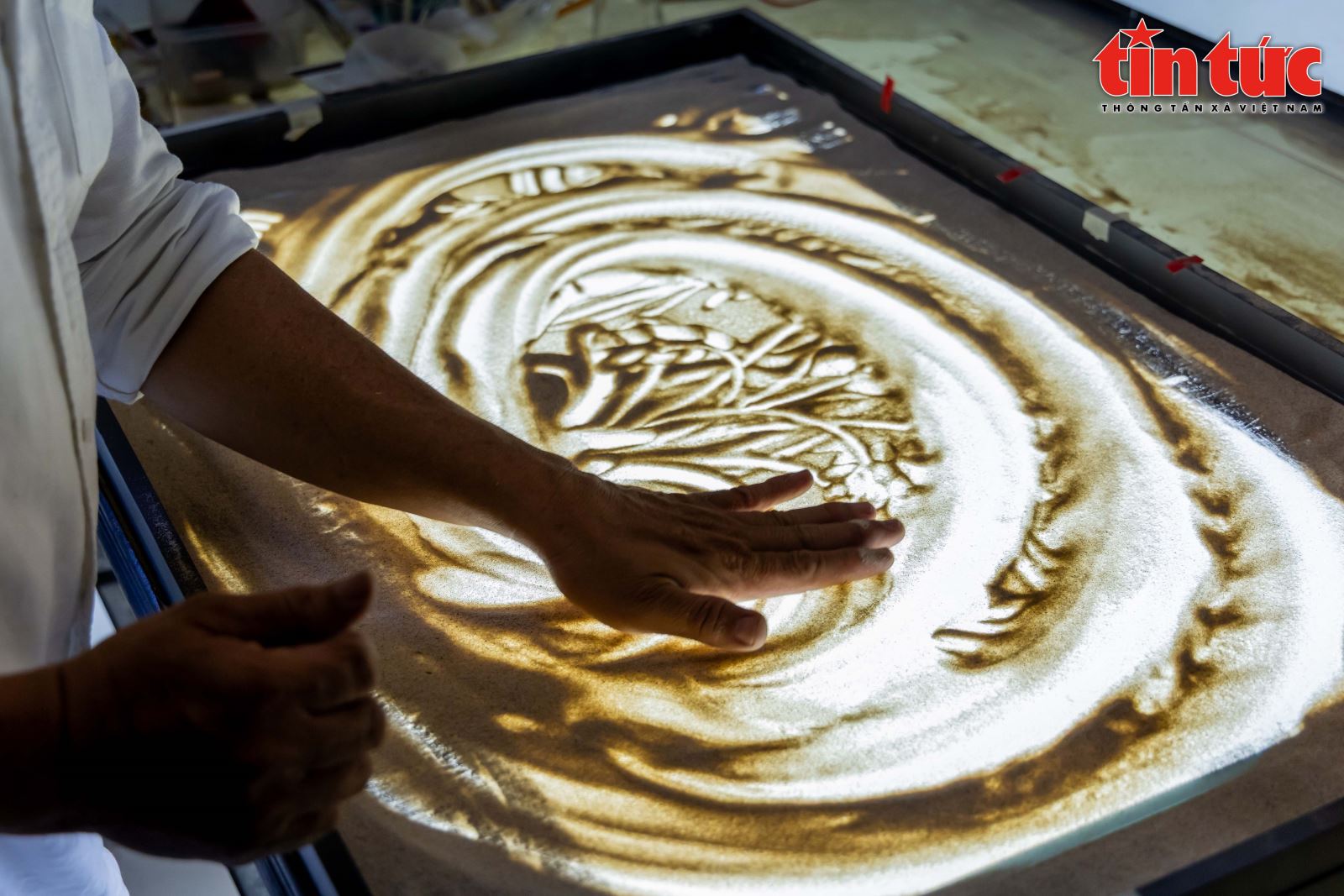
With skillful hands, artist Dang Tri Duc has told many stories in sand with different contents.
A friend asked him: “Can Tri Duc do it?”, that seemingly random question prompted him to start experimenting. He used a pair of glasses, a flashlight and started pouring sand onto a flat surface to try drawing. At first, it was simply drawing images with sand, but with his background as a long-time content creator and editor, he quickly linked the images into coherent stories. When performing with music , the performances became lively and expressive. He also combined other elements such as dance, mime, body movements, etc. to create a comprehensive and attractive performance.
According to artist Dang Tri Duc, sand painting is not simply drawing. This is a highly comprehensive visual art form, requiring the artist to know how to draw, feel music well, count the beat and perform the performance movements rhythmically and precisely. He used to work with puppetry, so approaching sand painting was somewhat easier. From 2008 to now, he has continued to perform and develop the art of moving sand painting with his group of four members in Go Vap district, Ho Chi Minh City.
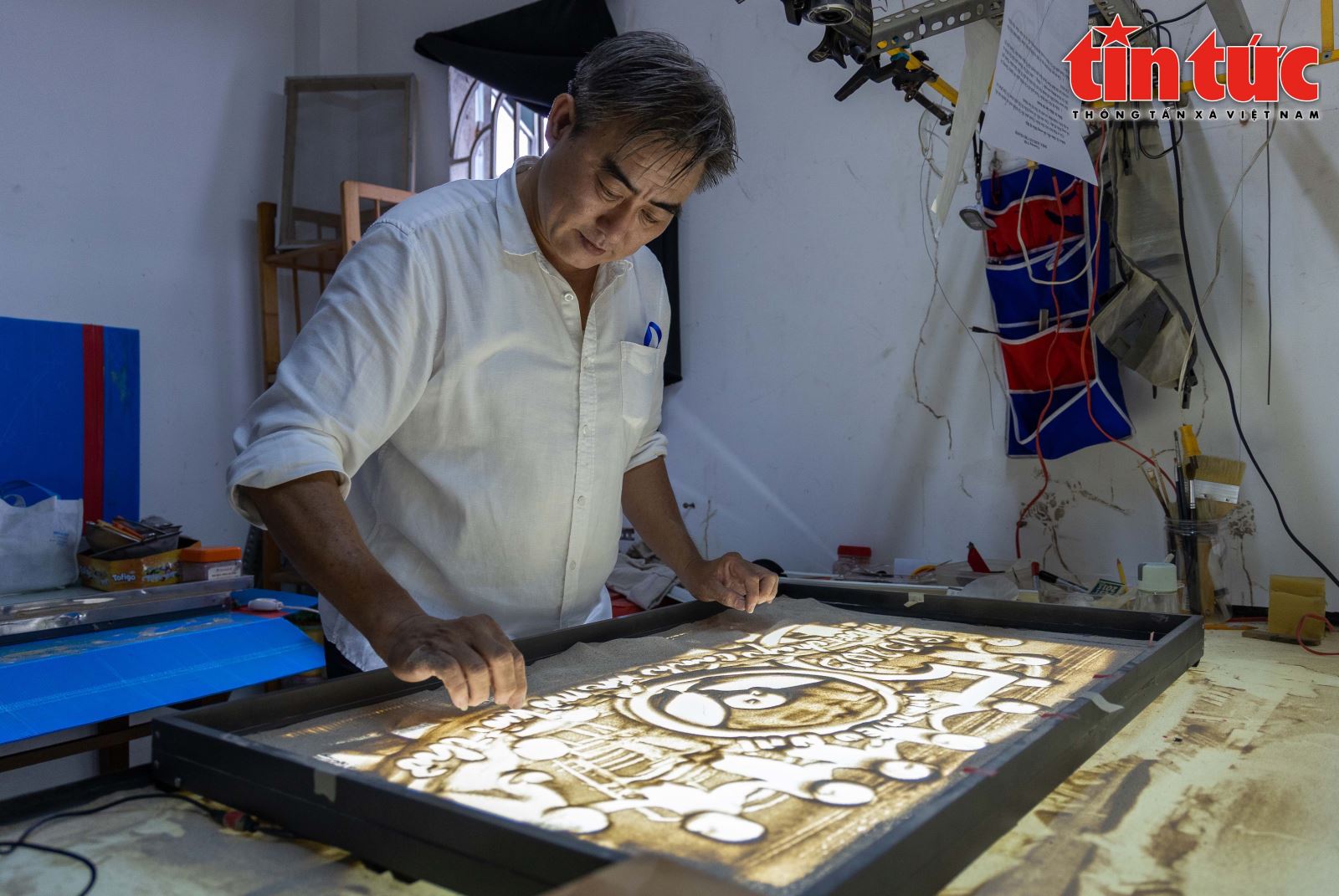
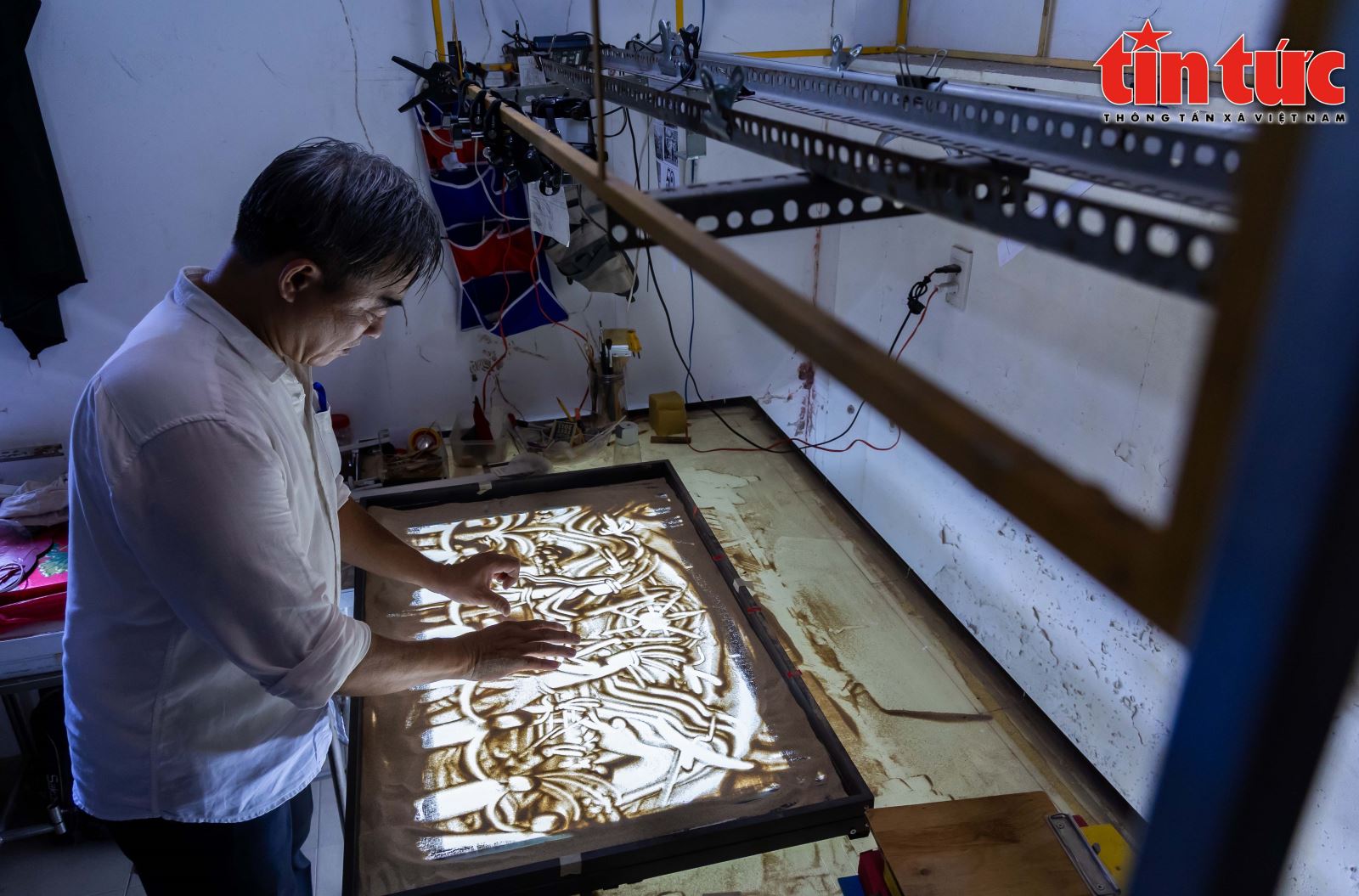
Even though he has a certain position and is known by many people, painter Tri Duc still diligently practices sand drawing skills every day.
Artist Dang Tri Duc shared that the biggest difficulty in performing sand paintings is not in creating individual images, but in the technique of transitioning scenes, turning one image into another smoothly and logically. This is the element that creates surprise and emotion for the viewer. The artist must be truly proficient, knowing how to add strokes without damaging the old image, thereby creating a seamless story. This technique requires not only talent but also a serious and long-term training process.
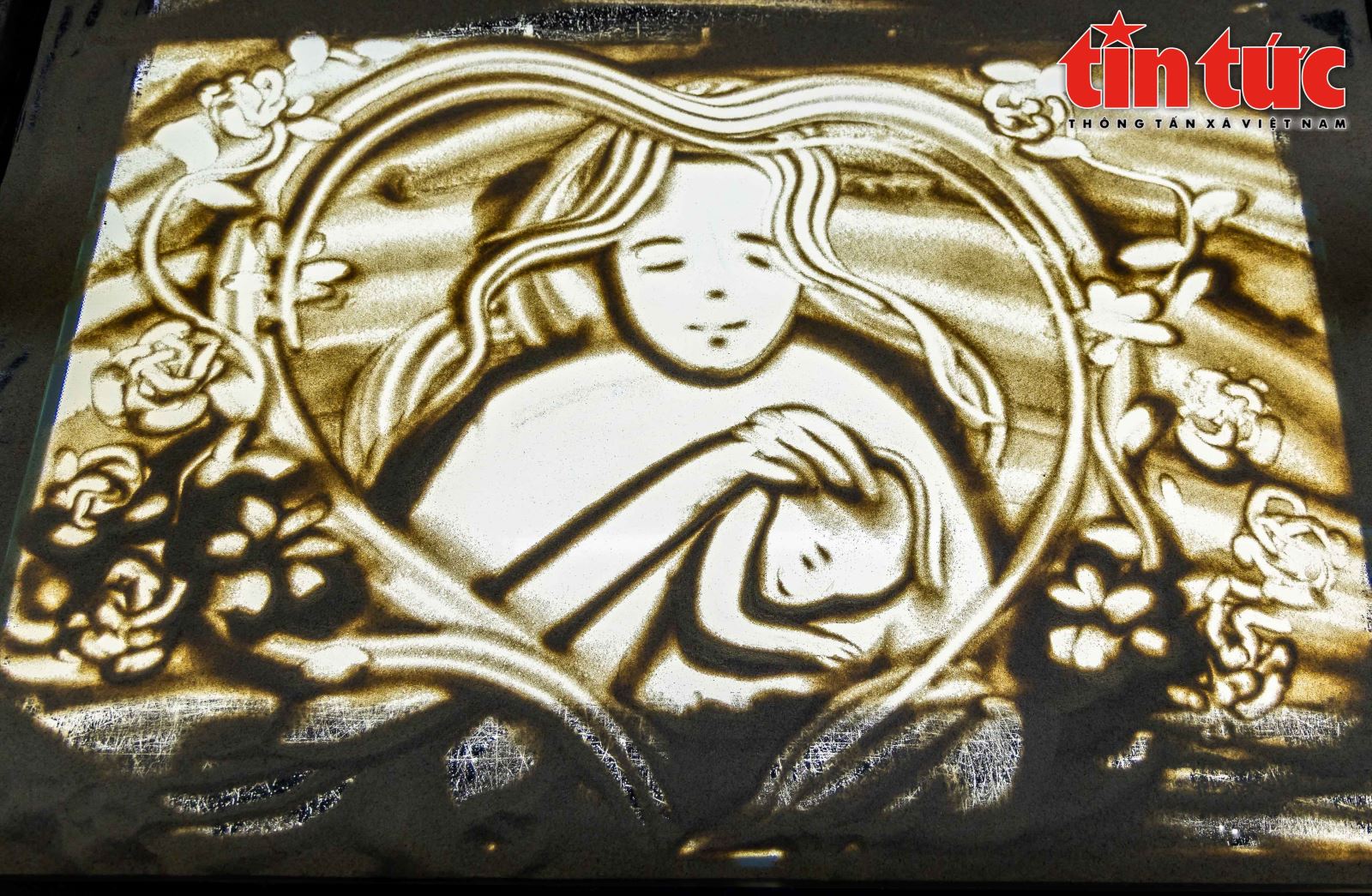
The sand painting illustrating the song "Mother's Diary" marks a development in artist Dang Tri Duc's career.
2012 marked a major turning point in the career of artist Dang Tri Duc when he participated in a sand painting performance illustrating the song “Mother’s Diary”. Within just a few days of the video being posted, the number of views reached 4-5 million, a very impressive number at that time. Since then, sand painting has become a new trend in performing arts, warmly welcomed by the public.
Not only famous domestically, artist Dang Tri Duc also has the opportunity to bring sand paintings to the world. He has performed in many major art programs in Germany, France, and the Czech Republic within the framework of the program "Spring in the homeland". In 2015, he and a Vietnamese art troupe performed in the United States and in 2016, he had the honor of participating in a performance at the World Buddhist Congress in Nepal, an event of profound religious and cultural significance.
Artist Tri Duc shared that in European countries, sand painting art has been widely applied in many events from large to small. Luckily for him, when sand painting was first introduced to Vietnam, the demand for performing at events was very high, helping him have the conditions to develop and affirm his position.
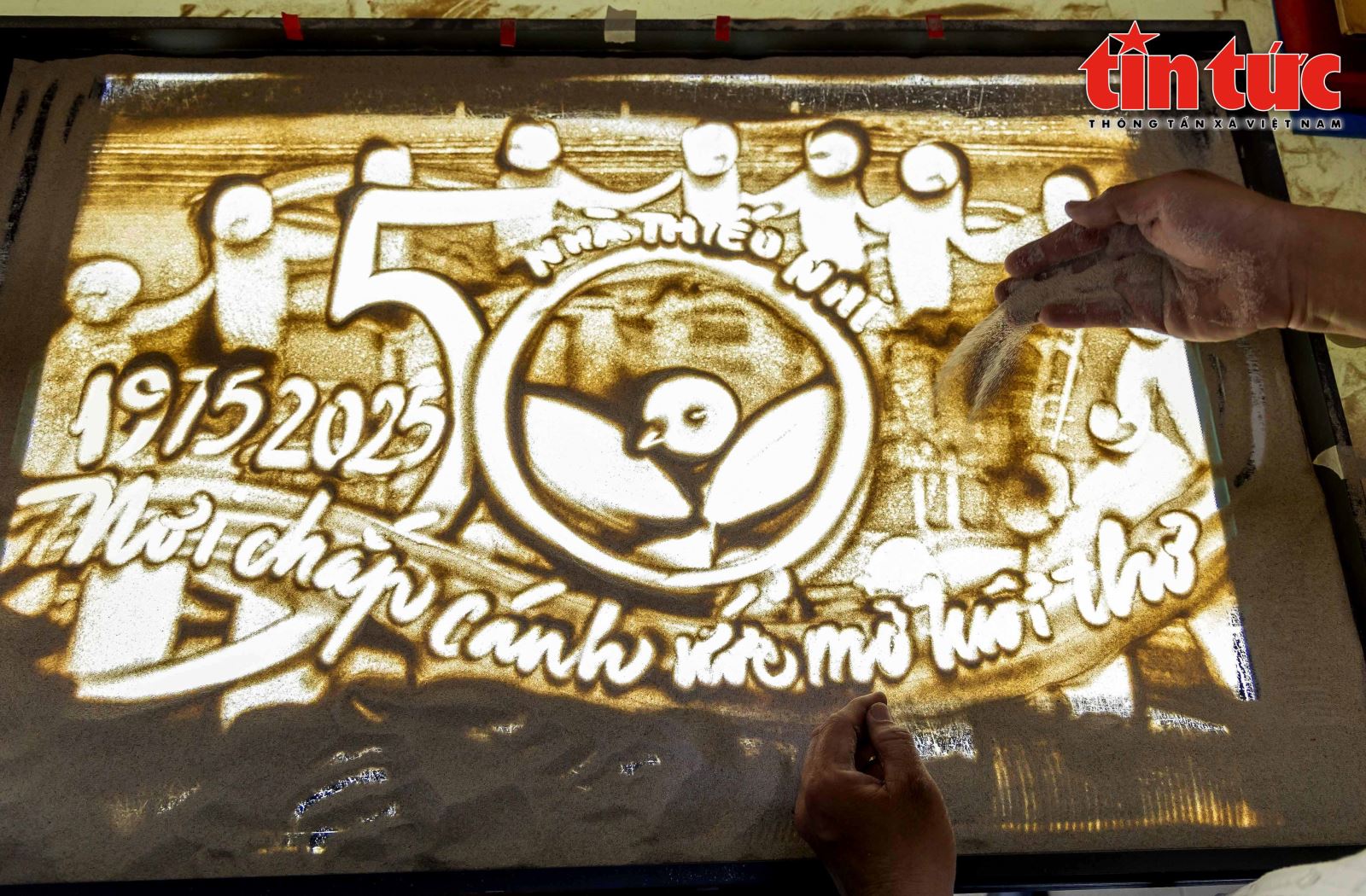
A sand painting that artist Dang Tri Duc will perform on the occasion of the 50th anniversary of the founding of Ho Chi Minh City Children's House.
close
For artist Dang Tri Duc, sand painting is not just a drawing technique, but also an art of storytelling through moving images and music. Each of his works is a story, sometimes a longevity celebration, a birthday, or a heroic historical event such as the 50th anniversary of the Liberation of the South and major events of the country. Every detail, every stroke contains the message and emotion that he wants to convey to the viewer.
He also constantly innovates and experiments with new techniques such as drawing with both hands at the same time, something that not everyone can do. "There are techniques that I only need to practice for a few days, but there are also techniques that take months to master," artist Tri Duc shared.
With his great contributions to the art of sand painting, in 2012, artist Dang Tri Duc was honored to receive the Gold Medal at the National Drama Festival with his sand painting performance as the background for the play, a worthy recognition for his talent and persistent efforts.
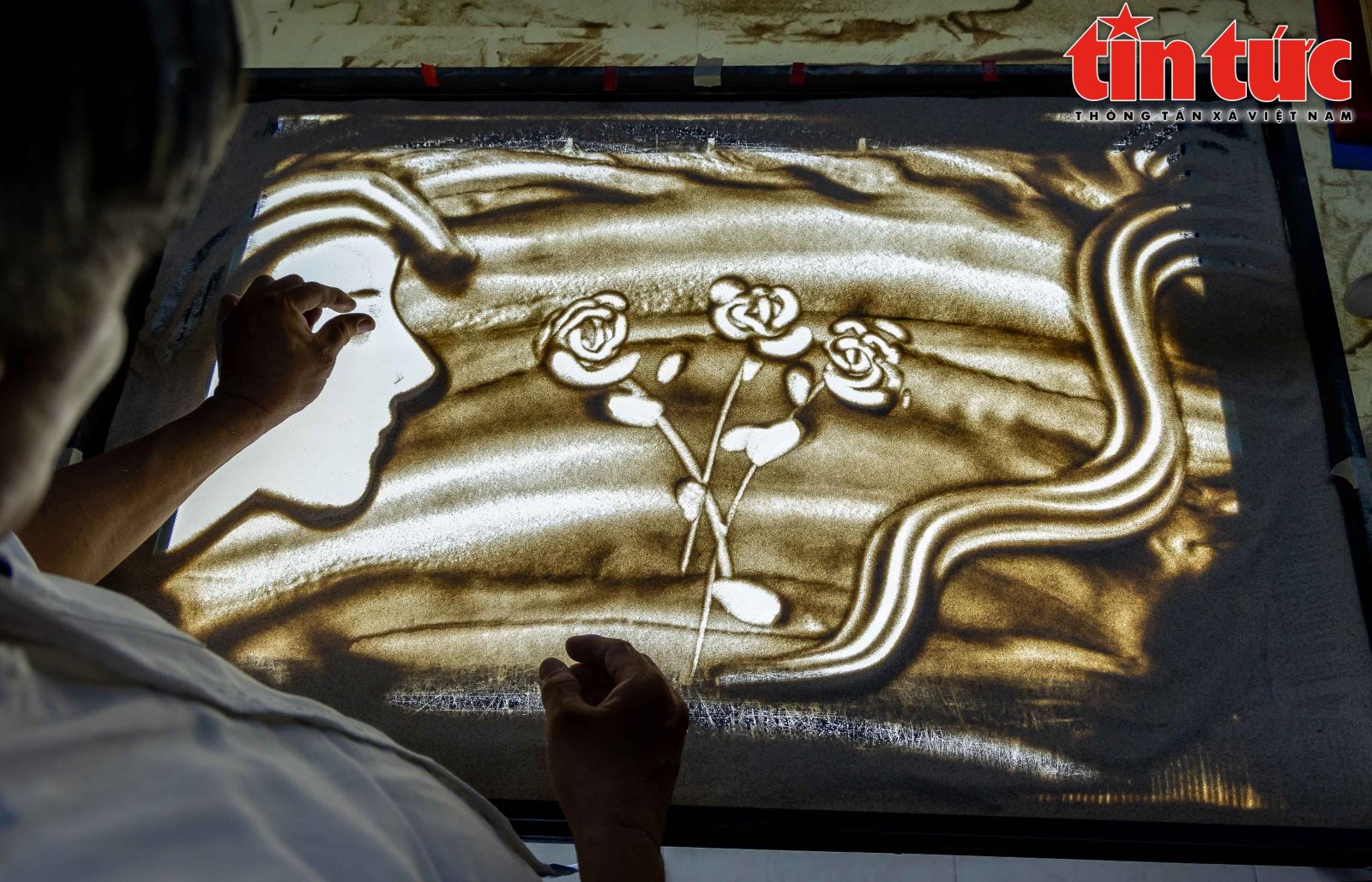
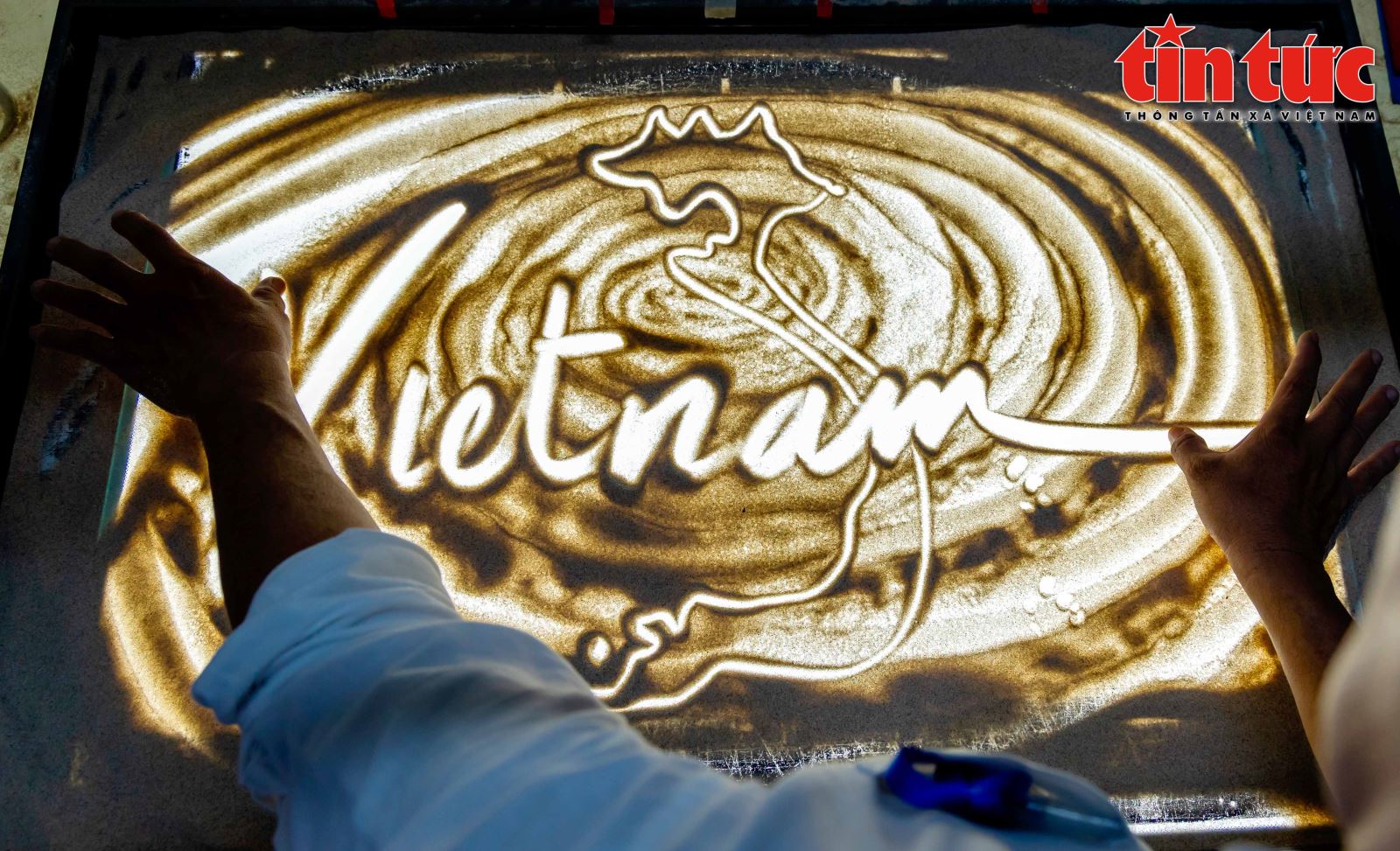
Each sand painting that artist Dang Tri Duc performs contains an emotional story.
After more than 15 years of dedication to the art of sand painting, artist Dang Tri Duc has continued to create and perform. He is proud to be the first person to introduce and perform sand painting to the Vietnamese public in a wide scale. But more than awards or glory, what makes him happiest is the love and support of the audience.
Mr. Tri Duc shared: “My biggest award is the public’s acceptance. That is the motivation for me to continue telling stories with sand, love and heart.”
Source: https://baotintuc.vn/van-hoa/hoa-si-dang-tri-duc-nguoi-tien-phong-ke-chuyen-bang-cat-20250529140322298.htm
































































Comment (0)