

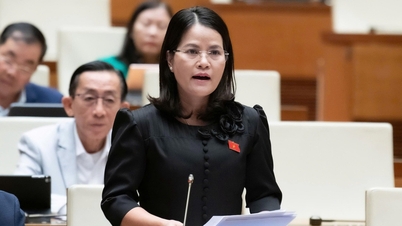
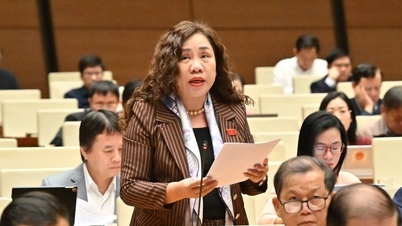
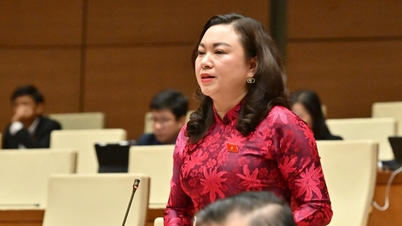
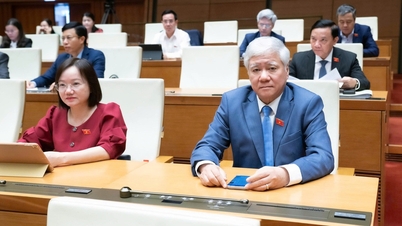
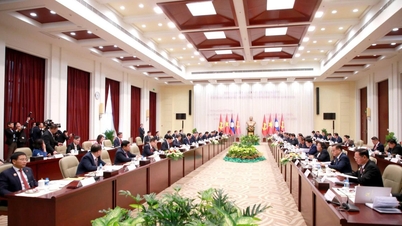
On the afternoon of December 2, the National Assembly discussed the National Target Program on modernization and improving the quality of education and training for the 2026-2035 period.
The national target program for the 2026-2035 period includes five projects: ensuring preschool and general education facilities; modernizing vocational education, forming six national centers and 12 high-skill regional centers; strengthening infrastructure for key universities; developing a team of teachers, managers and learners in the context of digital transformation; and a system of inspection, monitoring and evaluation.
By 2030, the program aims to standardize and solidify all preschool and general schools; complete the network of boarding schools and public housing in disadvantaged areas; 30% of general schools have equipment for teaching STEM/STEAM in English. Vocational education strives to have 18 high-quality schools; higher education has at least 8 facilities in the top 200 schools in Asia and some facilities in the top 100 in the world by field.
Along with that, 95% of teachers and 70% of students are trained in digital skills; at least 30% of educational institutions effectively apply digital technology and AI. English gradually becomes the second language with 30% of high schools having teachers qualified to teach science subjects in English; all key pedagogical universities are qualified to train this team.
By 2035, all preschool and general education facilities will meet infrastructure standards and be qualified to teach English as a second language. Vocational education aims to have 60 high-quality colleges meeting ASEAN-4 standards and 6 schools approaching the G20 group; public universities in the planning will complete infrastructure and form a system of innovation centers.
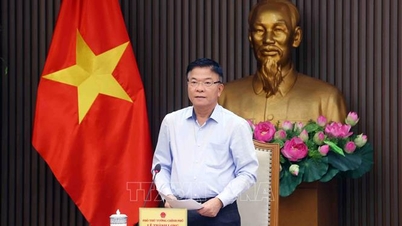
Explaining to the National Assembly, Deputy Prime Minister Le Thanh Long analyzed the basis for mobilizing a total capital of more than VND580,000 billion to serve the goal of modernizing facilities, improving the quality of staff and meeting the requirements of science and technology human resources for education.
Of which, the central budget is more than 349,000 billion VND, the local budget is more than 115,000 billion VND, the counterpart capital of universities and vocational training institutions is more than 89,000 billion VND; the rest is from other legally mobilized sources. In the 2026-2030 period, the State will allocate at least 174,673 billion VND; in the 2031-2035 period, about 405,460 billion VND.
According to the Deputy Prime Minister, the program aims to institutionalize the Party's major policies, especially Resolution 71 of 2025 on building a new national target program in education, creating a long-term foundation for developing high-quality human resources. He said that if the total capital is divided among 54,000 educational institutions, 1.6 million teachers and 25 million students, this is not too large a number.
It is expected that in the 2026-2030 period, the central government will allocate about 100,000 billion VND; localities 45,000 billion VND; schools will contribute about 20,000 billion VND; and socialized capital about 9,000 billion VND. The Ministry of Finance, when appraising, has clarified the basis for capital allocation. Localities will be responsible for investing in infrastructure, and those that have not yet balanced their budgets will receive central support.
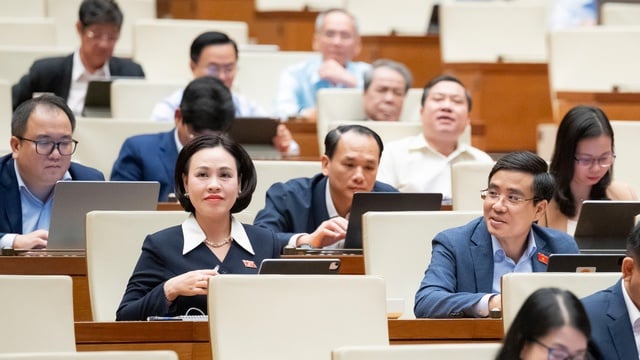
On the afternoon of December 2, the National Assembly discussed the national target program on modernization and improving the quality of education and training for the 2026-2035 period.
Program scope: Choose breakthroughs, not spread out
Deputy Prime Minister Le Thanh Long said that there are still many stages to complete for the national goal of modernizing and improving the quality of education and training. After the National Assembly approves the investment policy for the national target program, the next steps will be carried out, including making investment decisions.
The Government will continue to research to align, to best suit the capital allocation capacity, assigned tasks as well as the current economic context.
The Deputy Prime Minister emphasized that the policies proposed in this draft investment policy focus on a number of breakthrough steps, while other tasks have been and are being done in other programs or regular expenditures.
For example, investment in teaching ethnic minority languages or languages of border countries, as some opinions have mentioned, has been implemented according to separate projects and regular spending programs. The construction of the Ministry of Education and Training headquarters is also part of normal public investment. The Government will review to avoid spreading and ensure the program is appropriate and feasible.
Source: https://phunuvietnam.vn/hon-580000-ty-dong-danh-cho-hien-dai-hoa-giao-duc-giai-doan-2026-2035-238251202200407588.htm

![[Photo] National Assembly Chairman Tran Thanh Man receives First Vice Chairman of the Federation Council of the Federal Assembly of the Russian Federation](/_next/image?url=https%3A%2F%2Fvphoto.vietnam.vn%2Fthumb%2F1200x675%2Fvietnam%2Fresource%2FIMAGE%2F2025%2F12%2F02%2F1764648408509_ndo_br_bnd-8452-jpg.webp&w=3840&q=75)

![[Photo] Worshiping the Tuyet Son statue - a nearly 400-year-old treasure at Keo Pagoda](/_next/image?url=https%3A%2F%2Fvphoto.vietnam.vn%2Fthumb%2F1200x675%2Fvietnam%2Fresource%2FIMAGE%2F2025%2F12%2F02%2F1764679323086_ndo_br_tempimageomw0hi-4884-jpg.webp&w=3840&q=75)























































![[Infographic] Digital transformation for businesses](https://vphoto.vietnam.vn/thumb/402x226/vietnam/resource/IMAGE/2025/12/02/1764688626357_infographic-chuyen-doi-so-cho-cac-doanh-nghiep20251202050211.webp)













Comment (0)