

Unite to be stronger
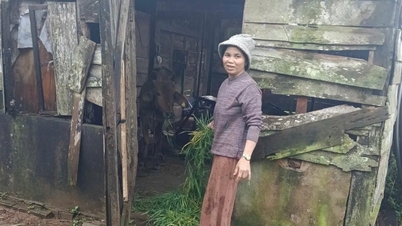
Voter Vi Thi Men - Que Phong commune, Nghe An province shared: If we can consolidate and clarify everything, the people will be very happy. The voter's sharing is similar to the reality pointed out by many National Assembly delegates at the discussion session on the morning of December 5: 3 programs but the same location, objects, same type of project... leading to duplication, even dispersion of responsibilities. The merger is expected to help unify management, reduce levels and procedures, increase investment efficiency and ensure resources go to the right focus. Voter Hwin Nie - Cu Prao commune, Dak Lak province agreed with the delegates' opinion that merger is not dissolution. Therefore, the proposal to keep a separate component for ethnic minority and mountainous areas - with specific mechanisms and goals - received strong support. Voters hope that "the difficulties of the difficult people" will not be lost when placed in a large program.
Voters hope that specific policies will continue to be clearly maintained in the new Program. People in the highlands have very different ways of doing business, learning conditions, health care and access to basic services compared to the lowlands. Therefore, the design specifically for ethnic minority areas is not just a technical requirement, but a humane concern so that the program truly touches the essential needs of the people, Mr. A Lenh, Meo Vac commune, Tuyen Quang shared. He hopes that when the program is effectively implemented, infrastructure is improved, livelihoods are sustainably supported and children have better education opportunities, the lives of people in the highlands will gradually improve, in line with the spirit of "no one is left behind".
Appropriate proportion division
If the merger is a strategic move, many National Assembly deputies and voters are excited, but the resource allocation mechanism is what makes many voters most concerned.
Following the information about the National Assembly session, voters of Nong Van Ngoan - a highland commune of Cao Bang province could not help but worry. The central government plans to allocate about 20% of the total program capital, while localities must take on 80%. For poor provinces, this is a burden beyond their capacity. Without a suitable mechanism, many of the most needed items are at risk of not being able to be completed simply because there is not enough counterpart capital.
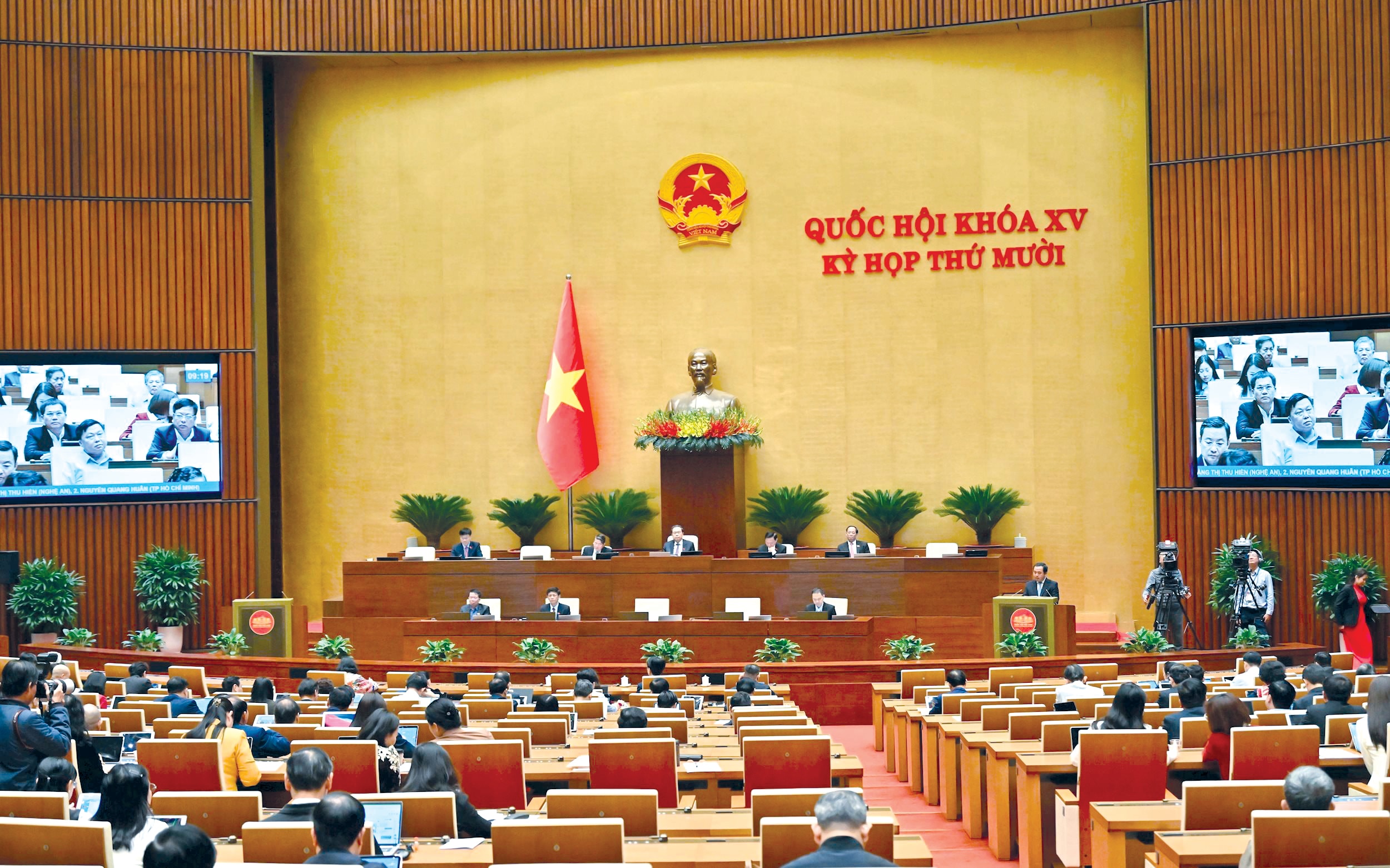
From the implementation of previous programs, many voters believe that it is reasonable for the Central and local governments to share investment responsibilities, but the ratio needs to accurately reflect the level of difficulty of each region. Therefore, the proposal emphasized at the TXCT meetings and also coincides with the view of many National Assembly deputies that it is necessary to flexibly adjust the ratio by region. Accordingly, for extremely difficult regions - where budget revenue is almost not enough for regular expenditure - the Central government needs to shoulder the majority, about 70%, to ensure that essential projects can still be implemented. For regions with more difficulties than average, a 50/50 matching ratio is considered feasible. Meanwhile, localities with better economic conditions can receive lower support levels, about 30% from the Central government. This approach is consistent with the spirit of "giving the strongest priority to the most difficult places", a consistent view throughout the discussion session on the Program.
Expanding the mechanism for replacing counterpart funds
At the same time, voters also recommended expanding the mechanism to replace counterpart funds so that no poor locality has to stay out of the policy just because of insufficient budget. Accordingly, instead of being forced to "pay out of pocket", localities can use legal sources such as land funds, socialized sources from enterprises, preferential loans or reinvestment from forest benefits and community tourism. These are real resources, suitable for the conditions of many mountainous provinces and can create the necessary flexibility for the policy to come into life. As many voters shared, if the mechanism does not take into account regional differences, then no matter how correct or good the program is, the poorest places - which need the most support - are easily left behind.
Another concern raised by many voters coincides with the comments of the delegates at the parliament: if a “leveling” rate is applied to all localities, no matter how good the policy is, it will be difficult to implement it evenly. Paradoxes can occur when the poorest places - which should receive the most support - face the biggest barriers in accessing resources, unintentionally reducing the humane meaning of the whole program. Voters therefore suggest allocation according to the actual level of difficulty. That is the voice of the lived experience of those who are directly disadvantaged if the mechanism is not designed to be close to reality.
Every policy is aimed at the people, but in areas still facing many shortages, what voters expect is not only the correctness of the policy but also the feasibility of resources and understanding of the specific characteristics of each region. The unification of the three programs is a big step forward, but for that step to reach every village, every house on the mountainside, the National Assembly and the Government must continue to fully listen to the voices of voters - those who understand best what is the urgent need and what is the reasonable solution for their own locality. That is also the common expectation of millions of people in difficult areas: the new program is not only innovative in mechanism, but truly opens a journey of sustainable, humane and inclusive development - so that no one is left behind.
Source: https://daibieunhandan.vn/hop-nhat-3-chuong-trinh-muc-tieu-quoc-gia-ky-vong-hanh-trinh-phat-trien-ben-vung-nhan-van-bao-trum-10399525.html










































































Comment (0)