

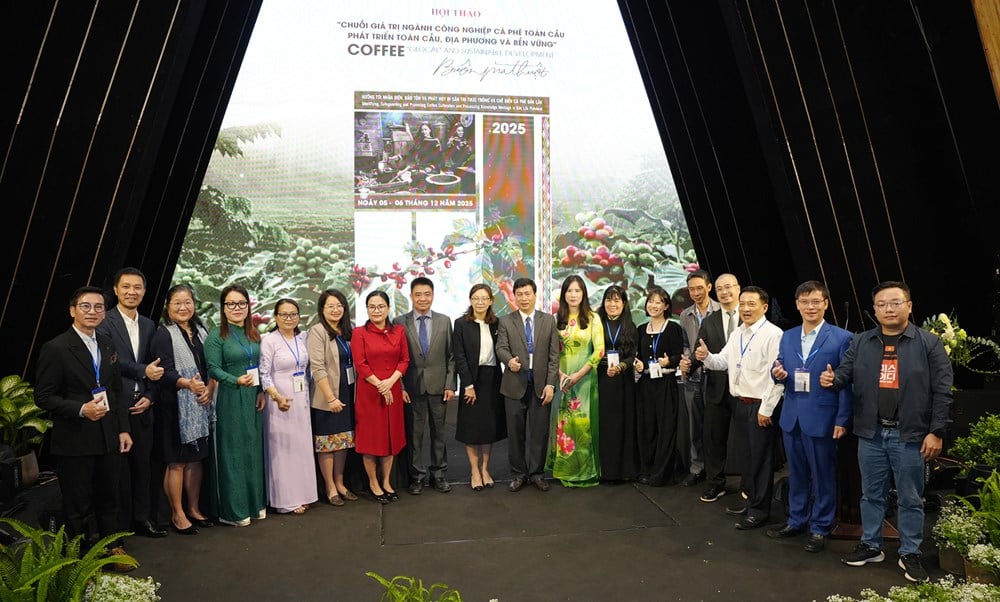
On the morning of December 6, at the World Coffee Museum (Buon Ma Thuot ward, Dak Lak province), the Department of Culture, Sports and Tourism of Dak Lak province in collaboration with Ho Chi Minh City University of Culture, UNESCO, Yunnan University (China) organized a scientific conference - International Forum "Global coffee industry value chain - Global, local and sustainable development" sponsored by Trung Nguyen Group Joint Stock Company.
Linking brand development with sustainable livelihoods
The workshop is the key activity in a series of events taking place on December 5 and 6, bringing together a large number of scientists, experts, managers, domestic and international businesses to discuss the role of coffee in the global value chain from the perspective of economics , culture, heritage and sustainable development.
Speaking at the opening of the workshop, Associate Professor Dr. Lam Nhan - Rector of Ho Chi Minh City University of Culture said that the workshop took place in the context of Dak Lak province and the Central Highlands region suffering severe consequences from the historic flood in 2025.
Thousands of households were affected, infrastructure and major crops were severely damaged. These losses are not only material losses but also the difficulties, worries and hardships that are weighing heavily on people's lives.
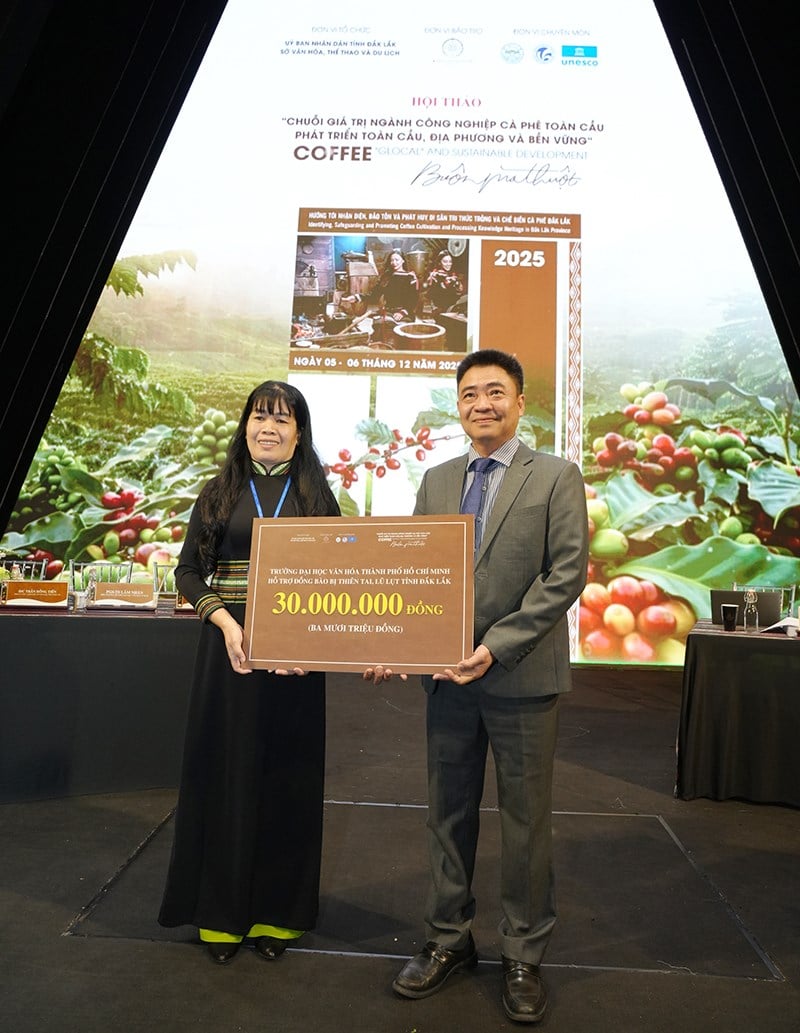
“In this solemn moment, we would like to deeply share the losses that our people have suffered,” Mr. Lam Nhan expressed, adding that from that reality, the conference not only has academic significance but also aims to find fundamental solutions to stabilize livelihoods, restore production and sustainably develop the Central Highlands region with rich identity.
According to Associate Professor Dr. Lam Nhan, coffee is a strategic industrial crop, the pride of Dak Lak and the Central Highlands, but it is also a crop with special ecological requirements, very sensitive to climate change.
The expansion of coffee acreage over the past years has brought immediate economic benefits, but also posed great challenges in terms of water resources, natural forest degradation and ecological balance.
“Every hectare of coffee plantation that is expanded comes at the cost of shrinking primary forests - which play a role in regulating water flow, protecting land, and maintaining water resources. Long-term forest loss, combined with the impact of climate change, is one of the underlying causes of the increased devastation caused by natural disasters,” Associate Professor Dr. Lam Nhan assessed.
From there, the workshop raised the requirement to view coffee industry development not only as a story of crops, but also as a close relationship between ecology - economy - culture - community and social responsibility.
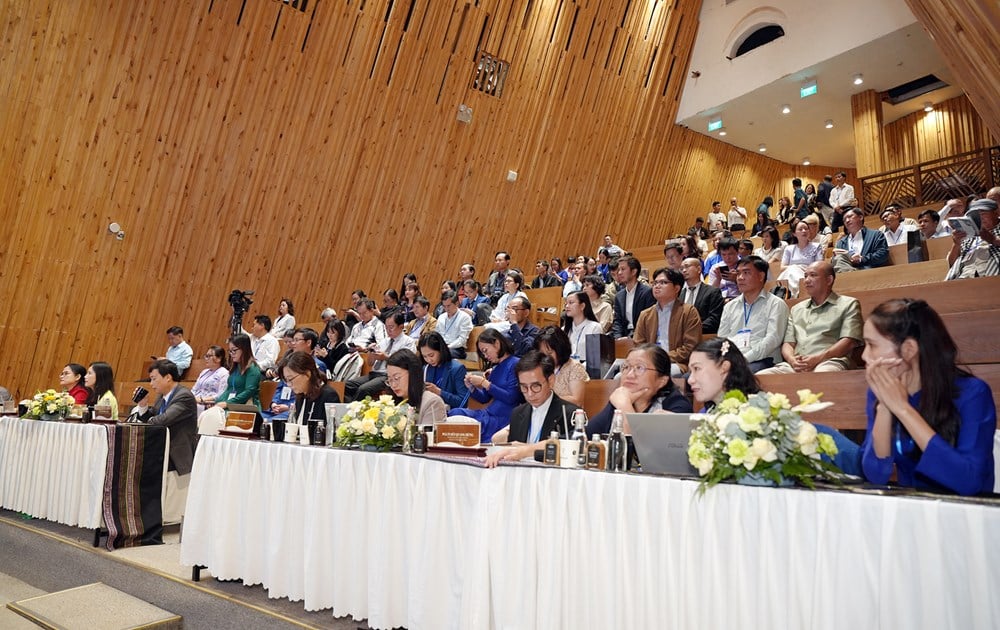
This international workshop also has special significance in the process of building the dossier "Knowledge of growing, processing and enjoying Central Highlands coffee" to submit to UNESCO for inclusion in the List of Good Practices for the Protection of Intangible Cultural Heritage.
This is considered an important opportunity to honor indigenous knowledge, increase the value of Vietnamese coffee brands and affirm the position of the Central Highlands on the world cultural heritage map.
Vietnamese coffee: from local heritage to global market
According to the Organizing Committee, after more than two months of implementation, the conference received 67 scientific presentations, spanning many fields from economics, society, culture, anthropology, heritage studies to processing technology, global value chains and sustainable development.
The presentations were divided into three main thematic groups: Coffee heritage: local identity and global value; Coffee value chain, industry and technology in the context of globalization; Coffee, social responsibility and sustainable development.
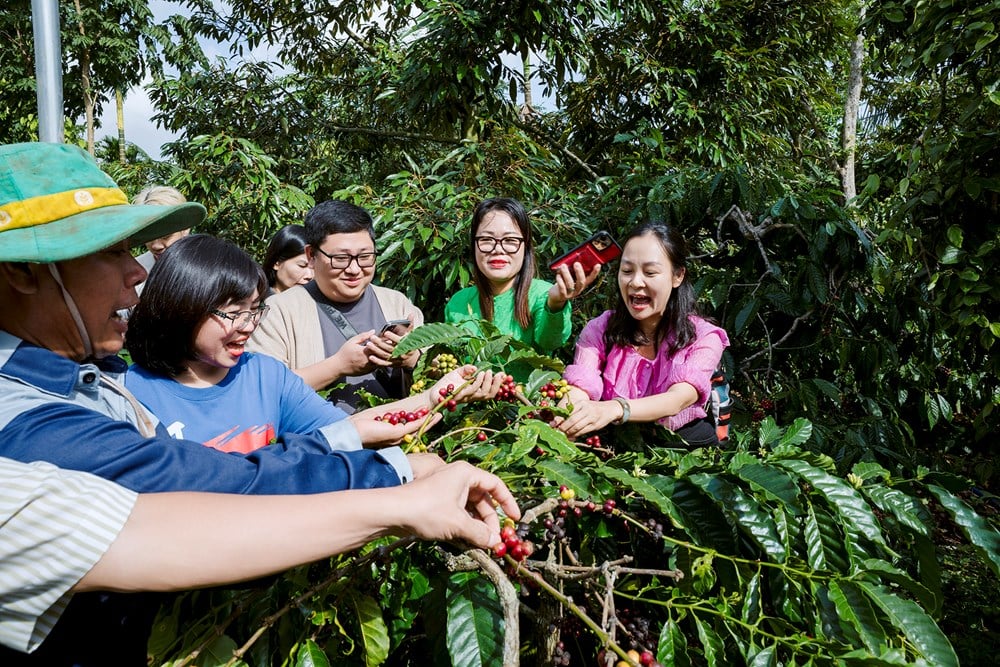
The content of the presentations focused on clarifying the role of coffee in the flow of cultural exchange and assimilation; practicing indigenous coffee in the context of globalization; positioning coffee heritage in economic, social and tourism development; preserving and promoting local knowledge in growing, caring, processing and enjoying coffee.
The organizers hope that the conference will become a prestigious academic space, connecting scientists and managers to build a strategic vision for the Vietnamese coffee industry, aiming at a balance between the goals of economic development, cultural preservation and conservation of the upstream forest ecosystem - the vital ecological foundation of the Central Highlands region.
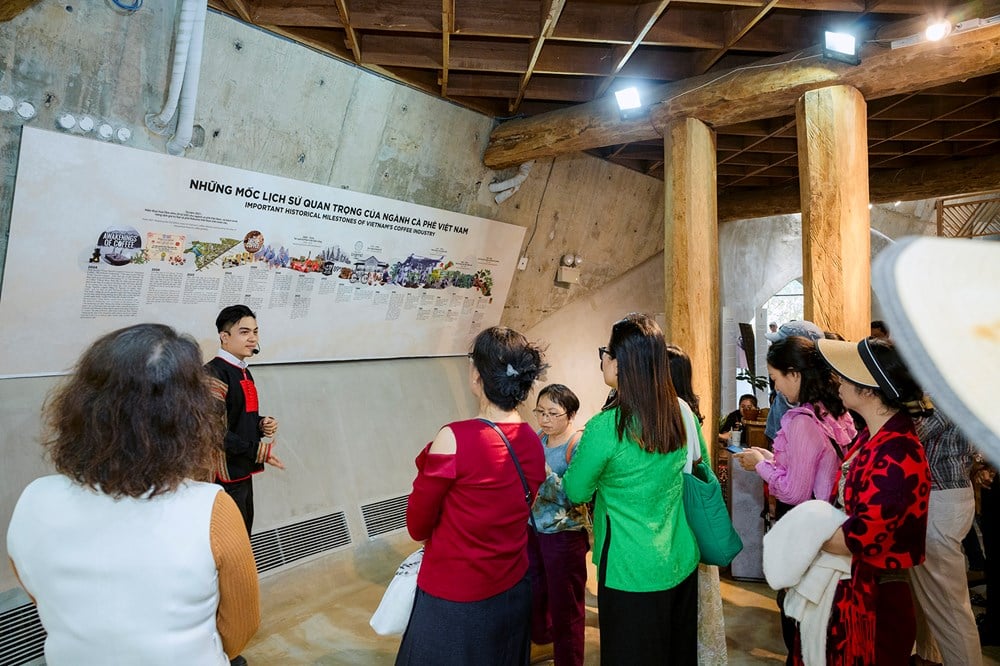
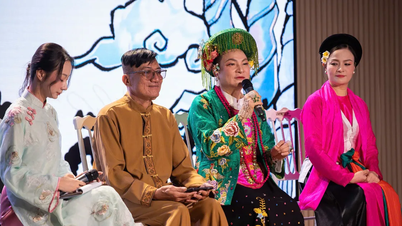
Not stopping at academic discussion sessions, the conference program also brings many unique cultural experiences such as coffee meditation, exchanges with heritage practitioners at coffee farms, visiting the World Coffee Museum, enjoying the 3D Mapping program of Ottoman coffee...
Thereby helping delegates approach the depth of Vietnamese coffee culture through direct, vivid experiences.
Through the workshop, the Dak Lak coffee industry in particular and Vietnam in general continued to affirm its development orientation according to the global value chain, associated with local identity, social responsibility and sustainable development goals, in line with world trends and practical requirements in the context of climate change.
Coffee has long gone beyond the role of an agricultural product to become a cultural asset, closely associated with the lives, indigenous knowledge and sustainable livelihoods of ethnic minorities in the Central Highlands.
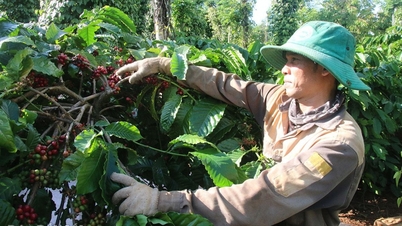
In Dak Lak - the coffee capital of Vietnam, coffee trees play an economic role, directly determining income, social security and local development, especially for the Ede, M'nong, Gia Rai communities...
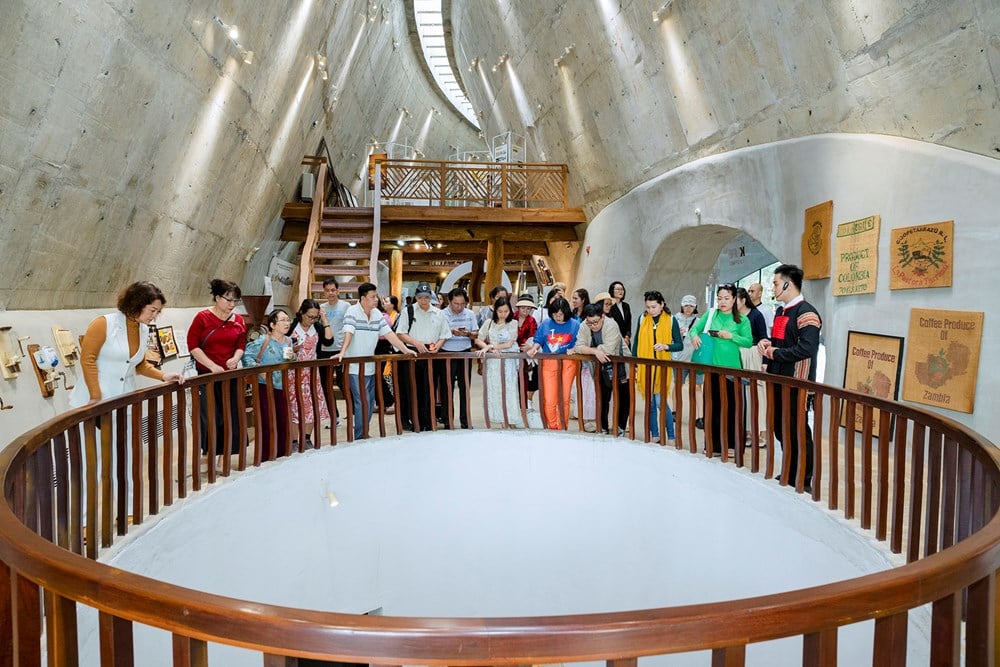
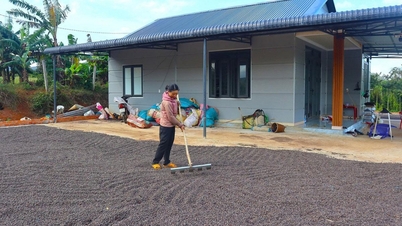
Not only is coffee a crop that helps alleviate poverty, it also contains a traditional knowledge system about cultivation, processing, and treatment of land and the environment. Over many generations, coffee has penetrated deeply into the way of life, forming cultural practices, nurturing community spirit, cohesion and pride in the identity of indigenous people.
On March 5, 2025, “Knowledge of growing and processing coffee in Dak Lak” was officially listed in the National Intangible Cultural Heritage List. This is an important milestone, affirming the cultural value of coffee in addition to its economic value, while opening up opportunities to elevate coffee products in the international market.
The international forum “Global Coffee Industry Value Chain - Global, Local and Sustainable Development” on December 5-6, 2025 not only promotes academic exchanges and international experience sharing, but is also the first step in the roadmap to build a dossier to submit to UNESCO.
If listed, the value of Dak Lak coffee beans will be enhanced by the depth of culture, history and indigenous knowledge, contributing to expanding the market, developing heritage tourism and ensuring sustainable livelihoods for the community.
Source: https://baovanhoa.vn/van-hoa/huong-toi-lo-trinh-xay-dung-ho-so-tri-thuc-trong-va-che-bien-ca-phe-dak-lak-trinh-unesco-186197.html






















![[Photo] National Assembly Chairman Tran Thanh Man attends the VinFuture 2025 Award Ceremony](/_next/image?url=https%3A%2F%2Fvphoto.vietnam.vn%2Fthumb%2F1200x675%2Fvietnam%2Fresource%2FIMAGE%2F2025%2F12%2F05%2F1764951162416_2628509768338816493-6995-jpg.webp&w=3840&q=75)















































Comment (0)