Discovery of 3.4 million year old fossil reveals human ancestors
The discovery of the 'Burtele Foot' along with the young teeth sheds light on the diversity of species during human evolution.
Báo Khoa học và Đời sống•01/12/2025
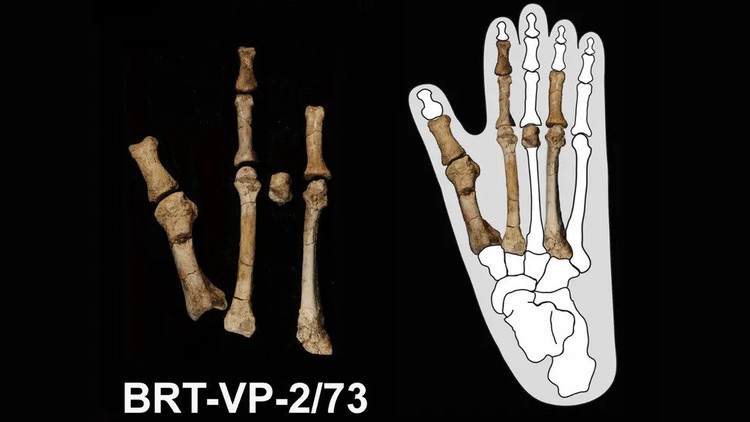
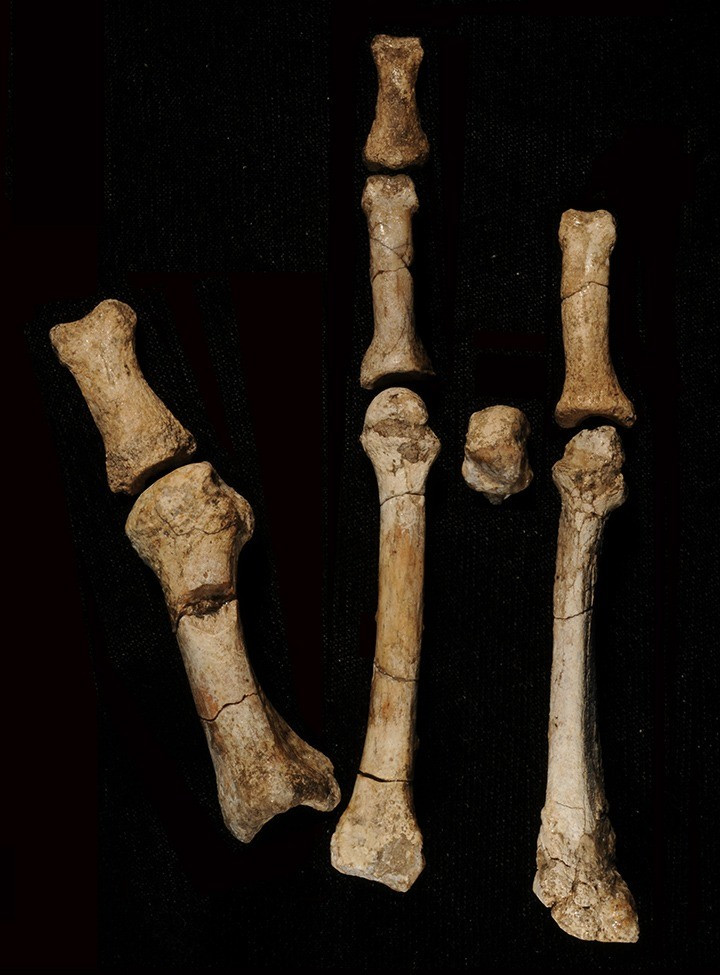
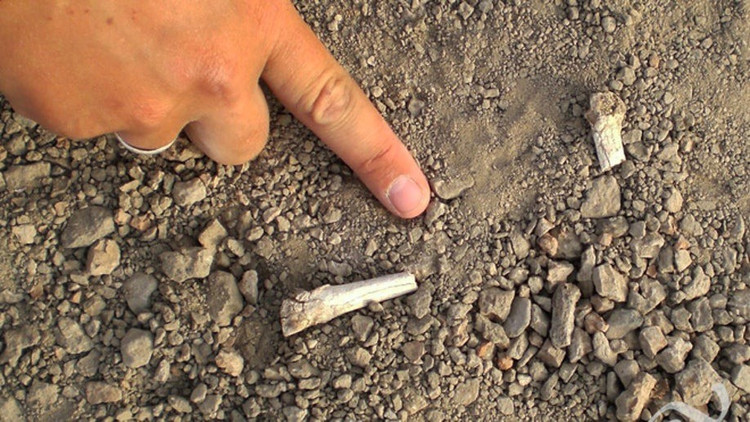
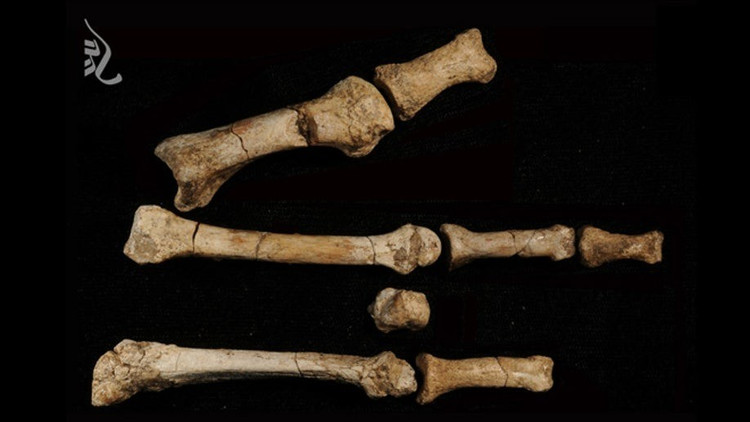
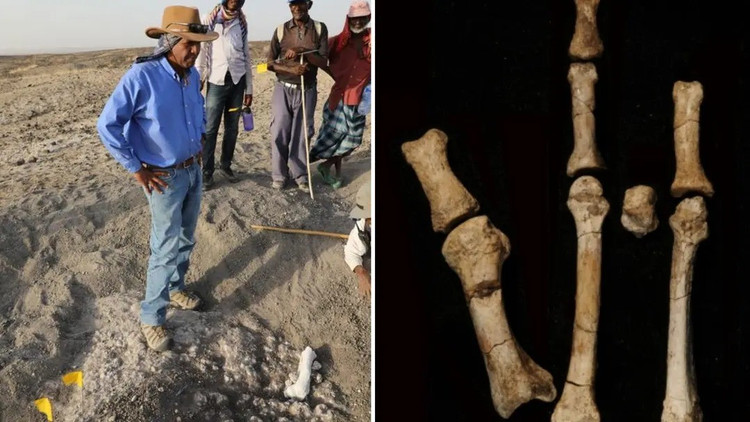
Experts recently published research results in the journal Nature on November 26 about a 3.4 million-year-old foot fossil, known as "Burtele Foot", found in Ethiopia in 2009. Photo: Yohannes Haile-Selassie, Arizona State University. Research by experts shows that this eight-piece leg bone actually belongs to Australopithecus deyiremeda - one of the ancestors of humans, who lived at the same time as the famous relative Australopithecus afarensis - the species of the Lucy fossil. Photo: Yohannes Haile-Selassie, Arizona State University.
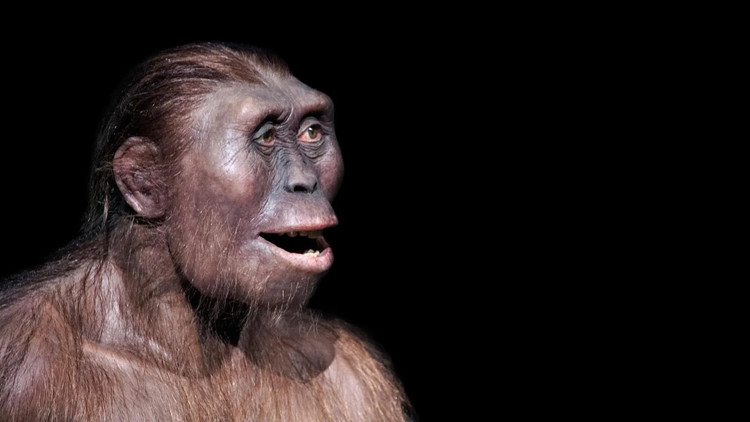
According to the research team, the breakthrough discovery was confirmed after scientists found 25 more teeth and jaw bones of a child around 4.5 years old in the Burtele area of Ethiopia's Afar region. Photo: Yohannes Haile-Selassie. The results helped experts pinpoint the owner of the foot bone, which has both human and ape-like features. Photo: Yohannes Haile-Selassie / The Cleveland Museum of Natural History. The “Burtele Foot” is unique in that its big toe is crooked to accommodate climbing, but its owner can still move on two legs, but the way it walks is very different from modern humans. Photo: Yohannes Haile-Selassie / The Cleveland Museum of Natural History.
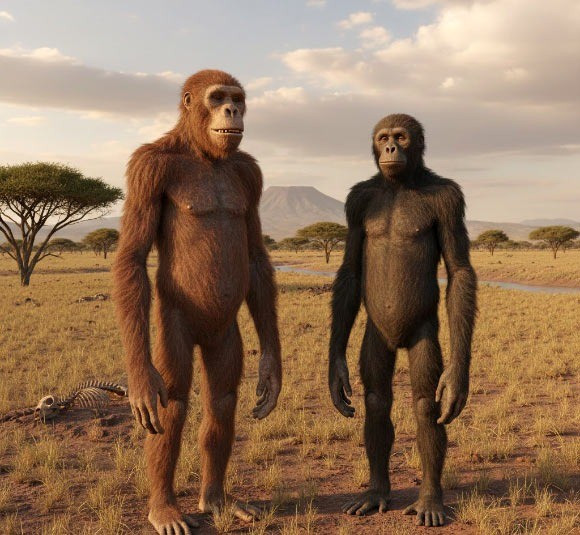
This ability to climb trees and walk upright suggests that Burtele Foot was well adapted to an environment teeming with predators. Photo: Stephanie Melillo, Mercyhurst University/Yohannes Haile-Selassie/ASU. This discovery reinforces the idea that, around 3.5 - 3.3 million years ago, two species of human evolution lived in the same area. This refutes the long-held notion that early human evolution proceeded in a linear fashion and that only one species existed at a time. Photo: Shutterstock. Not only did the two species walk differently, they also ate different types of plants. Analysis of tooth enamel suggests that Australopithecus afarensis had a more varied diet, including grasses, shrubs, and trees. Photo: Gemini AI.
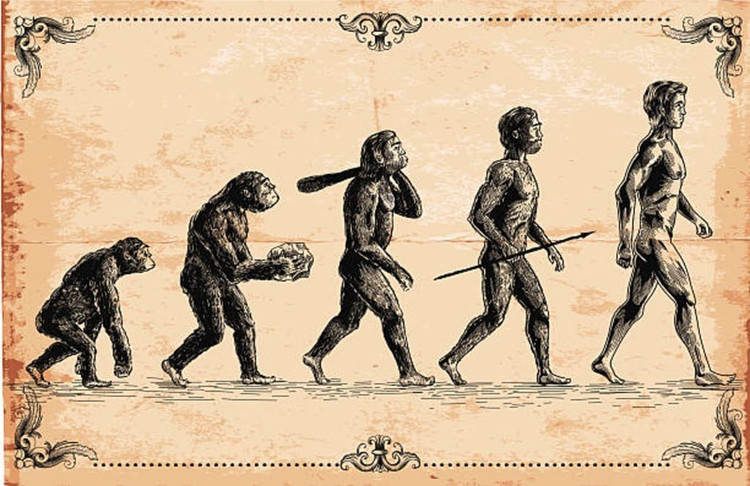
Meanwhile, Australopithecus deyiremeda had a more limited food source, mainly from shrubs and trees - like more primitive hominins. With this difference, the two species could avoid direct competition and coexist. Photo: vocal.media. Readers are invited to watch the video : Behind the success of scientists. Source: VTV24.


 Báo Khoa học và Đời sống•01/12/2025










![[Photo] National Assembly Chairman Tran Thanh Man receives First Vice Chairman of the Federation Council of the Federal Assembly of the Russian Federation](/_next/image?url=https%3A%2F%2Fvphoto.vietnam.vn%2Fthumb%2F1200x675%2Fvietnam%2Fresource%2FIMAGE%2F2025%2F12%2F02%2F1764648408509_ndo_br_bnd-8452-jpg.webp&w=3840&q=75)
















































![[Photo] General Secretary To Lam and his wife attend the 50th Anniversary of Laos National Day](https://vphoto.vietnam.vn/thumb/402x226/vietnam/resource/IMAGE/2025/12/02/1764644139308_1.jpeg)


































Comment (0)