

With each infrastructure project delayed, people have to struggle with traffic jams, flooding, and other problems. It's time for Ho Chi Minh City to decisively transform every penny of its budget into tangible projects to solidify public trust.
Funds awaiting project
According to the Ministry of Finance 's report on the allocation and disbursement of public investment capital in 2026, the scale of resources nationwide is enormous.
The total public investment capital allocated by the Prime Minister to ministries, sectors, and localities in 2026 amounts to VND 1,013,443.4 billion. In addition, VND 55,289.6 billion is allowed to be carried over from 2025 to 2026.
As of April 15, 2026, the units had allocated 976,538.8 billion VND in detail, equivalent to 95.1% of the plan; the remaining 50,040.8 billion VND had not yet been allocated. Regarding disbursement, only 2,676.5 billion VND of the funds carried over to 2026 had been disbursed, reaching 5.8%.
Regarding the 2026 capital plan, the whole country disbursed 127,390.6 billion VND, reaching 12.6%. Of this, central government budget funds disbursed reached 34,803 billion VND, equivalent to 9.6%; local government budget funds reached 92,587.6 billion VND (14.2%).
These statistics reveal a familiar paradox: vast resources are allocated, development needs are extremely urgent, yet the rate of capital conversion into projects remains slow. For Ho Chi Minh City alone, the planned capital allocation is approximately VND 147,599.166 billion, but the disbursement rate at the time of this report is only 11.2%. While not among the lowest in the country, this is still lower than the national average of 12.6%. This is not truly commensurate with the scale, strategic role, and development requirements of a special urban area.
Typically, delays in injecting capital into the economy create opportunity costs. For example, a slow-construction road will cost businesses extra time; a slow-to-operate digital infrastructure project will reduce the ability to manage data effectively.
Ho Chi Minh City does not lack mechanisms. Resolution 98/2023 and Resolution 260/2025 of the National Assembly already include many specific policies for the city. The issue is translating these policies into practical action.
Some persistent bottlenecks include: land regulations, difficulties in land clearance, documentation procedures, fluctuating material prices, contractor capacity, and coordination between agencies. In areas with extremely high population density, these barriers are particularly significant.
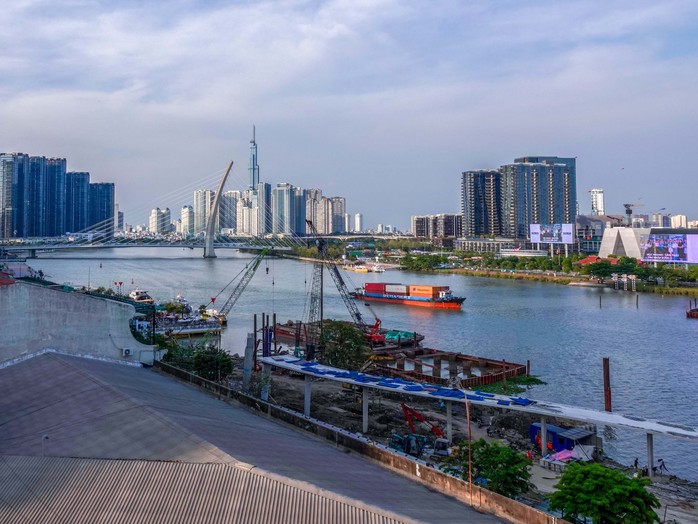
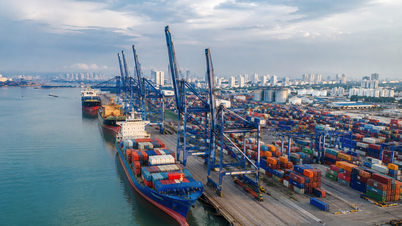
Timely and effective use of public investment capital will help Ho Chi Minh City develop strongly. Photo: HOANG TRIEU
Address the root of the problem.
To overcome these challenges, Ho Chi Minh City needs to implement a comprehensive set of key solutions.
First and foremost, we need to shift our mindset from focusing solely on disbursing funds to meet project deadlines, to a higher goal: disbursing funds to create tangible development value. The disbursement rate is an important but insufficient measure. People genuinely want to see completed projects and areas free from persistent traffic congestion and flooding.
Simultaneously, the city needs to establish a digital map showing bottlenecks in public investment. When a project is delayed, this system must immediately alert which procedural step is causing the error, who is responsible, and when it will be resolved.
Land clearance should always be viewed as a special component of the project, needing to precede construction progress. Consensus from the people will be strengthened if the compensation process is fair, transparent, and ensures that the new housing is of commensurate quality.
Furthermore, instead of spreading investment thinly, capital should be prioritized for projects that create green and smart urban structures. This includes expanding the public transportation network, upgrading drainage systems, implementing environmentally friendly waste treatment, and completing integrated operations centers to effectively support comprehensive digital management and administration.
On the other hand, Ho Chi Minh City needs to translate the special mechanisms stipulated in Resolution 260 into practical daily actions. A superior mechanism only truly maximizes its value when it is concretized into clear procedures, deadlines, and assigned responsibilities. Any project that is stalled for a long time due to weak contractor capacity or cumbersome administrative procedures must be immediately and decisively resolved.
From a broader perspective, the public administration process should not be limited to narrow administrative boundaries but should expand its linkages along the value chain. Factors such as materials, logistics infrastructure, seaports, and human resources are all closely interconnected throughout the Southeast region and the Mekong Delta. Investment should target regional bottlenecks to create a more positive impact.
The crucial step is to quickly build a strong culture of public service implementation. A system with abundant resources but where officials are afraid of making mistakes and relevant departments shirk responsibility will cause project progress to stagnate, hindering the overall development of the locality.
The city needs strong mechanisms to protect those who dare to think and act, and to resolutely address any attempts to evade responsibility. Even a rapid disbursement process can lead to many negative consequences if it is of poor quality; while delays due to fear of making mistakes result in a huge waste of resources.
Completely removing the bottlenecks in public investment is not only about achieving short-term financial targets, but also about paving the way for the aspiration towards a modern megacity.
The city needs to place citizens at the center of its public investment oversight.
Active community participation will directly contribute to promoting a sustainable co-construction governance model. In this way, the people will quickly become the core force protecting the project.

Source: https://nld.com.vn/khoi-dong-von-cong-de-tp-hcm-cat-canh-19626052120412823.htm
































































































Comment (0)