Vietnam.vn - Nền tảng quảng bá Việt Nam

Smoke from burning rice straw: A nightmare during harvest season.

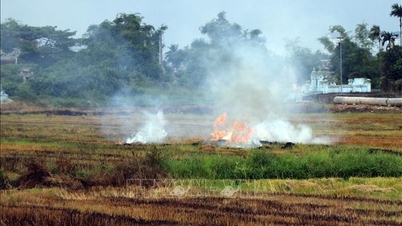
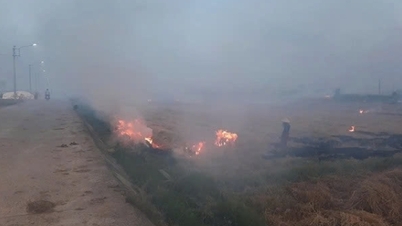
(Baohatinh.vn) - After the harvest, many fields in Ha Tinh are once again shrouded in thick smoke as people burn straw to "clean" their fields.

Báo Hà TĩnhBáo Hà Tĩnh04/05/2026

bqbht_br_dot-rom-ra-8.jpg
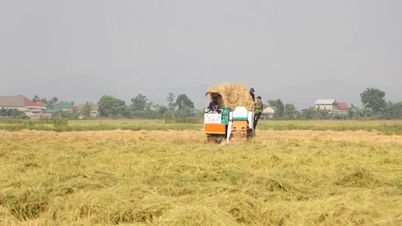
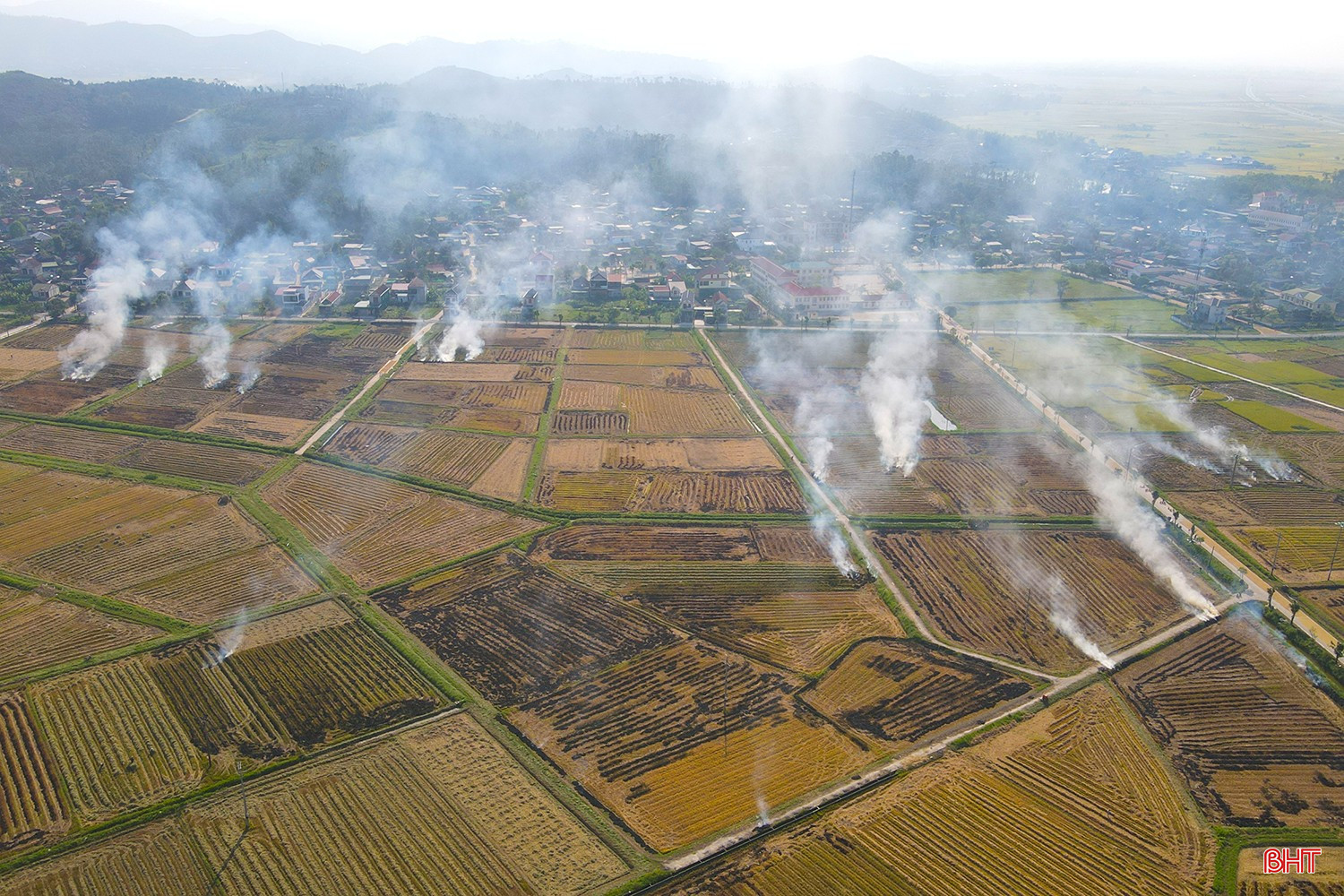
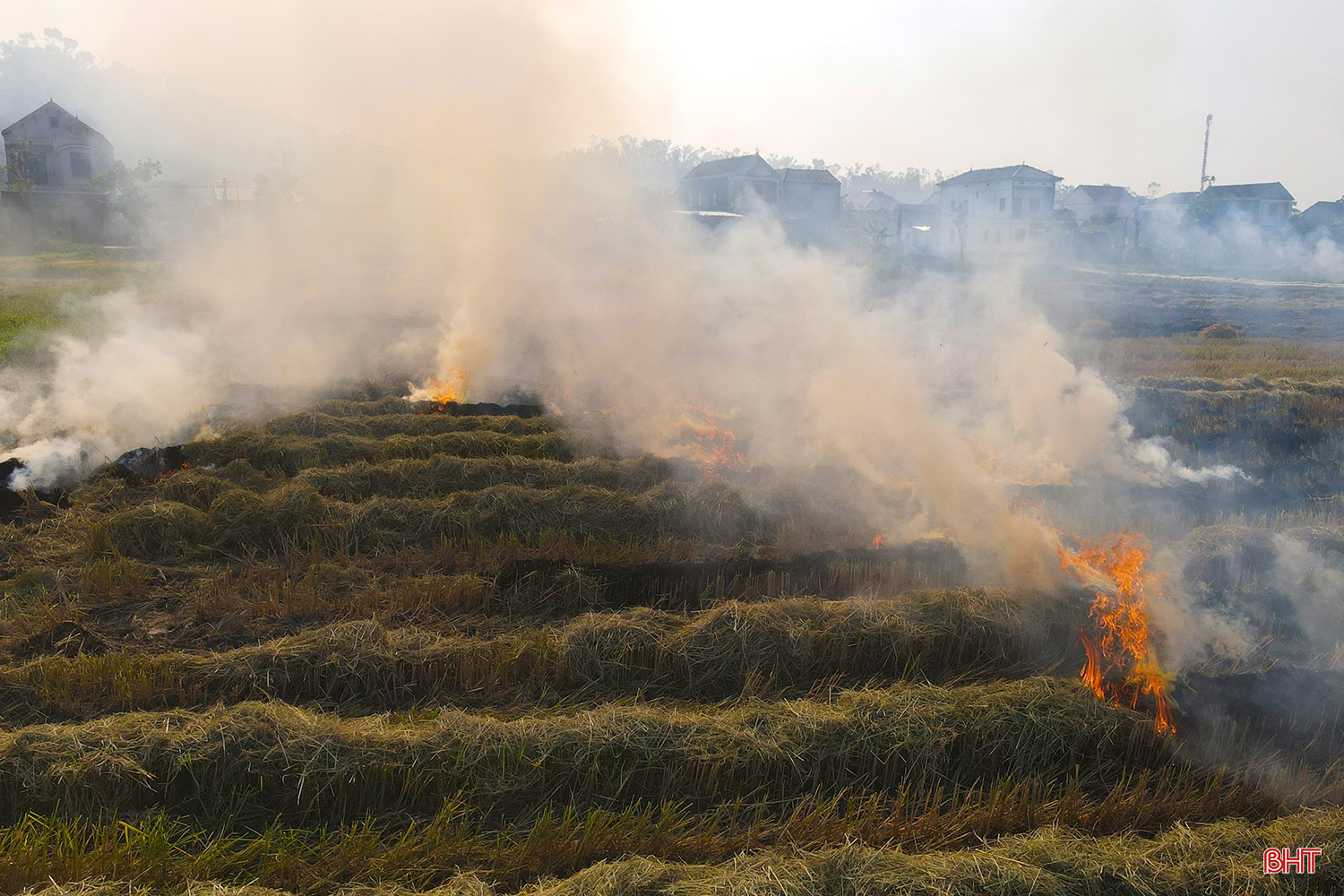
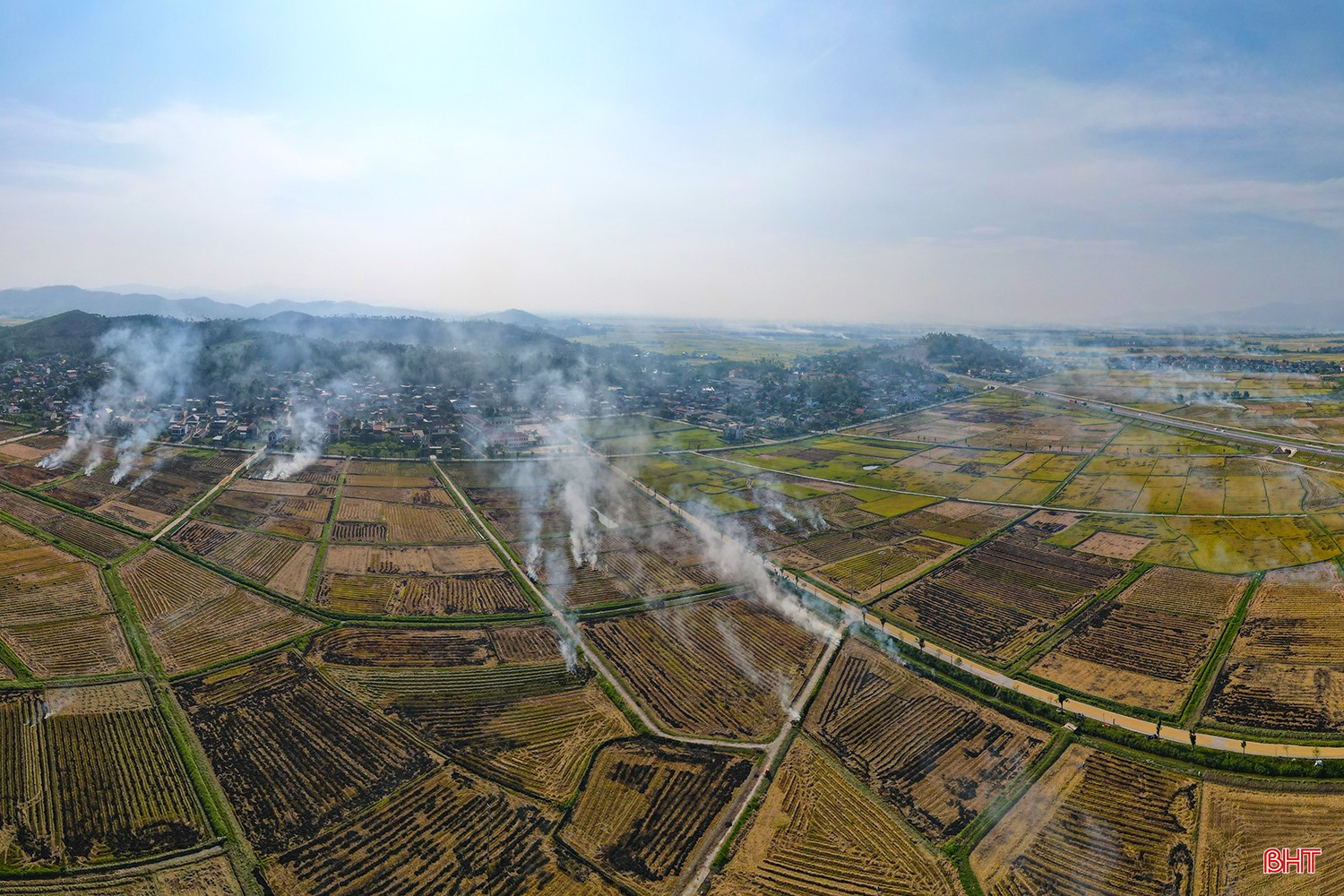
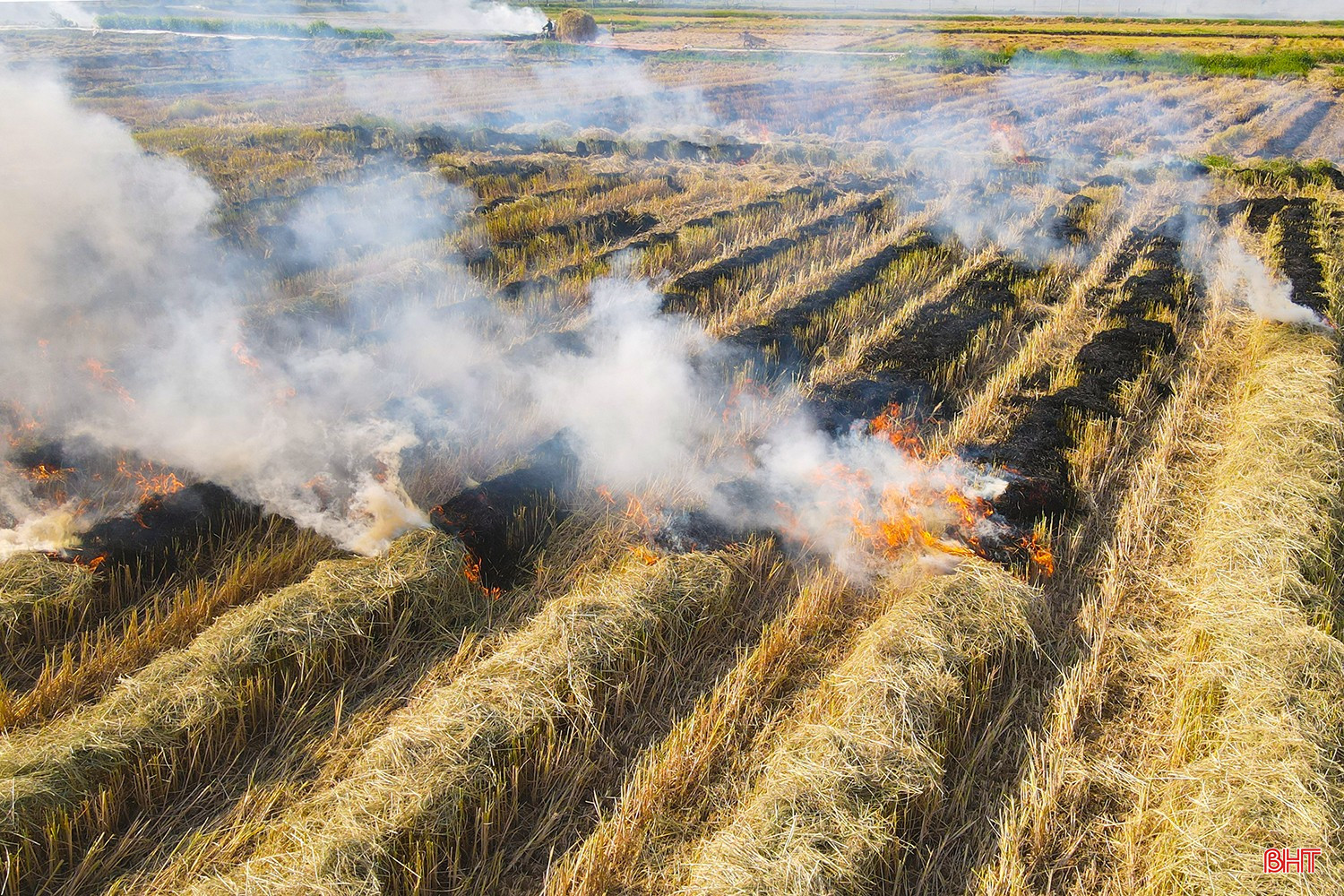
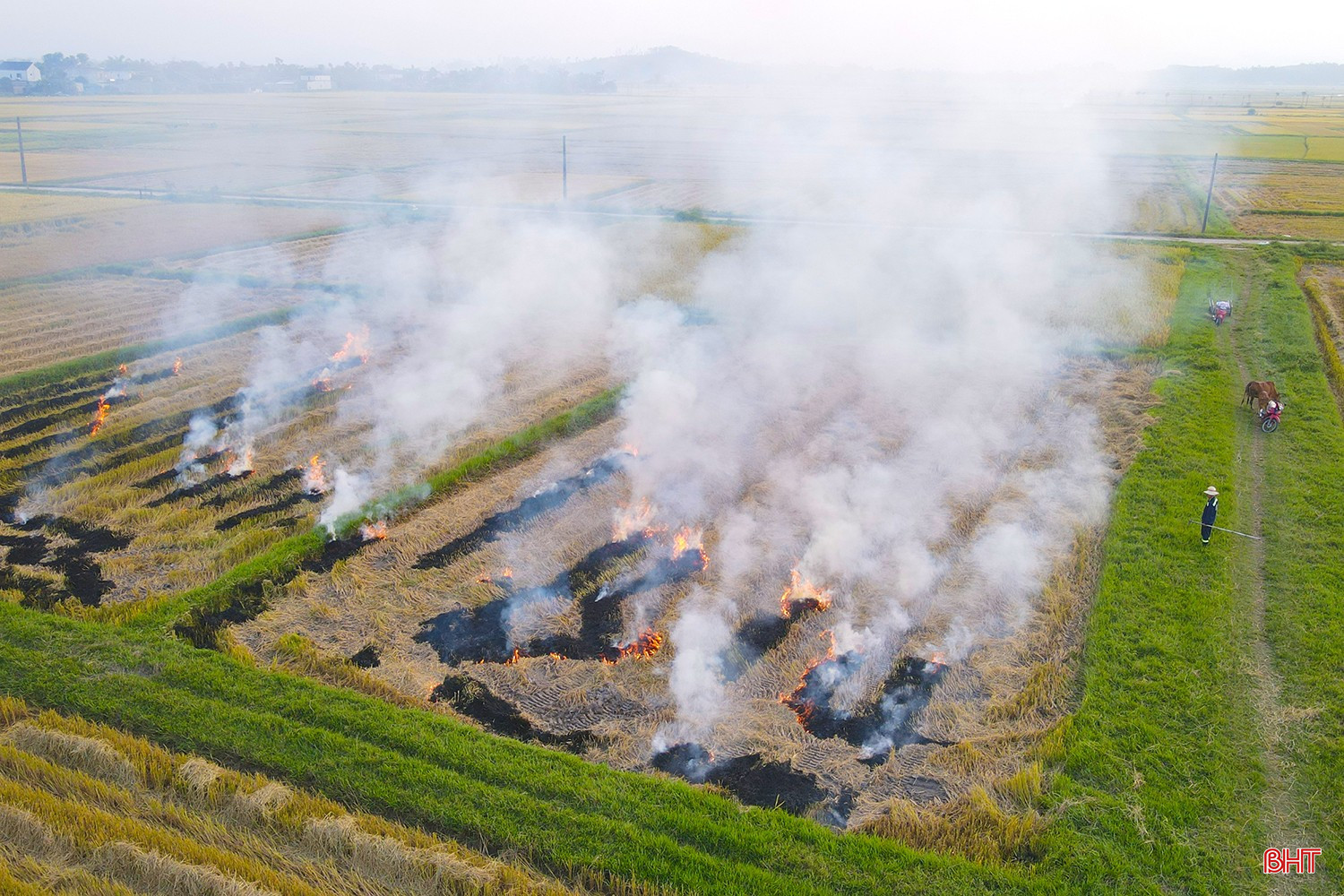
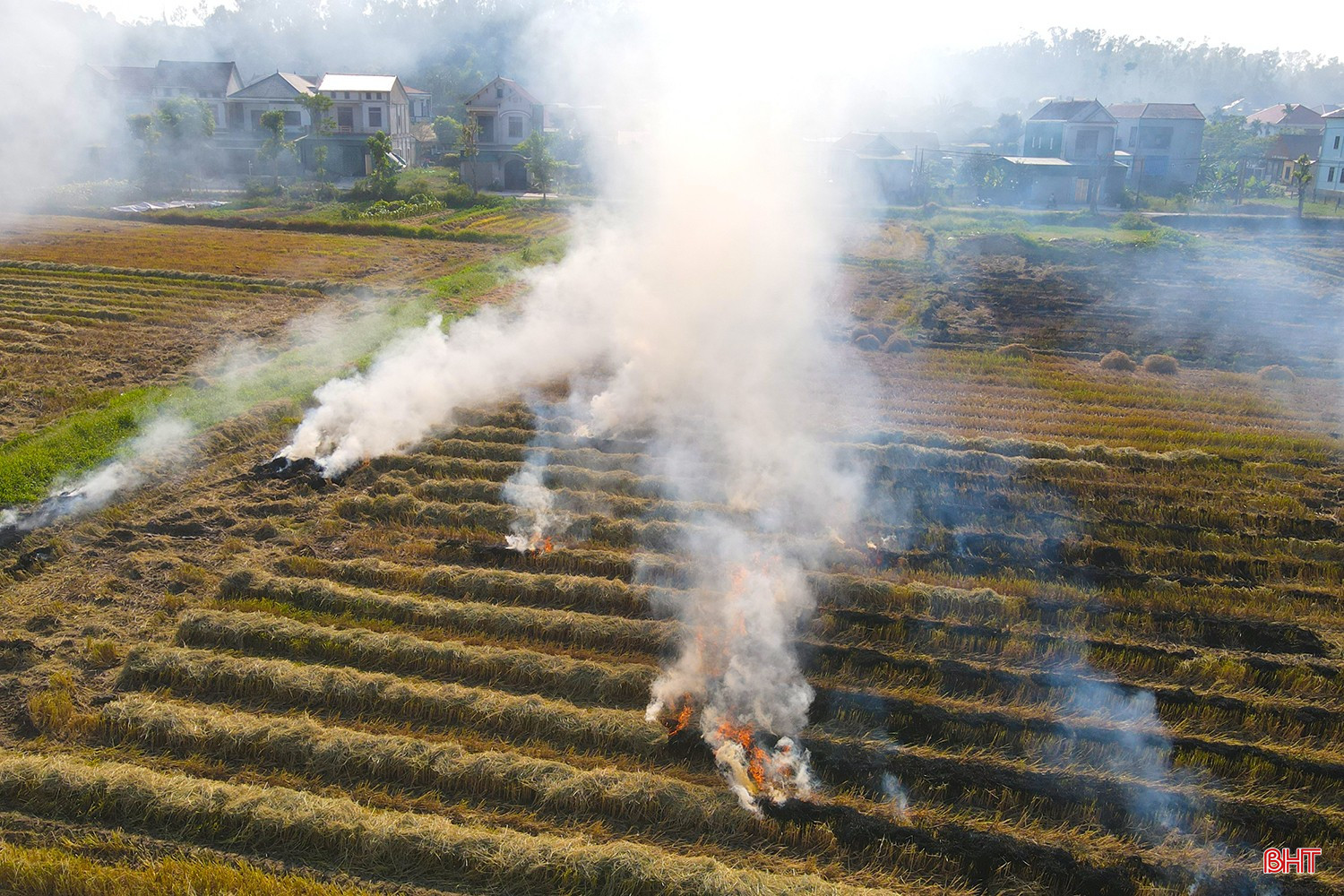
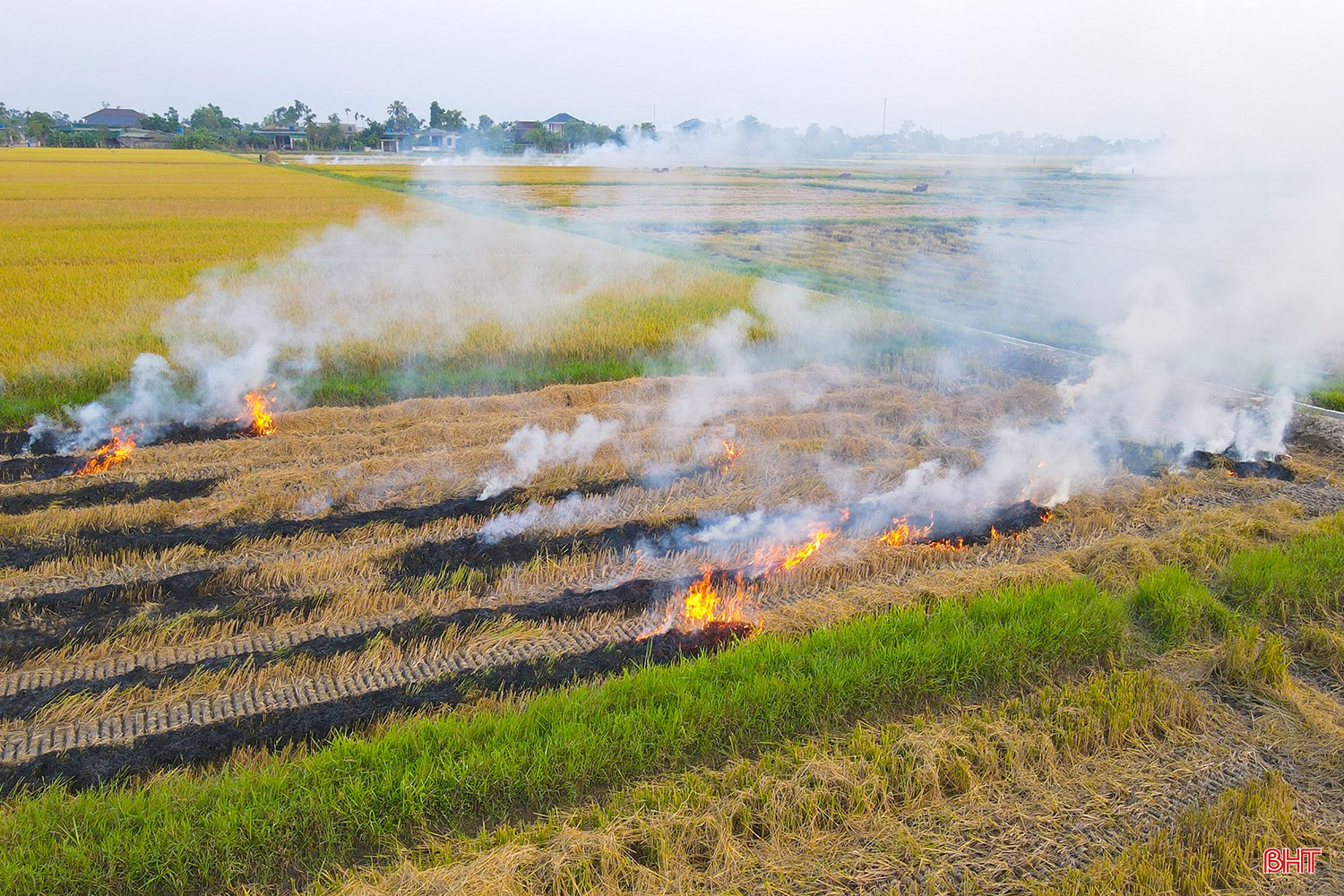
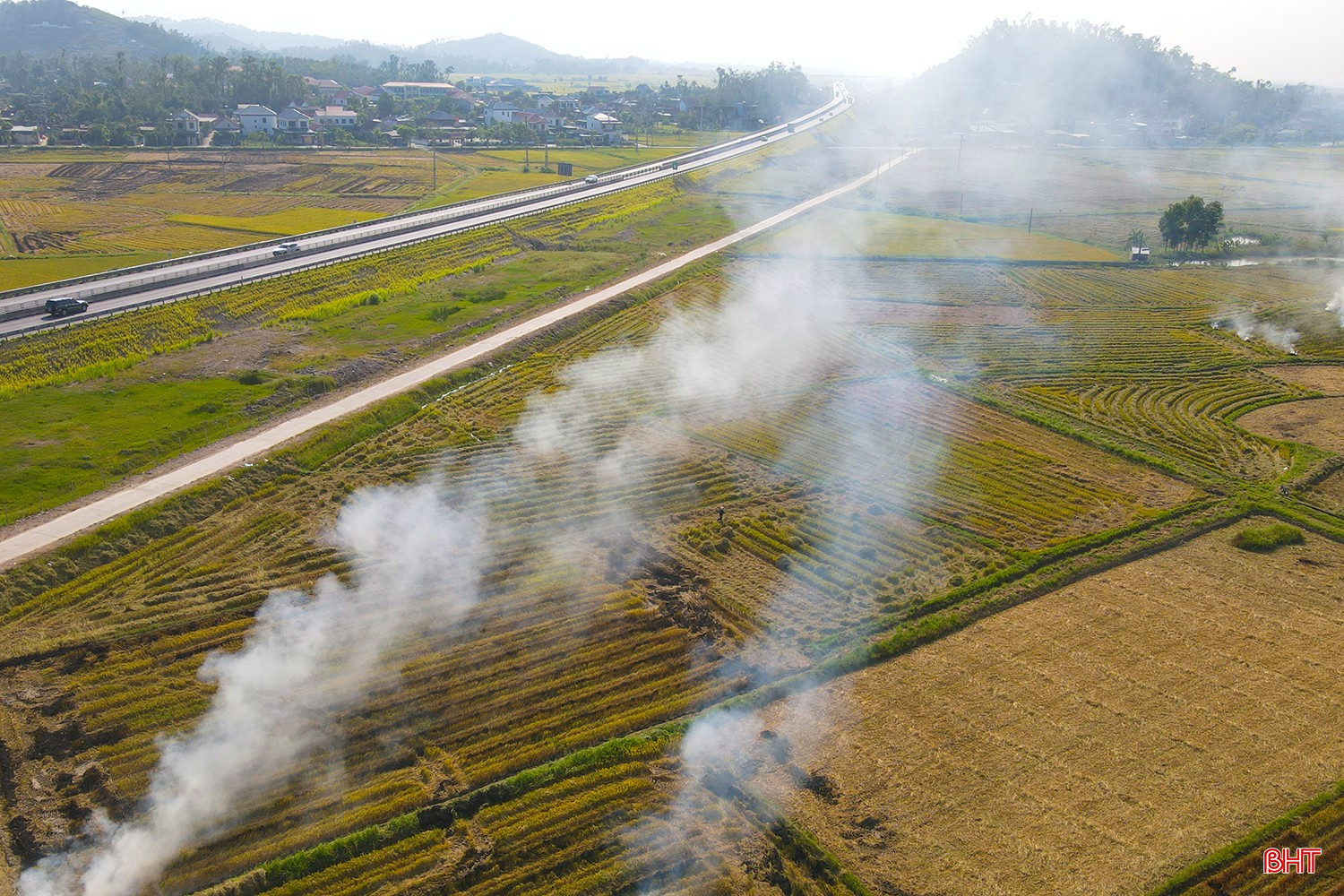
In recent days, favorable weather conditions have allowed farmers in Xuan Loc commune, Ha Tinh province, to harvest the spring rice crop. However, after the harvest, most of the straw and stubble are burned directly in the fields.
bqbht_br_dot-rom-ra-17.jpg
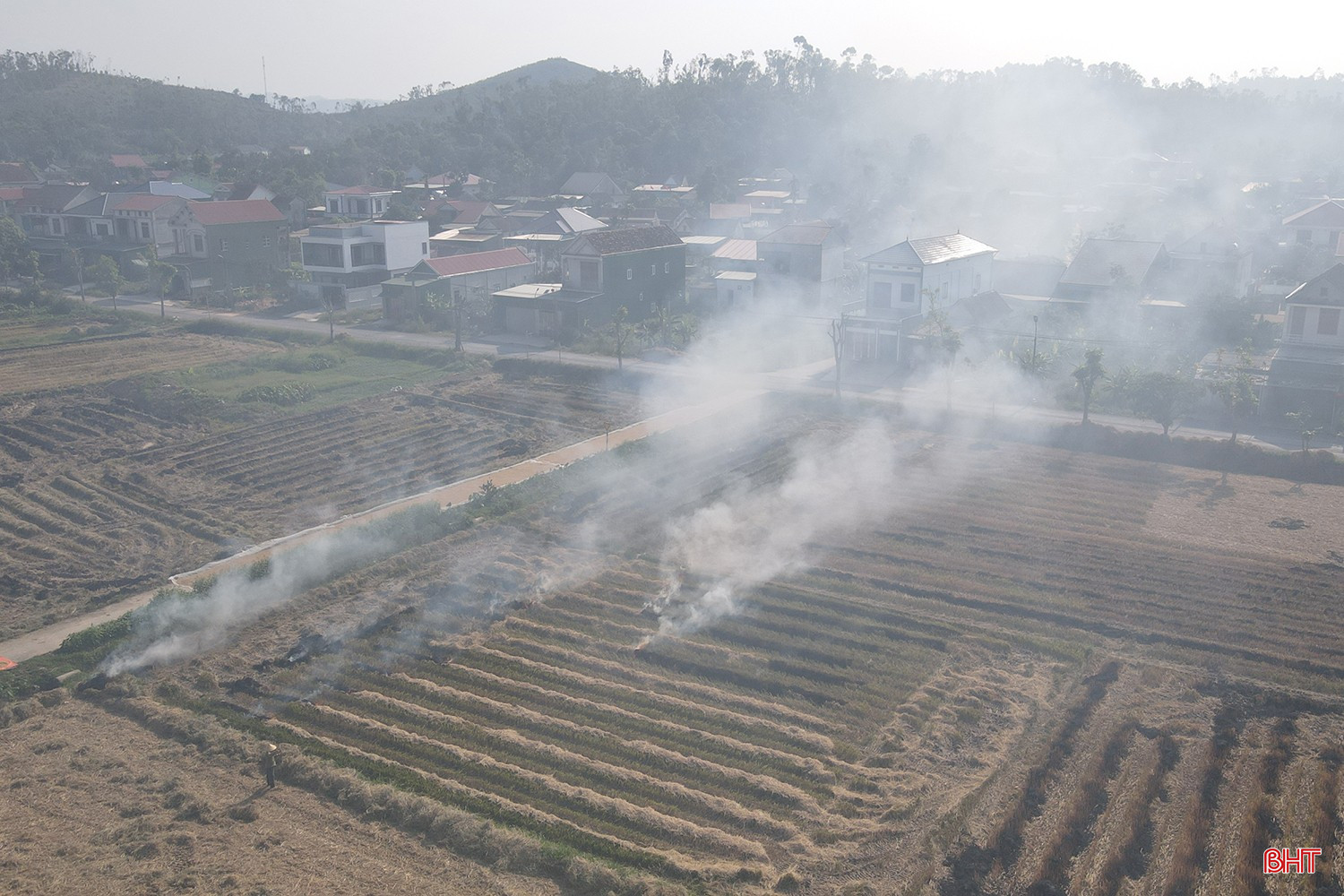
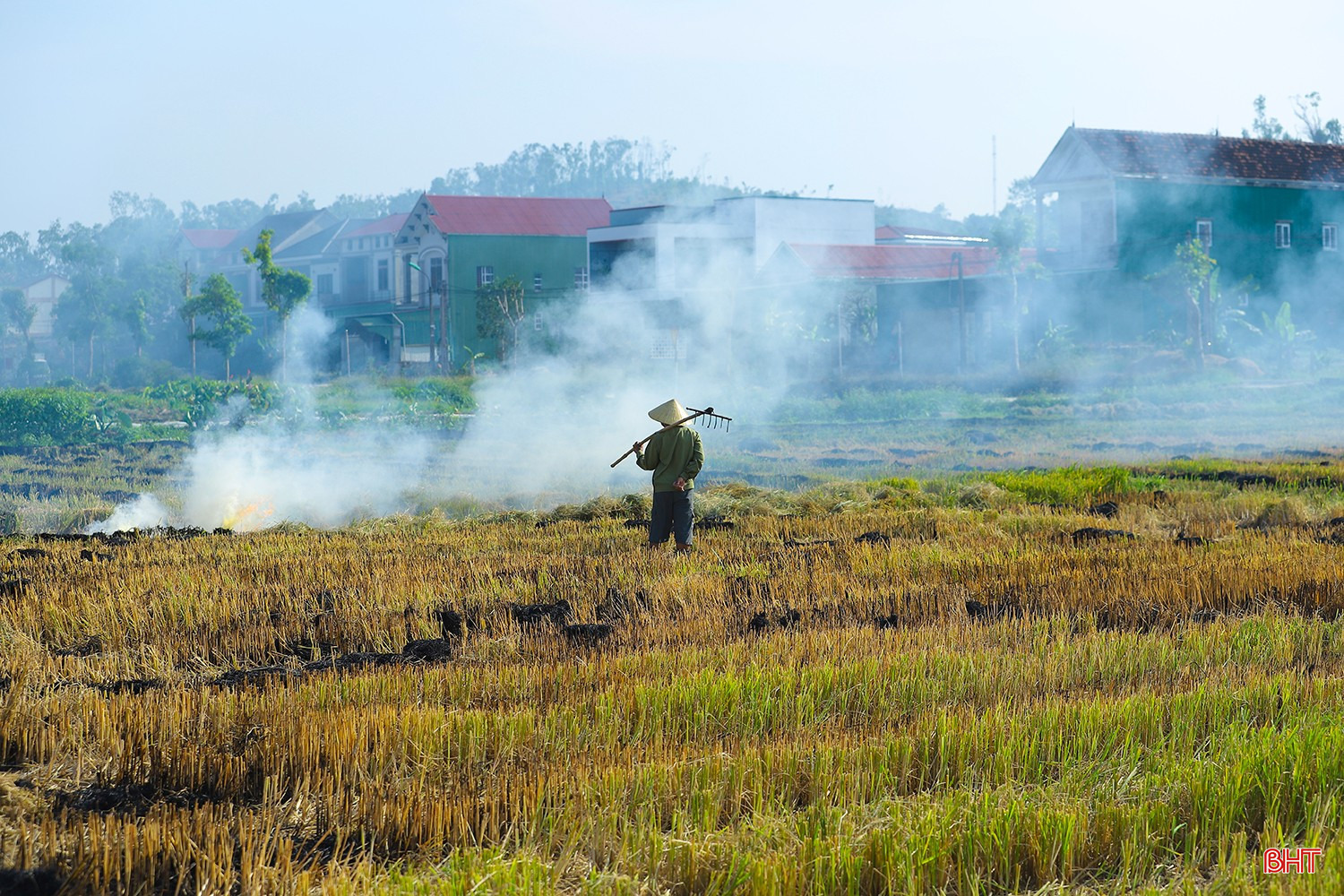
Observations show that people burn straw in the afternoon – when it has "received sunlight" after being exposed to the sun all day.
bqbht_br_dot-rom-ra-15.jpg
bqbht_br_dot-rom-ra-20.jpg
bqbht_br_dot-rom-ra-48.jpg
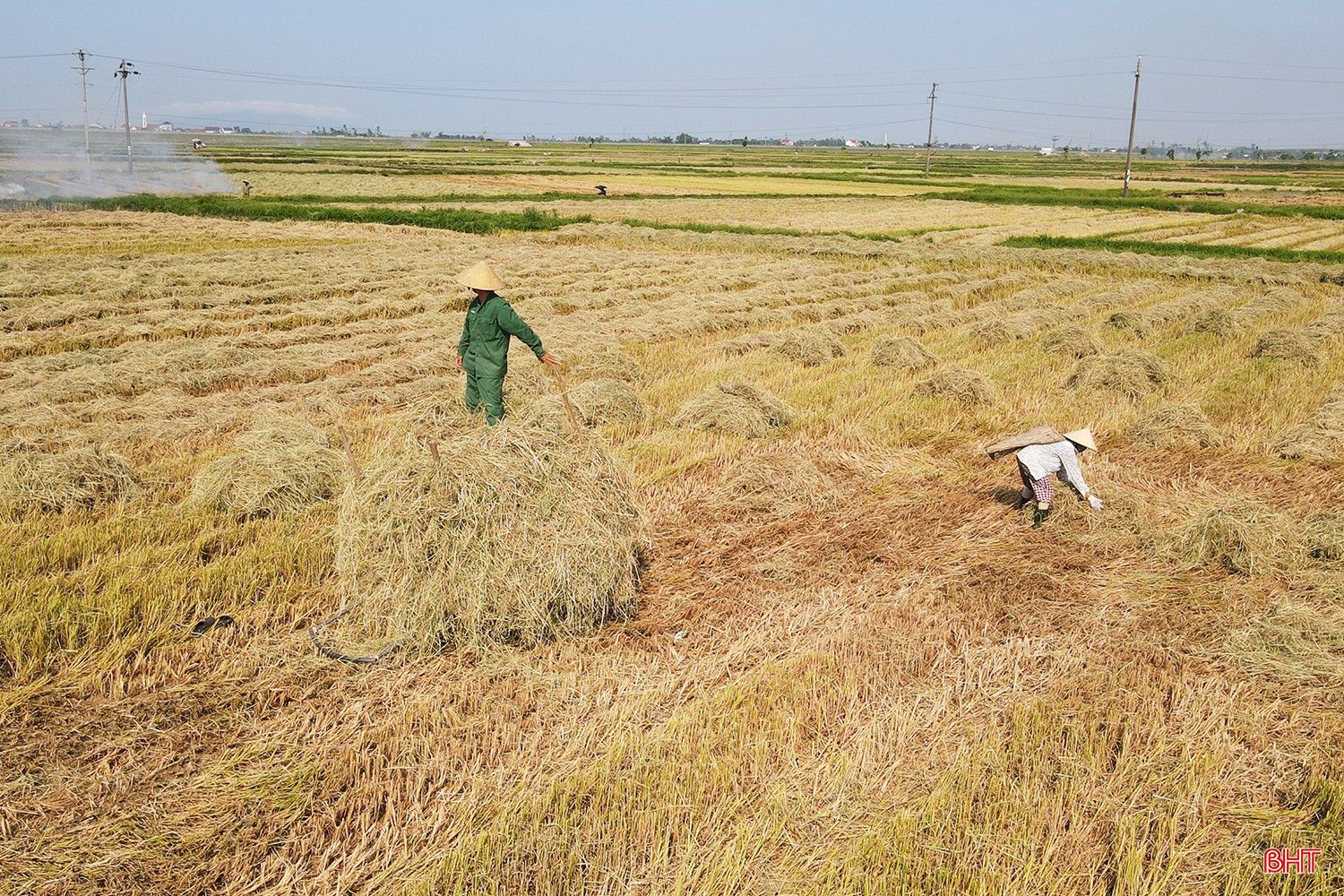
According to the people of Xuan Loc commune, in the past, straw was collected to be used as feed for buffaloes and cows, or for composting and starting fires. But now, with the mechanization of farming and the sharp decrease in the number of buffaloes and cows, the need for straw has almost disappeared. Collecting straw and bringing it home is "useless" and takes a lot of time and effort.
bqbht_br_dot-rom-ra-7.jpg
Only a small number of people still collect straw after harvesting the rice.
bqbht_br_dot-rom-ra-2.jpg
Since there is no need to collect them, the straw is gathered and burned directly in the fields to "save time and effort".
bqbht_br_dot-rom-ra-21.jpg
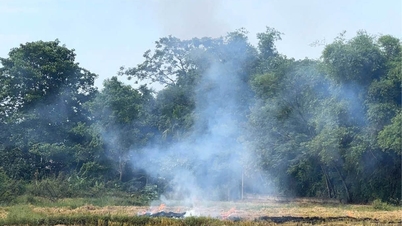
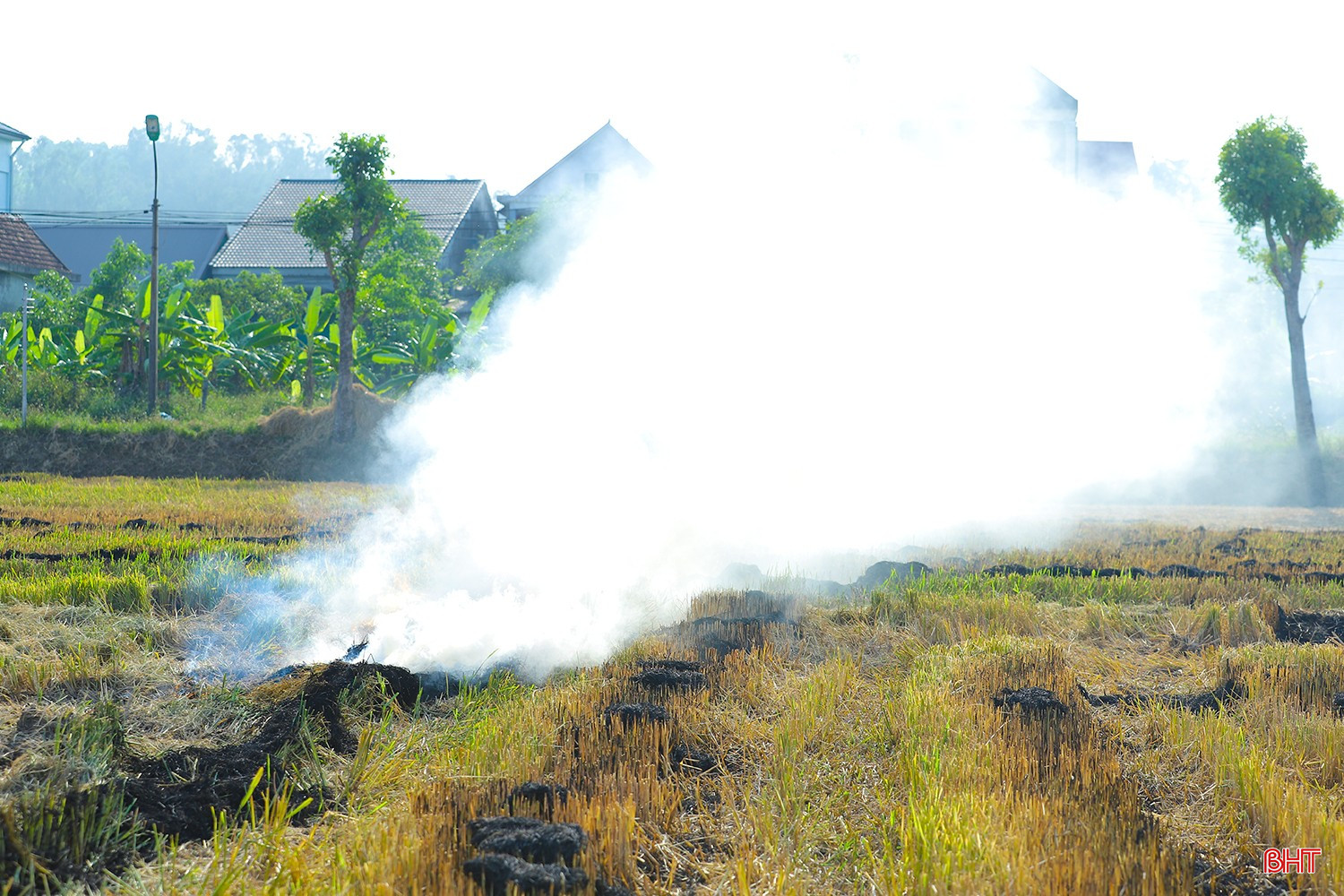
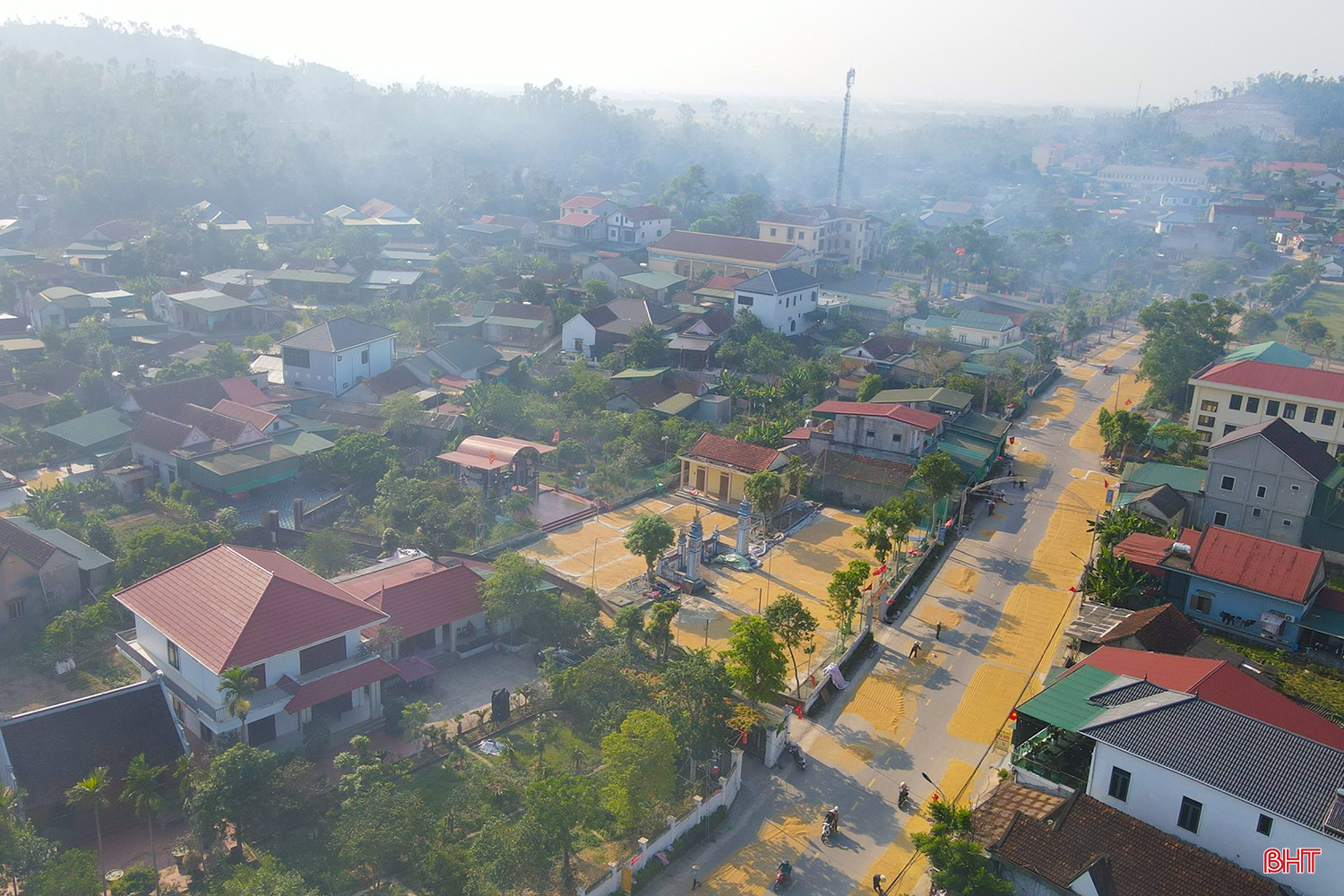
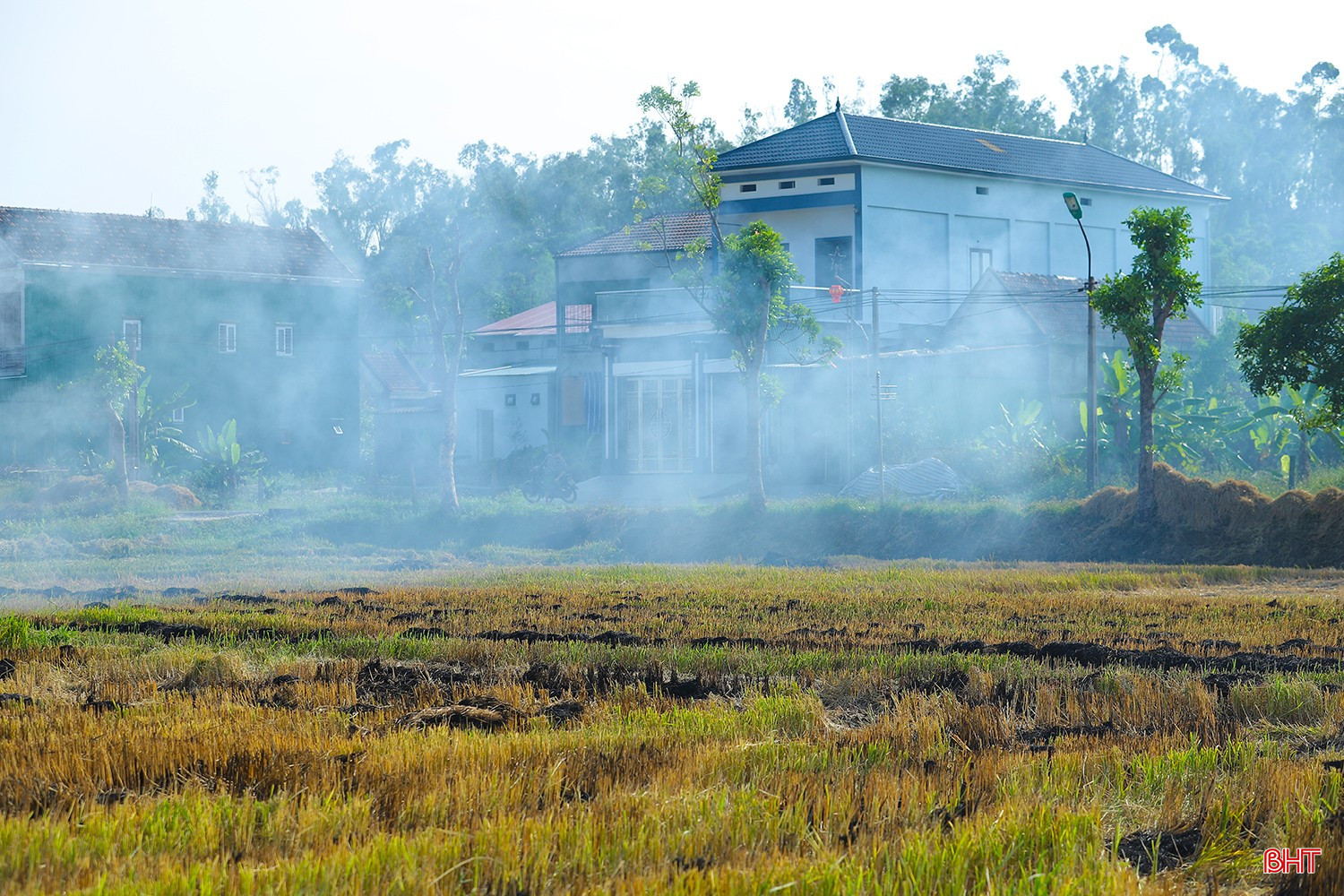
When straw is burned, columns of gray smoke rise, covering the entire sky. And when the wind blows, the smoke drifts into residential areas, seeping into every rooftop and alleyway. Many people experience shortness of breath and stinging eyes from prolonged exposure to straw smoke.
bqbht_br_dot-rom-ra-35.jpg
Not only in Xuan Loc commune, but also in the fields of Thach Ha commune, straw is being burned indiscriminately by people after the rice has been harvested.
bqbht_br_dot-rom-ra-19.jpg
bqbht_br_dot-rom-ra-36.jpg
bqbht_br_dot-rom-ra-45.jpg
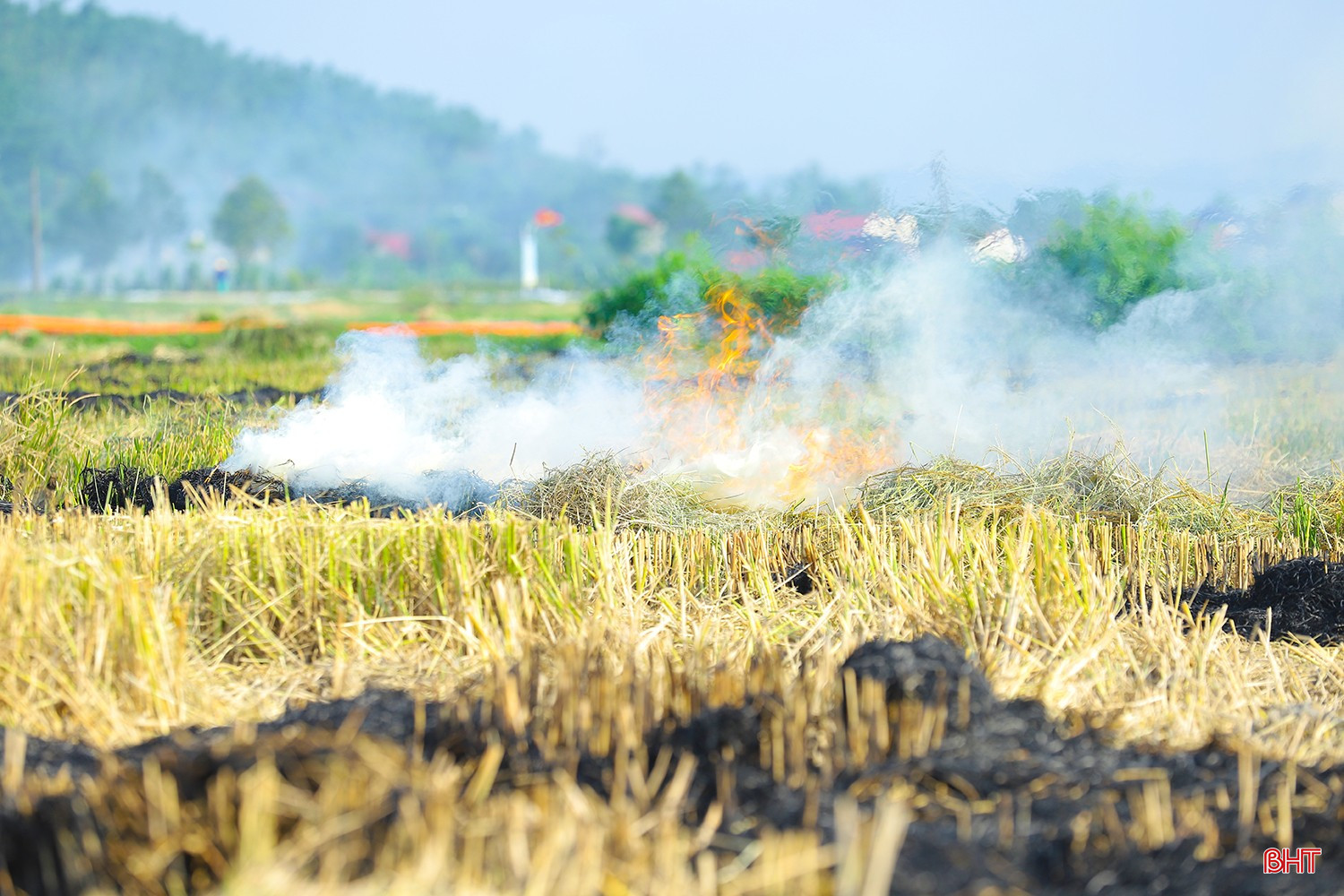
Locals explain that burning straw helps to quickly clear away stubble, kill disease-causing germs, and facilitate the next planting season. However, this is a misconception. Burning straw at high temperatures not only evaporates a large amount of valuable organic nutrients but also destroys beneficial microorganisms, alters soil structure, and makes the soil increasingly compacted and infertile.
bqbht_br_dot-rom-ra-41.jpg
Smoke and dust generated from burning straw not only pollute the environment but also have a significant impact on people's health.
bqbht_br_dot-rom-ra-9.jpg
bqbht_br_dot-rom-ra-25.jpg
bqbht_br_dot-rom-ra-26.jpg
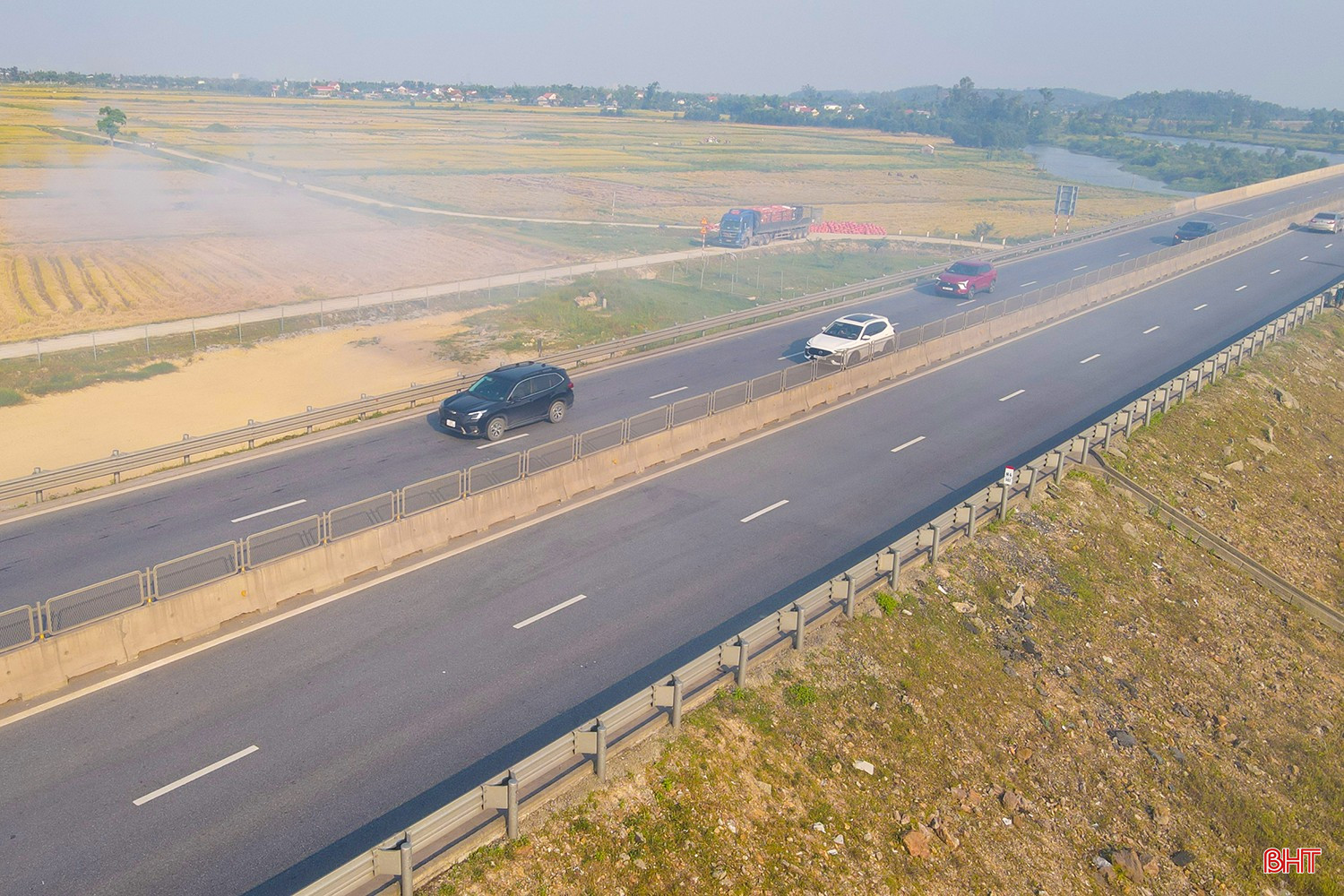
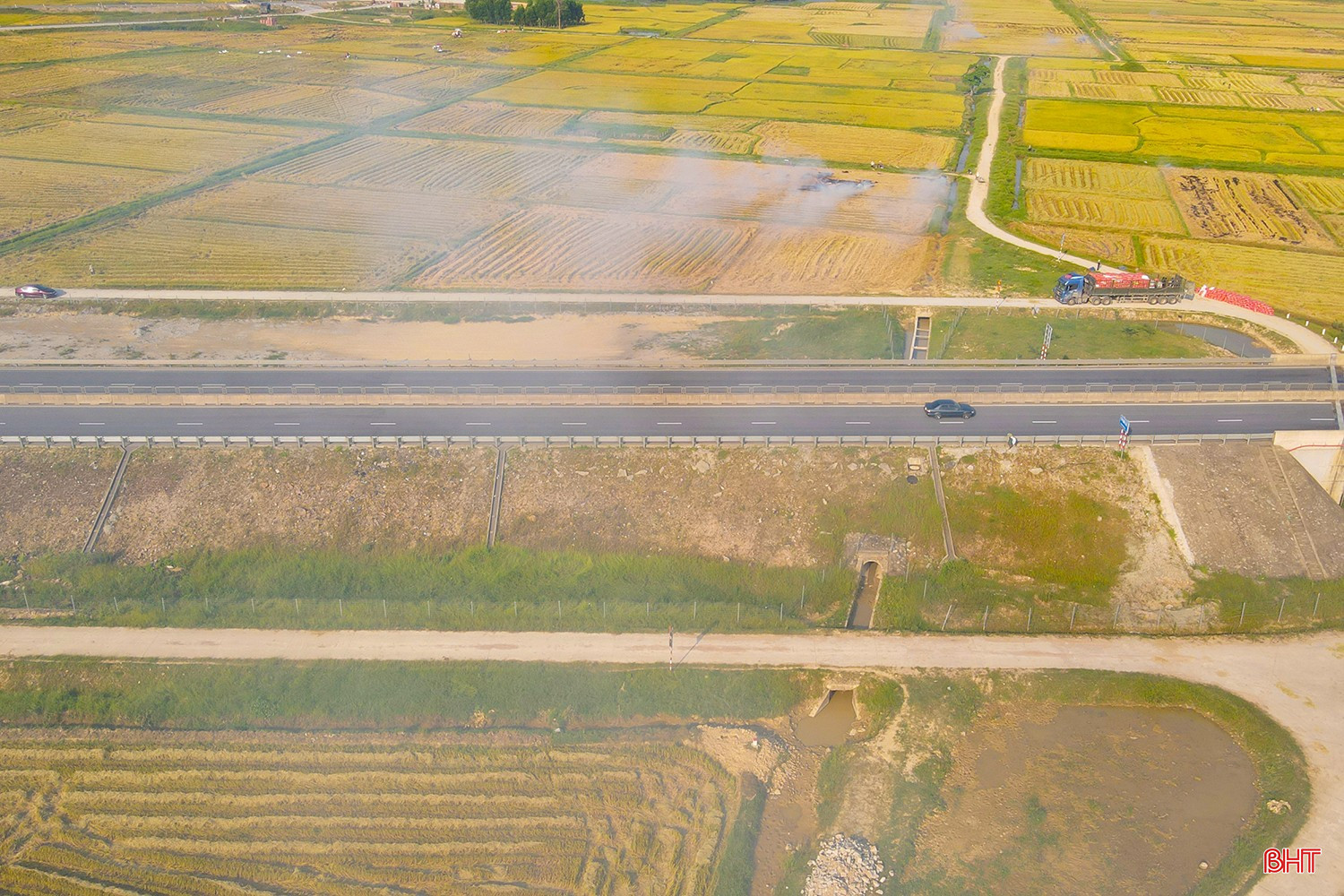
In fields located near roads, smoke from burning straw reduces visibility for drivers, leading to a risk of traffic accidents, especially on the North-South expressway.
bqbht_br_dot-rom-ra-40.jpg
In reality, many people are still aware of the harmful effects of burning rice straw. However, the severe shortage of rural labor, coupled with high costs for hiring straw collectors and the underdeveloped market for agricultural by-products, are major obstacles that force farmers to reluctantly choose to burn their straw to "save time and money."

According to the Department of Agriculture and Environment of Ha Tinh province, despite numerous warnings, the burning of rice straw still occurs in many localities.

Burning rice straw affects beneficial organisms and the rice paddy ecosystem; it causes water evaporation from the soil and, in the long term, can lead to soil compaction and nutrient depletion; in addition, burning rice straw causes air pollution (dust, smoke) affecting the lives of rural and urban residents, and compromises traffic safety on many roads; many fires spread, posing a potential risk of uncontrolled fire and explosion hazards in the area.

The Department of Agriculture and Environment requests that localities regularly disseminate information to neighborhood groups, residential clusters, villages, hamlets, households, and agricultural producers about the harmful effects of burning straw on the environment, people's health, traffic safety, and agricultural production.

Strengthen propaganda and guidance to raise people's awareness about the collection, processing, preservation, and use of straw after harvest; and about the role and importance of straw in agricultural production, especially organic and circular agriculture.

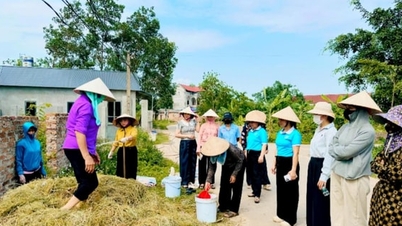
Monitor, encourage, and urge farmers in the area to apply measures to recover, process, and utilize straw and agricultural by-products for beneficial, efficient, and environmentally friendly purposes.

Source: https://baohatinh.vn/khoi-dot-rom-ra-noi-am-anh-mua-gat-post310035.html


Comment (0)

Please leave a comment to share your feelings!

Same tag

Same category

Same author

Heritage

Figure

Enterprise

News

Political System

Destination

Product

Happy Vietnam
Nét xưa

Nét xưa

Vietnam!

Vietnam!

Vietnam in My Heart

Vietnam in My Heart