

 |
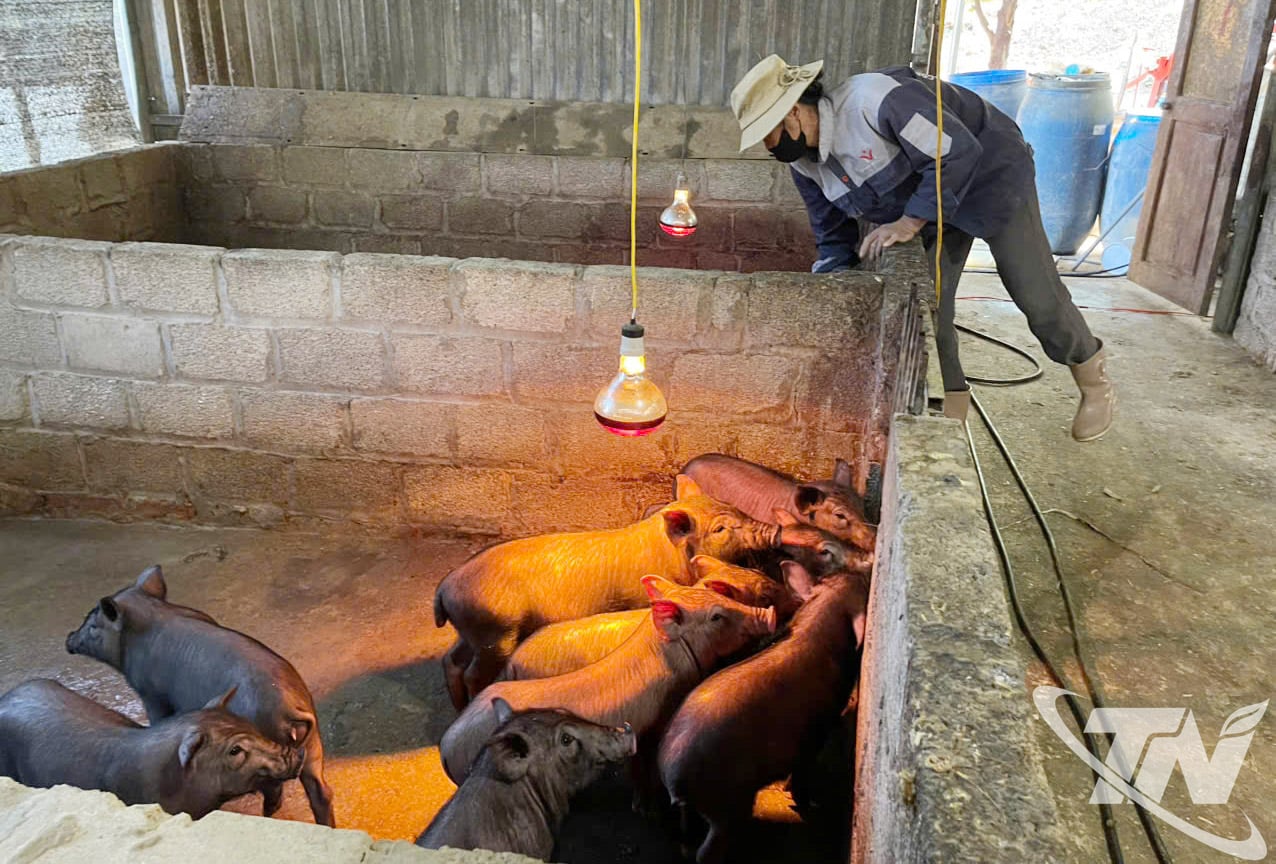
| Ms. Ma Thi Doi, in Na Giao village (Thuong Minh commune) turns on electricity to keep her pigs warm during low temperature days. |
In the highland communes, where small-scale farming accounts for a large proportion, people are speeding up the process of herding. Cleaning and disinfecting barns is given priority to create a safe environment before introducing new breeds.
Ms. Ma Thi Doi, Na Giao village (Thuong Minh commune) said: My family has sprayed disinfectant, sprinkled lime and only imported about 5 pigs to raise again. The breeding pigs must be purchased from reputable places, free of disease. When I bring them home, I vaccinate them immediately and monitor them regularly to prevent disease.
Many households in communes with previous outbreaks such as Dong Phuc, Ba Be, Yen Phong, Bac Kan ... also urgently rebuilt barns, improved drainage systems, separated farming areas and waste treatment areas. Some households used straw and rice husks, combined with lime to keep warm and limit pathogens. Large-scale farms applied biosecurity measures to increase the resistance of pig herds.
The family of Mr. Hoang Xuan Vu, Ban Dan village (Phong Quang commune), one of the households raising large numbers of native pigs, is preparing supplies for the Tet market. Mr. Hoang Xuan Vu said that his family uses natural microbiological products such as yeast, bananas, corn combined with herbal yeast and IMO soaked in garlic and turmeric to increase the immunity of the pigs. At the same time, they spray disinfectant with lime water to limit the risk of swine fever virus invasion.
Since mid-July 2025, African swine fever has broken out in 78 communes and wards of the province, causing more than 4,560 pigs to become sick and over 33,000 pigs to be destroyed, causing great losses to farmers. Thanks to drastic prevention and control measures by the professional sector and the government, the epidemic has been controlled.
Currently, many households have begun to re-herd with the principle of selecting breeds with clear origins, quarantine certificates and suitable for each household's farming conditions. Farms, businesses and cooperatives have implemented the model of "disease-free farming areas", strictly controlling people and vehicles entering and leaving, using standard industrial feed, and periodically testing to detect pathogens early.
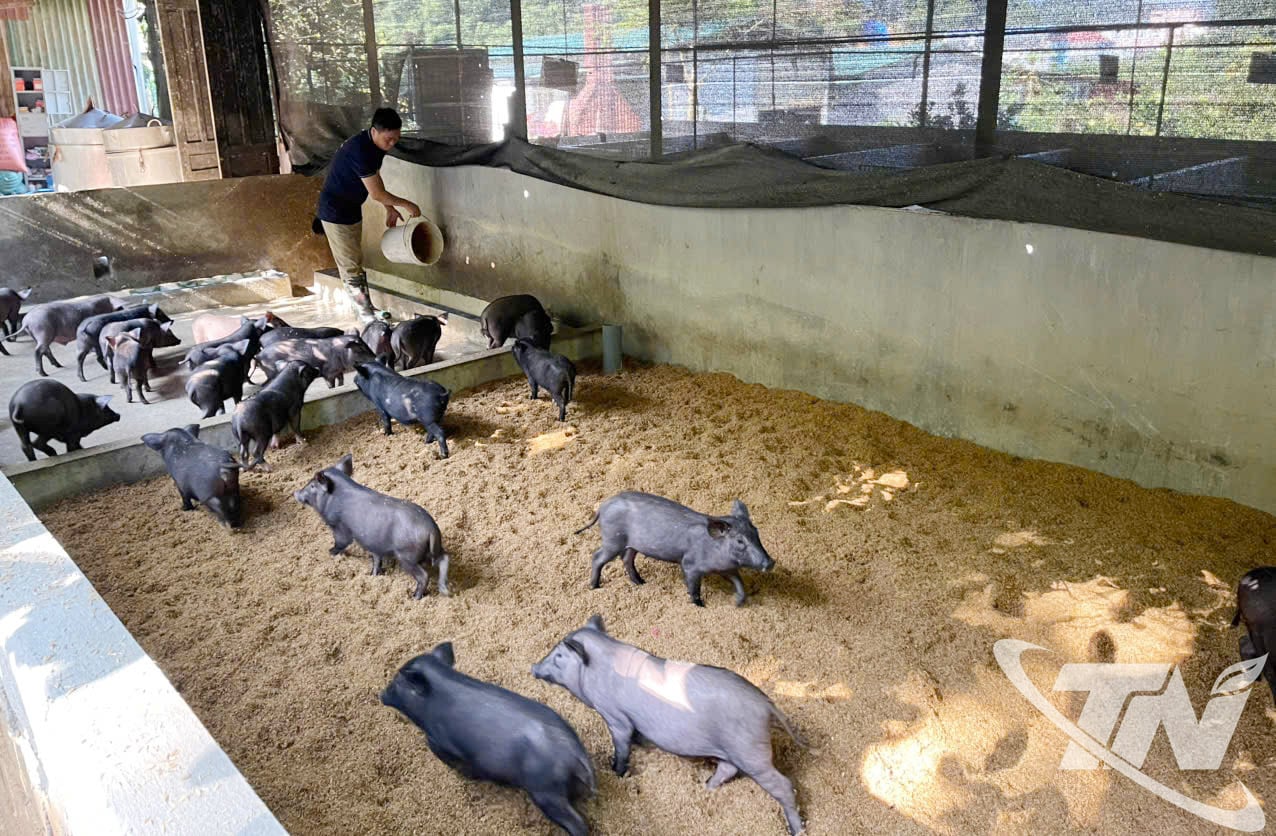 |
| A household raising more than 200 pigs in Bac Kan ward is actively re-herding, preparing to serve the Tet market. |
Along with the initiative of the people, local authorities are also actively supporting the restoration of production. In addition to technical guidance on herd restoration and diversification of farming methods, units have stepped up propaganda and mobilized livestock farmers to strictly implement disease prevention and control procedures in the direction of biosafety and ensuring veterinary hygiene.
Although the epidemic has been controlled, the rate of herd restoration in many localities is still low. The main reason is that farmers lack capital, lack of funds to renovate barns, and especially lack of quality local breeds. Breeds brought from other places are difficult to control and have the potential to carry pathogens, so many households do not dare to restore their herds.
Based on this reality, localities are strengthening the supervision of the transportation and trading of breeding pigs and pork to prevent goods of unknown origin; at the same time, closely monitoring the market to prepare scenarios for regulating supply during Tet. People's Committees of communes assigned specialized departments to strengthen vaccination propaganda, provide guidance on barn hygiene, breed selection and coordinate with mass organizations to support people in accessing loans for herd restoration.
According to the Thai Nguyen Department of Animal Husbandry, Veterinary and Fisheries, by the end of the third quarter of 2025, the total pig herd in the province had increased again, reaching about 85-90% compared to before the outbreak. It is forecasted that from now until the Lunar New Year 2026, the demand for pork will increase by 15-20%.
Therefore, proactively and safely restocking herds, controlling diseases and ensuring product quality are urgent requirements. With the synchronous participation of people, businesses and functional sectors, the supply of pork for Tet 2026 in Thai Nguyen is expected to be abundant, stable and ensure food safety.
Source: https://baothainguyen.vn/kinh-te/202512/khoi-phuc-chan-nuoi-lon-bao-dam-cung-ung-dip-tet-5a843e9/




![[Photo] Urgently help people soon have a place to live and stabilize their lives](/_next/image?url=https%3A%2F%2Fvphoto.vietnam.vn%2Fthumb%2F1200x675%2Fvietnam%2Fresource%2FIMAGE%2F2025%2F12%2F09%2F1765248230297_c-jpg.webp&w=3840&q=75)




























































![[Photo] General Secretary To Lam works with the Standing Committees of the 14th Party Congress Subcommittees](https://vphoto.vietnam.vn/thumb/402x226/vietnam/resource/IMAGE/2025/12/09/1765265023554_image.jpeg)




























Comment (0)