

In just a few days, the Vietnamese fuel market will officially enter a new era with the nationwide launch of E10 bioethanol fuel. The proactive entry of major players in the petroleum industry not only addresses energy security concerns but also represents a significant step forward in fulfilling environmental commitments. However, to achieve this readiness, a series of bottlenecks regarding supply, blending infrastructure, and pricing strategies are being addressed by relevant authorities and businesses.
Proactiveness from the distribution chain
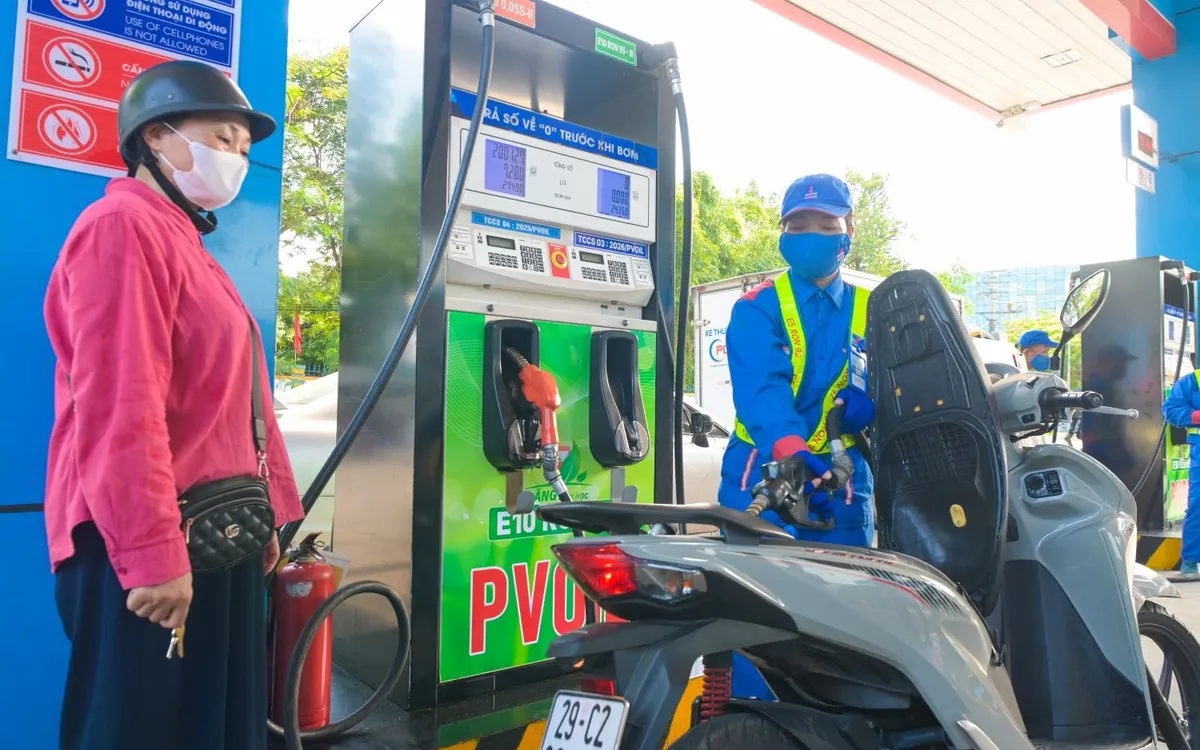
PV Oil is launching the sale of E10 bioethanol fuel.
To prepare for this crucial transition, key petroleum businesses have been diligently completing their infrastructure systems for months. For example, the Vietnam Oil Corporation (PVOIL) has invested in upgrading the blending systems at 13 technically qualified fuel depots and recorded 558 out of nearly 1,000 gas stations selling E10 fuel by the end of April 2026. All of these blending facilities have been licensed to operate by the National Standards and Quality Control Committee.
Meanwhile, the Vietnam National Petroleum Group ( Petrolimex ) is also ready with 7 standardized blending facilities and standardized technical processes at more than 2,800 retail outlets nationwide. Notably, after a successful pilot program in Ho Chi Minh City with a 40% increase in E10 consumption, businesses have gained more practical experience and confidence to accelerate the nationwide rollout of the new product.
Decoding the supply and infrastructure mixing problem
Despite having the retail infrastructure ready, one of the biggest challenges in the mass sale of E10 gasoline is ensuring the supply of ethanol (E100) for blending. Analyzing this barrier, Mr. Tran Huu Linh, Director of the Department of Domestic Market Management and Development ( Ministry of Industry and Trade ), stated that with a nationwide gasoline consumption of approximately 1 million cubic meters per month, Vietnam would need 100,000 cubic meters of ethanol. However, domestic production capacity currently only meets about 25% of the demand, with the majority of fuel still dependent on imports.

Binh Son Refinery and Petrochemical Plant.
To gradually achieve self-sufficiency in supply, Mr. Nguyen Viet Thang, General Director of Binh Son Refining and Petrochemical Joint Stock Company, shared: "The Dung Quat biofuel plant has been urgently restarted and has been operating stably since January. When it reaches 100% of its designed capacity, the plant will supply approximately 10,000 cubic meters of ethanol per month, meeting the raw material needs to blend 1 million cubic meters of E10 gasoline for the market."
Besides supply pressure, organizational barriers in the blending process are also gradually being removed. Mr. Tran Huu Linh acknowledged that currently, only about 3 to 4 key enterprises in the market possess the necessary capacity and licenses to carry out the blending process, placing most of the responsibility on the shoulders of large corporations. Regarding this issue, Mr. Bui Ngoc Bao, Chairman of the Vietnam Petroleum Association, further analyzed that when switching to E10, businesses will have to shoulder many more complex steps such as organizing ethanol procurement, blending, and testing, while also facing the risk of high losses due to the volatile nature of biofuels. However, Mr. Bao also viewed it from a positive perspective: when the market no longer maintains parallel sales of conventional gasoline, the logistics organization and quality management of the supply chain will become much more synchronized and convenient for businesses.
Pricing strategy - The key to changing consumer habits.
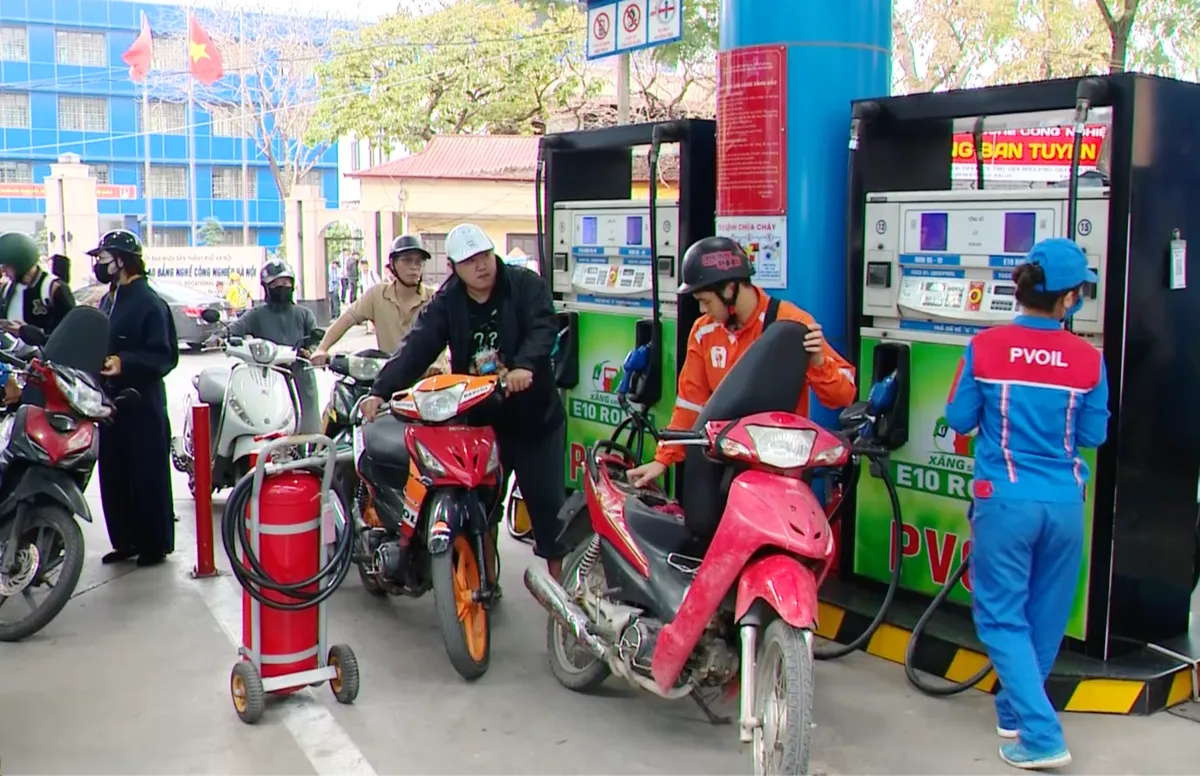
Once the technical infrastructure and supply sources are established, the final hurdle for E10 gasoline to truly become a part of people's lives is the pricing issue. Domestic consumers are very sensitive to even the smallest fluctuations in fuel prices. Regarding this aspect, Associate Professor Dr. Nguyen Thuong Lang (National Economics University) commented that the key factor for the widespread use of E10 gasoline is to create a clear price advantage. The price of bio-gasoline must be set significantly lower than that of conventional gasoline to stimulate the transition, creating an initial impetus to form a new consumption habit for the people.
The market is showing very positive signs, meeting these expectations. At PVOIL and Petrolimex's distribution systems, E10 RON95 gasoline is currently listed at 23,190 VND per liter, about 560 VND lower than RON95-III mineral gasoline. Regarding macroeconomic management, Mr. Dao Duy Anh, Deputy Director of the Department of Innovation, Green Transformation and Industrial Promotion, emphasized that the highest goal of the state is to provide this biofuel at a reasonable price, ensuring that it absolutely does not increase the cost of living for people when E10 gasoline is widely available.
The opening of E10 gasoline supply channels from mid-May has a deeper significance than just a commercial campaign. From a master plan perspective, Mr. Le Xuan Huyen, Deputy General Director of the National Energy and Industry Corporation, assessed that accelerating the E10 adoption roadmap will increase fuel supply by 15% without relying on traditional oil sources. This helps Vietnam achieve a "dual goal": strengthening national energy security in the face of complex geopolitical changes while ensuring the green energy transition roadmap.
With thorough preparation in terms of infrastructure, self-sufficiency in supply, and flexible price regulation strategies, the Vietnamese fuel market is fully ready to operate smoothly in the era of E10 bioethanol.
Source: https://vtv.vn/khoi-thong-dong-chay-xang-sinh-hoc-e10-100260519144628431.htm



























































































Comment (0)