

Vinh Long possesses a rare inland waterway transportation system in the Mekong Delta. With its large river network and six strategic estuaries connecting to the East Sea, the province has the opportunity to become an important waterway logistics center in the region if its potential is properly exploited and infrastructure is invested in comprehensively.
 |
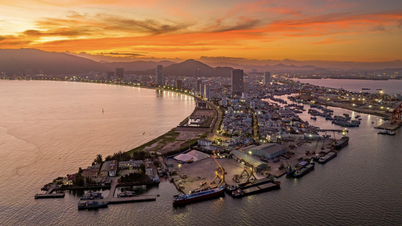
| The Định An estuary will form the Định An-Duyên Hải-Bình Đại port area, capable of receiving ships up to 50,000 tons. |
Potential from rivers and waterways
The province possesses one of the densest waterway systems in the Mekong Delta region. According to Mr. Duong Van Phuc, Provincial Party Committee member and Director of the Department of Construction, the province has many major rivers including: the Tien River, the Hau River, the Co Chien River, the Mang Thit River, the Ham Luong River, and the Ba Lai River, all flowing into the East Sea through the Dai, Ham Luong, Co Chien, and Dinh An estuaries… The total length of inland waterways in the province is approximately 2,117 km.
In addition, the province has three seaports and port areas: Vinh Thai port area, Binh Minh port area, and the potential Binh Tan port area; Duyen Hai-Dinh An port, Tra Cu-Kim Son port; and Tan Cang Giao Long port, capable of receiving ships from 5,000 to 20,000 tons. This is a significant advantage.
The province has the 40km-long Quan Chanh Bo canal connecting the Hau River to the East Sea. This is a project to create a channel for large cargo ships to enter the Hau River, transporting goods in the Mekong Delta region. This channel is designed for ships of 10,000 tons fully loaded and 20,000 tons partially loaded to enter and exit ports on the Hau River.
 |
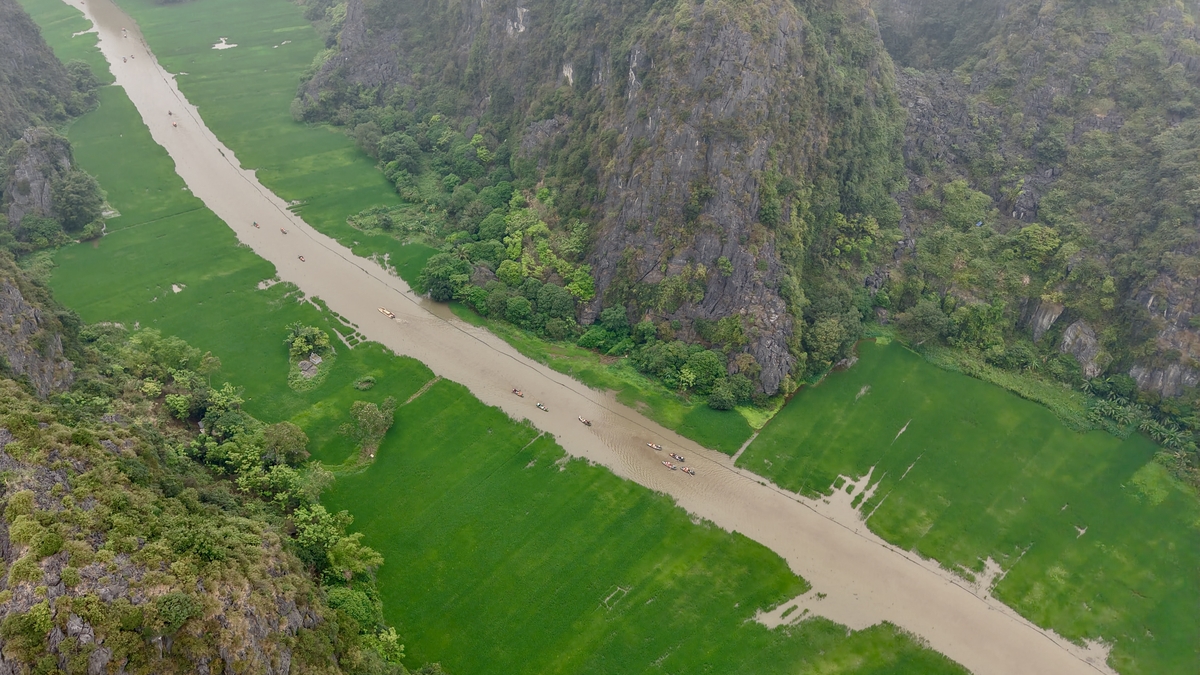
| The Cho Lach River plays a crucial role in transporting goods from Ho Chi Minh City to Vinh Long and other provinces in the Mekong Delta. |
According to experts, logistics and water transport currently have much lower costs than road transport, especially for large volumes of goods. In the context of high logistics costs being a bottleneck in the economy , strongly developing water transport will help enhance the competitiveness of local goods.
According to Dr. Nguyen Ngoc Vinh (Ho Chi Minh City University of Economics), with a coastline over 130km long and the Tien and Hau rivers flowing into the sea through large estuaries, the province has ideal natural conditions for developing many specific marine economic sectors and fields in accordance with Resolution No. 36-NQ/TW, dated October 22, 2018, on the strategy for sustainable development of Vietnam's marine economy to 2030, with a vision to 2045.
“The simultaneous presence of coastlines and major estuaries creates an integrated maritime-river economic space, expanding the development potential for marine economic sectors in depth and regional linkages. In particular, the strong development orientation of maritime-river logistics, with the Định An port cluster and the Định An-Cần Thơ waterway as its core, has the ability to connect goods from the inland center of Vĩnh Long to the East Sea and international markets,” said Dr. Nguyễn Ngọc Vinh.
The river system also opens up opportunities for the development of other economic sectors such as seaports, logistics services, shipbuilding, river tourism, coastal wind power, and integrated marine economy. Vinh Long almost has all the conditions to become a maritime logistics center of the eastern coastal region of the Mekong Delta.
Unlocking the advantages of waterway transportation.
Despite its enormous potential, the current challenge lies in the underdeveloped waterway infrastructure, which relies solely on natural conditions and lacks investment in dredging. Some bridges on key waterways do not meet the required clearance for navigation, limiting the operation of large vessels and overloading the road transport system.
According to many transport businesses, the cost of transporting goods by waterway is currently significantly lower than by road, especially for agricultural products, construction materials, and containers. However, many waterways have not been dredged comprehensively, and some bridges have low clearance, making it difficult for large ships to navigate, thus reducing operational efficiency.
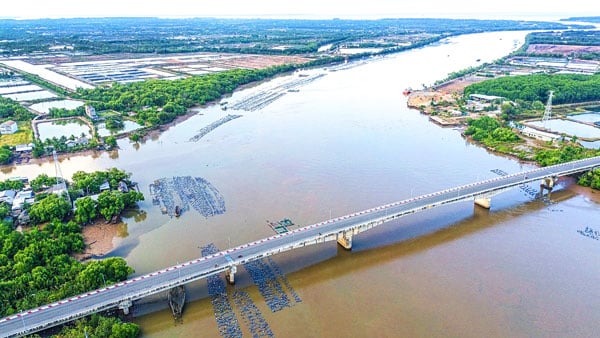 |
| Vinh Long boasts one of the densest waterway transportation systems in the Mekong Delta region. |
According to the Department of Construction, under Decision No. 1579/QD-TTg approving the overall plan for the development of Vietnam's seaport system for the period 2021-2030, with a vision to 2050, the province has a diverse port system including Type I seaports (Tra Vinh) and Type III seaports (Vinh Long, Ben Tre).
Key port areas: Duyen Hai-Dinh An and Binh Dai can accommodate ships up to 50,000 tons; Binh Minh and Tra Cu can accommodate ships up to 20,000 tons. These ports are connected to a system of satellite ports on the Tien River - Hau River - Co Chien River - Ham Luong River.
Regarding inland waterway ports, Vinh Long will have 9 ports capable of receiving vessels from 1,000 to 3,000 tons. In addition, there are 5 fishing ports serving more than 5,000 fishing vessels, handling the loading, unloading, and sale of approximately 60,000 tons of seafood per year.
The province is currently implementing a research and assessment project on the development potential of the deep-sea area of Tra Vinh province (formerly) as a basis for reporting to the Prime Minister for inclusion in the National Seaport System Development Plan. This will also serve as a foundation for the future construction of an offshore deep-sea port, making the province one of the key provinces for marine economic development in the Mekong Delta region.
To fully exploit the potential of inland waterways, the Director of the Department of Construction, Duong Van Phuc, stated that the province will gradually complete the planning of a modern, multimodal transportation network including expressways, national highways, inland waterways, and railways (in the future), aiming to enhance connectivity with Ho Chi Minh City, Can Tho City, and export gateways, gradually creating a synchronized and modern system. In particular, it will focus on effective connectivity between different modes of transport and between the national and local transportation systems.
“The development orientation for waterway transport is to integrate it with the road transport network to form a continuous system, ensuring connectivity between production areas, industrial zones and clusters… with consumption areas, transport hubs, and serving the needs of goods transportation and tourism development. At the same time, priority will be given to dredging and upgrading waterways on major rivers in the province to ensure that large-tonnage vessels can operate. The project to research and assess the potential for developing deep-water areas will also be implemented,” Mr. Phuc emphasized.
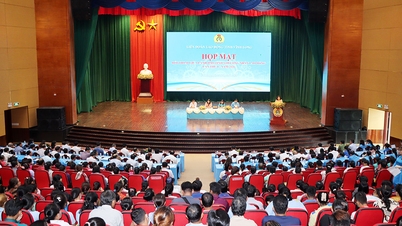
At the regular April meeting of the Provincial People's Committee, Central Committee member and Provincial Party Secretary Tran Van Lau emphasized: The province has already announced its provincial planning, and once announced, it must be implemented. Therefore, departments, agencies, and localities need to review and update their planning at the departmental, commune, ward, and specialized levels. In addition, attention should be paid to reviewing the planning of inland waterway terminals, linking them with industrial zones and clusters, and reviewing the transportation routes connecting to inland port areas to attract investment in cargo, logistics, and even tourism vessels.
“We have a strong advantage in waterways, and river transport helps reduce costs significantly, benefiting the people. For the same quantity of goods, transport by waterway is much more advantageous, and we must maximize the use of waterway transport. I especially request that relevant departments and agencies pay attention to this issue in the coming time,” emphasized Provincial Party Secretary Tran Van Lau.
Text and photos: KHANH DUY
Source: https://baovinhlong.com.vn/kinh-te/202605/khoi-thong-thuy-noi-dia-de-but-pha-logistics-44c4c69/













































































Comment (0)