

Pollution from traffic is becoming increasingly significant.
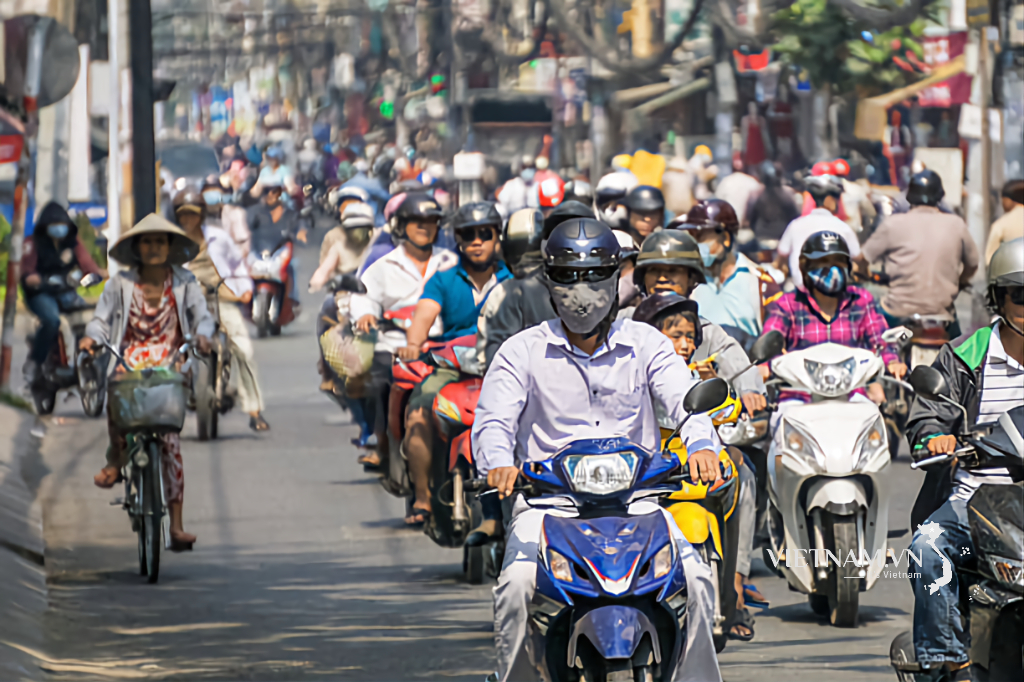
During rush hour, on many routes leading into and out of central Hanoi such as Giai Phong, Nguyen Trai, Lang, or around bridges like Chuong Duong, Long Bien, Nhat Tan, Thang Long, etc., people can easily feel the suffocating atmosphere. The dense lines of motorbikes and cars stretch for long distances, causing frequent traffic jams at many intersections and resulting in large amounts of exhaust fumes.
According to statistics, Hanoi currently has over 9.3 million vehicles, with motorcycles accounting for more than 86%. Notably, emissions from these vehicles have been identified as the main cause of air pollution in the inner city.
Mr. Do Minh Tien (Hang Voi Street, Hoan Kiem Ward) said: “On hot days or during rush hour, just walking to the end of the street, you can clearly smell the exhaust fumes. My house is on the main road, so even with the doors closed, dust still settles. I hope the city will soon have strong solutions to reduce old and polluting vehicles in the inner city.”
Ms. Nguyen Thi Bay (Hang Dao Street, Hoan Kiem Ward) shared: “ Tourists really enjoy the atmosphere of the Old Quarter, but sometimes the traffic is heavy, the noise and dust reduce the quality of the experience. If the city does a good job of green transportation, expanding the network of electric vehicles and clean buses, the urban landscape will be more civilized.”
In reality, the area within Ring Road 1 is experiencing immense traffic pressure. The narrow alleys, dense population, and bustling business activity mean that motorbikes remain the primary mode of transportation. Many people use motorbikes even for short distances under 2km due to a reluctance to walk or the inconvenience of using public transport. Meanwhile, the city currently has approximately 51 locations with frequent traffic congestion.
Associate Professor Bui Thi An, President of the Hanoi Women Intellectuals Association and Director of the Institute of Resources, Environment and Community Development, stated: “Air pollution in Hanoi has many causes, but traffic is the largest source of pollution emissions in the inner city. If not strictly controlled now, the pressure on the environment and public health will become increasingly serious. Controlling traffic emissions should be considered a central task in the capital's green urban development strategy.”
Developing green transportation
To fundamentally address the problem of air pollution, Hanoi is implementing a comprehensive set of solutions related to infrastructure and green transportation. A series of key projects, such as ring roads and urban railway lines, are expected to create a significant shift in the near future. Alongside infrastructure investment, Hanoi is promoting the application of smart transportation through AI camera systems, interconnected electronic ticketing, and non-stop toll collection systems. This is considered a crucial foundation for more effective vehicle management, traffic regulation, and emission control.
Specifically, the city plans to pilot a low-emission zone in Hoan Kiem ward, then expand it to Cua Nam ward and the entire area within Ring Road 1 to limit emissions from vehicles. The goal of the low-emission zone is to gradually control high-emission vehicles, thereby encouraging and promoting the transition of people to green transportation.
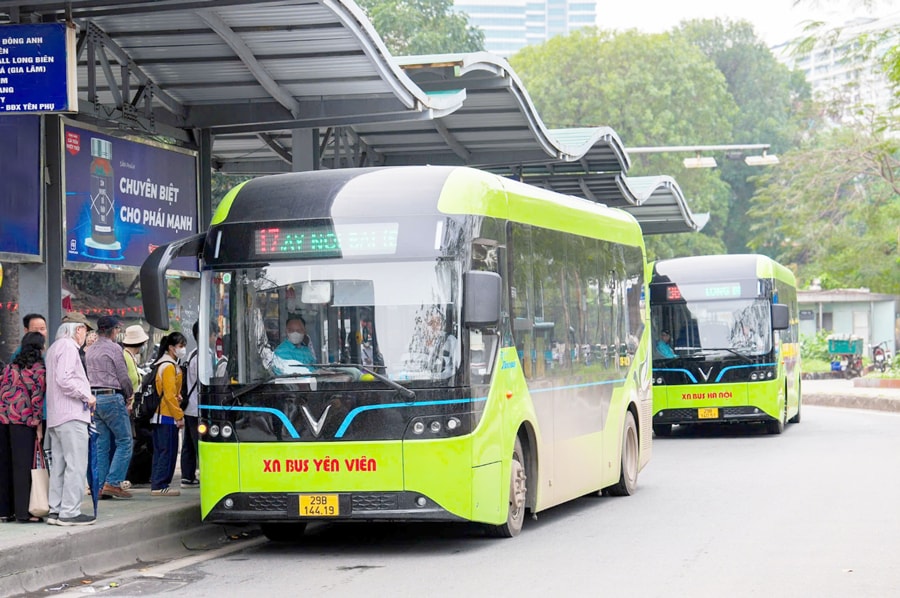
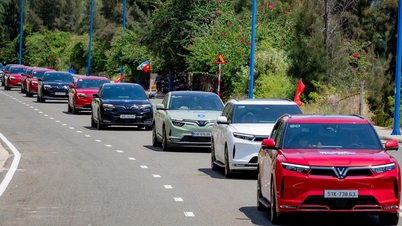
According to Nguyen Quang Huy, Deputy Head of the Transport Management Department (Hanoi Department of Construction), the groundbreaking solution being implemented by the city is the conversion of public transport vehicles to clean energy. Currently, 28 out of 128 bus routes have been converted to electric vehicles. It is expected that by the end of 2026, the percentage of buses using clean energy will reach approximately 43% of the entire network. For taxis and contract vehicles, the city also aims to complete the conversion of 100% of vehicles to electric or green energy vehicles by 2030.
In addition, the public bicycle system has also been expanded. The entire city of Hanoi has 130 stations with 1,800 public bicycles, mainly concentrated within the Ring Roads 1 and 2. Currently, the city is reviewing plans to develop thousands more electric bicycles and electric motorbikes to provide more green transportation options for residents.
To develop sustainable green transportation, in addition to infrastructure and technology solutions, many experts believe that the city needs to strengthen public awareness campaigns about the harmful effects of traffic emissions on health and quality of life; thereby encouraging people to prioritize the use of public transportation, walking, cycling, or switching to green transportation methods. Building a "green transportation culture" should be identified as a long-term solution, in which each citizen becomes an active "ambassador" contributing to reducing traffic emissions and protecting the environment.
According to Associate Professor Bui Thi An, controlling traffic emissions is not only an environmental issue but also directly related to the quality of life and competitiveness of urban areas. A green city with less pollution will be more attractive to investors, tourists, and residents. This journey cannot be completed "overnight," but with the determination to transition to green transportation and strengthen emission control, the capital city will become increasingly civilized and modern.
Source: https://hanoimoi.vn/kiem-soat-khi-thai-giao-thong-huong-toi-xay-dung-thu-do-van-minh-hien-dai-750995.html




















































































Comment (0)