

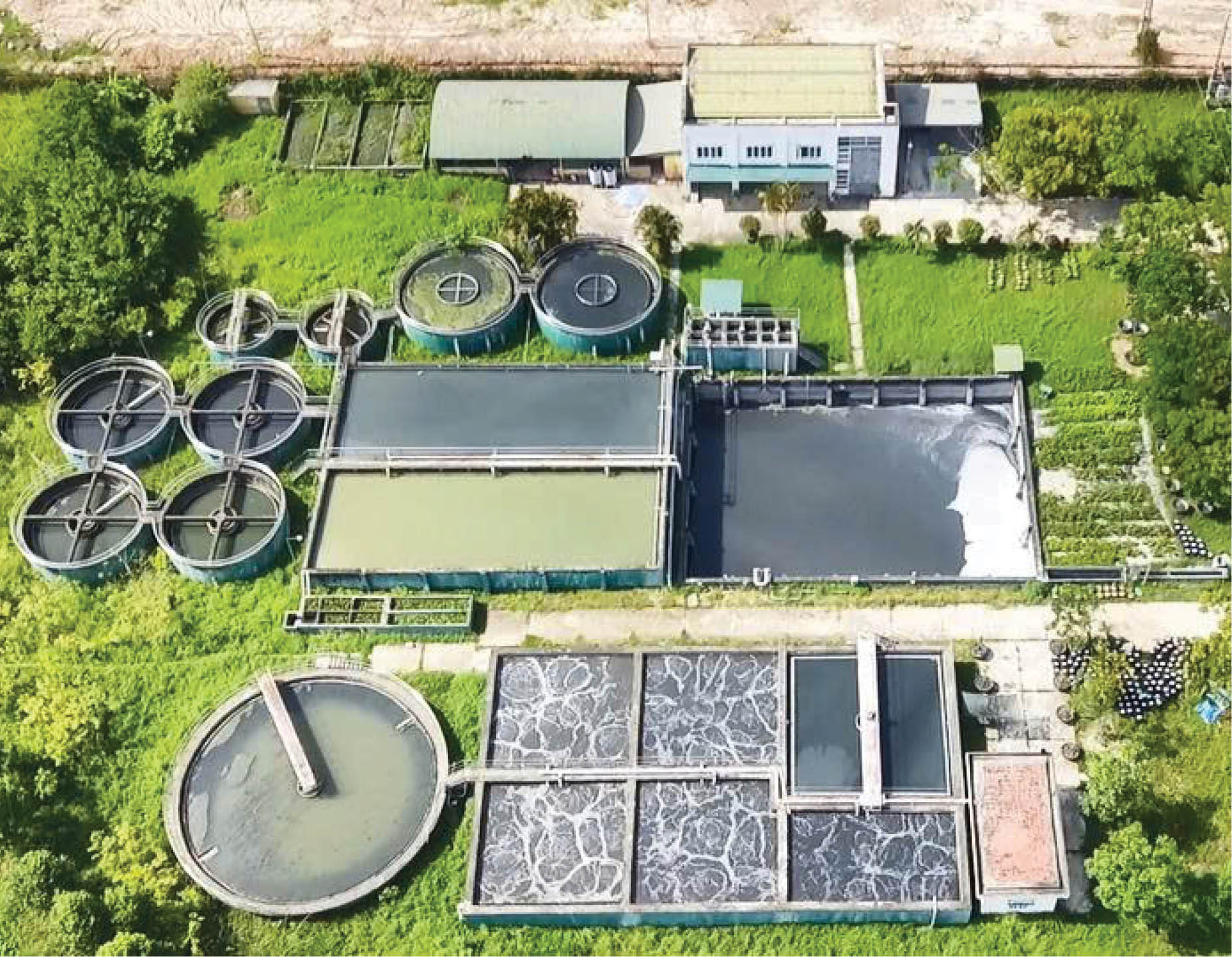
 |
| The centralized wastewater treatment system at Phu Bai Industrial Park is quite completely invested. |
Investing in collection and treatment systems
According to the Department of Environmental Protection (BVMT) of the Department of Agriculture and Environment, currently in the city, in addition to Chan May - Lang Co Economic Zone, there are 4 industrial parks that have investors building and trading in industrial park technical infrastructure, namely Phong Dien, Tu Ha, Phu Bai, La Son and 2 industrial parks that do not have investors building and trading in technical infrastructure, namely Phu Da and Quang Vinh industrial parks.
In particular, the project of investing in construction and business of infrastructure of La Son Industrial Park phase 1 of Vitto Company Limited has attracted 3 projects of secondary investors to come into operation. The current production types in this Industrial Park are frit and tiles that do not generate wastewater. Therefore, the requirement that industrial parks must have a centralized wastewater treatment system (XLNT) in this Industrial Park at the present time has certain inadequacies.
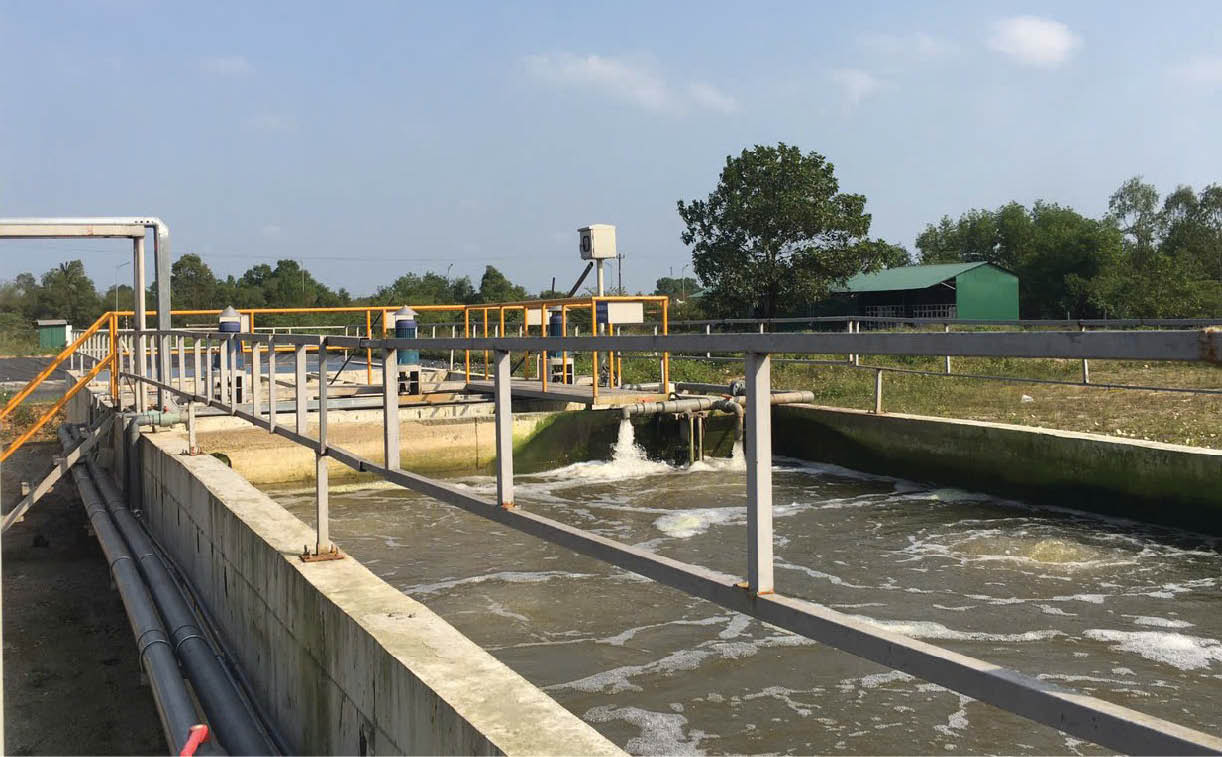 |
| Tu Ha Industrial Park has investors to build and operate technical infrastructure. |
Chan May - Lang Co Economic Zone has invested in a wastewater treatment system with a capacity of 4,900m3/day and night in the duty-free zone and is operating to treat a number of enterprises producing here. However, the wastewater collection pipeline system is still not complete to serve facilities that need connection. The Department of Environmental Protection assessed that infrastructure investors have focused on investing in infrastructure to call for secondary investors in industrial parks and economic zones according to environmental protection regulations, especially investing in centralized wastewater collection and treatment systems. Thanks to that, up to now, the number of industrial parks with wastewater treatment infrastructure in the city has increased by 2 compared to the time when the Law on Environmental Protection 2020 took effect.
According to the Department of Environmental Protection, the city currently has 9 established industrial clusters. The detailed planning of the industrial clusters has also been relatively complete with a total area of more than 304 hectares, reaching a rate of 86.23%. Among the above industrial clusters, 6 industrial clusters are in operation, including: An Hoa, Thuy Phuong, Tu Ha, Huong Hoa, Bac An Gia and A Co. The facilities here are mainly small-scale production, with the main production industries being construction materials, industrial sewing, embroidery, kraft paper production, fine art woodwork, leather shoes, wood chip production and energy pellets...
 |
| Wastewater treatment system in Tu Ha Industrial Park has been completely invested and constructed. |
Regarding infrastructure, industrial parks are only invested in a few items such as internal roads, electricity systems, and clean water supply. In particular, technical infrastructure serving environmental protection work in industrial parks has not been invested synchronously, lacking wastewater treatment systems and rainwater drainage systems, leading to the risk of environmental pollution. The reason for the above situation is that industrial parks have been formed for a long time, so the layout of the land is not guaranteed and not in accordance with the industrial park planning. Investment in facilities is still scattered, leading to infrastructure investment that is difficult to ensure the collection of all waste sources generated by the facilities. In addition, calling for infrastructure investment for these industrial parks also faces many difficulties due to large costs, while State resources are limited, and the capital recovery period is long.
Control of waste sources
In recent times, the Department of Agriculture and Environment has implemented many measures to control facilities at risk of causing environmental pollution according to the provisions of the Law on Environmental Protection 2020 and decrees and decisions of the Government and the Ministry of Agriculture and Environment ; in particular, the implementation of Official Dispatch No. 9403/UBND-TN dated September 6, 2022 of the City People's Committee on strengthening prevention and control of facilities at risk of causing environmental pollution in the area.
However, currently there are still some industrial parks and industrial clusters that have not fully invested in environmental protection infrastructure, including centralized wastewater collection and treatment systems, causing significant impacts on investment attraction.
In order to ensure environmental protection and effective waste control, the Department of Agriculture and Environment has advised the City People's Council and People's Committee to direct units, localities, and the City Economic and Industrial Zone Management Board to work with infrastructure investors to urgently arrange resources to invest in environmental protection infrastructure and centralized wastewater treatment systems in a modern direction, suitable to the context of each locality. The Department of Industry and Trade reviewed and agreed with the management units of industrial parks that have not yet invested synchronously in infrastructure, collection systems, and centralized wastewater treatment systems to have appropriate investment solutions and roadmaps. Require production and business establishments in industrial parks to fully comply with the provisions of law on environmental protection, complete initial environmental records, and be approved by competent authorities before going into operation...
Currently, the city is focusing on collecting and treating urban domestic wastewater, investing in the construction and operation of two wastewater collection and treatment systems in the southern area of the city with a capacity of 30,000 m3/day and night and in Chan May-Lang Co commune with a capacity of 4,750 m3/day and night, contributing to reducing environmental pollution in river basins and lagoon systems in the area. However, in many residential areas and new urban areas, there is still a lack of centralized wastewater collection and treatment systems; locations for collection points, classification, storage of bulky solid waste, construction solid waste and recycling facilities have not been planned. In addition, investment resources for environmental protection in rural areas are still limited, making it difficult for localities to implement environmental criteria in new rural construction.
Faced with that situation, the city proposed that the Ministry of Agriculture and Environment review, summarize, and comprehensively evaluate the implementation of the 2020 Law on Environmental Protection to promptly adjust and supplement it to suit the reality. There are solutions to build specific and effective environmental protection models and roadmaps for collecting, transporting, treating domestic waste and treating wastewater in accordance with the situation and context of Vietnam. In addition, there are more flexible regulations for the criteria that industrial parks must have a centralized wastewater treatment system; there are roadmaps and solutions suitable to the actual situation of localities. Research and develop economic tools, financial policies and synchronous coordination mechanisms to encourage businesses and people to participate in environmental protection. Prioritize allocating adequate budget for environmental protection, investing in infrastructure, having specific mechanisms for key areas of environmental pollution or effective environmental protection models...
| In the period of 2022 - 2025, the rate of collected and treated domestic solid waste meeting standards and regulations throughout the city will reach from 90 to 95%, of which the rate of collection and treatment of urban solid waste will reach from 96 to 100%. From 2024 to now, the city has put into operation the Phu Son Waste-to-Energy Plant, with a capacity of receiving and treating 600 tons/day and night, contributing to reducing the rate of waste treated by direct burial to below 30% according to the Prime Minister's directive. The total volume of solid waste collected and transported by localities and units to the Phu Son Waste-to-Energy Plant is 194,982 tons, accounting for about 81% of the amount of domestic solid waste generated in the area. |
Photo: Department of Environmental Protection
Source: https://huengaynay.vn/kinh-te/kiem-soat-nguon-thai-cac-co-so-co-nguy-co-o-nhiem-moi-truong-160737.html
![[Photo] Urgently help people soon have a place to live and stabilize their lives](/_next/image?url=https%3A%2F%2Fvphoto.vietnam.vn%2Fthumb%2F1200x675%2Fvietnam%2Fresource%2FIMAGE%2F2025%2F12%2F09%2F1765248230297_c-jpg.webp&w=3840&q=75)


















































![[Photo] General Secretary To Lam works with the Standing Committees of the 14th Party Congress Subcommittees](https://vphoto.vietnam.vn/thumb/402x226/vietnam/resource/IMAGE/2025/12/09/1765265023554_image.jpeg)
























Comment (0)