


Thoroughly upholding human values and the rule of law.
The exposure of numerous major cases such as the Viet A case, the rescue flight case, and cases related to the Van Thinh Phat Group, Phuc Son, Thuan An, and the cases involving the two Viet Duc and Bach Mai hospitals (branch 2) in Ha Nam... has revealed the sophistication, complexity, and close collusion between interest groups and those in positions of power; it also demonstrates the determination of the Party and the State in the fight against corruption and negative practices.
Affirming the determination of the Party, the State, and the entire political system to resolutely fight against corruption, waste, and negative phenomena, General Secretary and President To Lam emphasized: Inspection, supervision, and control of power, and the fight against corruption, waste, and negative phenomena in the coming period need to be placed within the overall requirements of the country's rapid and sustainable development, with an approach that is both systemic and strategically profound. This is not only an urgent and ongoing task to purify the apparatus, but also a fundamental condition for consolidating the people's trust, ensuring political and social stability, and creating a healthy environment for development...
The work of inspecting, supervising, and controlling power, and preventing and combating corruption, waste, and negative practices, must be implemented with high political determination, resolute and persistent action, regularly and continuously; strictly handling all violations, ensuring the principle of "no forbidden zones, no exceptions," but at the same time deeply understanding humanism, the supremacy of law, and the goal of development. This includes establishing and effectively operating mechanisms to protect dynamic, creative officials who dare to think, dare to act, and dare to take responsibility for the common good; and clearly defining the boundary between violations driven by self-interest and mistakes in the process of experimentation and innovation.
With the spirit of "no forbidden zones, no exceptions," many cases have been brought to light. The people's trust has been strongly reinforced as the Party and State truly implement the principle of "actions speak louder than words." And the support of the people is the most solid foundation, allowing the "furnace" to burn fiercely, consuming all acts of corruption...
However, in reality, legal loopholes still exist, especially in sensitive areas such as land, bidding, securities, and corporate bonds. Therefore, perfecting the legal system towards transparency, openness, and ease of supervision is a key task, ensuring that officials "cannot commit corruption" through strict regulations; "dare not commit corruption" through severe sanctions; and "do not need to commit corruption" through reasonable incentive policies.
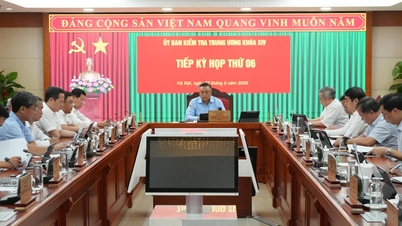
Comrade Le Minh Tri, Member of the Political Bureau, Secretary of the Central Committee of the Party, and Head of the Central Internal Affairs Commission , stated that it is necessary to resolutely and persistently fight against corruption, waste, and negative phenomena, and to maintain the achievements already made, while continuing to strengthen the people's trust. For new areas, mechanisms and regulations for management must be in place from the outset, with a focus on preventing petty corruption at the grassroots level, so as not to affect the trust of the people and businesses.
Furthermore, the fight against corruption, waste, and negative phenomena must be placed under the direct and comprehensive leadership and guidance of the Party, and must be based on the interests of the nation, political, economic , and social effectiveness, and the common good; enhancing the role, responsibility, pioneering spirit, and exemplary conduct of Party committees and organizations, especially their leaders; building and perfecting institutions, strengthening strict control over power, and prioritizing prevention as the fundamental and long-term approach, while focusing on detection and handling as the crucial and breakthrough.
No forbidden zones, no exceptions.
According to Comrade Le Minh Tri, under the direction of the Central Steering Committee on preventing and combating corruption, waste, and negative phenomena, headed by General Secretary and President To Lam, the Head of the Steering Committee, along with the determination and responsibility of Party committees and organizations at all levels and sectors, the work of detecting, investigating, prosecuting, and adjudicating corruption crimes has become increasingly systematic, with synchronized and effective coordination from awareness, viewpoints, approaches, to methods and principles of handling.
In many recent meetings of ministries, departments, and localities on anti-corruption, there has been a consensus on the principle that the prevention and handling of corruption crimes must be strict but humane and persuasive. This involves classifying and differentiating individuals in cases to prove the crime, demonstrating the element of self-interest and embezzlement in corruption, economic, and official misconduct cases; while also encouraging offenders to proactively mitigate the consequences. As a result, this has contributed to the faster recovery of assets lost to the State due to corruption.
"With the above perspective, understanding, and approach, in recent times, the whole country has detected, investigated, prosecuted, and tried many large-scale corruption, waste, and negative cases with complex characteristics in many fields related to land, banking, securities, corporate bonds, healthcare, education, electricity, public investment... with a spirit of continuous struggle from the central to local levels 'no forbidden zones, no exceptions'," Comrade Le Minh Tri said.
Mr. Bui Van Hung, Secretary of the Party Cell of Residential Area 23, Bo De Ward (Hanoi), believes that corruption and negative practices, in addition to exploiting positions and power for economic gain, also encompass the decline in political ideology, morality, and lifestyle, and are the root causes of corruption. This struggle is not just about exposing and handling major cases, but a revolution within the system, aimed at purifying the apparatus, eliminating "rotten apples," and keeping the Party clean and strong…
Clearly, by leveraging the combined strength of the entire political system and society, the fight against corruption, waste, and negative phenomena must be carried out down to the grassroots level, including Party branches, under the supervision and participation of the people; enhancing the capacity, effectiveness, core role, and synchronized and timely coordination of functional agencies will ensure that the fight against corruption, waste, and negative phenomena reaches a new level, with the spirit of "no forbidden zones, no exceptions."
However, corruption and malpractice remain complex and sophisticated, tending to "hide" within mechanisms and policies or exploit new areas. Therefore, in the coming period, it is necessary to further strengthen the three pillars: prevention as the primary focus; early detection and timely handling; and substantive, not merely formal, control of power. This struggle has achieved many important, comprehensive, and groundbreaking results, but for sustainability, it is necessary to continue shifting strongly from "handling" to "prevention," from "campaigns" to "institutions"...
Mr. Trang A Duong, a full-time member of the National Assembly's Ethnic Council of the 16th term, and a National Assembly representative from Lao Cai province.
Source: https://baotintuc.vn/thoi-su/kien-quyet-dau-tranh-chong-tham-nhung-lang-phi-tieu-cuc-20260428170805160.htm

























































































Comment (0)