

This planning not only sets out directions for expanding urban space, but also aims to reorganize the development structure of the capital city with a longer-term, sustainable mindset and better adaptability to changes in the coming decades.
Restructuring development space
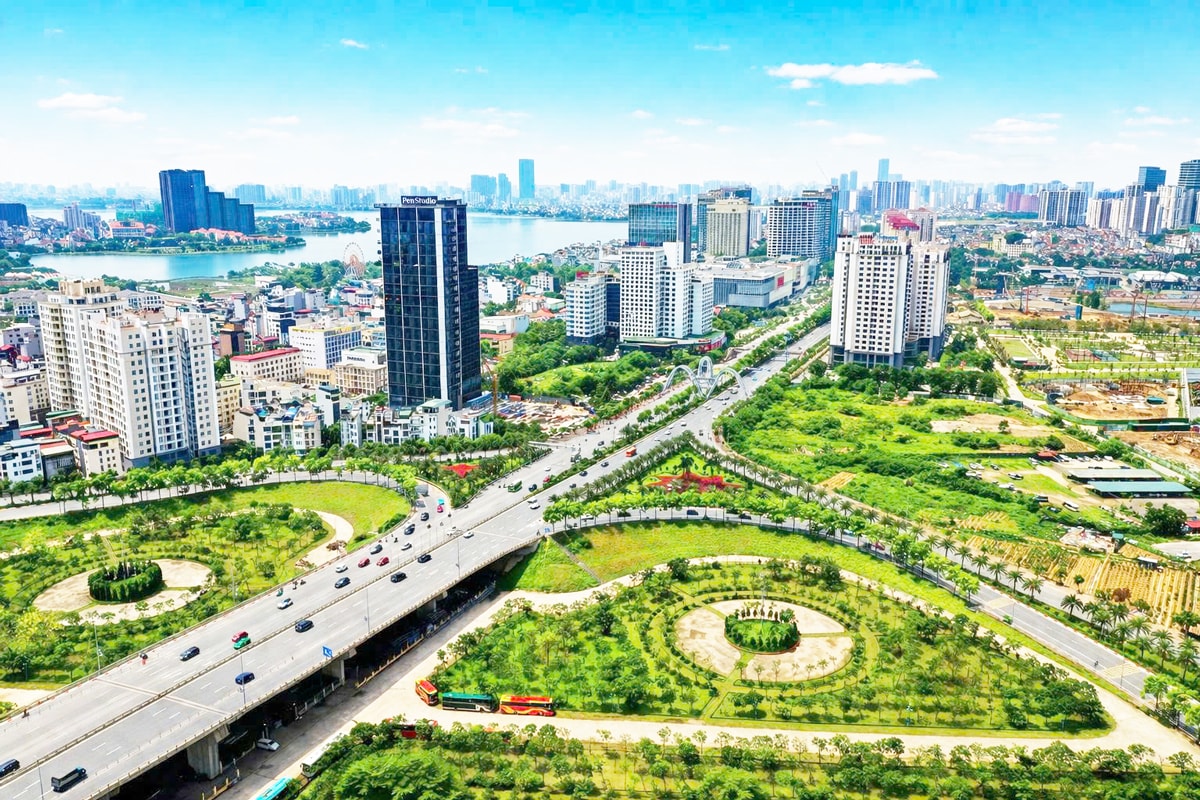
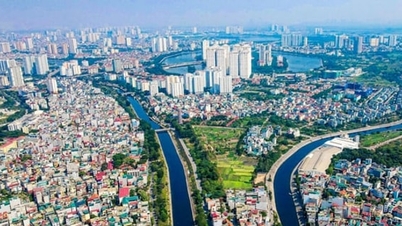
Over nearly 40 years of reform, Hanoi has experienced one of the fastest urbanization rates in the country. Urban space has continuously expanded, population has increased sharply, and many new areas have emerged with rapid development. Today, Hanoi is no longer a city confined to its historical inner core but has become an economic , cultural, educational, scientific, and technological center with regional and national influence.
However, rapid development also brings with it increasingly evident pressures such as traffic congestion, environmental pollution, overloaded infrastructure, lack of green spaces, and population pressure in urban areas, posing significant challenges to the quality of urban life.
Many experts believe that numerous problems Hanoi is facing stem from the fact that its urban development is progressing faster than its capacity for spatial organization and synchronized infrastructure investment. Some residential areas are experiencing rapid growth, but their transportation infrastructure, schools, healthcare facilities , and public spaces have not kept pace. Many newly formed urban areas remain heavily reliant on the central core for employment, services, and transportation.
Meanwhile, Hanoi's current development requirements are significantly different from previous periods. The city is not only facing the simple challenges of urban expansion or population redistribution, but also must simultaneously address new demands for green growth, digital transformation, innovation, and enhanced international competitiveness.
Previously, the Capital City Planning for the period 2021-2030, with a vision to 2050, and the Revised Capital City Master Plan to 2045, with a vision to 2065, were developed under two different laws, with different processes and timeframes, leading to a lack of synchronization in some development orientations and urban spatial organization.
In particular, many planning contents were developed before Hanoi implemented the two-tiered local government model and carried out administrative unit reorganization. The reorganization from 526 commune-level administrative units down to 126 units necessitated restructuring of development space, redistribution of infrastructure, and reorganization of the urban service network.
In this context, Hanoi's approval of the Master Plan for the Capital City with a 100-year vision is seen as a step towards building a unified development framework capable of guiding urban space in the long term.
Professor Tran Trong Hanh, former Rector of Hanoi University of Architecture, commented that the Hanoi Capital City Master Plan with a 100-year vision is not just a spatial development blueprint, but a choice of path for the future of a special city, the capital of the whole country. If effectively implemented, this plan will contribute to creating a new face for Hanoi in the new era of development.
According to Dr. Vu Hoai Duc, lecturer at the School of Interdisciplinary Sciences and Arts (Vietnam National University, Hanoi), modern urban planning is no longer about pre-designing the future based on rigid thinking, but rather a development structure capable of adapting to long-term economic, social, technological, and environmental changes.
From an urban governance perspective, the approval of the Hanoi Capital City Master Plan with a 100-year vision also shows that the city is strongly shifting from a "urban management" mindset to a "development space creation" mindset. While previously the main focus was on controlling construction and expanding urban space, the current requirement is to reorganize the development structure to create new growth drivers for the entire Capital Region.
Opening a new cycle of development
One of the major orientations of the Hanoi Capital City Master Plan with a 100-year vision is to reorganize development space towards a more balanced approach between the central area and new dynamic zones. Hanoi will gradually form more new development hubs linked to strategic infrastructure, thereby reducing pressure on the historical urban core and expanding long-term growth potential.
In the new development structure, strategic transportation systems such as ring roads, metro lines, and regional connecting corridors are identified as playing a leading role in urban development. These infrastructure axes not only serve transportation but also create conditions for the formation of new development spaces, contributing to the redistribution of population and economic activities.
According to Dr. Architect Dao Ngoc Nghiem, Vice President of the Vietnam Urban Planning and Development Association, Hanoi is facing a great opportunity to restructure its urban space through a modern transportation infrastructure system. If implemented synchronously, high-volume transportation routes will contribute to the formation of new development centers and create a transformation in the urban spatial organization of the capital city.
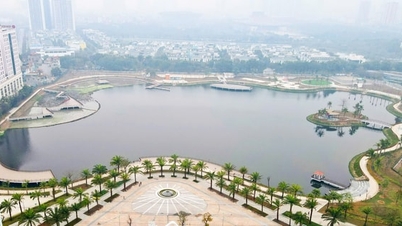
Besides infrastructure development, this planning also places greater emphasis on urban quality of life. Green spaces, waterways, ecological corridors, and historical and cultural values are identified as important components in the future development structure of the capital city.
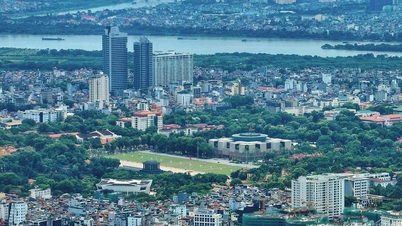
Notably, for the first time, the Red River has been identified as the main ecological and cultural landscape axis in the future development structure of Hanoi. This orientation opens up the possibility of restoring the river to its central role in urban life, creating new development spaces for both banks.
From a long-term development perspective, the city's approval of the Hanoi Capital City Master Plan with a 100-year vision not only signifies the completion of a planning project, but also prepares for a new development cycle for the capital, aiming to build a modern, sustainable, and distinctive development space in the 21st century.
Source: https://hanoimoi.vn/kien-tao-khong-gian-moi-cho-ha-noi-750336.html




















































































Comment (0)