

Following the outbreak of conflict in the Middle East in late February, the wave of instability from the Gulf quickly spread to many Asian economies – the destination of more than 80% of the oil and gas that passes through the Strait of Hormuz. Disruptions to energy supplies, along with soaring oil and raw material prices, are putting significant pressure on production, transportation, and consumption in the region.
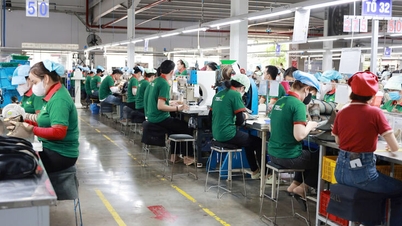
Using diesel generators for at least four hours a day is what the fashion company Arrival in Bangladesh is doing to maintain production amidst increasingly frequent power outages. Not only are energy costs soaring, but the prices of raw materials are also constantly escalating.
Alvi Islam, Director of Arrival Fashion Company in Bangladesh, said: "Raw materials such as sewing thread, plastic bags, and cardboard boxes are all derived from petroleum. Basically, there's a supply chain crisis. All suppliers have increased the prices of sewing thread, plastic bags, and other garment accessories. For that reason, the cost of exporting garments has increased significantly in the past month."
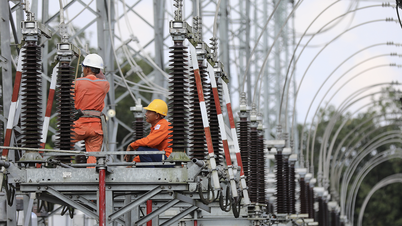
The shortage of natural gas and diesel fuel has also led to more frequent power outages in Bangladesh's industrial zones, threatening the operations of key export industries such as textiles.
Anwar Ul Alam Chowdhury, Chairman of the Bangladesh Industrial Association, shared: "Due to energy issues, production has decreased by approximately 30% to 40%, while business costs have increased by about 35% to 40%. Domestic demand has fallen due to high and continuing inflation."
Similar pressures are spreading across many Asian economies. Recent surveys show South Korea recording its sharpest increase in input costs in years, while Japan and Indonesia are also seeing escalating raw material prices.
In China, the producer price index in April reached its highest level in 45 months. The automotive industry was one of the sectors most significantly impacted, with rising fuel prices weakening demand for internal combustion engine vehicles, while the cost of electric vehicle chips and batteries also escalated due to supply disruptions from the Middle East.
Gu Desheng, manager of BYD's Shanghai dealership in China, said: "Currently, our direct retail prices haven't fluctuated much. However, the rising cost of chips and batteries is a real factor. Car prices may gradually increase in the near future."
According to S&P Global, manufacturing activity in many Asian economies continues to expand. However, analysts believe that part of the current momentum stems from businesses stockpiling goods to hedge against potential supply shortages and rising costs. Once warehouses are full and costs continue to accumulate, output may face a downward adjustment.
These pressures are expected to significantly impact the region's economic outlook in the coming period.

From energy and transportation to raw materials, many Asian economies are facing a wave of rising costs across the board.
Businesses diversify their transportation methods.
The United Nations Development Programme (UNDP) warns that the impacts of geopolitical conflicts in the Middle East could cause economic damage of up to $299 billion to the Asia-Pacific region.
Earlier, the Asian Development Bank (ADB) also lowered its growth forecast for developing economies in the Asia-Pacific region from 5.1% to 4.7%, amid forecasts of rising regional inflation to 5.2%.
This pressure is forcing economies and businesses in the region to accelerate their adaptation process. One prominent trend is the diversification of transportation activities to reduce dependence on the shipping route through the Strait of Hormuz.
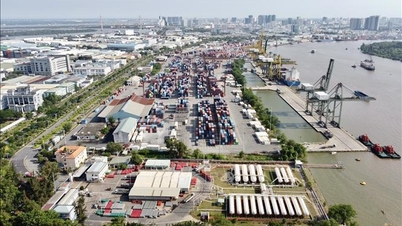
According to Euronews, many major shipping companies such as Maersk and CMA CGM have adjusted their shipping routes, increasing transshipment of goods through ports outside the Strait of Hormuz and using smaller vessels to deliver goods into the Gulf region.
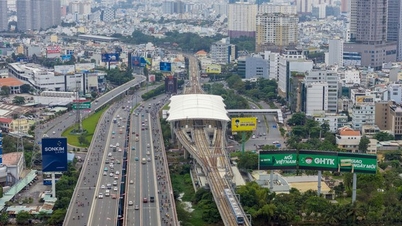
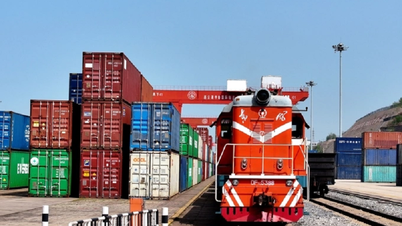
Simultaneously, many countries in the region are also promoting alternative solutions such as expanding seaports, developing road and rail networks connecting to ports, and increasing the capacity of onshore oil pipelines.
According to analysts, these changes indicate that regional trade is gradually shifting from prioritizing speed and low costs to placing greater emphasis on stability, security, and the ability to maintain transport operations in the face of geopolitical fluctuations.
Alexis Ellender, a senior analyst at maritime data firm Kpler, commented: "Countries in the region will seek to diversify their trade routes. For example, with oil, this could involve developing more inland pipelines; and with container shipping, it could involve expanding ports outside the Strait of Hormuz. These countries still have measures in place to mitigate risks. I think after what has happened recently, they will certainly invest more heavily in that direction."
Mr. Yu Zhiyue, Deputy General Manager of Shanghai Xinhai Company, China, said: "We use multimodal transport, first transporting goods to countries and ports around the Red Sea, then transporting them by road to areas near the conflict zone, ensuring that deliveries are still made."
"By combining water and rail transport, costs can be reduced by about 20% to 30% compared to road transport," said Deng Yijun, Business Director of Shanghai International Port Group, China.
Efforts to increase the resilience of the supply chain.

Many companies have continuously adjusted their supply chains to adapt to tariff tensions and geopolitical risks.
Beyond transportation, efforts to enhance long-term resilience are also being intensified in the manufacturing sector to mitigate the impact of trade tensions and geopolitical conflicts.
Agilian Technology is an electronics manufacturing and product development company based in Dongguan, China, that supplies goods to Western brands. Over the past year, the company has continuously adjusted its supply chain to adapt to tariff tensions and geopolitical risks.
Renaud Anjoran, Vice President of Agilian Technology, stated: "Our current planning is that we can no longer manufacture in just one country. We need at least one production facility outside of China. The main solution now is India – where we already have a company, a manufacturing plant, and a team. We can move projects that have reached a certain level of maturity to India. Another plan we have implemented is to outsource production to an existing manufacturing company in Malaysia."
According to the latest research from the McKinsey Global Institute, similar adjustments are becoming increasingly common and are helping to reshape Asia's trade patterns. While geographical distance was once the deciding factor, geopolitical factors are now increasingly influencing businesses' supply chain strategies. Companies are no longer prioritizing low costs but are shifting their focus to stability and long-term resilience.
Frederic Neumann, Chief Economist for Asia Economic Research at HSBC, commented: "Large corporations sourcing from Asia are increasingly focusing on diversifying their supply chains. They no longer want to rely on a single market but want to ensure their manufacturing network is widely dispersed. Therefore, Southeast Asian markets like Vietnam continue to benefit. Many buyers – for example, from the US – are looking to diversify into other markets. Vietnam consistently emerges as a highly resilient market, considered a reliable partner, and that's why investment capital and new manufacturing orders continue to flow into Vietnam."
A report by shipping giant Maersk indicates that intra-Asian trade remains robust despite the ongoing Middle East conflict. Flows of goods between China, Southeast Asia, and India continue to be active, while short-haul shipping and transshipment hubs are absorbing much of the demand as businesses ramp up regional sourcing and diversify their production networks.
Source: https://vtv.vn/kinh-te-chau-a-truc-vong-xoay-chi-phi-10026051310261587.htm
































































































Comment (0)