

Lesson 1 : Enhancing the role of the leader
The head of a cooperative plays a crucial role, steering the collective ship towards development. This requires the head of the cooperative to possess integrity, vision, and talent, all for the common good of the cooperative. This is also a common characteristic of many successful cooperatives today.
A sound production and business plan, transparent finances.
In 2022, Minh Trung Agricultural Cooperative (Tan Phu commune) was established, developing from the Minh Trung Custard Apple Cooperative Group, with 30 members, a charter capital of 500 million VND, and 100 hectares of custard apples produced according to VietGAP standards. From the outset, the Board of Directors and the Management Board of the Cooperative developed a specific business strategy, clearly defining the direction as elevating the brand of custard apples – the Cooperative's main product.

Thanks to the collective efforts, in 2022, the cooperative's custard apple achieved OCOP 4-star product status. In 2023, the cooperative was certified to use the geographical indication "Ba Den" for custard apple products by the Department of Science and Technology; in 2024, the cooperative established the Tay Ninh Custard Apple Association, creating opportunities to connect the government, scientists, and businesses, with over 100 members participating; and signed a cooperation agreement to supply custard apple products to Thien An Company for export to markets in France, India, the US, Japan, etc.
Building a strong brand and clearly defining its direction has helped Minh Trung Agricultural Cooperative operate more effectively, gaining the trust of its members and farmers in the region. The cooperative's profits increased from 1 million VND (in 2022) to 178 million VND (in 2025). Mr. Le Minh Trung – Director of Minh Trung Agricultural Cooperative – stated: “Looking back on the journey, the cooperative is most proud of the unity and solidarity of the leadership and members. As Chairman of the Board of Directors, I always prioritize the interests of the members and farmers as the guiding principle for all activities. I constantly research the Cooperative Law, new policies, consumer markets, innovate business models, and seek reliable partners… in order to create the best business direction.”
At Tan Thinh Production - Trade - Service Cooperative in Nhon Hoa Lap commune, the management board consists of young people from the 9X generation (born in the 1990s), who boldly innovate production and business methods. The cooperative has linked its members to shift from traditional rice production to cultivating rice seeds, while also guaranteeing the purchase and sale of agricultural inputs and outputs. In addition, the management board has pioneered the cultivation of ST rice using organic farming methods to create standardized products and enhance the value of local rice.
Bui Van Song, Director of Tan Thinh Production - Trade - Service Cooperative, said: “Anything we do must have a clear business plan, and it must be discussed openly in meetings. We shouldn't just do whatever we want or figure things out as we go along. The cooperative members trusted me enough to elect me as Director; for me, this is an honor but also brings many worries. Therefore, I always put the interests of the cooperative members first, especially regarding financial matters, which must be transparent and open.”
Build trust to cooperate, and cooperate to strengthen trust.
Chairman of the Provincial Cooperative Union, Ngo Thanh Tuyen, stated: “Building trust is a crucial prerequisite for opening up specific areas of cooperation, and the more effective the cooperation, the stronger the trust will be. In reality, when the Cooperative's Board of Directors builds trust, members are willing to support the business plan by contributing capital and production resources. Partners will also confidently cooperate and collaborate for mutual benefit, without hesitation or overthinking that could lead to a failed deal.”
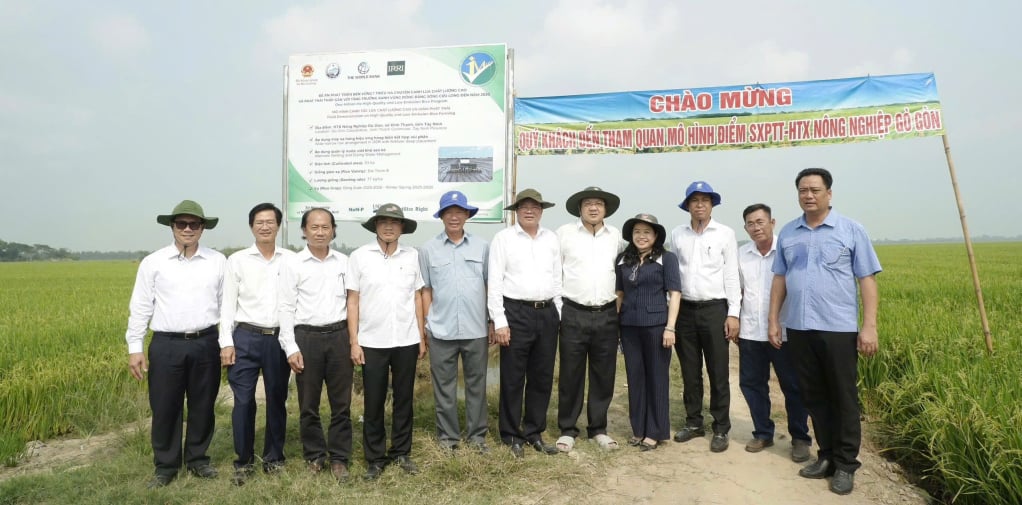
Recognizing this problem, Mr. Truong Huu Tri – Director of Go Gon Agricultural Cooperative, Vinh Thanh commune, proactively changed production methods, focusing on creating profits and benefits for members participating in the cooperative. While in 2005, Go Gon Agricultural Cooperative was initially established with the service of pumping water for agricultural production, today the cooperative has implemented many solutions to improve rice cultivation efficiency, such as: cooperative members planting rice simultaneously; standardizing the application of seed types, fertilizers, and pesticides; etc. Recently, the cooperative was also selected as a pilot site for the Sustainable Development Project of 1 million hectares of high-quality, low-emission rice cultivation associated with green growth in the Mekong Delta region by 2030.
Mr. Truong Huu Tri said: “When it was established, the cooperative had low charter capital. Therefore, to have capital to invest in agricultural supplies for cooperative members, I boldly discussed with my family the possibility of mortgaging the land use right certificate to borrow money from the bank to buy agricultural supplies and sell them at low prices to members. Simultaneously, the cooperative linked with several businesses to find stable markets for agricultural products. With this approach, cooperative members trusted the cooperative, and many farmers in the surrounding area applied to join to benefit from the preferential policies offered by the cooperative.”
Establishing a cooperative is not difficult, but ensuring its effective operation is not easy. It requires many factors, among which the role of the cooperative's leader is the most important. And in reality, wherever a cooperative has a leader with sufficient dedication, vision, and talent, the cooperative will continuously grow in both scale and quality.
(to be continued)
Lesson 2 : Promoting the role of the collective economy
Source: https://baotayninh.vn/kinh-te-tap-the-mo-loi-phat-trien-ben-vung-146294.html

























































































Comment (0)