

Lao Cai province possesses the largest number of intangible cultural heritages in the country, a system of sacred temples and pagodas along the Red River, unique traditional crafts and outstanding natural landscapes: terraced fields, primeval forests, hot mineral springs, and a cool climate all year round. This is an important foundation for developing community tourism and experiential service products, thereby creating jobs and increasing income for the community.
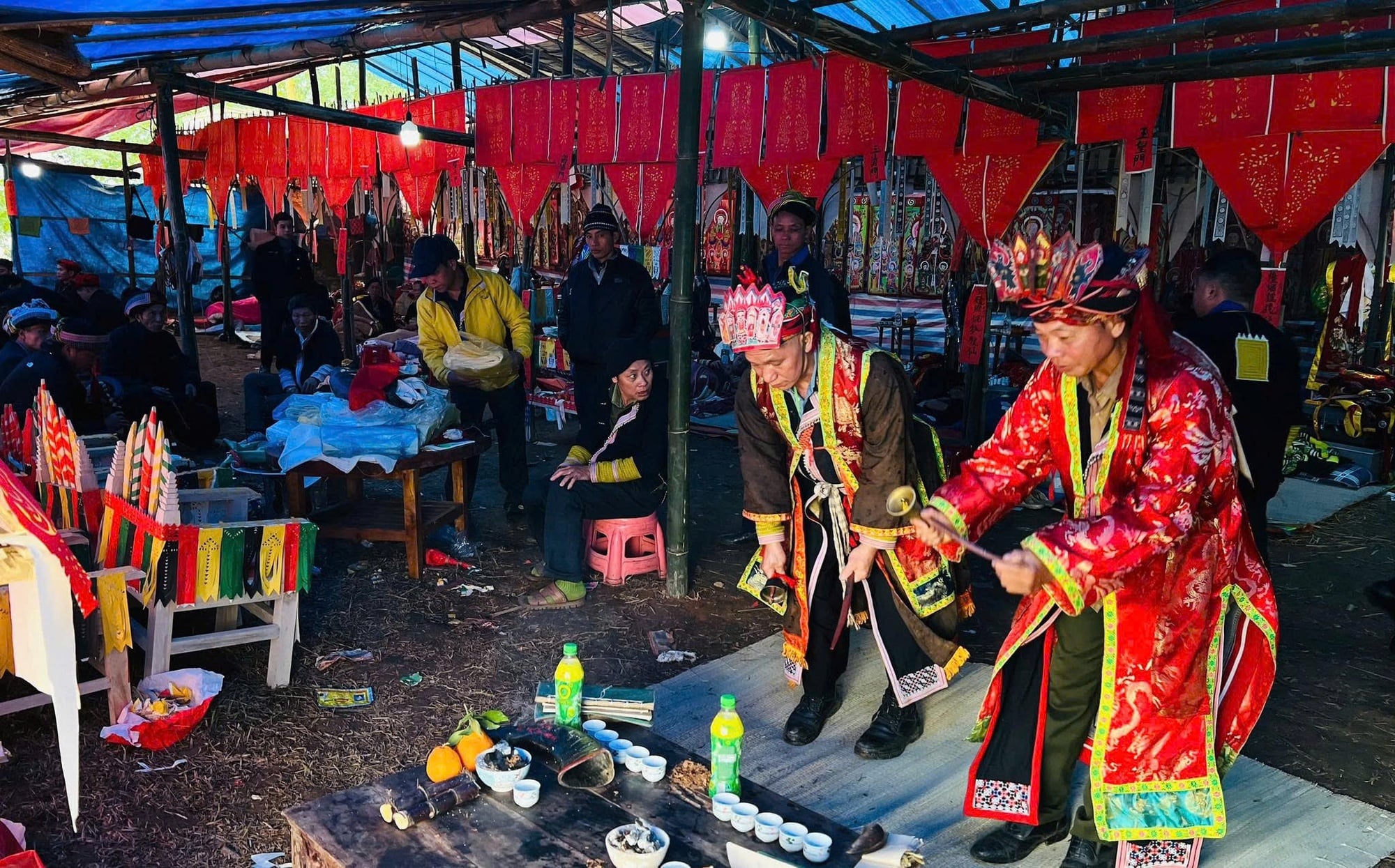
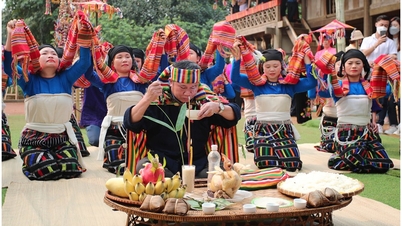
The 12-lamp initiation ceremony of the Red Dao people.
Heritage values are not only preserved in museums or traditional festivals, but are becoming a practical economic resource. In Sa Pa, Bac Ha, Bat Xat or Bao Yen, many households have proactively exploited culture and landscape to develop community tourism, homestay, farmstay and experiential services. This not only increases direct income but also creates local jobs, helping people to be less dependent on agricultural production or labor export.
One of the typical success stories is Ban Lien Forest Homestay of Ms. Vang Thi Can in Ban Lien commune. Previously, her family lived mainly on agriculture , depending on cinnamon trees, tea trees and small-scale livestock farming, with unstable income. In 2019-2020, realizing that the number of tourists to Ban Lien increased thanks to the primeval forest landscape and Tay stilt house architecture, Ms. Can boldly borrowed capital and renovated the traditional wooden house into a homestay associated with green space and experiencing indigenous culture. Ban Lien Forest Homestay not only provides accommodation services but also brings tourists to experience indigenous life: picking Shan Tuyet tea, gardening, preparing traditional dishes, learning Then singing, sword dancing and exploring Ban Lien forest. Thanks to preserving indigenous architecture and culture, the homestay quickly attracted domestic and international tourists, creating jobs for 6-8 workers in the village. Stable income from homestay has helped Ms. Can's family become well-off and become a model for other households to learn from, contributing to promoting the community tourism movement in Ban Lien.
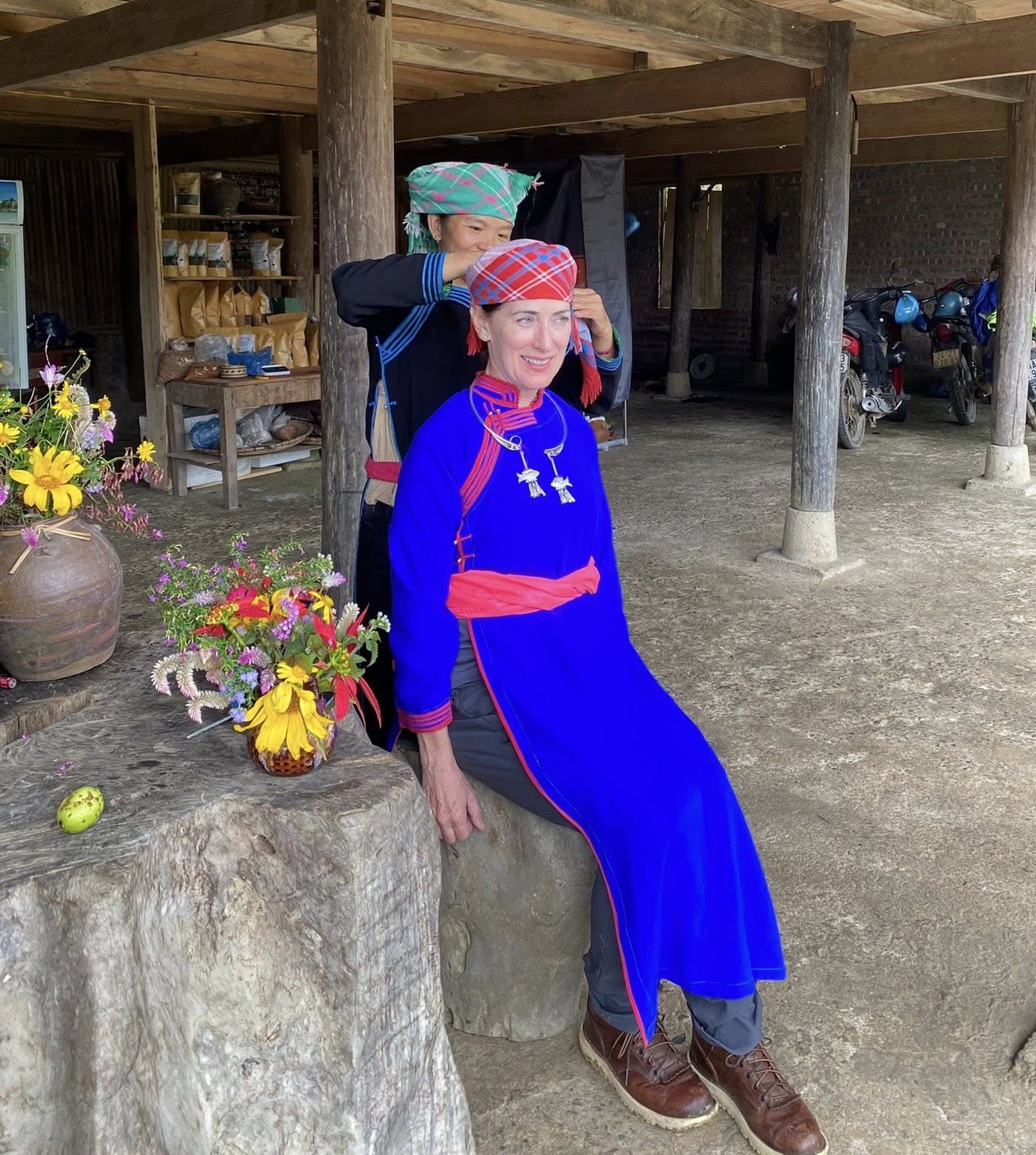
Foreign tourists try on Tay costumes at Ban Lien Forest Homestay.
In Sa Pa, many Mong youths have also boldly developed homestays that combine culture and modern amenities. These establishments proactively promote on social networks, link tours with businesses and design experiences related to traditional occupations, such as brocade weaving, cooking local dishes or participating in ethnic festivals. Thanks to that, young people have jobs right in their hometown, limit migration and contribute to community economic development.
In Bac Ha, the province and businesses support the promotion of linen weaving, musical instrument making, silver crafting, etc., and bring their products to e-commerce platforms, creating stable output for the people. In Bao Yen and Bat Xat, Then singing and Tinh lute clubs, farmstays for agricultural experiences, and indigenous eco-tourism have brought stable income to hundreds of households, while helping to preserve ethnic culture and traditional knowledge.
These models show that sustainable poverty reduction is only truly effective when people become the subjects of heritage exploitation. When communities are empowered to manage, operate and benefit from cultural and tourism products, their lives improve in the long term, limiting labor migration and creating stable income all year round. People both preserve their identity and develop their economy, thereby improving their quality of life and building strong communities.
Lao Cai province also focuses on training community tourism skills, supporting the standardization of homestays and farmstays, and building OCOP products from cultural heritage. Digitizing tourism information and building smart tourism maps helps tourists easily access destinations, while creating opportunities to expand the market for businesses. These policies both support the community in managing resources and ensure sustainable development without destroying the landscape and cultural identity.
With successful models such as Ban Lien Forest Homestay, Ta Van Farmstay, homestay of Mong youth, Lao Cai is gradually creating a tourism ecosystem associated with sustainable livelihoods. These methodical steps not only help reduce poverty effectively but also build the image of a land rich in identity, friendly and worth experiencing, opening up a long-term direction for socio-economic development in the highlands.
Source: https://bvhttdl.gov.vn/lao-cai-phat-huy-gia-tri-di-san-de-tao-sinh-ke-giam-ngheo-ben-vung-2025120916184832.htm





![[Photo] Urgently help people soon have a place to live and stabilize their lives](/_next/image?url=https%3A%2F%2Fvphoto.vietnam.vn%2Fthumb%2F1200x675%2Fvietnam%2Fresource%2FIMAGE%2F2025%2F12%2F09%2F1765248230297_c-jpg.webp&w=3840&q=75)



















































![[Photo] General Secretary To Lam works with the Standing Committees of the 14th Party Congress Subcommittees](https://vphoto.vietnam.vn/thumb/402x226/vietnam/resource/IMAGE/2025/12/09/1765265023554_image.jpeg)























Comment (0)