

Text and photos by KHANH PHAN
Norway is located on the Scandinavian peninsula in northern Europe, bordered by the sea to the west and south.
To the north, it borders Sweden to the east, and Finland and Russia to the north. For this trip, I chose to visit two famous Norwegian islands: Lofoten and Senja.

I was particularly impressed with Lofoten, an archipelago and traditional area belonging to the Nordland county of Norway, covering approximately 1,227 square kilometers and with a small population of only about 24,500 people. The archipelago boasts unique landscapes with the most striking mountain peaks extending into the sea in Norway. Here you'll find open seas, sheltered bays, and unspoiled wilderness areas. To reach Lofoten, I had to endure a two-day journey with three flights, including two layovers in Doha and Oslo before flying to Evenes. From Evenes, it was another five-hour drive to Lofoten.
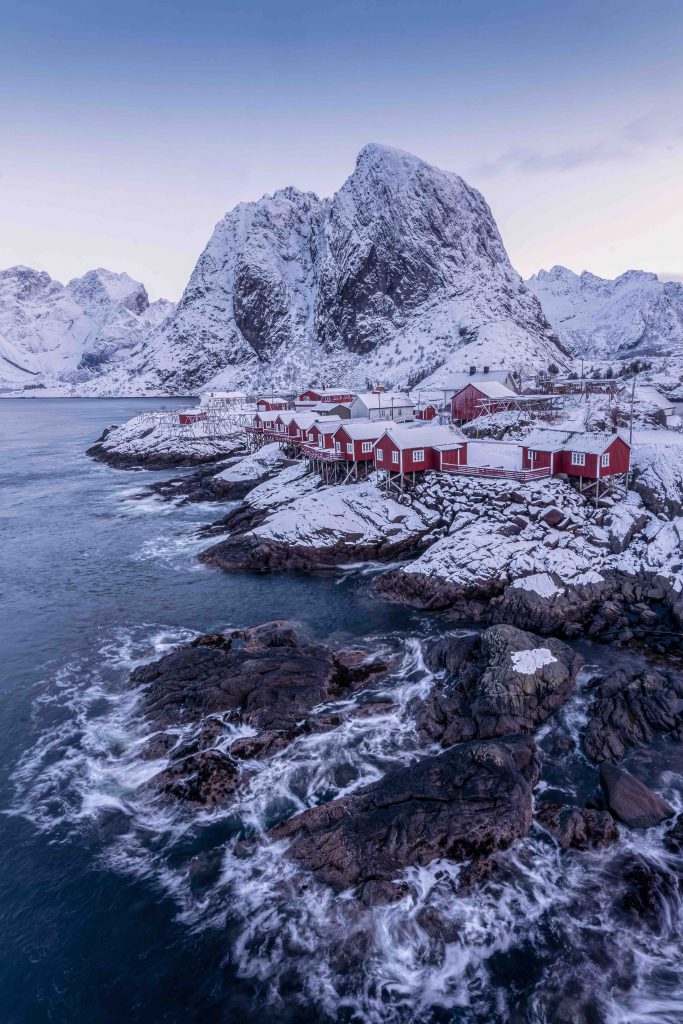
I came to Lofoten to witness the spectacular beauty of nature, and I was not disappointed. The scenery in Lofoten is both powerful and enchanting. The weather in Lofoten changes by the hour; swirling winds snake through the mountain tunnels, rattling against the car. But in the blink of an eye, it becomes calm, stilling the water and reflecting the snow-capped mountains embracing the fishing village. The red and yellow houses stand out against the magical colors of the sky – the characteristic colors of the Norwegian countryside.
A popular destination in Lofoten is the Hamnoy Bridge, which is crowded with photographers almost all day long. Attracted by the exhilarating and awe-inspiring weather of Lofoten, landscape photographers from all over the world flock here. However, taking photos at Hamnoy is not easy; its high location exposes it directly to swirling sea winds that shake the bridge, sometimes forcing me to tie my camera to the railing and hold onto the tripod to stay steady against the wind. In front of the Hamnoy Bridge is a village with a unique and shortest name – Å. A row of red houses along the coast, with its rugged rocks catching the powerful waves, and the majestic mountains behind, covered in snowstorms, create a truly magnificent scene.

In Lofoten, small waterfalls like Molneva are scattered across the cliffs, streams formed by melting snow. In winter, and especially on windy, snowy days, the scenery changes constantly. The path I had to traverse was covered in thick snow, and the rocks were slippery with ice. Two hours of climbing and descending for a single moment. Reaching the waterfall meant seeing my teammates as small as the tip of a chopstick, while I was perched precariously on the cliff face—a feeling of both fear and exhilaration. The camera shutter was carefully pressed, and when I returned to the car, my toes were stiff and stuck together. I quickly turned on the heater and felt my blood vessels desperately trying to regain their life.
One of my favorite tourist activities in Norway is aurora hunting. The aurora borealis usually appears when a combination of factors is present: very cold weather, clear skies, a high KP (aurora intensity), a not-too-bright moon, and even the influence of solar storms… I spent many long nights on the roads trying to catch the blue aurora. The convergence of all these factors is necessary, and I had eight failed nights. One moment the sky was clear, the stars twinkling, heralding a spectacular display, the blue-purple halos peeking over the horizon. But no!
A sudden snowstorm hit, the snow felt like salt being thrown on me. I was standing on Uttakleiv beach and had to quickly get into my car to return to the hotel amidst the raging wind. I prayed for safety as I drove.
After the storm, the roads become dangerous due to the thick layer of ice covering the slippery surface, and the route is filled with spectacular hairpin bends along mountain passes, tunnels, and winding mountain roads. Many sleepless nights I spent disappointed by the gloomy sky. I rejoiced at the golden sunny days. Nature gently bestows sunshine but also calls for rain and blizzards. She is both wonderful and terrifying, capable of displaying the breathtaking colors of an aurora dancing in the sky, but also capable of battering you with freezing temperatures and winds so strong they could lift you off the ground.
Challenging yet sublime. When you embrace nature, the world allows you to witness rare and profound moments. When a shutter clicks, you've captured a moment from time. It's exciting, amazing, sad, frightening, cold, exhausting, and beautiful. Most importantly, it's all worth it. These are the emotions that landscape photographers like myself have experienced. Passion instills courage and willpower, and with a steadfast heart, you'll capture your own spectacular moments.
Boarding the flight from Evenes to Oslo, the capital of Norway, marked the end of my 12-day journey of conquering nature. Northern Europe was entering the final weeks of winter. It was a trip filled with unforgettable experiences and a treasure trove of photographs capturing the breathtaking beauty of nature. 
See more articles in the same category:
- There is a generous Kagoshima.
- The stone towers smile
- Munich eye contact
Source: https://heritagevietnamairlines.com/lay-khoanh-khac-ra-khoi-thoi-gian/





























































































Comment (0)