

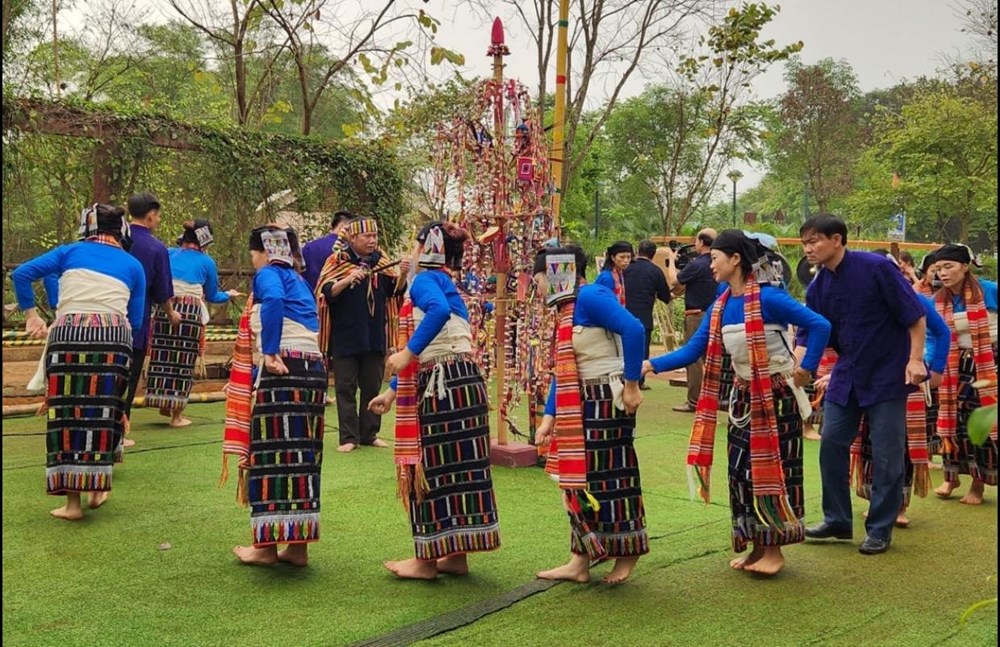
 The ceremony of erecting cotton trees (Booc May) in the Cha Mun Festival of the Black Thai people in Yen Thang commune
Journey to revive an ancient festival
According to legend, in ancient times, Muong Lum village experienced a period of barren land, prolonged drought, and widespread epidemics that exhausted the lives of the people. With no other choice, the Thai people had to send people to Muong Troi to ask for help from Po Then.
Understanding the suffering of the villagers, Po Then opened the gates of heaven, sent soldiers and divine doctors to earth to destroy evil spirits, cure diseases, and bless people with favorable weather and bountiful crops. Since then, every September and October of the lunar calendar, the Black Thai people hold the Cha Mun Festival to thank heaven and earth, pray for blessings, health and peace.
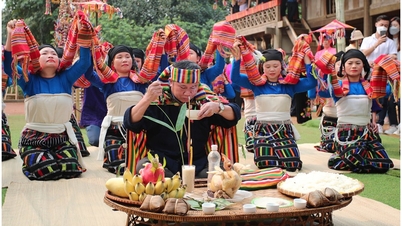
The center of the festival is the cotton tree (Booc May), erected in the middle of the yard and decorated with flowers, birds, models of animals, crops... expressing the desire for fertility and abundance. Next to the cotton tree is a jar of rice wine - a symbol of abundance and solidarity. All members of the village, from old to young, join in the festival atmosphere with reverence but also full of excitement.
The Cha Mun Festival consists of four main steps: preparation; welcoming the gods; performing rituals; and sending the gods back to Muong Troi. The rituals are performed by traditional healers, people with prestige, rich experience in healing and possessing folk knowledge. Each prayer, gong rhythm, song, and dance reflects the rich intangible cultural heritage of the Black Thai community.
The festival of Cha Mun usually lasts for many hours with unique folk games such as throwing con, shooting crossbows, walking on stilts, dancing and singing around cotton trees. These activities not only create a joyful atmosphere but also evoke cultural identity, encouraging the younger generation to be proud of and preserve traditions.
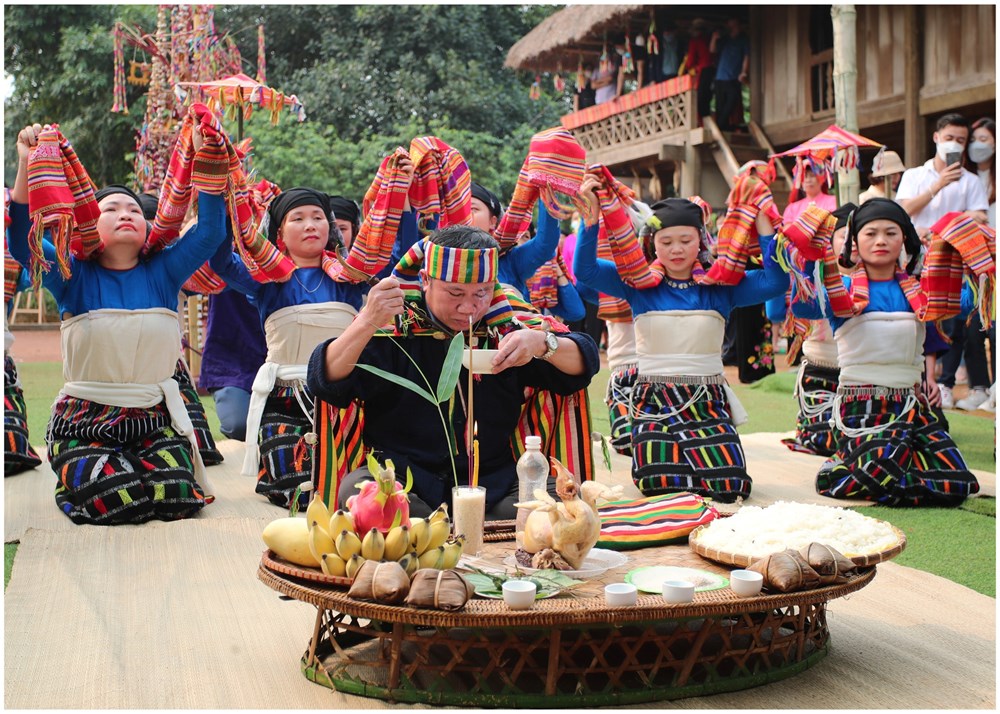
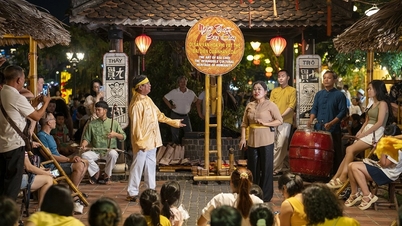
The shaman practices the Po Then thanksgiving ritual in the traditional festival space
After 1945, war and difficult life gradually caused the festival to be forgotten. It was not until 2017 that the Department of Culture, Sports and Tourism of Thanh Hoa cooperated with Lang Chanh district to restore it according to the traditional rituals. In 2019, Yen Thang commune continued to organize it at the commune level, attracting a large number of people and tourists in the region.
National heritage and new expectations in Yen Thang
Through many generations, the Cha Mun ritual has been passed down by the community, keeping its spirit intact. Up to now, the traditional procedures are still fully practiced. Before the ceremony, the shaman will inform those who have been treated by shaman Mun (called Luc May) to prepare offerings including a chicken, a bottle of wine, a brocade umbrella, a cushion stuffed with reed cotton and 5 betel leaves.
On the main day of the festival, Luc May and the villagers, dressed in colorful costumes, carrying offerings on their heads, gathered at the shaman's house to perform the Po Then thanksgiving ceremony. The offerings were prepared on 31 trays, with a main tray placed in the middle of the house, along with 30 side trays including fruits, sticky rice, chicken, pork, grilled fish, wine... symbolizing the prosperity of the village.
After the prayer to the gods, the shaman and the Mun shamans perform the ritual of inviting and sending Po Then and the souls back to Muong Troi, ending the festival season with the belief in a peaceful new year and a prosperous harvest.
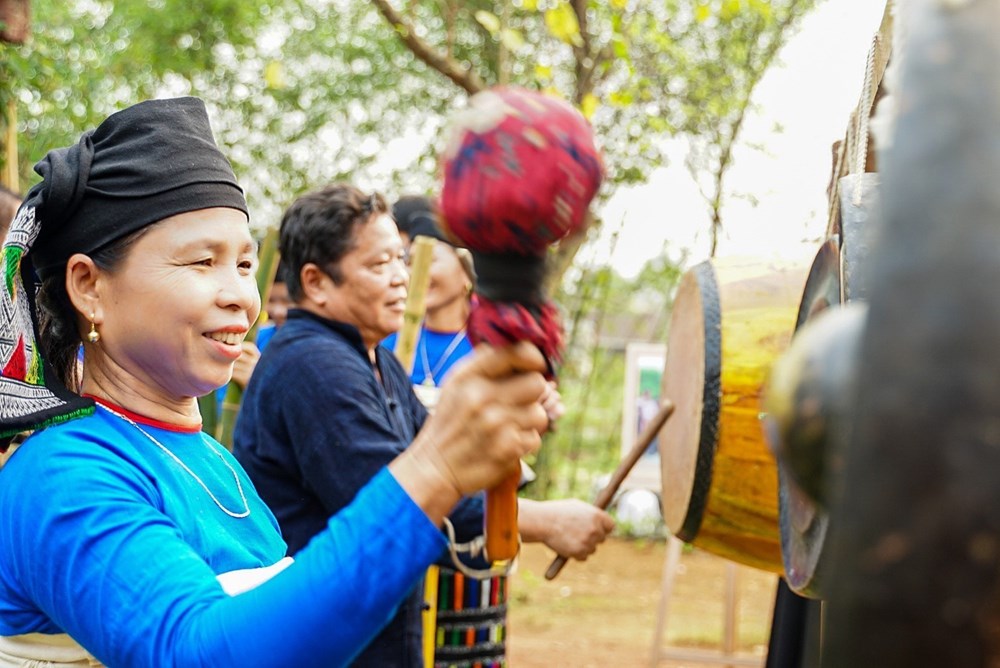
Thai people beat drums and gongs to celebrate Cha Mun Festival. Photo: News and Ethnicity
Mr. Lo Viet Lam, one of the people in the commune called the "soul keeper" of the Cha Mun Festival, in Ngam Poc village (Yen Thang) - shared: "The Cha Mun Festival is a sacred cultural belief of the Black Thai people. Being recognized as a national intangible cultural heritage makes us very proud. The elders and I will continue to promote and mobilize people to preserve and promote the festival so that this beauty can spread more widely."
Not only the efforts from the community, local authorities are also proactively preserving and promoting the value of the festival.
Mr. Ha Trung Kien, Vice Chairman of Yen Thang Commune People's Committee, said that the commune is building a project "Preserving and promoting the value of Cha Mun Festival in the period of 2025 - 2030", which emphasizes teaching festival knowledge to the younger generation, organizing extracurricular talks, and inviting artisans to guide rituals at schools.
At the same time, the commune aims to combine cultural preservation with the development of eco -tourism and discovery tourism in Ngam Poc and Peo villages, opening up new livelihoods for the people.
The fact that Cha Mun is recognized as a national intangible cultural heritage is not only the pride of Yen Thang but also an important driving force for the locality to combine cultural preservation with community tourism development. The festival contributes to increasing the attractiveness of the West of Thanh Hoa, creating unique tourism products based on the Black Thai cultural identity.
Currently, Thanh Hoa has 28 national intangible cultural heritages, reflecting the rich and diverse spiritual life of the ethnic groups in the area. Among them, Cha Mun Festival is a new mark, continuing to affirm the position of Thanh Hoa as a land rich in tradition, where indigenous culture is always preserved, transmitted and spread.
Source: https://baovanhoa.vn/dan-toc-ton-giao/le-hoi-cha-mun-di-san-danh-thuc-ban-sac-nguoi-thai-o-yen-thang-186807.html
![[Photo] Urgently help people soon have a place to live and stabilize their lives](/_next/image?url=https%3A%2F%2Fvphoto.vietnam.vn%2Fthumb%2F1200x675%2Fvietnam%2Fresource%2FIMAGE%2F2025%2F12%2F09%2F1765248230297_c-jpg.webp&w=3840&q=75)




![Major decisions to develop Thanh Hoa agriculture: [Part 1] Cua Dat Lake - a great migration for the people's happiness](https://vphoto.vietnam.vn/thumb/402x226/vietnam/resource/IMAGE/2025/12/09/1765248819994_z7282526539020_1ee647dc8468da9b9f2428712b435ae7-nongnghiep-165859.jpeg)






























![[Photo] General Secretary To Lam works with the Standing Committees of the 14th Party Congress Subcommittees](https://vphoto.vietnam.vn/thumb/402x226/vietnam/resource/IMAGE/2025/12/09/1765265023554_image.jpeg)





















Comment (0)