

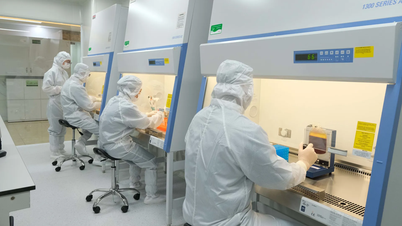
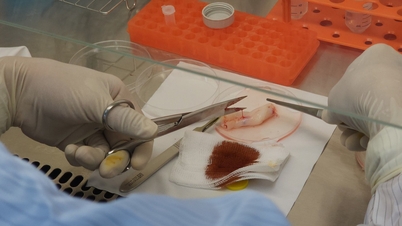
At the First Affiliated Hospital of the University of Science and Technology of China (USTC) in Hefei, a research team has pioneered a new stem cell therapy for Parkinson’s disease. The team claims the conversion rate of stem cells into functional dopamine neurons is over 80%. This impressive figure far exceeds current international standards, which hover around 50%.
Led by neurologist Shi Jiong, Phase I of the clinical trial was launched in mid-2025.
All six treated patients showed rapid symptom relief and sustained increases in dopamine signaling in the brain.
This regenerative approach works by implanting “seeds” into the brain, which then differentiate into new neurons, capable of reshaping neural networks and offering hope for a functional cure.
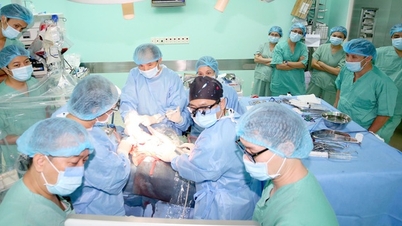
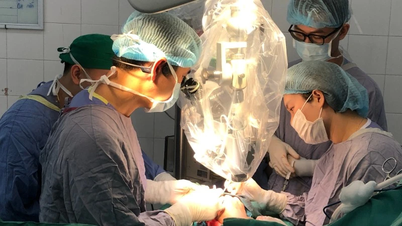
The therapy targets the loss of dopaminergic neurons, which are responsible for Parkinson's motor symptoms such as tremors and muscle stiffness. In the trial, patients had stem cells implanted directly into their brains. Follow-up results showed a significant increase in dopamine levels shortly after the transplant.
A typical case is a patient named Li, 37, who lost the ability to control her movements at the age of 22. Just three months after treatment, she achieved near-normal motor function and was able to return to daily life.
Professor Shi emphasized that this superior efficiency was achieved through optimized differentiation processes, putting USTC at the forefront of other research efforts around the world .
Source: https://baophapluat.vn/lieu-phap-te-bao-goc-tri-parkinson-cua-trung-quoc-dat-hieu-qua-ky-luc.html


![[Photo] General Secretary To Lam works with the Standing Committees of the 14th Party Congress Subcommittees](/_next/image?url=https%3A%2F%2Fvphoto.vietnam.vn%2Fthumb%2F1200x675%2Fvietnam%2Fresource%2FIMAGE%2F2025%2F12%2F09%2F1765253019536_a1-bnd-0983-4829-jpg.webp&w=3840&q=75)


![[Photo] Urgently help people soon have a place to live and stabilize their lives](/_next/image?url=https%3A%2F%2Fvphoto.vietnam.vn%2Fthumb%2F1200x675%2Fvietnam%2Fresource%2FIMAGE%2F2025%2F12%2F09%2F1765248230297_c-jpg.webp&w=3840&q=75)




























































































Comment (0)