

 |
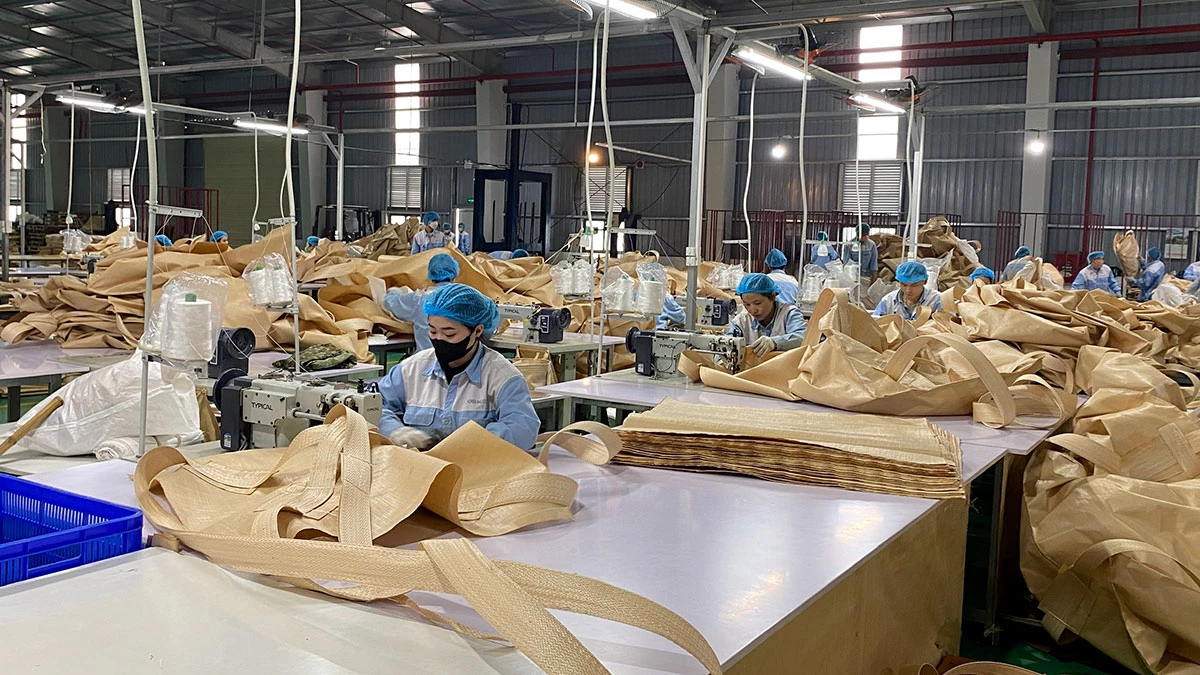
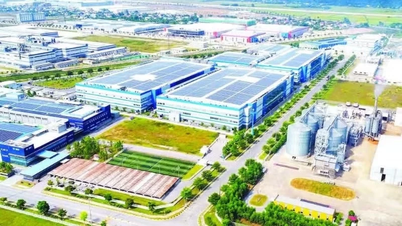
| Manufacturing export packaging at HITARP Vietnam Company, Phuc Ung Industrial Cluster, Son Duong Commune. |
"Price surge" spreads from construction sites to the market.
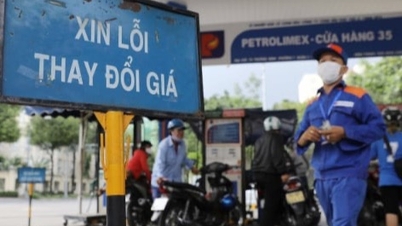
Since the beginning of 2026, the prices of many raw materials and fuels have increased sharply, especially in the construction sector. Steel, cement, sand, stone, etc., have all established new price levels, causing input costs to rise rapidly. In fact, at one point, the price of steel increased from around 14 million VND to 17 million VND per ton in just two months; many other materials also increased by 10-15%. This has put many businesses in a difficult position, even leading to losses with previously signed contracts.
Maintaining prices amidst escalating material costs is no easy task, but for businesses supplying public investment projects, it's almost a mandatory requirement. At Tan Ha Industrial Joint Stock Company, a concrete supplier for many key projects in the province, cost pressure is weighing heavily on every stage of production. The simultaneous increase in prices of cement, sand, stone, and fuel has significantly driven up product costs. However, to ensure project timelines and avoid disrupting the budgets of public investment projects, the company is forced to maintain prices.
Mr. Phung Anh Tuan, Director of Production and Business, frankly stated: “The high price of materials is pushing up production costs significantly. For businesses supplying public works, this is a considerable pressure.” To maintain prices, Tan Ha chose to “save itself” by restructuring production, such as optimizing raw material consumption, tightening waste management, proactively securing input supplies, and negotiating long-term contracts with partners to limit fluctuations. Along with that, they cut intermediary costs, improved operational efficiency, and accepted reduced profit margins to maintain stable selling prices.
At HITARP Vietnam Company (Phuc Ung Industrial Cluster, Son Duong Commune), a manufacturer of packaging and tarpaulins for export to Europe, Japan, and Myanmar, the pressure is even more pronounced as input costs remain high while output shrinks. Mr. Lee Hyung Hun, Production Manager, stated: "Rising raw material prices have driven up production costs, while export value has declined for several consecutive months due to weakening global consumer demand, especially in major markets like the EU and the US."
To fulfill its production plan of exporting nearly 10,000 tons of tarpaulin annually, HITARP has focused on optimizing its production line, tightly controlling costs, and minimizing unnecessary expenses to maintain competitive pricing. Simultaneously, the company has proactively expanded its distribution channels and sought new markets to compensate for the decline in traditional orders.
 |
| Wood production for export at Greenhome Flooring Co., Ltd., Thang Quan Industrial Cluster, Yen Son Commune. |
Adapt and adjust.
Faced with rising prices, businesses in the province have not remained passive but have proactively implemented many flexible solutions. One common approach is restructuring production, adjusting scale, focusing on key products, and limiting diversification. At the same time, businesses are strengthening cost control and optimizing processes to reduce waste.
In the first quarter of 2026, Tan Quang Cement Joint Stock Company maintained a stable production pace, with a production and consumption volume of 215,000 tons, fulfilling the set plan. However, behind this figure lies the effort to "struggle" against cost pressures as the price of raw materials for cement production increased by 10-30% depending on the type. In this context, the selling price of the product had to be adjusted upwards by about 3% compared to the same period in 2025.
Mr. Nguyen Trong Du, Deputy Director in charge of production, said that to mitigate the impact of price fluctuations, the company has chosen a "belt-tightening" approach from within: tightening every stage of production, optimizing costs, and promoting the application of technology to reduce raw material and fuel consumption. Since the beginning of 2026, the company has invested over 10 billion VND in a clinker cooling system, contributing to reducing coal consumption in production. In addition, environmental protection projects such as dust filtration systems, exhaust gas treatment systems, and material grinding systems, with a total investment of over 30 billion VND, are currently undergoing trial operation.
One notable approach is for businesses to promote the reuse of alternative materials, such as slag from steel mills in the province, waste ceramic tiles, and fly ash from thermal power plants, in order to reduce the clinker content in cement production. This solution not only saves resources and lowers costs but also aims towards a circular production model, reducing environmental impact.
An Hoa Paper Joint Stock Company, one of the province's key industrial enterprises, maintains stable production with high output. In recent years, the company has consistently produced hundreds of thousands of tons of paper and pulp annually, ensuring jobs and income for its employees. In the first quarter of 2026 alone, production reached approximately 40,000 tons of paper and pulp. Mr. Hoang Minh Son, Director of Administration and Human Resources at An Hoa Paper Joint Stock Company, stated: In the context of declining global demand and rising production costs, the company has gradually adjusted its sales strategy towards reducing dependence on exports and increasing the proportion of supply to the domestic market. This approach helps the company be more proactive in terms of output while simultaneously reducing transportation and logistics costs.
Not only are businesses making their own efforts, but the Tuyen Quang provincial government is also actively accompanying and supporting the private sector in overcoming difficulties. The province has accelerated administrative procedure reforms, shortened processing times, and strengthened dialogue to promptly address obstacles arising in production and business. At the same time, efforts to improve the investment environment and remove bottlenecks related to land and procedures are being focused on, creating conditions for businesses to stabilize and expand their operations.
Challenges also present opportunities; amidst the "price surge," many businesses are accepting reduced profits to maintain market share, preserve reputation, and secure jobs for their employees. This is also seen as a test of their management capabilities and resilience.
Text and photos: Trang Tam
Source: https://baotuyenquang.com.vn/kinh-te/202605/linh-hoat-thich-ung-e104cab/


























































































Comment (0)