

On the morning of May 22nd, the Ho Chi Minh City People's Committee organized a workshop to consult with experts, scientists , and prominent intellectuals on the draft Law on Special Urban Areas. The workshop was chaired by Mr. Nguyen Manh Cuong, Vice Chairman of the Ho Chi Minh City People's Committee; Mr. Truong Minh Huy Vu, Director of the Ho Chi Minh City Institute for Development Research; and Ms. Nguyen Thi Hong Hanh, Director of the Ho Chi Minh City Department of Justice.
Redefining the scope of the "Ho Chi Minh City metropolitan area"
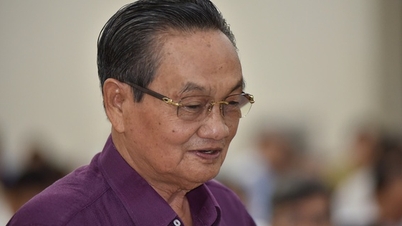
Dr. Tran Du Lich , a member of the National Financial and Monetary Policy Advisory Council, suggested that, unlike pilot resolutions with time limits, the Law on Special Cities will provide a stable, long-term legal framework for the city. According to him, this is the opportune time to implement substantive decentralization of power to the locality.
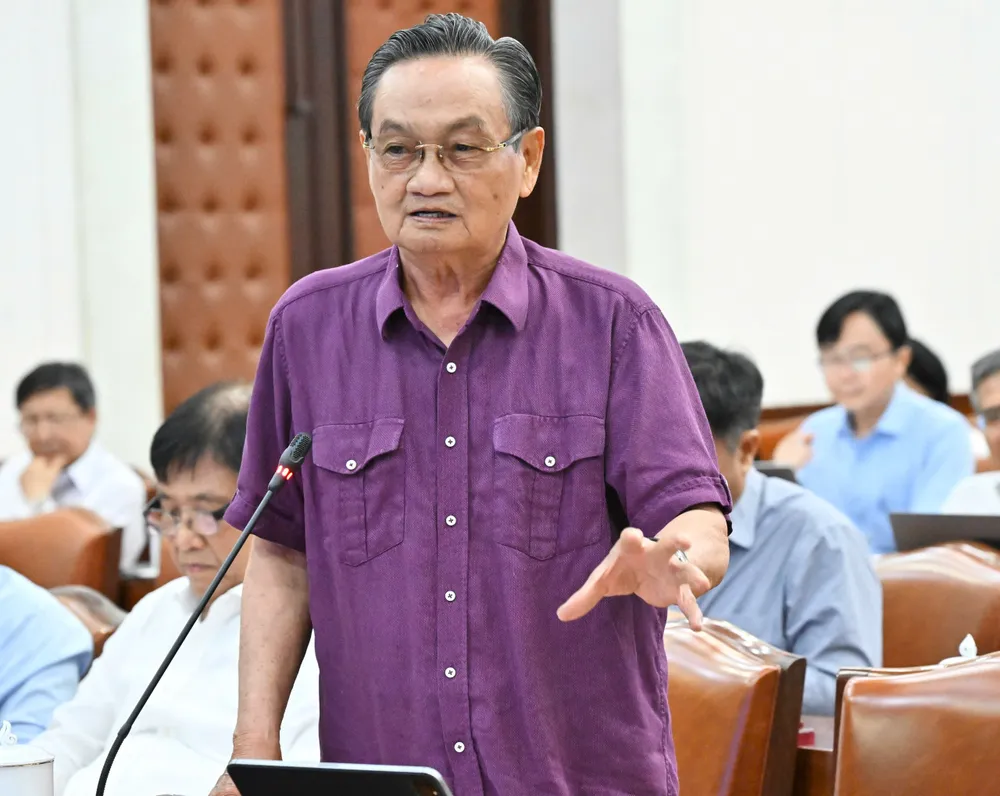
From there, he suggested that the law should focus on addressing three core issues: decentralization of decision-making power, procedural reform, and granting the city more room to enact policies. In particular, regarding budgetary finances, Ho Chi Minh City needs to be more proactive with regard to local budget revenues. Dr. Tran Du Lich analyzed that 100 dong that the central government subsidizes to the locality is still central government money, subject to the National Assembly's oversight. However, 100 dong under the Special Urban Area Law will be the local government's budget; that power belongs to the local government, and the City People's Council has the right to decide and bear the highest responsibility.
Dr. Tran Du Lich also argued that the city is "asking for mechanisms, not money," and therefore needs to be empowered to generate revenue and proactively invest in development. He proposed granting more decision-making power regarding organizational structure, staffing, and civil service regulations to the two levels of local government; increasing the authority of department directors and the chairman of the city's People's Committee to reduce unnecessary meetings and cumbersome procedures.
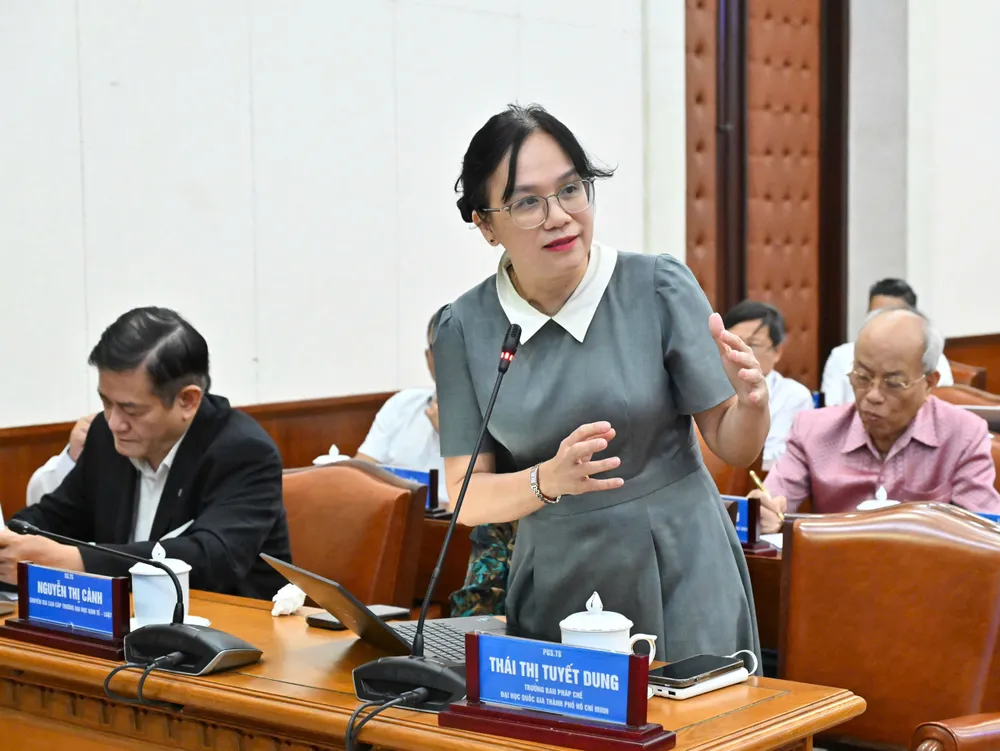
From a regional perspective, Associate Professor Dr. Thai Thi Tuyet Dung, Head of the Legal Department of the Vietnam National University Ho Chi Minh City, suggested that the metropolitan area should include Ho Chi Minh City and neighboring localities with adjacent administrative boundaries, and that a "Regional Coordination Council" mechanism should be added to address current coordination bottlenecks.
Sharing the same view, Associate Professor Phung Chi Sy commented that expanding the special urban area to encompass the entire Southeast region, the Mekong Delta, the South Central region, and the Central Highlands would be too broad and difficult to coordinate and manage. He proposed that the area should only include Ho Chi Minh City and adjacent or connected localities within the Dong Nai River basin, such as Tay Ninh, Binh Duong, Dong Nai, Long An, and Lam Dong, to better address infrastructure, flood control, and environmental issues.
Proposing 5 distinctive urban models
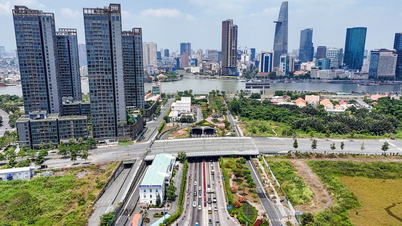
Architect Ngo Viet Nam Son argues that the current draft only mentions free trade zones and TOD (Transit-Oriented Development) but is insufficient to create new development drivers for Ho Chi Minh City. He proposes including five specific urban models in the law: free trade zones, financial centers, TOD cities, airport cities, and knowledge cities.
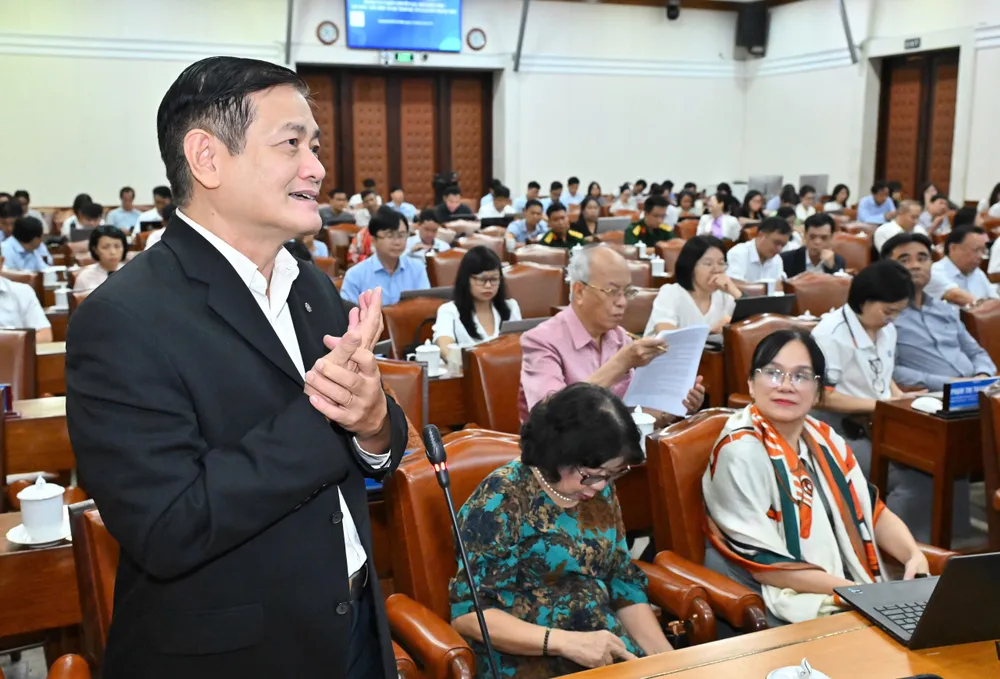
According to Dr. Ngo Viet Nam Son, with regard to airport cities, Ho Chi Minh City currently lacks the authority to comprehensively intervene in the area surrounding Tan Son Nhat Airport. If legalized, the city would be more proactive in planning the areas affected by both Tan Son Nhat and Long Thanh airports. Meanwhile, the knowledge city model would facilitate the connection of universities, high-tech zones, and innovation centers to form new growth poles.
He also suggested that, once these models are legalized, the Ho Chi Minh City People's Council and People's Committee should be empowered to decide on project boundaries, land price policies, compensation, resettlement, and auctions. In cases of overlap with existing laws, Ho Chi Minh City's specific mechanisms should be prioritized to avoid prolonged consultation periods.
Architect Ngo Viet Nam Son also analyzed that if the focus is solely on exploiting commercial value without considering social welfare, low-income earners will be pushed further away from public transportation routes. He suggested allocating 20-30% of the land around TOD projects for social housing or low-cost rental housing.
Given the limitations in urban conservation efforts, Dr. Ngo Viet Nam Son also suggested that the law should clearly define the role and authority of the Chief Architect of the city to ensure sufficient authority in planning, renovating, and preserving the city center. At the same time, the city needs a mechanism to compel investors to share infrastructure and environmental costs for high-rise projects that put pressure on traffic, cause flooding, and contribute to urban pollution.
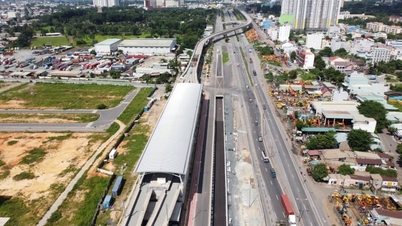
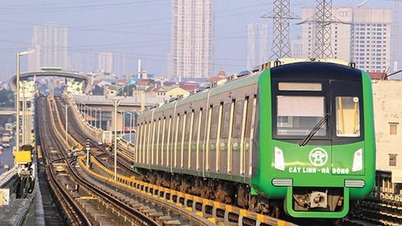
To solve the problem of resources for developing the metro system, Dr. Ngo Viet Nam Son, an architect, proposed that the central government consider allowing Ho Chi Minh City to retain 25-30% of its budget to create a stable source of capital for strategic infrastructure investment.
Meanwhile, Associate Professor Dr. Thai Thi Tuyet Dung argued that the draft law currently does not give adequate attention to the fields of education and healthcare, despite these being prominent strengths of Ho Chi Minh City. According to her, the city needs a financial mechanism for universities and tertiary hospitals located within its boundaries; and also needs to supplement policies to attract foreign experts and scientists in key areas.
Regarding general education, in the face of the pressure of a shortage of high schools, Associate Professor Dr. Thai Thi Tuyet Dung proposed allowing the establishment of high schools within the campuses of large universities such as the Vietnam National University Ho Chi Minh City to utilize available resources and address the educational needs of the people.
Concluding the workshop, Vice Chairman of the Ho Chi Minh City People's Committee Nguyen Manh Cuong stated that the city's leaders recognize that the development of the Law on Special Urban Areas is a very important task with historical significance, aiming to concretize the conclusions and directives of the Party and State leaders regarding the city's development.
"This is not just about creating a unique and superior legal framework for the city's development, but also about pioneering the creation of a modern urban governance model, contributing to the overall improvement of the country's institutions in the new era," the comrade analyzed.
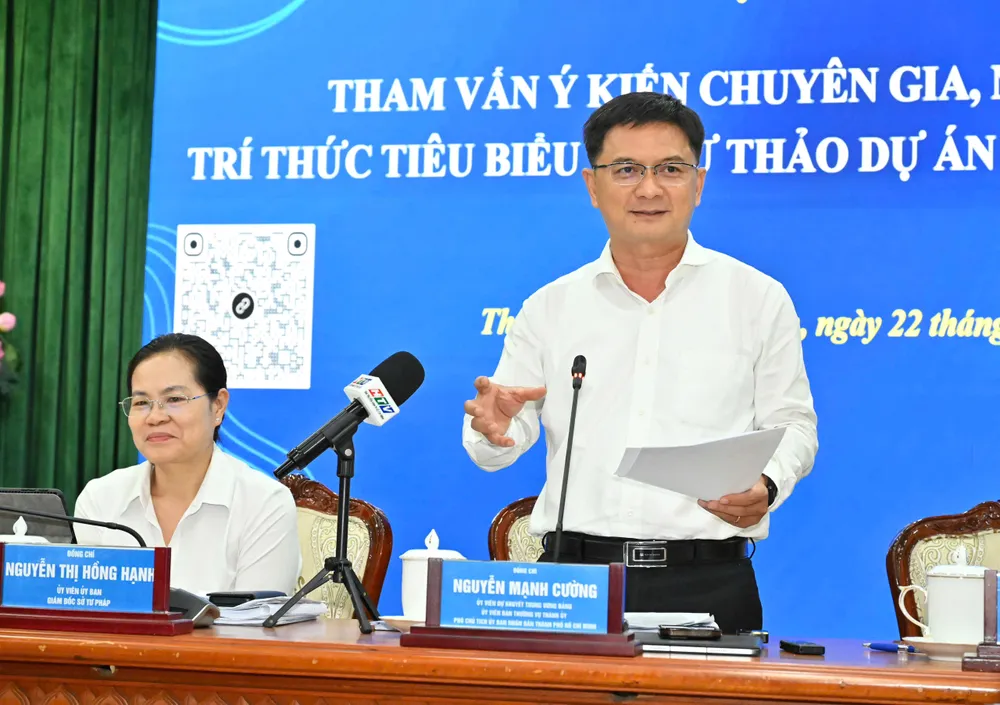
According to Vice Chairman of the Ho Chi Minh City People's Committee Nguyen Manh Cuong, the draft has received very high consensus and agreement from experts and scientists. Independent perspectives, specific analyses, critiques, and suggestions have helped the city better identify issues that need to be amended, adjusted, and improved in the next steps.
Source: https://www.sggp.org.vn/luat-do-thi-dac-biet-phan-quyen-thuc-chat-de-tphcm-but-pha-post853917.html




















































































Comment (0)