

 |
Service quality increases, M&A breaks through
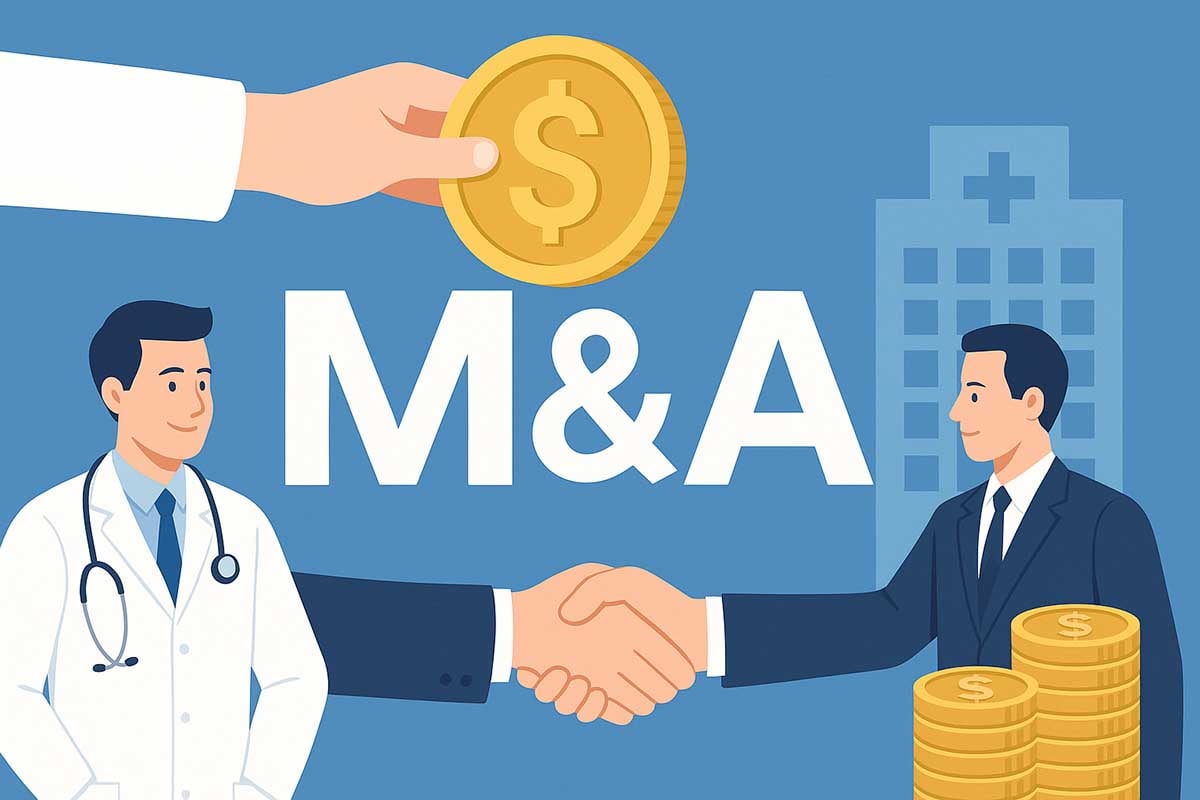
In the context of international capital flows increasingly interested in the Vietnamese healthcare market, M&A is emerging as an important growth driver, helping businesses develop faster, more sustainably and closer to international standards. However, this field requires a high level of transparency, strict legal risk management processes and professionalism in auditing, valuation and operations. Only when these standards are standardized can businesses confidently enter the investment, cooperation or IPO process.
Globally, the healthcare M&A market peaked in 2020-2021, with transaction values in the first half of 2021 reaching $330-340 billion thanks to a series of deals worth over $1 billion. From 2022 to the first half of 2024, the market stagnated due to a lack of large-scale deals, causing the total transaction value to drop sharply. However, from the second half of 2024 to the first half of 2025, global M&A values recovered, reaching around $115-120 billion.
The Vietnam M&A Forum 2025 is the most prestigious annual event in the field of mergers and acquisitions, organized by the Finance - Investment Newspaper. The forum will gather more than 500 senior leaders from domestic and international corporations, investment funds, financial institutions and consulting units.
With the theme “New Position, New Opportunities”, the Forum reflects the strong transformation of the Vietnamese market on the regional investment map, in the context of a more transparent legal environment, an expanding capital market and increasing demand for corporate restructuring.
The event includes in-depth seminars, honoring outstanding deals and M&A consultants, and investment networking activities.
The forum took place on December 9, 2025, at JW Marriott Saigon Hotel, Ho Chi Minh City.
In the pharmaceutical and life sciences sector, the number of deals will decrease by 19% from early 2024 to early 2025, while the total transaction value will decrease from $60 billion to $40 billion (33%). In contrast, the healthcare services sector, despite a 25% decrease in the number of deals, recorded a 50% increase in value, from $40 billion to $60 billion, indicating a trend towards large-scale deals.
In this global trend, Vietnam has emerged as an attractive market. In the first 8 months of 2025, the total M&A value reached 4.8 billion USD, an increase of 21% compared to 2024. The average deal size reached 42 million USD, an increase of 15% compared to the period 2022-2023. The attraction comes from the rapid aging of the population (about 20% of the population is elderly), the middle class is expected to reach 23.3 million people by 2030 and the growing demand for high-quality healthcare services.
The strong growth of the private healthcare sector and the open-door policy have attracted many large deals, contributing to putting Vietnam on the regional healthcare M&A map. A typical example is the deal where Thomson Medical Group acquired FV Hospital for 381.4 million USD, among the largest in Southeast Asia in 2023. In the pharmaceutical sector, Livzon Group (China) plans to spend 240 million USD to own nearly 65% of Imexpharm, while Dongwha Pharm (Korea) invested 30 million USD to buy 51% of Trung Son pharmacy chain.
Vietnam is considered one of the most potential markets in the region for M&A deals in the healthcare sector. The rapid development of the private healthcare system, the increasing demand for high-quality services, and the strong open-door policy from the State have created a favorable foundation for M&A to become a strategic tool to help improve the healthcare ecosystem.
Mr. Nguyen Toan Thang, Deputy Chief of the Ministry of Health Office, emphasized that in the era of integration, digital technology and global competition, the health sector needs to innovate and be creative to welcome new opportunities. According to him, the industry's goal by 2030 is to expand the scope of public health care, focus on improving the quality of medical examination and treatment services, ensure health security and enhance the ability to respond to climate change as well as emergency situations. At the same time, the health sector focuses on controlling disease risk factors, managing the health environment and promoting equity in health care.
Along with these strategic goals, the hospital, pharmaceutical and medical equipment ecosystem is increasingly expanding and diversifying. The health sector also continues to promote administrative reform, transparency in licensing, drug and equipment procurement. Strengthening the capacity to produce and distribute medical equipment domestically and expanding international cooperation are considered key solutions to help strengthen the industry's foundation.
Legal barriers and internal challenges
Despite abundant opportunities, healthcare M&A in Vietnam still faces many obstacles, especially in terms of legal and administrative procedures. The legal framework is not yet synchronized, and the specific requirements of the medical industry make the appraisal process lengthy and complicated.
Associate Professor, Dr. Dang Duc Nhu, Senior Advisor of Medicallaw, said that M&A appraisal in healthcare is more complicated than many other fields because it involves a series of factors such as practice licenses, professional operating licenses, fire prevention and fighting standards, environment, key personnel, drug lists and health insurance regulations. This complexity requires businesses to have careful preparation, complete documentation and strict compliance.
According to Mr. Brian K. Langenberg (ONEtoONE Corporate Finance), every M&A deal starts with preparation. For healthcare businesses, this is even more important because the industry is under strict management in terms of legal, financial and patient data. Preparation documents include financial and legal reports, operational data, customer information, preliminary assessment to identify potential risks and build a set of marketing documents including teasers, NDAs and CIMs, helping to tell the story of business development convincingly.
In the process of finding investors, businesses need to classify and choose suitable partners such as pharmaceutical corporations, private hospital systems, private equity (PE) funds specializing in healthcare or sovereign wealth funds. ONEtoONE supports meetings, facility tours and real-time progress updates through the Clarity platform, helping businesses maintain transparency, a key factor in building trust.
Once an investment proposal is made, the company enters the negotiation and due diligence phase, which is the most important phase because it involves price, payment structure, earn-out clauses, guarantees and legal elements to protect the interests of the parties. The role of the M&A consultant at this time is to maintain competition among investors, optimize results and ensure the transfer process goes smoothly.
The success of an M&A deal does not stop at signing a share purchase agreement (SPA), but is also measured by sustainable post-merger values such as operational efficiency, service expansion and improved patient care quality.
Therefore, the four important principles that healthcare businesses need to adhere to are absolute confidentiality; transparency and standardization according to international standards; creating competition to enhance negotiating advantage; and especially telling the right development story, because investors do not only buy data but also buy the vision and journey of the business.
According to Mr. Peter Sørensen (Asia Business Builder - ABB), M&A in healthcare is not just a financial transaction, but a strategic journey, where success depends on thorough preparation and reputable partners. The support of international consulting organizations such as ONEtoONE helps Vietnamese healthcare businesses open up global opportunities, improve service quality and achieve sustainable growth.
In the context of Vietnamese enterprises increasingly eager to expand their scale and improve operational efficiency, PEs have become important strategic partners. Mr. Peter Sørensen said that enterprises wishing to attract capital from PEs need to prepare carefully, communicate a clear vision, evaluate strengths and weaknesses in a structured way and build a “Honeymoon Plan” for the first 100 days after receiving capital. Enterprises that are well prepared are often valued higher and the investment process goes more smoothly.
Source: https://baodautu.vn/ma-linh-vuc-y-te-dang-tro-thanh-mo-vang-cua-nha-dau-tu-ngoai-d446470.html


![[Photo] National Assembly Chairman Tran Thanh Man receives First Vice Chairman of the Federation Council of the Federal Assembly of the Russian Federation](/_next/image?url=https%3A%2F%2Fvphoto.vietnam.vn%2Fthumb%2F1200x675%2Fvietnam%2Fresource%2FIMAGE%2F2025%2F12%2F02%2F1764648408509_ndo_br_bnd-8452-jpg.webp&w=3840&q=75)





















































![[Photo] General Secretary To Lam and his wife attend the 50th Anniversary of Laos National Day](https://vphoto.vietnam.vn/thumb/402x226/vietnam/resource/IMAGE/2025/12/02/1764644139308_1.jpeg)

























Comment (0)