

At the end of the year, many mountain peaks in the North enter their peak season with dozens of groups each week. Trails are easily blocked, rest houses are overloaded, and safety risks increase. Below are experiences shared by Mr. Manh Chien (YOLO Trekking, admin of the Mountaineering Association with more than 160,000 members) and Mr. Thanh Tung, who has experience conquering many mountain peaks in Vietnam.
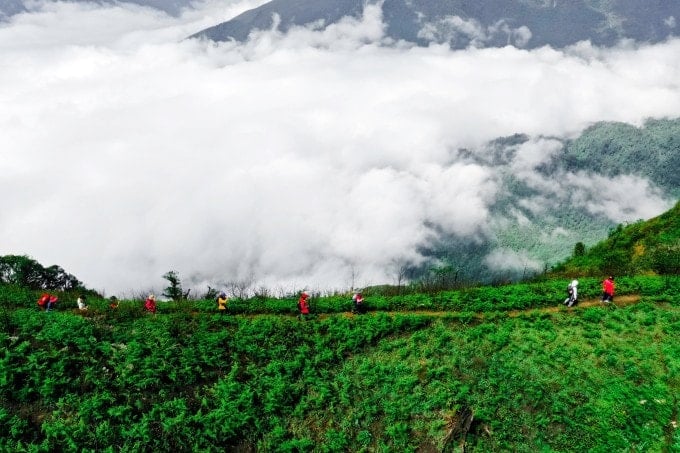
Famous mountain peaks in the North
Trekking routes are often classified according to difficulty, altitude and terrain. Information can be found on forums and travel agencies. Popular destinations are divided by region:
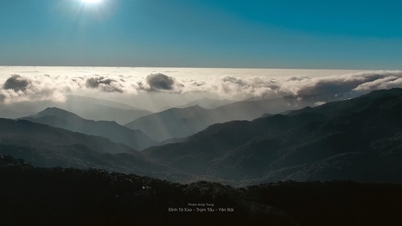
- Son La - Yen Bai area: Ta Xua, Ta Chi Nhu, Lung Cung, Sa Mu.
- Lao Cai area: Ngu Chi Son, Lao Than, Nhiu Co San, Fansipan, Bach Moc Luong Tu.
- Lai Chau province and neighboring areas: Po Ma Lung, Chung Nghia Vu, Pusilung, Khang Su Van, Putaleng, Ta Lien Son, Nam Kang Ho Tao, Chuva, Can Chua, Rang Cua, Mieu Thach Son.
Choose the right climbing form
In the North, there are three main options with different pros and cons and costs. The price usually includes transportation (usually from Hanoi), accommodation at huts/guesthouses, porters and other expenses (medals, border guards, photography).
- Self-sufficient: The group takes care of everything; hiring a porter costs from 500,000 to 700,000 VND/day. Economical but hard work and risky. Cost per person from 1.5 million VND (depending on needs).
- Tour porter: Experienced porters organize and pick up and drop off at the meeting point; customers book their own vehicle from the departure point. Cost 1.5-2 million VND, depending on experience and organization. According to Thanh Tung, this model requires less work and supports the local economy, but it is necessary to choose a reputable porter for each route.
- Package tour: From A to Z, pick-up and drop-off from Hanoi. Price from 3 million VND/person, depending on tour structure and accompanying services. Even if it is the most convenient, you still need to check the reputation of the unit; high prices often come with quality, but do not eliminate risks. It may be 1-2 million VND more expensive, but the experience is significantly better.
If cost is a priority, you can try to do it yourself. Newbies or those who do not care about budget should choose a reputable tour operator. After a few trips, you can switch to a tour porter to be proactive and support the locals; this method requires a tour guide, porter contacts and negotiation skills.
The appropriate size for a group is 5-6 or 10-12 people. If it is too crowded, the group should be split to reduce the risk. Even when buying a tour, only 6-12 people should go to ensure the quality of service.
Weather and timing
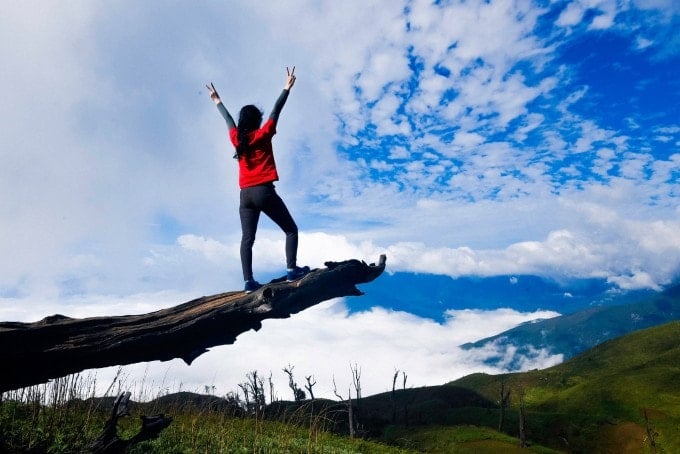
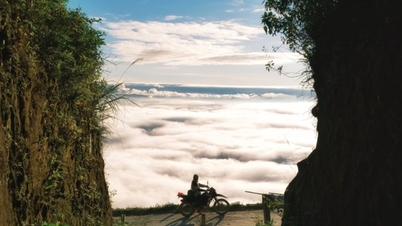
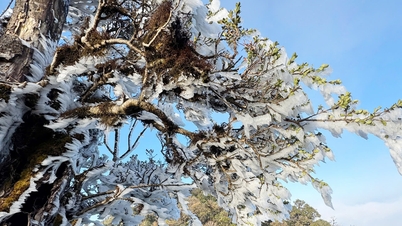
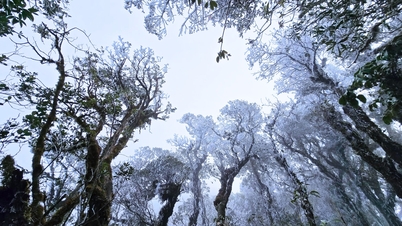
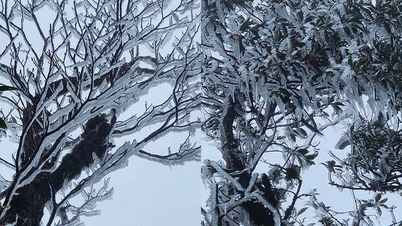
November to February is the best time, favorable for cloud or ice hunting; the climbing season can last until April. Inexperienced people should consider when there is a monsoon announcement or the period after Tet because of drizzle, north wind, and cold. Note that the temperature on the mountain is usually about 10 degrees lower than at the foot of the mountain, depending on the time.
First time climbing: fitness and luggage
Physical preparation
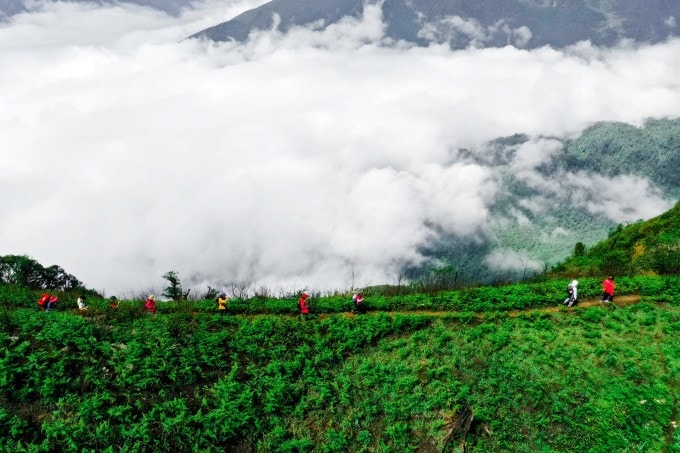
First-timers need to be mentally prepared: the journey will be tiring, whether easy or difficult. Physical training does not need to be too strenuous but must be regular, especially for women. About 10-15 days before the trip, practice climbing 20 flights of stairs; spend the last 2-3 days completely resting and recovering your muscles.
Basic equipment
- Shoes: Prioritize shoes with good grip and anti-slip from reputable brands.
- Clothing: Breathable inner layer; light jacket; quick-drying pants. Choose clothes that are readily available but comfortable.
- Accessories: Hat, glasses, gloves, knee and ankle guards to reduce injuries.
- Winter: Add thermal shirts, sweatshirts or sweaters, warm hats, and heat patches.
- Other: At least two pairs of socks; personal first aid kit with pain relievers, digestive aids, and bandages. Expensive specialized clothing may be considered after gaining experience.
Safety notes for female travelers
Mountain huts are often cramped, with groups sharing rooms and sleeping together, so alcohol consumption should be limited to avoid losing control of behavior. Alcohol also directly affects physical strength, increasing the risk of exhaustion or stroke when exercising vigorously the next day.
An experienced climber shared: "Climbing is a journey of experience, limits and emotions, not a place to compromise your own safety."
Source: https://baonghean.vn/mien-bac-ky-nang-leo-nui-cuoi-nam-cho-chuyen-di-an-toan-10314411.html
![[Photo] General Secretary To Lam works with the Standing Committees of the 14th Party Congress Subcommittees](/_next/image?url=https%3A%2F%2Fvphoto.vietnam.vn%2Fthumb%2F1200x675%2Fvietnam%2Fresource%2FIMAGE%2F2025%2F12%2F09%2F1765253019536_a1-bnd-0983-4829-jpg.webp&w=3840&q=75)

![[Photo] Urgently help people soon have a place to live and stabilize their lives](/_next/image?url=https%3A%2F%2Fvphoto.vietnam.vn%2Fthumb%2F1200x675%2Fvietnam%2Fresource%2FIMAGE%2F2025%2F12%2F09%2F1765248230297_c-jpg.webp&w=3840&q=75)







































































Comment (0)